
Presbyopia: What It Is, How It Affects Your Vision, and What You Can Do
When you start holding your phone farther away to read the text, or squint at the menu in a dim restaurant, you’re not alone. That’s presbyopia, the age-related loss of the eye’s ability to focus on close objects. Also known as age-related farsightedness, it’s not a disease—it’s just what happens when the lens inside your eye gets stiffer and the muscles around it weaken, usually starting in your early 40s. Unlike nearsightedness or astigmatism, presbyopia doesn’t come from the shape of your cornea. It’s about the lens losing its flexibility, like a rubber band that can’t stretch as well anymore. Everyone gets it. If you live long enough, you’ll need reading glasses—or another solution—because your eyes simply can’t adjust focus the way they used to.
This isn’t just about reading small print. Presbyopia affects everyday tasks: threading a needle, checking your blood sugar, reading a text message, or even looking at your dashboard while driving. It’s not sudden. It creeps in slowly, often over a year or two, and gets worse until your mid-50s, when it tends to stabilize. You might notice it first with artificial light, or when you’re tired. That’s because your eyes are working harder to compensate. The good news? It’s one of the most predictable and manageable vision changes in aging. You don’t need surgery or expensive treatments to live normally. Most people find relief with over-the-counter reading glasses, progressive lenses, or contact lenses designed for presbyopia. Some even opt for monovision, where one eye is corrected for distance and the other for near vision—something your eye doctor can help you test before committing.
Presbyopia doesn’t happen in isolation. It often overlaps with other age-related eye changes, like cataracts or macular degeneration. That’s why regular eye exams matter—not just to get a new prescription, but to catch other problems early. Many people think they just need stronger readers, but if their vision is blurry even with glasses, it could be something else. The same goes for people who rely on bifocals or multifocals and suddenly find their near vision worse. That could mean their cataracts are progressing, or their lens is changing shape again. And while reading glasses are the go-to fix, they’re not the only option. There are prescription eye drops that temporarily improve near focus, and newer surgical procedures that reshape the cornea or replace the natural lens. None are perfect, but they exist for those who want alternatives to glasses.
What you’ll find in the posts below isn’t a list of generic tips. It’s real, practical advice from people who’ve lived through this—how to pick the right glasses, how to avoid eye strain at your desk, why some people get headaches with progressive lenses, and what to ask your eye doctor before spending hundreds on a new pair. You’ll also see how presbyopia connects to other health issues, like diabetes or high blood pressure, which can speed up lens changes. And yes, there’s even a post about how certain medications can make presbyopia feel worse, even if they don’t cause it. This isn’t about fear. It’s about understanding what’s normal, what’s not, and what you can actually do about it—without falling for hype or unnecessary treatments.
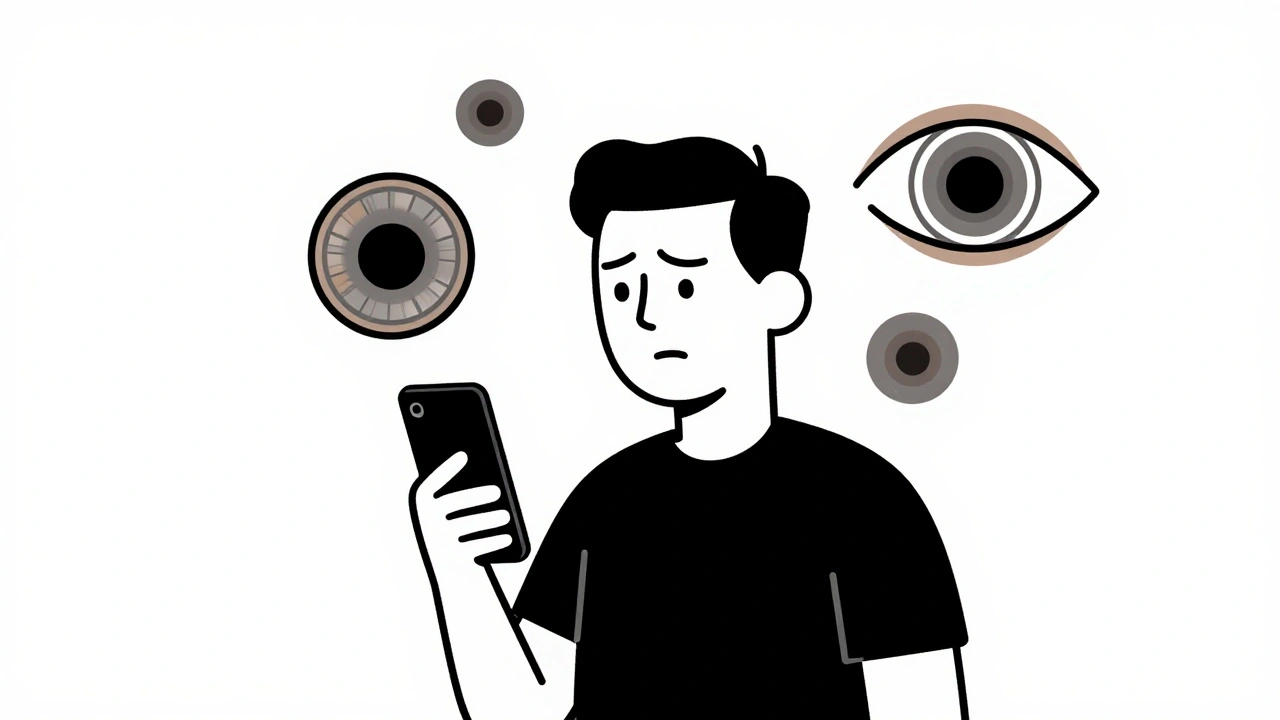
Presbyopia: Why You Can't Read Small Print Anymore and What You Can Do About It
- Dec, 3 2025
- 15
Presbyopia is the natural aging of your eyes that makes reading small print hard after 40. Learn how reading glasses, progressives, and other options restore near vision - and why eye exams at 40 are essential.
Categories
- Health and Medicine (77)
- Health and Wellness (57)
- Medicine (37)
- Women's Health (11)
- Mental Health (10)
- Men's Health (7)
- Beauty and Wellness (4)
- Health Information (4)
Archives
- April 2026 (2)
- March 2026 (11)
- February 2026 (11)
- January 2026 (25)
- December 2025 (28)
- November 2025 (25)
- October 2025 (27)
- September 2025 (14)
- August 2025 (3)
- July 2025 (2)
- June 2025 (2)
- May 2025 (3)
- online pharmacy
- medication safety
- generic drugs
- dietary supplement
- health benefits
- dietary supplements
- prevention
- fertility
- online pharmacy Australia
- side effects
- QT prolongation
- medication side effects
- diabetes medications
- GLP-1 agonists
- nocebo effect
- brand vs generic
- treatment
- treatment options
- benefits
- connection