
Ciprofloxacin and Tums: What You Need to Know About This Common Drug Interaction
When you take ciprofloxacin, a broad-spectrum antibiotic used to treat bacterial infections like urinary tract infections, pneumonia, and skin infections. Also known as Cipro, it works by stopping bacteria from reproducing. But if you’re also taking Tums, a common antacid made with calcium carbonate to relieve heartburn and indigestion, you might be making your antibiotic less effective—without even realizing it.
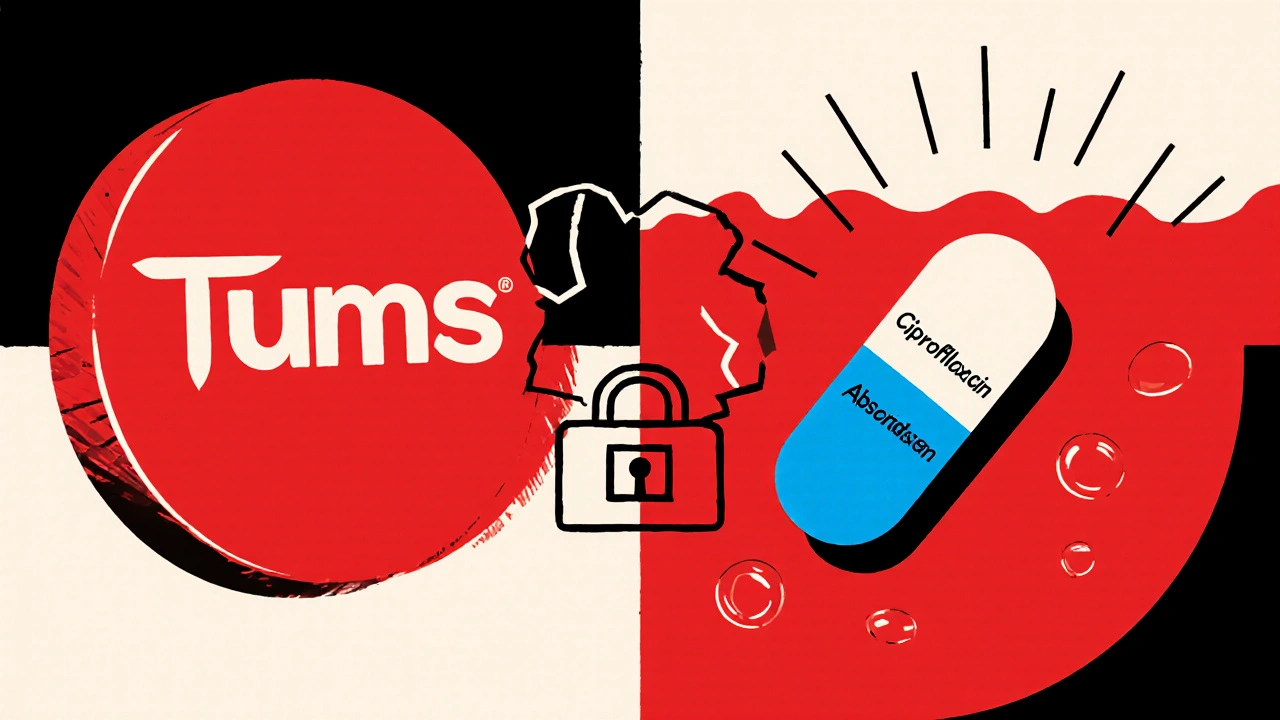
The problem isn’t that Tums are dangerous with ciprofloxacin. It’s that calcium, a mineral found in dairy, supplements, and antacids like Tums, binds to ciprofloxacin in your gut and stops your body from absorbing it. This isn’t just a minor issue. If you take them together, your infection might not clear up, and that could lead to worse symptoms or even antibiotic resistance. Studies show calcium can reduce ciprofloxacin absorption by up to 90%. That’s not a small drop—it’s a complete loss of effectiveness. The same thing happens with other minerals like magnesium, aluminum, and iron, which is why many antacids, multivitamins, and even some calcium-fortified foods can interfere.
You don’t have to stop taking Tums or ciprofloxacin. You just need to space them out. Take your antibiotic at least 2 hours before or 6 hours after any antacid, calcium supplement, or iron pill. If you take Tums for heartburn, wait until your ciprofloxacin has had time to absorb—usually 2 hours after your dose—before reaching for the antacid. If you’re on ciprofloxacin for a week or more, plan your meals and supplements around it. Avoid dairy right before or after your pill. Even a glass of milk can cause the same issue. If you’re unsure, check the label on your antibiotic bottle or ask your pharmacist. They see this mix-up every day.
This isn’t just about Tums and ciprofloxacin. It’s part of a bigger pattern. Many antibiotics—like doxycycline and levofloxacin—have the same problem. So do osteoporosis drugs like alendronate, and even some thyroid medications. If you’re on more than one daily pill, timing matters more than you think. A simple delay of a few hours can make the difference between treatment working and failing. The posts below show real-world cases where people ran into this exact issue, how they fixed it, and what alternatives actually work without risking your health.
Antacids and Antibiotics: How to Time Your Doses to Avoid Treatment Failure
- Nov, 14 2025
- 15
Learn how to time your antacid and antibiotic doses to avoid treatment failure. Find out which antibiotics are most affected and how to safely manage both without risking infection.
Categories
- Health and Medicine (78)
- Health and Wellness (57)
- Medicine (37)
- Women's Health (11)
- Mental Health (10)
- Men's Health (7)
- Beauty and Wellness (4)
- Health Information (4)
Archives
- April 2026 (3)
- March 2026 (11)
- February 2026 (11)
- January 2026 (25)
- December 2025 (28)
- November 2025 (25)
- October 2025 (27)
- September 2025 (14)
- August 2025 (3)
- July 2025 (2)
- June 2025 (2)
- May 2025 (3)
- online pharmacy
- medication safety
- generic drugs
- dietary supplement
- health benefits
- dietary supplements
- prevention
- fertility
- online pharmacy Australia
- side effects
- QT prolongation
- medication side effects
- diabetes medications
- GLP-1 agonists
- nocebo effect
- brand vs generic
- treatment
- treatment options
- benefits
- connection