
Antacid Timing: When to Take Antacids for Best Relief
When you're dealing with heartburn or an upset stomach, antacid timing, the specific window when antacids are most effective at neutralizing stomach acid. Also known as acid reflux medication timing, it's not just about popping a pill—it's about syncing it with your meals, other drugs, and your body’s natural rhythms. Take antacids too early, and they won’t be there when the acid hits. Take them too late, and you’re already in pain. Get it right, and relief comes fast—often in under five minutes.
Antacids work by directly neutralizing stomach acid, unlike PPIs or H2 blockers that reduce acid production. That’s why timing matters more with antacids. They’re fast but short-lived. Most work best when taken 1 hour after eating and again at bedtime if symptoms return. Taking them right after a meal gives them time to coat the stomach lining before acid levels peak. If you’re on other meds—like antibiotics, thyroid pills, or iron supplements—antacids can block their absorption. That’s why you need to space them out by at least two hours. It’s not just about feeling better now; it’s about making sure your other drugs still work.
People often mix up antacids with other acid reducers. Antacids are for quick, on-demand relief. If you’re taking them more than twice a week, you might need something longer-term. But even then, timing still counts. If you’re using antacids along with a PPI, take the antacid first, then wait two hours before the PPI. This avoids interference. Also, chewable antacids work faster than liquids if you chew them well and follow with a sip of water. Liquid antacids coat the esophagus better, which helps if you’re dealing with reflux after meals.
Older adults, pregnant women, and people with kidney issues need to be extra careful. Some antacids contain aluminum or magnesium, which can build up if your kidneys aren’t clearing them. Check labels. Avoid calcium-based antacids if you’re prone to kidney stones. And don’t use them as a calcium supplement unless your doctor says so.
There’s no one-size-fits-all schedule, but the pattern is simple: eat, wait an hour, take the antacid. Repeat if needed. Keep track of when symptoms strike. Do they happen after coffee? After spicy food? After lying down? That tells you when to plan your antacid use. You’re not just treating acid—you’re learning your body’s triggers.
Below are real cases from people who’ve figured out how to use antacids without messing up their other meds, avoiding side effects, and getting real relief. Some of these stories involve people managing reflux while on antibiotics, dealing with heartburn during pregnancy, or balancing antacids with osteoporosis drugs. Each one shows how small timing changes made a big difference.
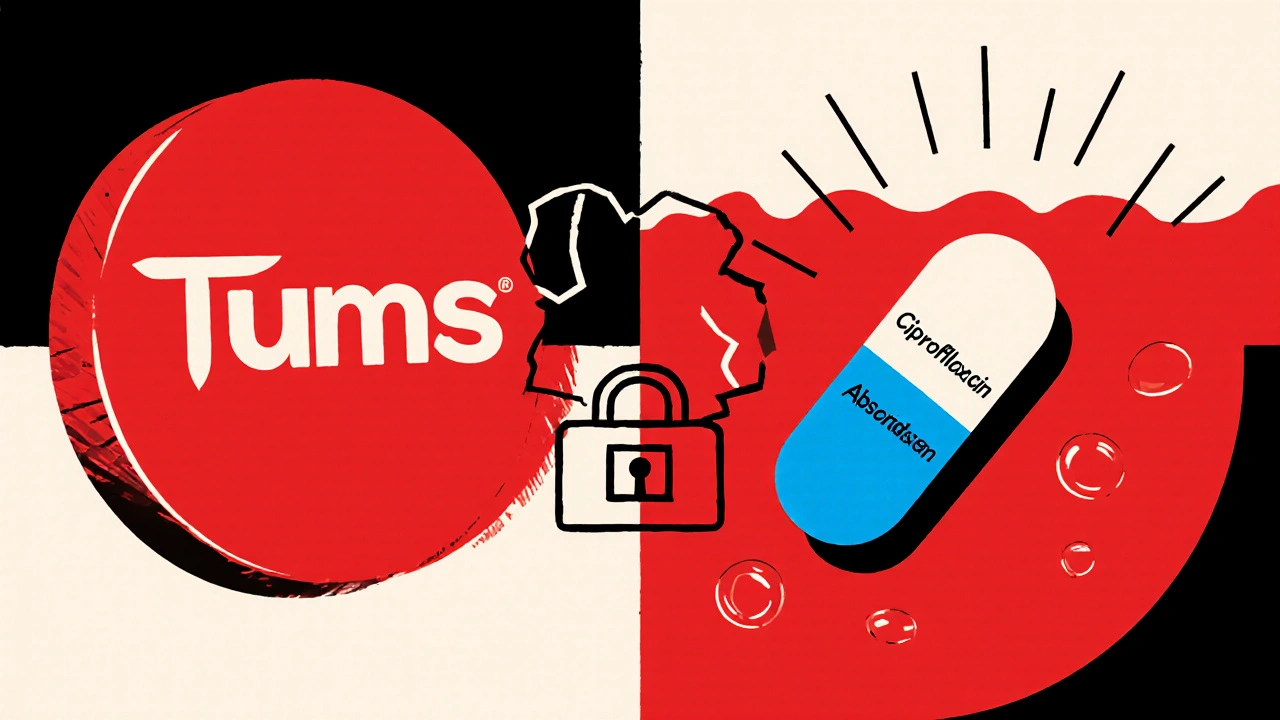
Antacids and Antibiotics: How to Time Your Doses to Avoid Treatment Failure
- Nov, 14 2025
- 15
Learn how to time your antacid and antibiotic doses to avoid treatment failure. Find out which antibiotics are most affected and how to safely manage both without risking infection.
Categories
- Health and Medicine (78)
- Health and Wellness (57)
- Medicine (37)
- Women's Health (11)
- Mental Health (10)
- Men's Health (7)
- Beauty and Wellness (4)
- Health Information (4)
Archives
- April 2026 (3)
- March 2026 (11)
- February 2026 (11)
- January 2026 (25)
- December 2025 (28)
- November 2025 (25)
- October 2025 (27)
- September 2025 (14)
- August 2025 (3)
- July 2025 (2)
- June 2025 (2)
- May 2025 (3)
- online pharmacy
- medication safety
- generic drugs
- dietary supplement
- health benefits
- dietary supplements
- prevention
- fertility
- online pharmacy Australia
- side effects
- QT prolongation
- medication side effects
- diabetes medications
- GLP-1 agonists
- nocebo effect
- brand vs generic
- treatment
- treatment options
- benefits
- connection