
Age-Related Vision: What Changes Happen and How Medications Affect Your Eyes
When your vision starts to blur or you struggle to read small print, it’s often age-related vision, the natural decline in eye function that comes with getting older, including reduced light sensitivity, slower focus, and trouble seeing in low light. It’s not a disease—but it can be made worse by the very medicines you take to manage other conditions. Many people assume blurry vision just comes with age, but drugs like brimonidine tartrate, a glaucoma medication that also shows promise in protecting retinal nerves or diabetes medications, which control blood sugar but can lead to diabetic retinopathy if levels swing too wildly play a hidden role in how your eyes age.
Think about this: if you’re on metformin for diabetes, your blood sugar is better controlled—but that doesn’t mean your eyes are safe. Diabetic retinopathy can still creep in over time, and it’s one of the leading causes of vision loss in older adults. Meanwhile, people taking meds for high blood pressure or cholesterol might not realize these drugs can reduce blood flow to the optic nerve. Even something as simple as antihistamines for allergies can dry out your eyes and make reading harder. And then there’s glaucoma, a group of eye diseases that damage the optic nerve, often without symptoms until it’s too late. Many seniors are prescribed eye drops to lower pressure, but if those drops aren’t used correctly—or if they interact with other meds—their vision can keep slipping.
The good news? You don’t have to accept blurry vision as inevitable. Knowing which drugs affect your eyes lets you ask smarter questions. Did your pharmacist warn you that your arthritis pill might make night driving risky? Has your doctor checked your retina lately, especially if you’re on long-term steroids or diabetes meds? These aren’t just side effects—they’re warning signs you can act on. The posts below cover real cases: how brimonidine helps protect retinal cells, why diabetes meds need careful timing with calcium, and how geriatric drug lists like the Beers Criteria flag eye-harming prescriptions. You’ll find practical tips on spotting early vision changes, avoiding dangerous interactions, and working with your care team to keep your sight sharp as you age.
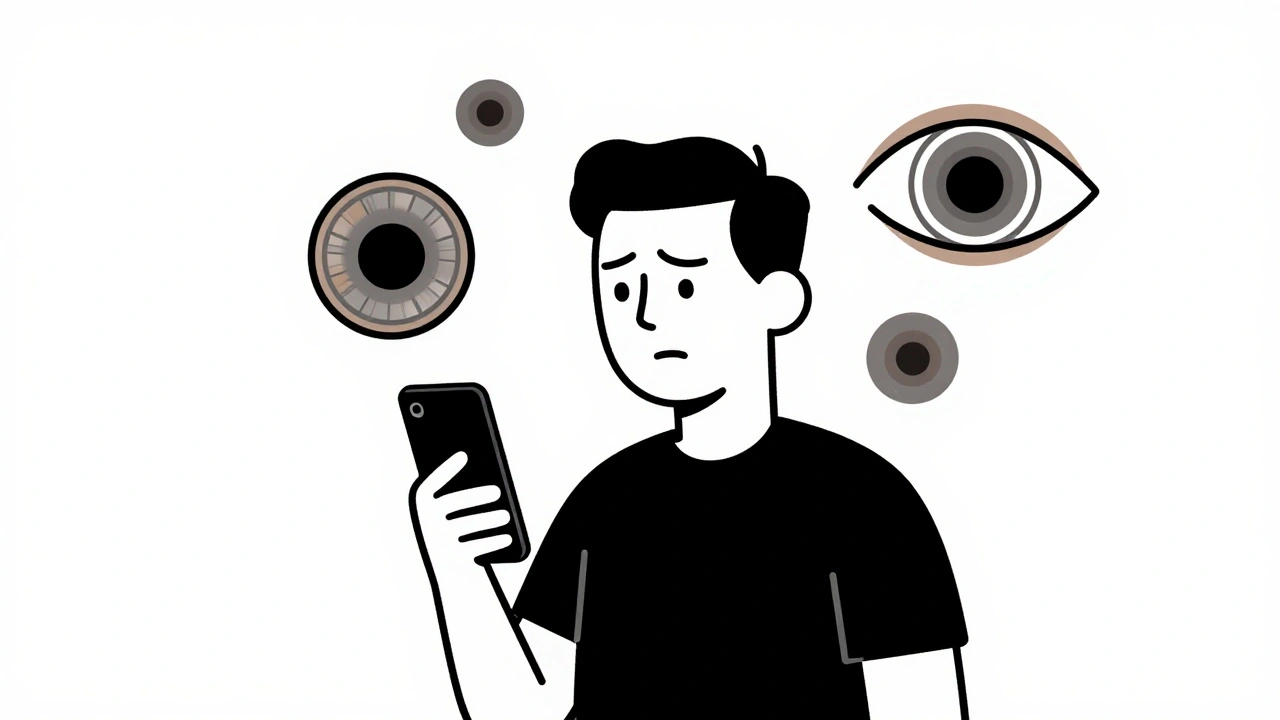
Presbyopia: Why You Can't Read Small Print Anymore and What You Can Do About It
- Dec, 3 2025
- 15
Presbyopia is the natural aging of your eyes that makes reading small print hard after 40. Learn how reading glasses, progressives, and other options restore near vision - and why eye exams at 40 are essential.
Categories
- Health and Medicine (77)
- Health and Wellness (57)
- Medicine (37)
- Women's Health (11)
- Mental Health (10)
- Men's Health (7)
- Beauty and Wellness (4)
- Health Information (4)
Archives
- April 2026 (2)
- March 2026 (11)
- February 2026 (11)
- January 2026 (25)
- December 2025 (28)
- November 2025 (25)
- October 2025 (27)
- September 2025 (14)
- August 2025 (3)
- July 2025 (2)
- June 2025 (2)
- May 2025 (3)
- online pharmacy
- medication safety
- generic drugs
- dietary supplement
- health benefits
- dietary supplements
- prevention
- fertility
- online pharmacy Australia
- side effects
- QT prolongation
- medication side effects
- diabetes medications
- GLP-1 agonists
- nocebo effect
- brand vs generic
- treatment
- treatment options
- benefits
- connection