
Warfarin and NSAIDs: The Hidden Bleeding Risk You Need to Know
 Dec, 23 2025
Warfarin & NSAID Safety Checker
Check Your NSAID Risk
This tool shows you the specific bleeding risk when combining different NSAIDs with anticoagulants like warfarin or NOACs. Always consult your doctor before taking any pain reliever while on blood thinners.
Bleeding Risk Assessment
Combining this NSAID with anticoagulants significantly increases bleeding risk. This combination is strongly discouraged.
Safety Recommendations
- Do NOT take this NSAID with warfarin or any anticoagulant
- Consider acetaminophen (Tylenol) as a safer alternative for pain relief
- If you must take this NSAID, consult your doctor immediately and get INR monitoring
- Use topical NSAIDs (like Voltaren gel) instead of oral forms
Every year, millions of people take warfarin to prevent dangerous blood clots - often because of atrial fibrillation, a mechanical heart valve, or a past deep vein thrombosis. At the same time, countless others reach for ibuprofen, naproxen, or diclofenac for a bad back, a headache, or arthritic knees. What most don’t realize is that combining these two types of medications can turn a simple pain reliever into a silent killer. The risk isn’t theoretical. It’s measurable, documented, and deadly.
Why This Combination Is So Dangerous
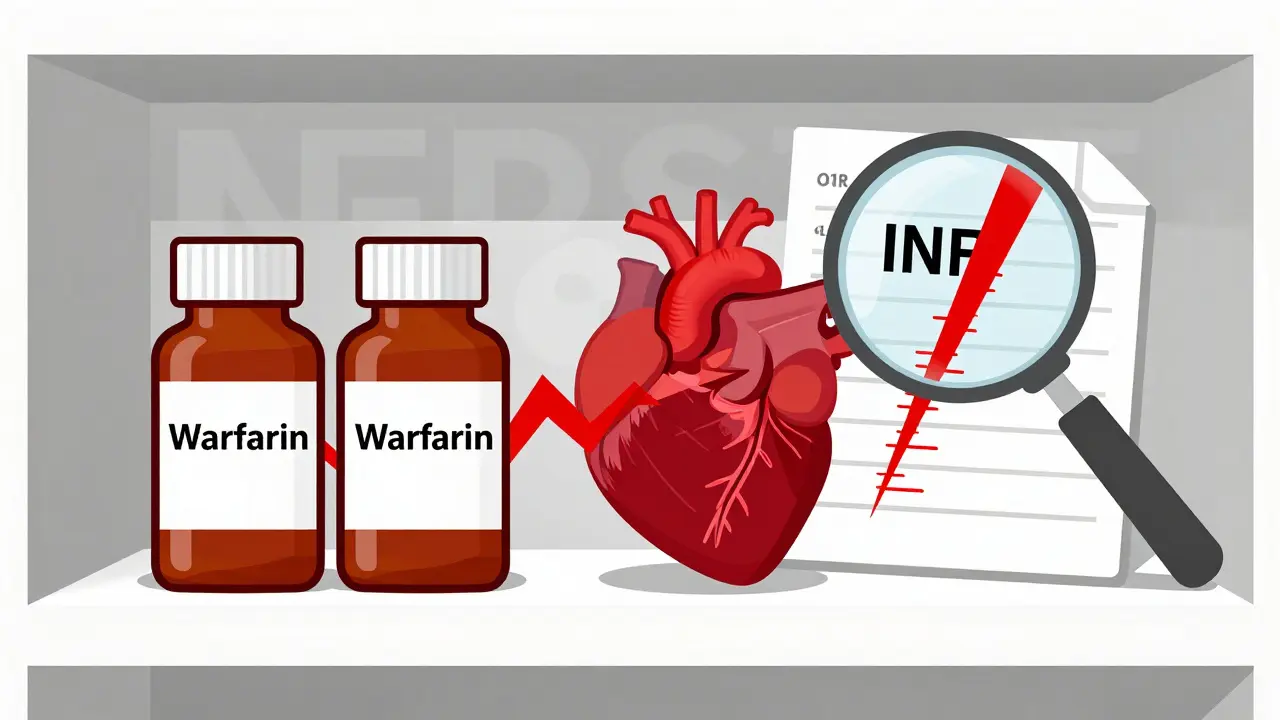
Warfarin works by blocking vitamin K, which your body needs to make clotting factors. Without those factors, blood takes longer to clot - that’s the whole point. But NSAIDs? They do something completely different, and just as dangerous. They shut down cyclooxygenase enzymes, which are needed to make thromboxane - a chemical that helps platelets stick together and form clots. So while warfarin slows down the clotting cascade, NSAIDs disable the first responders: your platelets.Together, they create a perfect storm. Your blood can’t clot properly, and the lining of your stomach gets damaged too. NSAIDs reduce protective mucus in the gut, making ulcers more likely. Add warfarin’s thinning effect, and a small stomach ulcer can turn into a life-threatening bleed.
The numbers don’t lie. A 2023 study from Aarhus University Hospital found that people on warfarin who took NSAIDs had more than double the risk of serious bleeding compared to those on warfarin alone. And it’s not just one type of bleed. Gastrointestinal bleeding jumps 2.24 times. Brain bleeds? That risk goes up 3.22 times. Even bleeding in the lungs or urinary tract becomes more common.
Not All NSAIDs Are Created Equal
If you’ve been told to avoid NSAIDs while on warfarin, you might assume they’re all the same. They’re not. Some are far riskier than others.Naproxen is the worst offender. Studies show it increases bleeding risk by 4.1 times compared to warfarin alone. Diclofenac isn’t far behind at 3.3 times. Ibuprofen is often seen as "safer," but even it still raises bleeding risk by nearly 80%. Meloxicam, a common prescription NSAID for arthritis, carries a similarly high risk - and it’s often prescribed without warning.
Many people assume that COX-2 inhibitors like celecoxib are safer because they don’t irritate the stomach as much. But that’s a myth. A 2020 meta-analysis confirmed that celecoxib and rofecoxib (the latter pulled from the market in 2004) carry the same bleeding risk as traditional NSAIDs when mixed with warfarin. The stomach protection advantage? It doesn’t extend to the rest of the body. Your platelets still get hammered. Your INR still spikes. Your risk still soars.
It’s Not Just Warfarin - NOACs Are Risky Too
A lot of people switched from warfarin to newer anticoagulants - dabigatran, rivaroxaban, apixaban - thinking they were safer and didn’t interact with other drugs. That’s partly true. But it’s not true for NSAIDs.A 2019 study in Circulation found that patients on apixaban who took NSAIDs still had significantly higher bleeding rates than those who didn’t. Even though apixaban has fewer drug interactions overall, NSAIDs still wreck its safety profile. The same goes for dabigatran and rivaroxaban. The 2020 study in Journal of Thrombosis and Haemostasis showed that while dabigatran had slightly lower bleeding risk than warfarin with NSAIDs, the difference wasn’t enough to call it safe.
The bottom line? If you’re on any oral anticoagulant - warfarin, Xarelto, Eliquis, Pradaxa - NSAIDs are a no-go. The idea that "newer is safer" doesn’t apply here. The mechanism of bleeding risk is the same: platelet dysfunction plus anticoagulation equals disaster.
Who’s Most at Risk?
Some people are walking into this danger zone without even knowing it. Here’s who’s most vulnerable:- People over 75 - they face nearly 4 times the bleeding risk compared to younger patients.
- Those on high-dose warfarin (over 40 mg per week) - their INR spikes dramatically when NSAIDs are added.
- Patients taking other drugs that affect bleeding - like SSRIs, aspirin, or corticosteroids.
- Anyone with a history of ulcers, kidney disease, or high blood pressure.
- People who take NSAIDs regularly - even over-the-counter ones - without telling their doctor.
Here’s a harsh truth: in 68% of warfarin-related bleeding cases, the patient never mentioned their NSAID use to their provider. Why? Because they think it’s "just ibuprofen." Or they take it once a week for a headache. Or they got it from a friend. Or they didn’t know it counted.
What Happens When You Mix Them?
Real stories tell the real story.One Reddit user wrote: "I took two ibuprofen for a migraine. My INR was 2.8. Two days later, it was 9.4. I woke up with black, tarry stools. My hemoglobin dropped from 14 to 8 in 24 hours. I ended up in the ER, got two units of blood, and spent three days in the hospital. I didn’t know NSAIDs could do that."
Another patient, a 72-year-old woman with atrial fibrillation, took naproxen for knee pain for three days. Her INR jumped from 2.5 to 8.1. She developed a massive gastrointestinal bleed. She needed surgery. She lost 40% of her blood volume. She survived - barely.
These aren’t rare cases. The FDA’s Adverse Event Reporting System recorded over 1,800 bleeding events tied to warfarin-NSAID combos between 2015 and 2020. Nearly two-thirds were GI bleeds. More than 78% of patients required hospitalization. Average stay? Over five days.
And the cost? A 2022 analysis estimated $1.87 billion in direct medical costs in the U.S. alone - just for bleeding events caused by this one interaction.
What Should You Do Instead?
The answer isn’t "suffer in pain." It’s finding safer alternatives.- Acetaminophen (Tylenol) - This is the go-to for most patients on anticoagulants. It doesn’t affect platelets or the stomach lining. It’s not perfect - too much can hurt your liver - but at standard doses (up to 3,000 mg/day), it’s the safest pain reliever for people on warfarin.
- Topical NSAIDs - Gels and patches like diclofenac gel (Voltaren) deliver the drug directly to the skin. Very little gets into your bloodstream. Studies show they’re far less likely to cause bleeding than oral forms.
- Physical therapy - For chronic pain from arthritis or back issues, movement and strengthening can reduce pain without any drugs.
- Cold/heat therapy - Simple, free, and effective for many types of muscle or joint pain.
- Non-drug options - Acupuncture, massage, or TENS units can help, especially when used with other strategies.
If you absolutely must use an oral NSAID - and this should be a last resort - follow these steps:
- Use the lowest dose possible (e.g., 200 mg ibuprofen, not 400 mg).
- Take it for the shortest time possible - no more than 3-5 days.
- Avoid naproxen, diclofenac, and meloxicam completely.
- Get your INR checked 3-5 days after starting the NSAID.
- Check again weekly while taking it.
- Take a proton pump inhibitor (like omeprazole) to protect your stomach.
- Tell every doctor, pharmacist, and nurse you see that you’re on a blood thinner.
Why Doctors Still Prescribe This Combo
It’s baffling - but it happens. Why?First, many doctors don’t realize how common this mix is. About 2-3 million Americans take both drugs at the same time. Second, some assume that because NOACs are "safer," NSAIDs are okay. They’re not. Third, patients don’t tell them. They think OTC means harmless. Fourth, electronic health records often don’t flag the interaction. One 2022 report found that 42% of U.S. hospitals don’t automatically warn doctors when warfarin and NSAIDs are prescribed together.
And then there’s the pain. A patient with severe arthritis might beg for something that works. A doctor, under time pressure, might write a prescription without thinking twice.
But the guidelines are clear. The American College of Cardiology and American Heart Association give NSAID use in anticoagulated patients a Class I recommendation - meaning: "Do not do this. It’s harmful."
What Patients Need to Know
You are your own best advocate. If you’re on warfarin or any blood thinner:- Never take an NSAID without asking your doctor or pharmacist first.
- Check every bottle - even cough syrups and cold meds - for ibuprofen, naproxen, or aspirin.
- Keep a list of everything you take, including supplements and OTC drugs.
- Ask: "Is this safe with my blood thinner?" - even if it’s "just one pill."
- If you feel dizzy, weak, or notice dark stools, nosebleeds, or unusual bruising - get checked immediately.
There’s no safe middle ground here. No "sometimes." No "low dose for a few days." The risk is too high, and the consequences are too severe. The only safe choice is to avoid NSAIDs entirely.
What’s Changing in 2025?
Good news: co-prescribing of warfarin and NSAIDs has dropped 27% since 2015, thanks to more people switching to NOACs. But here’s the catch: NSAID use with NOACs has gone up by 35%. That’s because people think, "If it’s not warfarin, it’s safe." It’s not.The 2024 American College of Chest Physicians guidelines will now explicitly warn against NSAID use with all oral anticoagulants - no exceptions. They’re also pushing for better EHR alerts and mandatory patient education. Meanwhile, researchers are exploring new painkillers that don’t affect platelets at all, and AI tools that can flag risky prescriptions before they’re written.
But until those tools are everywhere, the responsibility falls on you. If you’re on a blood thinner, don’t gamble with NSAIDs. The odds are stacked against you - and the cost of losing is too high.
Can I take ibuprofen with warfarin if I only use it once in a while?
No. Even occasional use of ibuprofen can spike your INR and trigger a serious bleed. The risk isn’t about frequency - it’s about the biological interaction. One dose can be enough to cause a dangerous drop in clotting ability. Acetaminophen is the only over-the-counter pain reliever considered safe for regular use with warfarin.
Is naproxen worse than ibuprofen with warfarin?
Yes, significantly. Naproxen increases bleeding risk by 4.1 times compared to warfarin alone, while ibuprofen raises it by about 1.8 times. Naproxen also lasts longer in your system, meaning its effect on platelets is more prolonged. It’s one of the most dangerous NSAIDs to combine with anticoagulants. Avoid it completely.
Do COX-2 inhibitors like celecoxib have less bleeding risk with warfarin?
No. While celecoxib is gentler on the stomach, it still blocks platelet function and increases bleeding risk just like traditional NSAIDs. Studies show a nearly 2-fold increase in gastrointestinal bleeding when celecoxib is taken with warfarin. The myth that COX-2 inhibitors are safe with blood thinners is dangerous and false.
What should I do if I accidentally took an NSAID while on warfarin?
Call your doctor or anticoagulation clinic immediately. Don’t wait for symptoms. Get your INR checked within 24-48 hours. If you notice any signs of bleeding - black stools, unusual bruising, dizziness, vomiting blood, or severe headaches - go to the ER. Even if you feel fine, the risk is still elevated for several days.
Are there any pain relievers that are completely safe with warfarin?
Acetaminophen (Tylenol) is the only commonly used oral pain reliever that doesn’t interfere with blood clotting or increase bleeding risk when used at recommended doses (up to 3,000 mg per day). Topical NSAIDs (like Voltaren gel) are also considered low-risk because very little enters the bloodstream. Always check with your provider before starting any new medication, even if it’s labeled "natural" or "herbal."
If you’re on warfarin, your pain management plan should be reviewed by your doctor at least once a year - and anytime your medications change. Don’t assume your pharmacist or online search will catch the danger. You’re the only one who can speak up for your safety.
suhani mathur
December 24, 2025 AT 04:13Wow. I just checked my medicine cabinet and found three different bottles with ibuprofen. Guess I’m officially a walking time bomb. Thanks for the wake-up call - I’m switching to Tylenol tomorrow. Also, my grandma’s on warfarin and takes naproxen for her knees. I’m sending her this link right now. 😅
Diana Alime
December 25, 2025 AT 19:08i just took 2 advil for my back and now im paranoid. like… what if my INR is already 9.4? why does no one warn you about this?? my dr just said ‘take what you need’… like wtf??
Bartholomew Henry Allen
December 27, 2025 AT 09:38Government and pharmaceutical companies have failed patients by not mandating clear labeling on OTC painkillers. This is negligence on a national scale. The data is irrefutable. Action must be taken now.
Usha Sundar
December 28, 2025 AT 18:34My aunt bled out from a GI bleed after taking naproxen for a week. She’s fine now. But she won’t touch NSAIDs again. Ever.
claire davies
December 29, 2025 AT 07:12Oh my gosh, I had no idea that even the ‘gentle’ celecoxib was just as dangerous as naproxen with warfarin! I’ve been popping it like candy for my arthritis, thinking I was being smart because it didn’t give me heartburn. Turns out I was just being… quietly suicidal? 🤦♀️ I’m switching to the Voltaren gel tonight - and maybe a nice long walk in the park to distract myself. Thank you for this eye-opening post - seriously, you just saved someone’s life. Or at least mine.
Wilton Holliday
December 29, 2025 AT 11:31Big props to the author for laying this out so clearly 🙌 I’ve been on Eliquis for 3 years and used to grab ibuprofen like it was candy. Now I use heat packs, stretch daily, and take Tylenol like a boss. You’re not weak for avoiding NSAIDs - you’re smart. Keep moving, keep healing, and never feel guilty about choosing safety over a quick fix. You got this 💪❤️
Joseph Manuel
December 29, 2025 AT 15:09The statistics presented are statistically significant but lack longitudinal cohort analysis. The correlation between NSAID use and bleeding events does not establish causation without controlling for confounders such as age, renal function, and concurrent SSRI use. The article overgeneralizes risk.
Austin LeBlanc
December 29, 2025 AT 18:01Why are people still alive after taking NSAIDs with warfarin? You’re not a child. You’re an adult. If you can’t read a medication label or ask your doctor, you deserve what happens. This isn’t rocket science. Stop being careless.
niharika hardikar
December 30, 2025 AT 23:09Per the 2024 ACC/AHA Anticoagulation Management Guidelines, Section 7.3: Concomitant NSAID administration in patients on VKAs or DOACs constitutes a Class I, Level A contraindication. Failure to adhere to this standard of care constitutes a breach of clinical protocol and may result in medicolegal liability. Patient education must be documented in the EHR.
Christine Détraz
December 31, 2025 AT 20:48Thank you for sharing this. I’ve been on Xarelto for AFib since 2021, and I’ve always thought acetaminophen was the only safe option - but I didn’t realize even topical NSAIDs were low-risk. My knee’s been killing me, so I’m ordering the Voltaren gel today. Also, I’m printing out this whole post to give to my mom - she’s 78, on warfarin, and takes naproxen ‘once a week.’ She thinks it’s fine. I’m not letting her think that anymore.
EMMANUEL EMEKAOGBOR
January 1, 2026 AT 11:32This is an excellent and well-researched summary. In Nigeria, many patients self-medicate with NSAIDs due to limited access to healthcare. This information must be translated into local languages and shared through community health workers. Thank you for raising awareness. We must protect our elders.
CHETAN MANDLECHA
January 1, 2026 AT 12:51As a pharmacist in Delhi, I see this every week. Patients come in asking for ibuprofen because their doctor didn’t warn them. I now have a printed handout: ‘Warfarin + NSAID = ER Trip.’ I hand it out with every anticoagulant prescription. Simple. Effective. Life-saving.