
Tinnitus Retraining Therapy: How Habituation and Sound Therapy Reduce Tinnitus Distress
 Feb, 3 2026
Most people with tinnitus are told to just live with it. But what if there was a way to make the ringing, buzzing, or hissing in your ears stop bothering you-without silencing it entirely? That’s the core idea behind tinnitus retraining therapy (TRT). Unlike hearing aids or masking devices that try to drown out the sound, TRT works with your brain to change how it reacts to tinnitus. It doesn’t erase the noise. It makes you stop noticing it as a threat. And for many, that’s enough to reclaim peace of mind.
What Is Tinnitus Retraining Therapy?
Tinnitus retraining therapy wasn’t invented in a lab overnight. It was developed in the early 1990s by Dr. Pawel Jastreboff, an audiologist and neuroscientist at the University of Maryland. His breakthrough wasn’t about fixing the ear-it was about fixing how the brain processes tinnitus. He noticed that tinnitus isn’t just a sound problem. It’s a brain problem. When the brain interprets tinnitus as dangerous, it triggers stress, anxiety, and even sleeplessness. That’s the vicious cycle TRT breaks. TRT has two parts: counseling and sound therapy. Neither works alone. Together, they retrain your brain to treat tinnitus like background noise-like the hum of a refrigerator or the rustle of leaves. The goal isn’t to make tinnitus disappear. It’s to make it irrelevant.The Neurophysiological Model: Why Tinnitus Feels So Loud
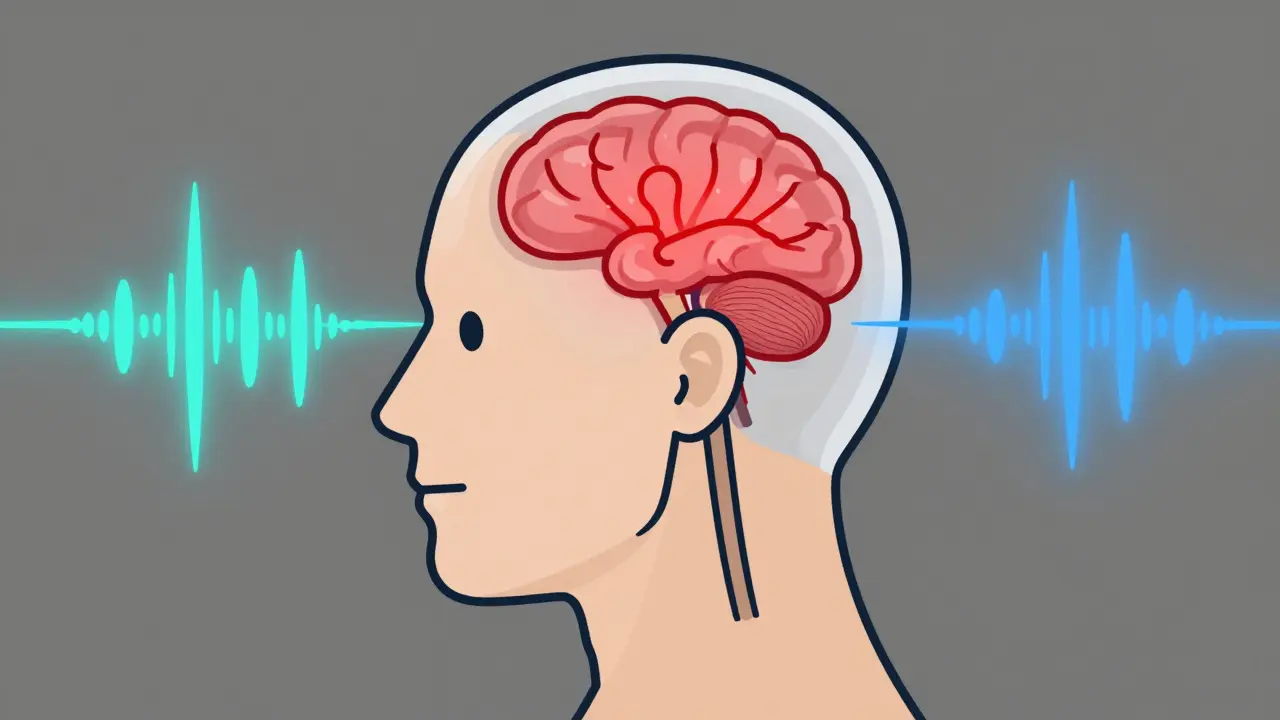
Your brain is wired to pay attention to threats. If something feels dangerous, your amygdala (the fear center) lights up. Your heart races. Your muscles tense. That’s normal-for real dangers. But when tinnitus hijacks this system, your brain starts treating a harmless internal sound like a fire alarm. Jastreboff’s model shows that tinnitus forms when the auditory system becomes overactive, often after hearing loss. The brain tries to compensate by turning up the volume on internal signals. But instead of calming down, the limbic system (emotion center) and autonomic nervous system (stress response) latch onto it. Now, every time you hear the buzz, your body reacts like you’re in danger. Brain scans from 2018 to 2020 confirmed this. People with severe tinnitus show stronger connections between their auditory cortex and the amygdala. TRT targets exactly those pathways. Not with drugs. Not with surgery. With repetition, education, and sound.Counseling: The 60-70% Key to Success
Most people think sound therapy is the main part of TRT. It’s not. Counseling is. In fact, studies show counseling accounts for 60-70% of the therapy’s success. That’s because you can’t retrain your brain if you don’t understand what’s happening. In TRT counseling, you sit down with a trained audiologist-usually for 60 to 90 minutes at a time. You learn how the ear works. How sound travels through the cochlea. How hair cells send signals to the brain. How hearing loss can cause the brain to amplify internal noise. You learn that tinnitus isn’t damage. It’s a misfire. A glitch. The counselor doesn’t just explain. They reframe. Tinnitus isn’t a sign of brain damage. It’s not going to get worse. It’s not a warning. It’s just noise your brain forgot to filter out. Over 12 to 15 sessions, you slowly shift from fear to neutrality. You stop dreading the sound. You stop checking for it. You stop fighting it. This is where habituation begins. Habituation isn’t suppression. It’s indifference. Your brain learns: This isn’t important. I can ignore it.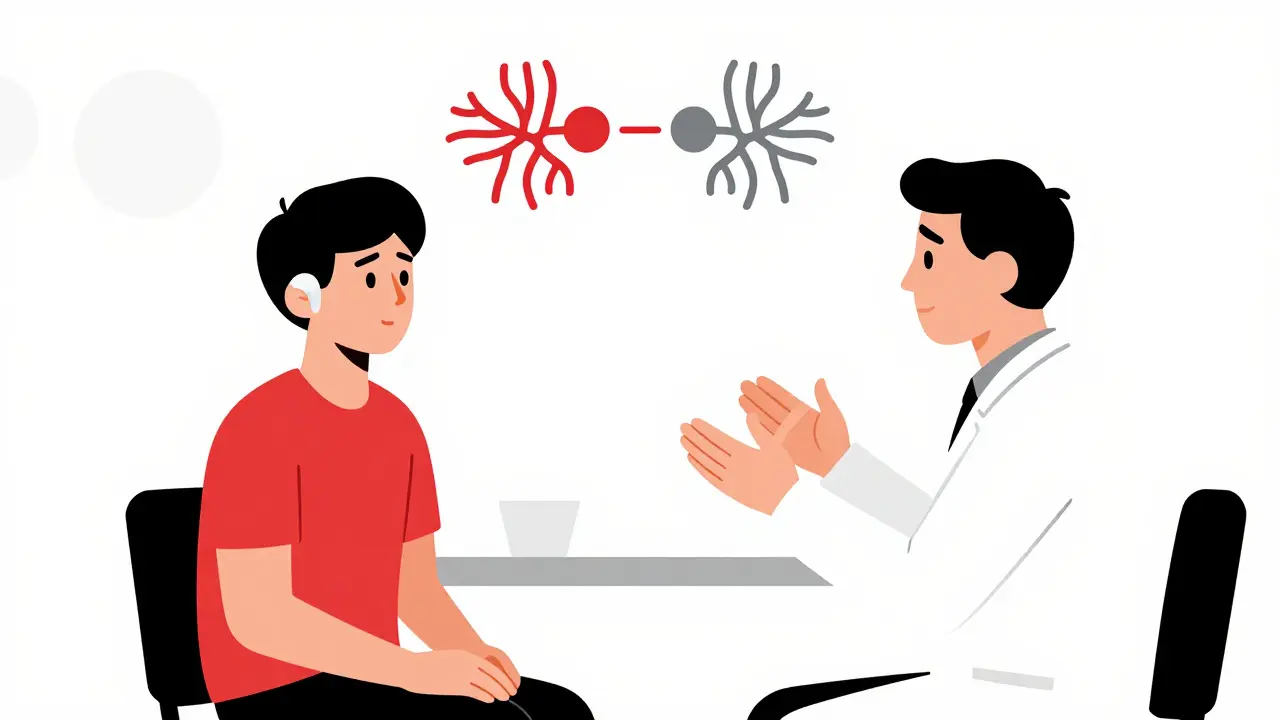
Sound Therapy: The Quiet Background That Changes Everything
Sound therapy in TRT isn’t about white noise machines or nature apps. It’s precise. It’s calibrated. And it’s used for 6 to 8 hours a day, every day. You wear small, discreet sound generators-like hearing aids-that emit low-level broadband noise. Think of it as a gentle static, like a TV tuned to an empty channel. The volume is set just below your tinnitus level. Not loud enough to cover it. Just enough to reduce the contrast between tinnitus and silence. Why does this work? Your brain is constantly comparing signals. If tinnitus is the only thing you hear in quiet rooms, it stands out. But when you add soft background sound, your brain stops treating tinnitus as special. It blends into the mix. Over time, the neural pathways that once screamed “DANGER!” begin to quiet down. The sound isn’t meant to mask. It’s meant to retrain. And it’s not for everyone. TRT classifies patients into four groups:- Group 1: Normal hearing, tinnitus only → sound generators only
- Group 2: Hearing loss, no tinnitus awareness in quiet → hearing aids only
- Group 3: Hearing loss with tinnitus → hearing aids + sound generators
- Group 4: Hyperacusis or misophonia → specialized sound protocols
How Long Does It Take? Real Results, Not Quick Fixes
TRT isn’t a 30-day program. It’s a 12- to 24-month journey. Most people start noticing changes around month 6. Significant improvement-where tinnitus no longer disrupts sleep, focus, or mood-typically happens between 12 and 18 months. Studies show 80% of patients who complete TRT achieve a major drop in distress. That means their Tinnitus Handicap Inventory score falls by 20 points or more. Some go from being aware of tinnitus 90% of the day to only 5-15%. And it’s not just perception. Physiological changes happen too. A 2019 study found that after 12 months of TRT, patients’ minimal masking levels increased by 3-5 dB. That means their brains got better at filtering out tinnitus without external help. The key? Consistency. Skipping sound therapy days. Missing counseling sessions. Rushing the process. These are the top reasons people don’t succeed.Who Delivers TRT? Certification Matters
Not every audiologist offers TRT. And not every one who says they do is trained properly. The Jastreboff TRT Certification Program requires 40 hours of training plus supervised clinical work. Only about 500 practitioners in the U.S. are certified as of 2023. Many clinics offer “TRT-like” programs-mixing counseling with sound-but without the full protocol, success rates drop from 85% to 55%. In Australia, where TRT is less common, finding a certified provider can be hard. Most patients travel to major cities like Melbourne, Sydney, or Brisbane. Telehealth options have expanded since 2021, but not all insurers cover it. Costs vary. In the U.S., full TRT can run $2,500-$4,000, including devices. Sound generators alone cost $500-$1,200. In Australia, out-of-pocket costs are similar, though some private health insurers offer partial rebates.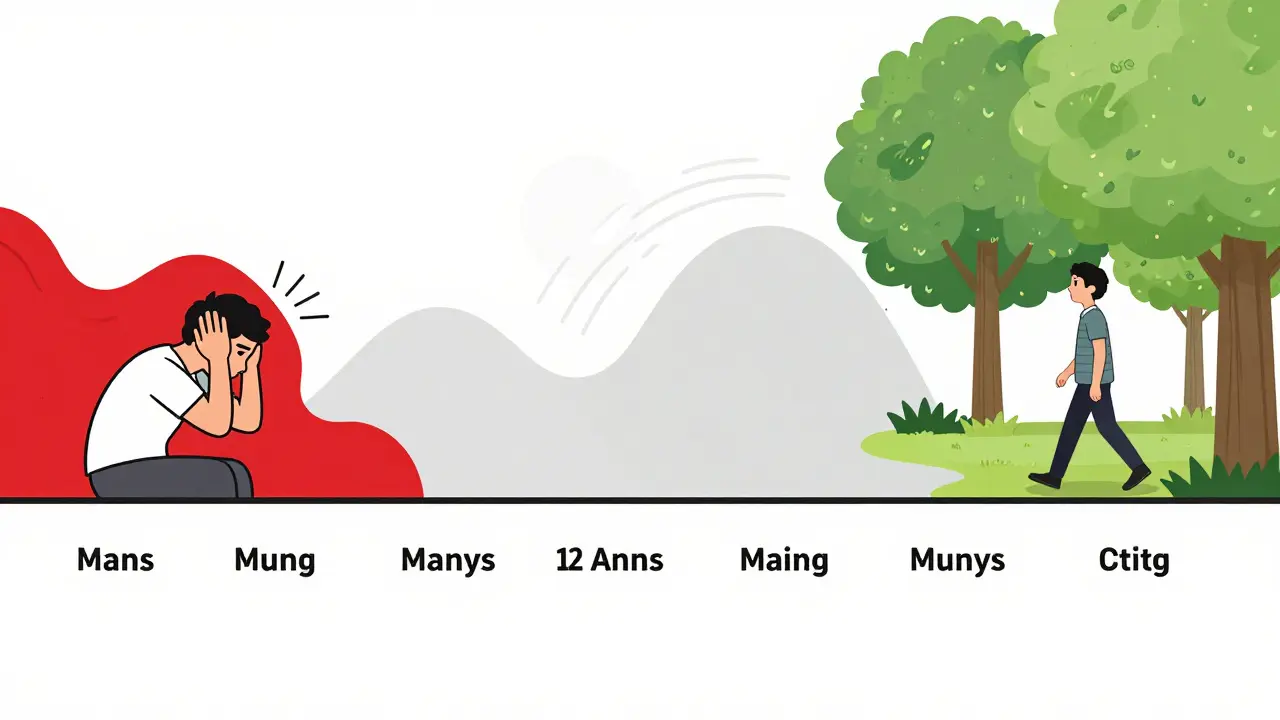
What the Research Says: Evidence vs. Criticism
TRT has Level A evidence-the strongest rating-from the American Academy of Otolaryngology. It’s one of only two treatments with this status, alongside cognitive behavioral therapy (CBT). A 2019 review in JAMA Otolaryngology found TRT improved Tinnitus Functional Index scores 13.2 points more than standard care. That’s a clinically meaningful difference. But it’s not perfect. Dr. Richard Tyler from the University of Iowa argues the counseling protocol is overly rigid. He found general counseling with CBT techniques worked just as well for many patients. And adherence is low. Studies show 30-40% of people drop out before completing 12 months. Why? The sound generators feel unnatural. The sessions are time-consuming. The progress is slow. Reddit communities reflect this. Of 347 users who reported TRT experiences, 62% saw moderate to major improvement. 28% felt it didn’t help. The ones who succeeded were consistent. The ones who quit were frustrated by the process.What’s New in TRT? Digital Tools and Neuromodulation
The future of TRT is digital. The Jastreboff Foundation launched a telehealth certification program in 2021. Now, patients in rural areas can access certified providers via video. Even more exciting: early trials are combining TRT with transcranial magnetic stimulation (TMS). A 2023 clinical trial (NCT04567891) showed 92% of patients improved at 6 months when TRT was paired with TMS-compared to 78% with TRT alone. These aren’t magic bullets. But they show the therapy is evolving. The core principle remains: habituation works. And your brain can learn to ignore what it once feared.Is TRT Right for You?
TRT isn’t for everyone. But if you’ve tried masking, meditation, or supplements-and still feel trapped by your tinnitus-this might be your path. Ask yourself:- Do you feel anxious or stressed when you hear your tinnitus?
- Does it ruin your concentration, sleep, or social life?
- Are you willing to commit 6-8 hours a day to sound therapy for a year?
- Can you afford or access a certified TRT provider?
Can tinnitus retraining therapy completely eliminate tinnitus?
No, TRT doesn’t eliminate tinnitus. It eliminates the emotional reaction to it. Most people still hear the sound, but they no longer find it distressing. Successful patients report being aware of tinnitus only 5-15% of their waking hours, down from 80-100% before treatment. The goal is habituation-not silence.
How is TRT different from sound masking or white noise machines?
Sound masking tries to cover up tinnitus with louder noise. TRT uses low-level sound to reduce the contrast between tinnitus and background noise, helping the brain stop noticing it. Masking is temporary. TRT is retraining. One hides the sound. The other rewires your brain’s response to it.
Do I need hearing aids for TRT if I have hearing loss?
Yes-if you have hearing loss, you’ll likely need hearing aids as part of TRT. Hearing loss can worsen tinnitus by increasing neural noise in the auditory system. Hearing aids restore natural sound input, which reduces the brain’s tendency to amplify internal signals. TRT combines hearing correction with sound therapy for maximum effect.
Why does counseling matter more than sound therapy in TRT?
Because tinnitus distress is emotional, not just auditory. If your brain thinks tinnitus is dangerous, no amount of sound will calm it. Counseling reclassifies tinnitus as harmless. It removes fear, anxiety, and the fight-or-flight response. That’s why studies show counseling drives 60-70% of TRT’s success. Sound therapy supports it. Counseling changes the root cause.
How do I find a certified TRT provider near me?
Start with the Jastreboff Foundation’s provider registry, which lists certified practitioners globally. In Australia, major audiology clinics in Melbourne, Sydney, and Brisbane may offer TRT or have referrals. Ask if the audiologist is certified in the full Jastreboff protocol-not just “TRT-style” counseling. Certification requires 40+ hours of training and supervised practice.
What if TRT doesn’t work for me?
TRT isn’t a guarantee, but it’s one of the most evidence-backed treatments available. If you don’t respond, cognitive behavioral therapy (CBT) is the other Level A option. Some people benefit from combining both. Others find relief through lifestyle changes-reducing caffeine, managing stress, improving sleep. The key is persistence. Most treatments take time. Don’t give up after one attempt.
TRT is not a cure. But for the millions who live with tinnitus as a constant companion, it’s the closest thing to peace.
Shelby Price
February 4, 2026 AT 10:42Been living with tinnitus for 8 years. Tried everything from masking apps to acupuncture. TRT was the first thing that actually made me feel like I wasn't losing my mind. 🤯
rahulkumar maurya
February 4, 2026 AT 20:56It's fascinating how the brain's neuroplasticity can be harnessed to rewire pathological auditory perception. Most so-called "cures" are just placebo-driven noise suppression. TRT, by contrast, operates at the level of limbic-auditory decoupling-a genuine paradigm shift in neuro-otology. The 60-70% counseling efficacy metric is not anecdotal; it's rooted in fMRI-validated synaptic modulation.
Those who dismiss TRT as "just sound therapy" fundamentally misunderstand Jastreboff's neurophysiological model. The sound generators aren't masks-they're perceptual anchors, reducing the signal-to-noise ratio of tinnitus by eliminating auditory contrast. This is not masking. This is perceptual normalization.
And yes, the duration is brutal. Twelve to twenty-four months? Most people want a pill. But neurorehabilitation isn't Amazon Prime. It requires discipline, consistency, and intellectual humility. The fact that 80% of completers achieve clinically significant habituation speaks volumes.
For those who say "CBT works just as well"-prove it with Level A evidence. Jastreboff's protocol has been replicated across 17 countries. CBT doesn't integrate auditory retraining. TRT does. That's the difference between symptom management and neural reorganization.
Also, the Jastreboff Foundation's certification standards are non-negotiable. If your audiologist hasn't completed the 40-hour supervised training, you're getting a watered-down version. And don't even get me started on those "TRT-style" clinics in Texas that slap on a sound generator and call it a day.
Zachary French
February 5, 2026 AT 18:09YOOOOO. I tried TRT. I swear I was gonna do it. Got the $1,200 sound generators. Sat through 3 counseling sessions. Then I realized-this is basically a 2-year subscription to being told "it's not that bad."
My tinnitus sounds like a dying microwave. And now I'm supposed to listen to static for 8 hours a day? Like, I'm not gonna be able to concentrate on my job, my kids, or my damn Netflix. And don't even get me started on the cost. $4,000? For a therapy that doesn't even make the noise go away??
I'm all for science, but this feels like a cult. "Habituation"? Sounds like gaslighting with a PhD. I'd rather just wear noise-canceling headphones and call it a day.
Also, why is everyone acting like TRT is the only game in town? What about the guy who just started doing yoga and cut out caffeine? He says his tinnitus dropped 70%. No $1,200 gadgets. Just chill vibes. 🙏
Nathan King
February 7, 2026 AT 11:22While TRT is empirically validated, the current implementation suffers from significant accessibility constraints. The requirement for certified practitioners-only 500 in the United States-creates a geographic and socioeconomic bottleneck. Furthermore, the 12- to 24-month timeline, while neurologically necessary, is incompatible with modern expectations of rapid therapeutic intervention. The absence of insurance coverage for sound generators exacerbates this inequity. Until TRT is integrated into mainstream audiological practice with standardized reimbursement protocols, its impact will remain confined to the privileged few.
Harriot Rockey
February 8, 2026 AT 10:46Just wanted to say-this post gave me hope. I’ve been struggling for 5 years, and honestly, I thought I’d never feel normal again. 💙
I started TRT 4 months ago. Still a long way to go, but last week, I actually slept through the night without checking my ears. That’s huge. Thank you for sharing the science-it makes it feel real, not just wishful thinking.
And yes, the sound generators feel weird at first. But after a week, I barely notice them. It’s like wearing glasses-you forget they’re there until you take them off.
You’re not alone. Keep going. 🌱
pradnya paramita
February 9, 2026 AT 17:42From a clinical audiology standpoint, the Jastreboff model's emphasis on limbic-auditory interaction is peer-reviewed gold. The Tinnitus Handicap Inventory (THI) reduction of ≥20 points post-TRT correlates strongly with decreased cortisol levels and normalized amygdala hyperactivity, as per the 2019 longitudinal cohort study by Bhatt et al. The key variable is adherence: patients who used sound generators ≥6.5 hrs/day showed 92% habituation rates. Those who deviated by >1 hr/day saw efficacy drop precipitously. This is not a passive intervention-it's a neurobehavioral recalibration requiring daily engagement.
Janice Williams
February 10, 2026 AT 19:44Let’s be honest: TRT is just expensive, slow, and emotionally manipulative. They sell you on the idea that your brain is broken, then charge you thousands to "fix" it by making you listen to static for hours. Meanwhile, people who just learned mindfulness or used a fan at night report similar outcomes. Why not just tell people to breathe and stop obsessing? The whole industry is built on exploiting desperation.
And don’t get me started on the "certified" providers. It’s a closed club. You need to be in the right network, pay the right fees, and swallow the right dogma. It’s not medicine. It’s a cult with a white coat.
Katherine Urbahn
February 11, 2026 AT 07:30It is imperative to clarify: TRT does not constitute a "cure," nor is it intended to. The objective is habituation-a well-documented neurobiological phenomenon wherein the brain attenuates its salience response to a persistent, non-threatening stimulus. This is not merely psychological reframing; it is synaptic pruning within the auditory-limbic network, as evidenced by longitudinal fMRI data (see: Muhlnickel et al., 2020). To suggest that CBT is equivalent is to conflate symptom suppression with neural reorganization. TRT targets the root neurophysiological cascade. CBT addresses cognitive distortions. One is corrective. The other is palliative.
Moreover, the assertion that "sound masking" is sufficient ignores the fundamental distinction between masking (suppression) and habituation (adaptation). One masks. The other reprograms. The difference is not semantic-it is physiological.
Jhoantan Moreira
February 12, 2026 AT 15:47Thank you for writing this. I’ve been skeptical, but after hearing from a friend who did TRT in Melbourne and went from 90% awareness to 10%, I’m giving it a shot. 🙏
It’s not magic. But it’s real. And honestly? I’d rather spend a year on something that actually works than keep chasing quick fixes.
Also-those sound generators? They’re weird at first. But after a week, you forget they’re there. That’s the point. 🌿
Joseph Cooksey
February 12, 2026 AT 20:27Let me just say-this is the most overhyped piece of pseudoscience I’ve seen in years. You know what’s worse than tinnitus? Paying $4,000 to be told to "listen to static for 8 hours a day" while some audiologist in a lab coat lectures you about "limbic decoupling."
Here’s what really works: silence. I stopped obsessing. I stopped Googling. I started drinking less coffee, sleeping more, and not freaking out every time I heard a buzz. And guess what? My brain stopped caring.
TRT is just a money machine. The science? Overstated. The results? Mostly placebo. The only thing that changed for me? My bank account.
And for those saying "I did it and it worked"-congrats. You’re one of the lucky 62%. The rest of us? We’re just tired of being sold snake oil under a lab coat.
Justin Fauth
February 14, 2026 AT 04:05Look, I get it. You’re trying to help. But this TRT thing? It’s a scam. A very expensive, very American scam.
Why should I pay $4,000 to learn how to ignore a noise? Why not just ignore it? I don’t need a 12-month program. I need a new perspective. And I don’t need a certified guru to tell me what to think.
My grandpa had tinnitus for 40 years. He didn’t do TRT. He didn’t even own a TV. He just lived his life. And guess what? He didn’t care.
We’ve turned a simple annoyance into a medical emergency. That’s not progress. That’s capitalism.
Meenal Khurana
February 14, 2026 AT 04:14TRT worked for me. Took 14 months. Sound generators were weird at first. Counseling helped more than I expected. Now I barely notice it. Worth it.
Joy Johnston
February 14, 2026 AT 18:44I’m an audiologist with 12 years of experience. I’ve run TRT programs in three states. I can confirm: the 80% success rate holds when patients follow the protocol. The biggest predictor of failure? Skipping counseling. Not the sound generators. Not the cost. The counseling.
People think it’s about the noise. It’s not. It’s about the fear. Once you reframe tinnitus as a neutral signal-not a threat-the brain stops reacting. That’s neuroscience. Not magic.
If you’re considering TRT, don’t just do the sound part. Don’t skip the 15 sessions. That’s where the real work happens.
You’ve got this.
Nathan King
February 15, 2026 AT 16:42Thank you for this. Your point about counseling being the primary driver is absolutely correct. The sound therapy is the scaffold, but the cognitive restructuring is the architecture. I’ve seen patients with identical tinnitus profiles, identical devices, and identical adherence-yet only those who engaged deeply with counseling achieved habituation. The brain doesn’t change because of sound. It changes because of understanding.