
Tinnitus and Ringing in the Ears from Medications: What to Know
 Jan, 28 2026
Medication Tinnitus Risk Calculator
Medication Tinnitus Risk Assessment
Identify if your medications might be causing tinnitus and assess your risk level.
Risk Assessment Results
Many people notice a ringing, buzzing, or hissing in their ears and immediately worry it’s something serious. But sometimes, the culprit isn’t aging, noise exposure, or stress-it’s a medication you’re taking. Tinnitus caused by drugs is more common than most people realize, and it’s often reversible-if you catch it early.
What Exactly Is Medication-Induced Tinnitus?
Tinnitus isn’t a disease. It’s a symptom: your brain hears sound when no external noise is present. When it’s caused by medication, it’s called ototoxicity. This means a drug is damaging the inner ear or the nerve that connects it to your brain. The result? Ringing, roaring, clicking, or even a high-pitched tone that won’t go away. Over 600 prescription and over-the-counter drugs are known to trigger or worsen tinnitus, according to Sound Relief’s 2025 review. These include common pills you might take for headaches, infections, depression, or even acne. The damage can be temporary or permanent, depending on the drug, dose, and how long you’ve been taking it.Which Medications Are Most Likely to Cause Ringing in the Ears?
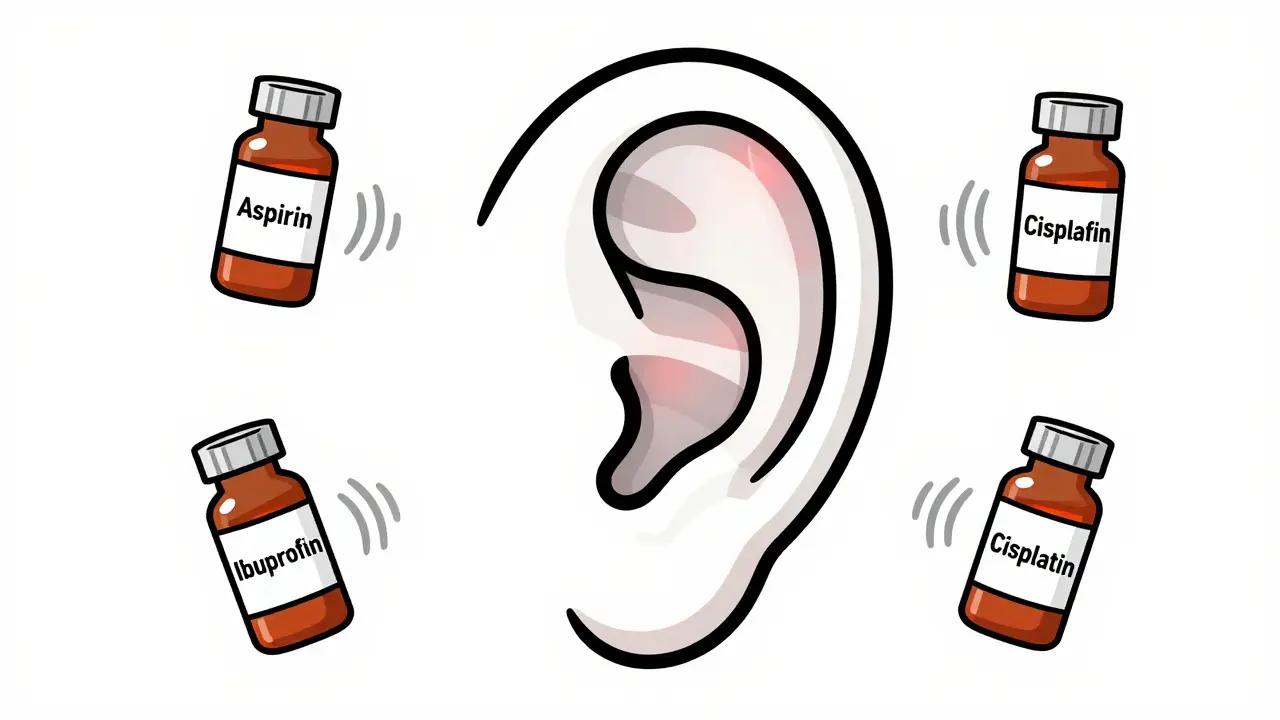
Not all drugs carry the same risk. Some are high-risk, others rare. Here’s what the evidence shows:- High-dose aspirin (over 4,000 mg daily) can cause tinnitus in about 15% of users. But don’t panic-regular headache doses (325-650 mg) almost never cause it. The Tinnitus Organization UK says only a tiny fraction of people react to low doses.
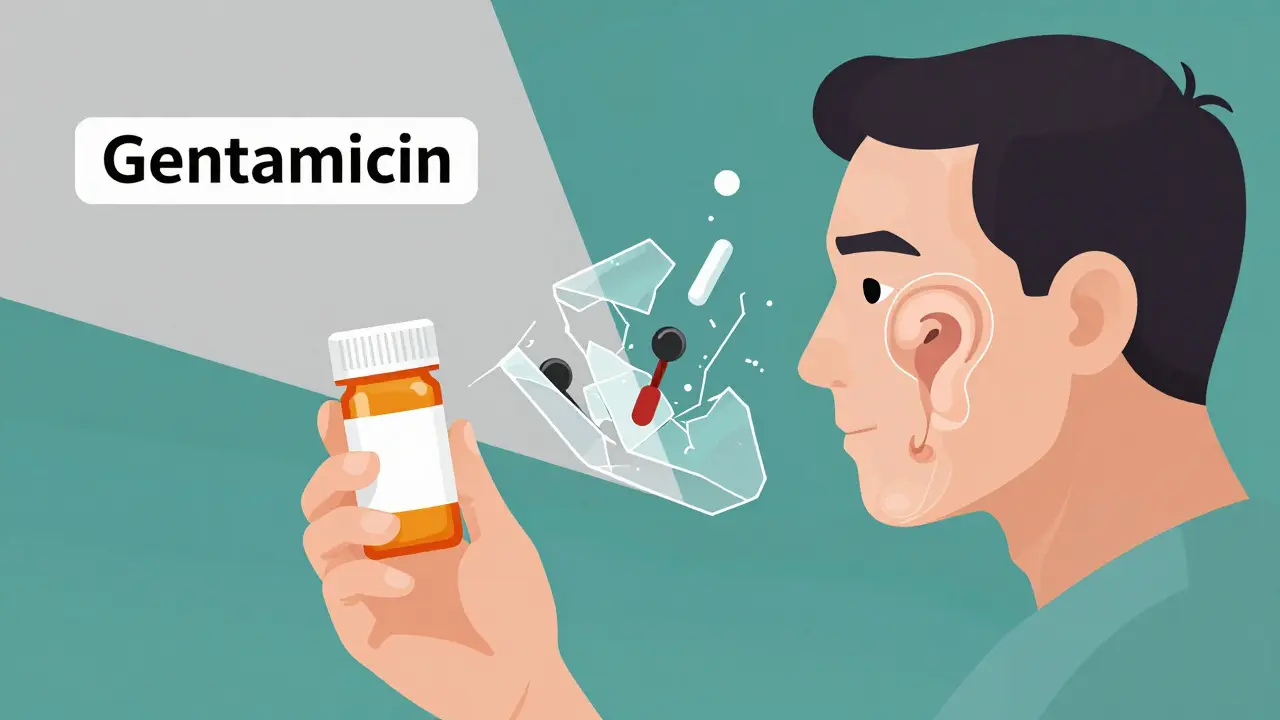
- Aminoglycoside antibiotics like gentamicin and tobramycin are among the worst offenders. Used for serious infections, they can cause permanent hearing loss in up to 25% of patients on long-term IV treatment. Topical versions (ear or skin drops) are much safer.
- Cisplatin and other chemotherapy drugs damage hearing in 30-70% of patients. The damage often starts with high-frequency hearing loss, which can later affect speech. This is why oncologists often check hearing before and during treatment.
- Loop diuretics like furosemide (Lasix), used for heart failure or fluid retention, can cause temporary tinnitus and hearing loss, especially with high doses or kidney problems.
- NSAIDs like ibuprofen and naproxen may cause ringing when taken in large amounts-like 800 mg three times a day for several days. Many people report symptoms starting within 48 hours, but it usually goes away after stopping the drug.
- Isotretinoin (Accutane), used for severe acne, is linked to tinnitus in about 5% of users, though the manufacturer reports less than 1%. If you notice ringing after starting this drug, talk to your dermatologist.
- Antidepressants like sertraline (Zoloft) and fluoxetine (Prozac) are rarely the cause. Less than 1% of users report tinnitus. But some people notice ringing when they stop taking them, not when they start.
- Benzodiazepines like Xanax or Valium are linked to tinnitus mostly after long-term use (6+ months). Stopping them suddenly can also trigger ringing.
Why Do Some Drugs Damage Your Ears?
The exact reason isn’t fully understood. But researchers believe ototoxic drugs interfere with the delicate hair cells in your inner ear that turn sound into electrical signals. They may also disrupt the balance of fluids or chemicals in the cochlea, or mess with the auditory nerve’s ability to send signals to your brain. Some drugs, like aspirin, seem to temporarily change how these cells function-like a glitch you can undo by stopping the drug. Others, like cisplatin or gentamicin, actually kill the cells. Once those hair cells die, they don’t grow back. That’s why the damage from those drugs can be permanent.How Fast Does Tinnitus Show Up After Starting a Drug?
Timing varies. For many, symptoms appear within days:- Aspirin or NSAIDs: 1-3 days
- Quinine (for malaria): 24-72 hours
- Loop diuretics: Within hours to a few days
- Aminoglycosides: Often within a week, but can be delayed
- Chemotherapy: May take weeks or months to show up
- Antidepressants: Sometimes only after stopping the drug
Is the Tinnitus Permanent?
It depends. About 60% of medication-induced tinnitus cases are reversible. That means if you stop the drug, the ringing fades. But not all drugs are created equal:- Reversible: Aspirin, NSAIDs, diuretics, some antidepressants (if caught early)
- Often permanent: Aminoglycosides, cisplatin, high-dose quinine
What Should You Do If You Notice Ringing?
Don’t stop your medication on your own. That’s the most important rule. Stopping a drug suddenly-especially antibiotics, antidepressants, or blood pressure meds-can be dangerous. Instead:- Write down when the ringing started and what meds you’re taking.
- Check the dosage. Are you on the highest possible dose? Could it be lowered?
- Call your doctor. Say: “I’ve started ringing in my ears since I began [drug name]. Can we look at alternatives?”
- Switch you to a different drug with less ototoxic risk
- Lower your dose
- Order a hearing test to check for damage
- Monitor your kidney function (many ototoxic drugs are cleared through the kidneys)
Can You Prevent Medication-Induced Tinnitus?
Yes, to some extent. Here’s how:- Ask your doctor: “Does this drug carry a risk of hearing damage?” before starting any new prescription.
- If you’re on a high-risk drug (like cisplatin or gentamicin), request a baseline hearing test before treatment begins.
- Get follow-up hearing checks during treatment-especially if you’re on IV antibiotics or chemo.
- Don’t take more than the recommended dose of NSAIDs or aspirin.
- Report any changes in hearing, balance, or ringing immediately. Don’t wait.
What If You Can’t Stop the Medication?
Sometimes, the drug you need is also the one causing the ringing. For example, someone with life-threatening infection might need gentamicin. Or a cancer patient might need cisplatin. In those cases, managing the tinnitus becomes the goal-not eliminating the cause. Sound therapy (like white noise machines or hearing aids with tinnitus masking) helps about 60-70% of people cope better. Cognitive behavioral therapy (CBT) is also effective at reducing the emotional distress tied to tinnitus. These don’t cure the ringing, but they make it less noticeable and less upsetting. Many people learn to live with it-even if it doesn’t fully disappear.Why Isn’t This Better Known?
A 2022 survey found only 35% of primary care doctors routinely check for ototoxicity risk before prescribing high-risk drugs. Most patients aren’t warned. Pharmacists often don’t mention it either. That’s changing slowly. The FDA now requires stronger warning labels on aminoglycosides. Hospitals are starting to use therapeutic drug monitoring-checking blood levels of drugs like gentamicin to avoid overdose. Research is also moving forward. The NIH is funding studies on drugs that might protect the ear during chemo. Genetic tests are being developed to find people who are extra sensitive to ototoxic drugs. But for now, the best defense is you: knowing the risks, asking questions, and speaking up when something feels off.Bottom Line
Tinnitus from medication isn’t rare. It’s often overlooked. But it’s also often treatable-if you act fast. If you’ve noticed new ringing, buzzing, or hearing changes after starting a new drug, don’t ignore it. Don’t assume it’s just stress. Don’t stop the medicine yourself. Talk to your doctor. Get your hearing checked. Ask if there’s a safer alternative. Most of the time, the answer is yes.Can aspirin cause ringing in the ears?
Yes, but only at very high doses-typically above 4,000 mg per day. That’s far more than the 325-650 mg used for headaches or heart health. At normal doses, aspirin rarely causes tinnitus. Only a tiny number of people are unusually sensitive and may hear ringing even at low doses.
Is tinnitus from medication permanent?
It can be, but it’s often not. About 60% of cases improve or disappear after stopping the drug. Drugs like aspirin, NSAIDs, and diuretics usually cause temporary ringing. But aminoglycoside antibiotics and chemotherapy drugs like cisplatin can cause permanent damage, especially with long-term use or high doses.
Which antidepressants are linked to tinnitus?
Tinnitus is a rare side effect of antidepressants, affecting less than 1% of users. Some reports link sertraline (Zoloft) and fluoxetine (Prozac) to tinnitus, particularly when stopping the drug-not when starting it. Other SSRIs and SNRIs have very low risk. If you notice ringing, talk to your doctor before making any changes.
Can ibuprofen cause ringing in the ears?
Yes, especially at high doses-like 800 mg taken three times a day for several days. Many people report ringing starting within 48 hours. The good news? It usually goes away within a week after stopping the drug. Regular doses (200-400 mg) for occasional pain are unlikely to cause it.
Should I stop my medication if I get tinnitus?
No. Never stop a prescribed medication without talking to your doctor. Stopping suddenly can be dangerous-especially with antibiotics, antidepressants, or blood pressure drugs. Instead, note when the ringing started, list all your meds, and call your doctor. They can help you decide if a switch or dose change is safe.
How can I protect my hearing while on ototoxic drugs?
Ask your doctor for a baseline hearing test before starting high-risk drugs like cisplatin or gentamicin. Request follow-up tests during treatment. Avoid loud noise, which can make ototoxic damage worse. Never exceed the recommended dose of NSAIDs or aspirin. Report any hearing changes immediately-early action can prevent permanent loss.
paul walker
January 29, 2026 AT 18:08Just started taking ibuprofen for my back and now my ears are buzzing like a damn bee hive. Took me 3 days to connect the dots. Stopped it yesterday and the ringing’s already fading. Don’t ignore this stuff, folks. Your ears aren’t replaceable.
Also, why do doctors never mention this? I’ve been on NSAIDs for years and no one ever said ‘hey this might turn your head into a speaker’.
Frank Declemij
January 30, 2026 AT 22:11Aspirin at therapeutic doses does not cause tinnitus in the vast majority of cases. The 4000 mg threshold is well documented in otology literature. This post correctly distinguishes between high-dose toxicity and common usage. Many online sources conflate the two and create unnecessary panic.
Always consult a pharmacist or audiologist before assuming drug-induced tinnitus. Self-diagnosis is dangerous.
Pawan Kumar
February 1, 2026 AT 18:35Let us not be naive. The pharmaceutical industry has known about ototoxicity for decades. Why are warning labels still buried in 20-page inserts? Why do GPs prescribe these drugs like candy? This is not negligence-it is systematic obfuscation. They profit from your hearing loss. They profit from your cochlear implants. They profit from your tinnitus management apps.
Next time you take a pill, ask: who benefits? The answer is never you.
Keith Oliver
February 3, 2026 AT 14:45LMAO so now aspirin is dangerous? Bro I take 3 of those a day for my headaches and I’ve got the hearing of a bat. You think your ears are gonna go out because of a little NSAID? Nah. You’re just anxious. I’ve had tinnitus since I was 19 and it’s from loud concerts, not your mom’s Tylenol.
Stop Googling symptoms and go outside. Fresh air cures everything.
Jasneet Minhas
February 5, 2026 AT 06:14Wow 🙌 this is such an important post! I’m so glad someone finally broke this down like a real human instead of a medical textbook. 🥹 I started Zoloft last month and my ears started ringing right after I skipped a dose-talk about withdrawal vibes 😅
Thanks for the clarity! I’m booking a hearing test tomorrow. 💯
Megan Brooks
February 5, 2026 AT 14:36It’s fascinating how medicine often treats symptoms without examining causality. Tinnitus is not merely an auditory phenomenon-it is a neurological signal of systemic imbalance. When a drug disrupts the delicate electrochemical milieu of the cochlea, it is not merely a side effect; it is a warning from the body that homeostasis has been breached.
Yet we continue to prescribe aggressively, relying on patient compliance rather than precaution. We have the tools to prevent this. Do we have the will?
Robin Keith
February 7, 2026 AT 05:58Okay, so I’ve been on furosemide for 14 months now, and yes, the ringing started around month 8-but here’s the thing: I’ve been meditating since then, and I’ve noticed that the *perception* of the tinnitus has decreased dramatically, even though the physical stimulus remains. This isn’t just about drugs, it’s about consciousness. The brain is the real culprit here. If you stop obsessing over the noise, it stops obsessing over you. I’ve read 17 books on neuroplasticity and tinnitus retraining therapy, and I can tell you: the cure isn’t in the pill bottle-it’s in the mind.
Also, I think the FDA is in bed with Big Pharma. Have you seen their funding sources? I’ve got spreadsheets.
Sheryl Dhlamini
February 7, 2026 AT 18:55My mom’s on gentamicin right now. She’s 72. I cried when she told me her ears were ringing. I didn’t know it could happen from an antibiotic. I’m calling her doctor tomorrow. Thank you for writing this. I feel less alone now.
And if anyone’s reading this: please, please ask your doctor about hearing tests. It’s not a big deal. It takes 15 minutes. Don’t wait until it’s too late.
Doug Gray
February 9, 2026 AT 12:04OTOTOXICITY: a clinically significant, dose-dependent, and often irreversible auditory insult mediated by mitochondrial dysfunction in outer hair cells. The pathophysiology is well-documented in the Journal of Otology (2023).
That said, I’m not sure why this is even a conversation. We live in a world where people think ibuprofen is ‘natural’ because it’s ‘plant-derived.’
Also, I’ve been told my tinnitus is from stress. I don’t stress. I’m just… aware. 😌
Kristie Horst
February 10, 2026 AT 07:27How lovely that we now have a comprehensive, evidence-based overview of medication-induced tinnitus-complete with actionable steps, risk stratification, and patient empowerment strategies.
It’s a shame this level of clarity is so rare in mainstream health communication. Thank you for not treating readers like children or criminals. You’ve done the work. Now let’s make sure your doctor reads it too.
LOUIS YOUANES
February 11, 2026 AT 07:13I’ve had tinnitus for 12 years. I’ve tried everything: acupuncture, binaural beats, silence chambers, no caffeine, no alcohol, no screens, no thoughts. Nothing works. The drugs didn’t cause it. My soul did.
Also, I don’t trust doctors. They’re all on the payroll.