
Varenicline: What It Is, How It Works, and What You Need to Know
When you’re trying to quit smoking, varenicline, a prescription medication designed to help people stop smoking by targeting nicotine receptors in the brain. Also known as Chantix, it doesn’t just mask cravings—it rewires how your brain responds to nicotine. Unlike nicotine patches or gum, varenicline doesn’t replace nicotine. Instead, it gently blocks the high you get from cigarettes while slowly reducing the urge to smoke. This dual action is why it’s one of the most effective tools doctors recommend for long-term quit success.
It works by attaching to the same brain receptors that nicotine targets, but with less intensity. That means when you do smoke while on varenicline, you don’t get the usual rush—making cigarettes feel boring or even unpleasant. At the same time, it gives your brain just enough stimulation to avoid the worst of withdrawal. People who’ve used it report fewer mood swings, less irritability, and a real drop in the constant mental pull to light up. But it’s not magic. It works best when paired with real behavioral changes—like avoiding triggers, finding new routines, or getting support from a counselor or app.
It’s not for everyone. If you’ve had depression, anxiety, or suicidal thoughts in the past, your doctor will need to monitor you closely. Some people report changes in mood or sleep, and while serious side effects are rare, they’re real. That’s why you never start varenicline without a plan. Most people begin taking it a week before their quit date, letting it build up in their system. The full course usually lasts 12 weeks, with an option to extend if you’re doing well.
You’ll find posts here that dig into how varenicline fits into real-life quit journeys—how it interacts with other meds, what to do if you slip up, and why some people succeed while others don’t. There are stories from people who used it alongside therapy, others who combined it with exercise, and even one about how it affected sleep in older adults trying to quit. You’ll also see how it compares to other options like bupropion or nicotine replacement, and why timing matters more than you think.
What makes varenicline different isn’t just the science—it’s the fact that it gives you back control. Not by force, not by willpower alone, but by quietly changing the rules your brain has been playing by for years. If you’ve tried quitting before and felt like your body was working against you, varenicline might be the missing piece. The posts below don’t just explain how it works—they show you how to use it right, avoid common mistakes, and stay on track when things get tough.
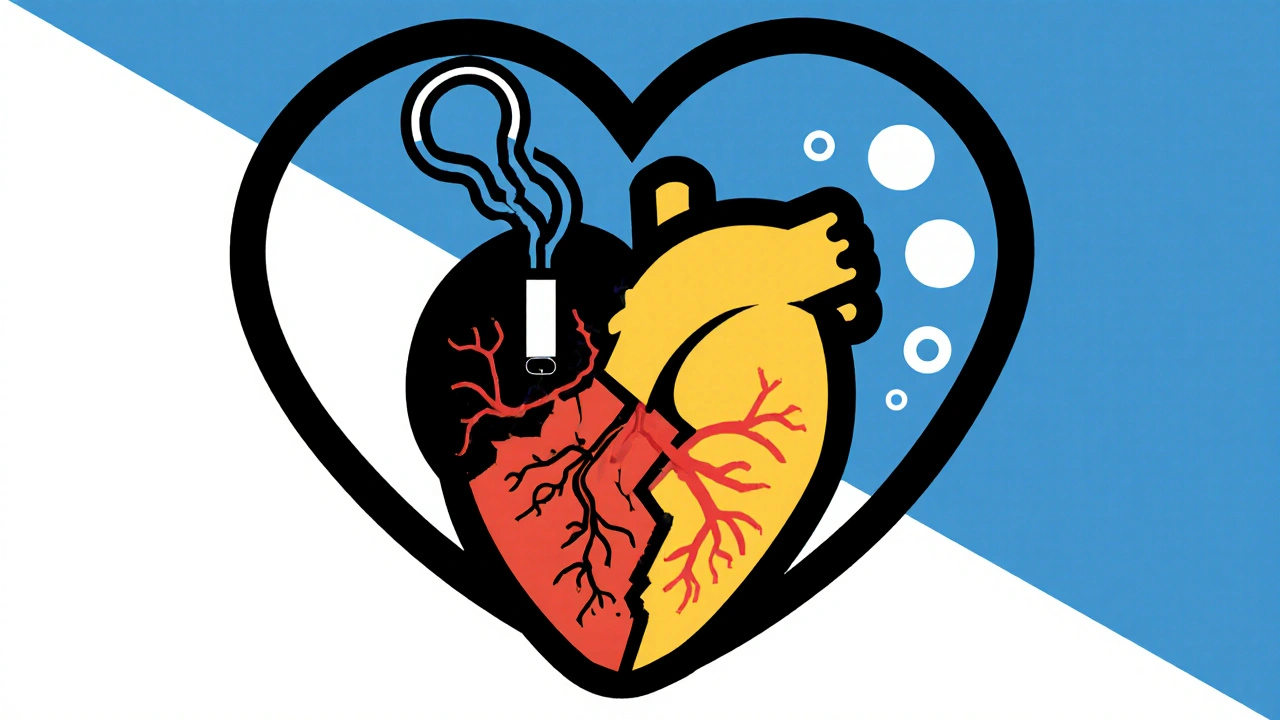
Smoking and Heart Disease: Proven Cessation Strategies That Save Lives
- Nov, 12 2025
- 12
Quitting smoking is the most effective way to reduce heart disease risk. Learn the proven strategies-medications, counseling, and timelines-that can cut your heart attack risk in half within a year.
Categories
- Health and Medicine (78)
- Health and Wellness (57)
- Medicine (37)
- Women's Health (11)
- Mental Health (10)
- Men's Health (7)
- Beauty and Wellness (4)
- Health Information (4)
Archives
- April 2026 (3)
- March 2026 (11)
- February 2026 (11)
- January 2026 (25)
- December 2025 (28)
- November 2025 (25)
- October 2025 (27)
- September 2025 (14)
- August 2025 (3)
- July 2025 (2)
- June 2025 (2)
- May 2025 (3)
- online pharmacy
- medication safety
- generic drugs
- dietary supplement
- health benefits
- dietary supplements
- prevention
- fertility
- online pharmacy Australia
- side effects
- QT prolongation
- medication side effects
- diabetes medications
- GLP-1 agonists
- nocebo effect
- brand vs generic
- treatment
- treatment options
- benefits
- connection