
State Drug Laws: What You Need to Know About Prescription Rules and Penalties
When it comes to state drug laws, the legal rules that govern how medications are prescribed, dispensed, and monitored within each U.S. state. Also known as pharmaceutical regulations, these laws determine everything from who can write a prescription to what happens if you share your pills with a friend. Unlike federal rules, which set the baseline, state drug laws can be stricter—or sometimes looser—depending on where you live. That means a medication you can get over the counter in one state might need a special permit in another.
These laws aren’t just about control—they’re about safety. controlled substances, drugs with a high risk of abuse or dependence, like opioids, benzodiazepines, and stimulants are tracked through state prescription monitoring programs (PMPs). Doctors must check these databases before writing a new script to avoid dangerous overlaps. Meanwhile, pharmacy laws, the rules pharmacies must follow when filling prescriptions vary in how they handle refills, substitutions, and patient counseling. In some states, pharmacists can refuse to fill a script on moral grounds. In others, they’re required to explain side effects in plain language.
State drug laws also shape how patients manage chronic conditions. For example, if you’re on long-term pain meds, your state might require monthly visits to your doctor or limit how many pills you can get at once. If you’re a caregiver for an elderly relative, you might run into rules about who can pick up prescriptions or how to store opioids safely at home. Even something as simple as bringing your medication across state lines can get tricky—some states treat possession of certain pills without a valid prescription as a felony, even if it’s legal where you got it.
These rules aren’t just paperwork. They’re tied to real consequences. Overprescribing, pharmacy errors, or even sharing medication can lead to fines, license suspension, or jail time. That’s why the posts below cover practical issues like how to avoid drug interactions under strict state rules, what to do if your insurance denies a state-mandated step therapy, or how to legally transport medications while traveling. You’ll find guides on geriatric safety, antibiotic stewardship, and how to handle prescriptions during pregnancy—all shaped by the legal landscape you’re in.
Whether you’re a patient, caregiver, or just trying to understand why your doctor won’t refill your script, knowing your state’s drug laws isn’t optional—it’s essential. Below, you’ll find real-world advice from people who’ve navigated these rules, made mistakes, and learned how to stay safe without breaking the law.
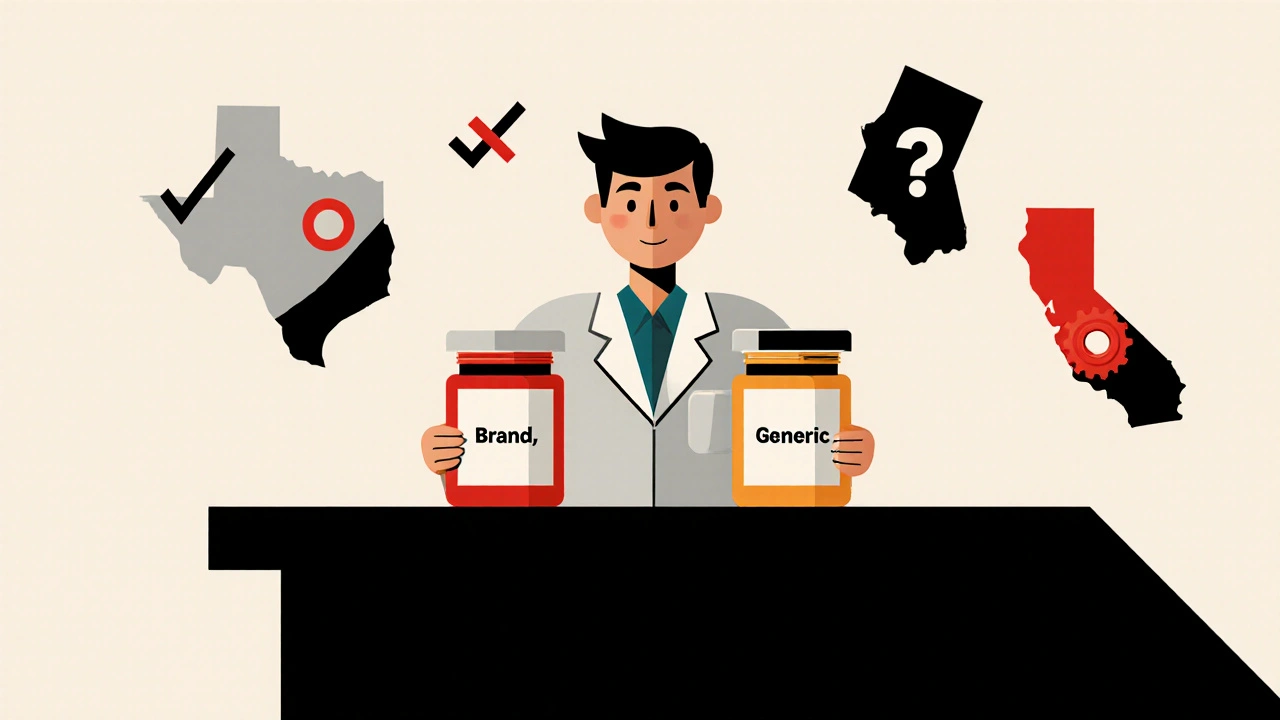
State Laws on Generic Drug Substitution: What Pharmacists and Patients Need to Know
- Nov, 17 2025
- 15
State laws on generic drug substitution vary widely across the U.S., affecting how pharmacists swap brand-name drugs for cheaper generics. Know your rights, your state’s rules, and when substitution could impact your health.
Categories
- Health and Medicine (78)
- Health and Wellness (57)
- Medicine (37)
- Women's Health (11)
- Mental Health (10)
- Men's Health (7)
- Beauty and Wellness (4)
- Health Information (4)
Archives
- April 2026 (3)
- March 2026 (11)
- February 2026 (11)
- January 2026 (25)
- December 2025 (28)
- November 2025 (25)
- October 2025 (27)
- September 2025 (14)
- August 2025 (3)
- July 2025 (2)
- June 2025 (2)
- May 2025 (3)
- online pharmacy
- medication safety
- generic drugs
- dietary supplement
- health benefits
- dietary supplements
- prevention
- fertility
- online pharmacy Australia
- side effects
- QT prolongation
- medication side effects
- diabetes medications
- GLP-1 agonists
- nocebo effect
- brand vs generic
- treatment
- treatment options
- benefits
- connection