
School Health: What Every Parent and Teacher Needs to Know About Medications, Allergies, and Student Safety
When we talk about school health, the system of policies, practices, and resources that keep students safe and healthy during the school day. Also known as educational health services, it's not just about checking temperatures or handing out cough drops—it's about managing real medical risks that can turn dangerous in minutes. Think about it: a child with a peanut allergy could go into anaphylaxis during lunch. A kid on ADHD meds might need a dose at noon. A teenager with diabetes could have a low blood sugar episode in math class. These aren’t hypotheticals—they happen every day in schools across the country.
Epinephrine auto-injector, a handheld device that delivers a life-saving dose of epinephrine during severe allergic reactions. Also known as EpiPen, it’s one of the most critical tools in school health. But having the device isn’t enough. Training matters. Teachers, aides, and even older students need to know how to use it correctly. Studies show that up to 40% of epinephrine auto-injector uses in schools fail because of incorrect technique. That’s why clear protocols and regular drills aren’t optional—they’re non-negotiable. And it’s not just allergies. Medication safety in schools, the process of ensuring students receive the right drug, at the right dose, at the right time, without harmful interactions or errors. Also known as school-based medication management, it’s a quiet but vital part of daily operations. From asthma inhalers to insulin pumps, schools are now de facto pharmacies. But without clear labeling, trained staff, and communication between parents and nurses, mistakes happen. A child taking antibiotics and an antacid at the same time? That could mean the treatment fails. A student with depression on antidepressants? That’s where understanding side effects and monitoring becomes part of the school’s responsibility. Then there’s health literacy, the ability to understand and act on health information, like reading pill labels or following dosing instructions. Also known as medication comprehension, it’s the foundation for everything else. If a parent can’t read the label on their child’s medicine, or a teenager doesn’t know why they’re taking a drug, safety falls apart. Simple tools like the Universal Medication Schedule or pictograms can fix that—but only if schools use them consistently.
What you’ll find in the posts below isn’t theory. It’s real-world guidance from people who’ve seen the consequences of gaps in school health. From how to prevent mupirocin resistance in kids with MRSA to why St. John’s Wort can interfere with school medications, these posts cut through the noise. You’ll learn what actually works when a child has auditory processing issues in class, how to talk to a pharmacist about drug interactions affecting teens, and why geriatric safety principles sometimes apply to older students too. This isn’t about checking boxes. It’s about keeping kids alive, learning, and growing—every single day.
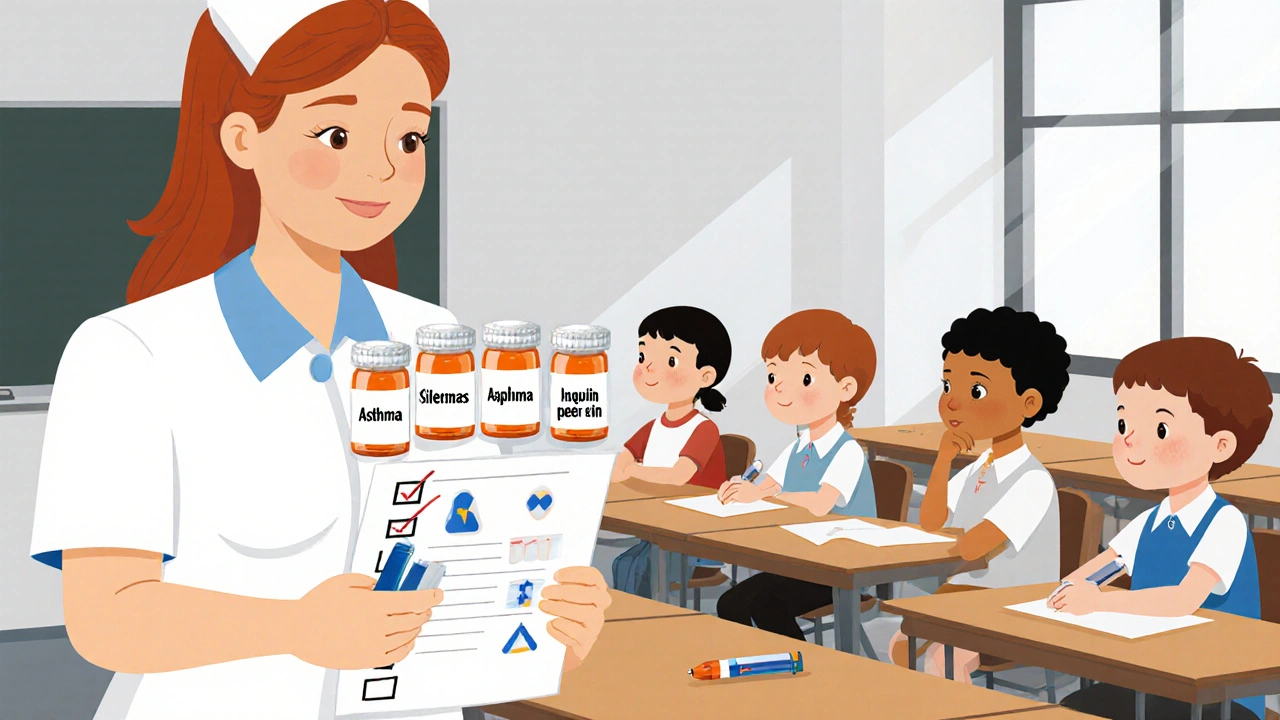
How to Coordinate School Nurses for Daily Pediatric Medications
- Nov, 25 2025
- 12
Learn how school nurses safely coordinate daily pediatric medications using the Five Rights, legal guidelines, and proven protocols to prevent errors and ensure student safety.
Categories
- Health and Medicine (75)
- Health and Wellness (57)
- Medicine (37)
- Women's Health (11)
- Mental Health (10)
- Men's Health (7)
- Beauty and Wellness (4)
- Health Information (4)
Archives
- March 2026 (11)
- February 2026 (11)
- January 2026 (25)
- December 2025 (28)
- November 2025 (25)
- October 2025 (27)
- September 2025 (14)
- August 2025 (3)
- July 2025 (2)
- June 2025 (2)
- May 2025 (3)
- April 2025 (4)
- online pharmacy
- medication safety
- generic drugs
- dietary supplement
- health benefits
- dietary supplements
- prevention
- fertility
- online pharmacy Australia
- side effects
- QT prolongation
- medication side effects
- diabetes medications
- GLP-1 agonists
- nocebo effect
- brand vs generic
- treatment
- treatment options
- benefits
- connection