
Quitting Smoking: What Works, What Doesn't, and How Medications Help
When you decide to quit quitting smoking, the process of stopping tobacco use to improve health and reduce disease risk. Also known as smoking cessation, it’s not just about willpower—it’s a medical event that changes your brain chemistry, your body’s response to stress, and even your sleep patterns. Most people try to quit cold turkey, and most fail. Why? Because nicotine is a powerful drug, and your body has learned to depend on it. The craving isn’t just mental—it’s physical, and it lasts longer than most people expect.
That’s where nicotine replacement, products like patches, gum, or lozenges that deliver controlled doses of nicotine without smoke come in. They don’t cure addiction, but they take the edge off withdrawal: headaches, irritability, trouble sleeping. Studies show people using nicotine replacement are twice as likely to stay quit after six months compared to those who go it alone. But it’s not the only option. varenicline, a prescription pill that blocks nicotine receptors in the brain to reduce cravings and withdrawal works differently. It doesn’t give you nicotine—it tricks your brain into thinking it’s getting some, without the high. And then there’s bupropion, an antidepressant that also reduces nicotine cravings and is approved for smoking cessation. It’s not for everyone, especially if you have seizures or an eating disorder, but for many, it’s a game-changer.
What no one tells you is that timing matters. Taking these meds too late—after you’ve already started craving cigarettes—is like locking the barn after the horse is gone. The best results come when you start the medication one to two weeks before your quit date. That way, your brain adjusts before the real test begins. And yes, side effects happen. Nausea with varenicline, dry mouth with bupropion. But they usually fade within a week. Most people who stick with the plan for just 12 weeks end up quitting for good.
There’s no magic pill, but there are proven tools. And the good news? You don’t have to pick just one. Combining medication with support—whether from a counselor, an app, or even a friend who’s also quitting—doubles your chances. The posts below cover exactly that: real stories, medication guides, what to expect when you stop, and how to avoid the most common mistakes that lead to relapse. You’re not alone in this. And you don’t have to figure it out by trial and error.
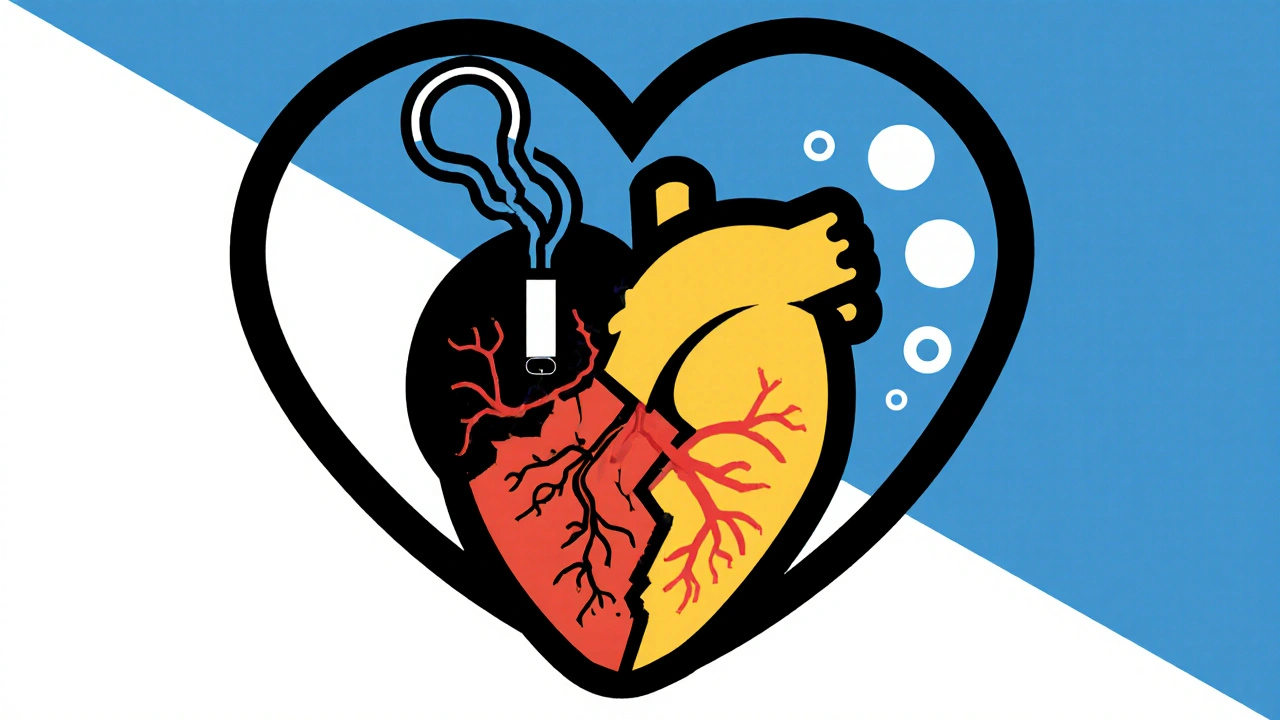
Smoking and Heart Disease: Proven Cessation Strategies That Save Lives
- Nov, 12 2025
- 12
Quitting smoking is the most effective way to reduce heart disease risk. Learn the proven strategies-medications, counseling, and timelines-that can cut your heart attack risk in half within a year.
Categories
- Health and Medicine (78)
- Health and Wellness (57)
- Medicine (37)
- Women's Health (11)
- Mental Health (10)
- Men's Health (7)
- Beauty and Wellness (4)
- Health Information (4)
Archives
- April 2026 (3)
- March 2026 (11)
- February 2026 (11)
- January 2026 (25)
- December 2025 (28)
- November 2025 (25)
- October 2025 (27)
- September 2025 (14)
- August 2025 (3)
- July 2025 (2)
- June 2025 (2)
- May 2025 (3)
- online pharmacy
- medication safety
- generic drugs
- dietary supplement
- health benefits
- dietary supplements
- prevention
- fertility
- online pharmacy Australia
- side effects
- QT prolongation
- medication side effects
- diabetes medications
- GLP-1 agonists
- nocebo effect
- brand vs generic
- treatment
- treatment options
- benefits
- connection