
Pump and dump: What It Is and How It Affects Medication Safety
When people talk about pump and dump, a practice where breast milk is expressed and discarded to reduce drug concentration in breast milk. Also known as milk expression and disposal, it's often used by nursing mothers taking medications that could pass into breast milk. But this isn’t just about breastfeeding—it’s part of a bigger picture around how drugs move through the body, how they’re cleared, and when timing matters for safety.
Drugs don’t stay in your system forever. They get absorbed, distributed, metabolized, and then excreted—this is called pharmacokinetics, how the body handles a drug over time. For some medications, waiting a few hours after taking a dose lets your body clear enough of the drug so that less passes into breast milk. That’s where pump and dump comes in. But here’s the catch: it doesn’t work for every drug. For example, if a medication builds up slowly in your bloodstream or takes days to clear, dumping milk won’t make a meaningful difference. On the other hand, for drugs like certain antibiotics or pain relievers that peak quickly and clear fast, timing your pumping around your dose can reduce exposure without stopping breastfeeding entirely.
What’s often missed is that drug interactions, when one medication changes how another behaves in the body can make pump and dump less effective—or even unnecessary. Take antacids and antibiotics: if you’re taking doxycycline and Tums together, the antacid blocks absorption, which changes how much even gets into your blood to begin with. Same goes for caffeine and warfarin—what you drink affects how your meds work. So before you start dumping milk, ask: Is the drug even getting into your system in a way that matters for your baby? Is there a safer alternative? Could you just delay feeding by a few hours instead?
Some moms think pump and dump is a universal fix. It’s not. For drugs like SSRIs or thyroid meds, which stay in your system for days, dumping milk won’t protect your baby—it just wastes milk and stresses you out. But for short-acting drugs like ibuprofen or certain antibiotics, timing your doses and pumping around them can be smart. The real goal isn’t to avoid all drugs while breastfeeding—it’s to use them safely. That means knowing your drug’s half-life, checking reliable sources like LactMed, and talking to a pharmacist who understands both medications and lactation.
You’ll find posts here that dig into exactly this: how medications behave in the body, when timing matters, and what alternatives exist. From how antacids interfere with antibiotics to why certain diabetes drugs are riskier for seniors, these articles connect the dots between drug science and real-life choices. Whether you’re nursing, managing chronic meds, or just trying to avoid bad interactions, the info below gives you the facts—not the myths.
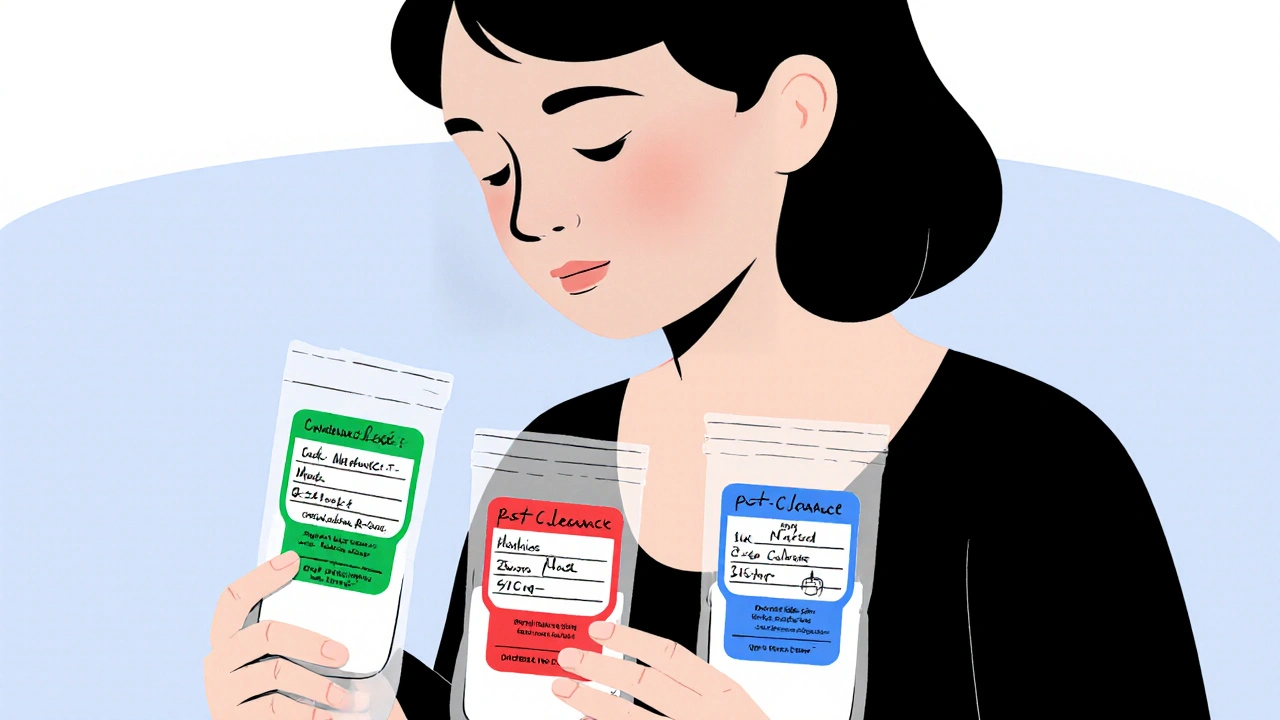
How to Store and Label Breast Milk When Taking Temporary Medications
- Nov, 18 2025
- 14
Learn how to safely store and label breast milk when taking temporary medications. Most meds are safe-no need to pump and dump. Just follow simple labeling rules to protect your baby and avoid wasting milk.
Categories
- Health and Medicine (78)
- Health and Wellness (57)
- Medicine (37)
- Women's Health (11)
- Mental Health (10)
- Men's Health (7)
- Beauty and Wellness (4)
- Health Information (4)
Archives
- April 2026 (3)
- March 2026 (11)
- February 2026 (11)
- January 2026 (25)
- December 2025 (28)
- November 2025 (25)
- October 2025 (27)
- September 2025 (14)
- August 2025 (3)
- July 2025 (2)
- June 2025 (2)
- May 2025 (3)
- online pharmacy
- medication safety
- generic drugs
- dietary supplement
- health benefits
- dietary supplements
- prevention
- fertility
- online pharmacy Australia
- side effects
- QT prolongation
- medication side effects
- diabetes medications
- GLP-1 agonists
- nocebo effect
- brand vs generic
- treatment
- treatment options
- benefits
- connection