
Patch Testing: What It Is, Who Needs It, and How It Prevents Dangerous Skin Reactions
When your skin breaks out in redness, itching, or blisters for no clear reason, it might not be dryness or stress—it could be patch testing, a medical procedure used to identify allergic reactions to substances that touch your skin. Also known as allergic contact dermatitis testing, it’s the most reliable way to find out what’s hiding in your lotion, shampoo, jewelry, or even your prescription cream. Unlike allergy shots or blood tests, patch testing doesn’t react to things you swallow or breathe—it catches the sneaky offenders you’re constantly touching.
Think about it: you’ve used the same soap for years, then suddenly your hands flare up. Or your watch strap gives you a rash every summer. These aren’t coincidences—they’re clues. allergic contact dermatitis, a delayed immune response to chemicals in everyday products is behind most of these cases. Common triggers include nickel in jewelry, fragrances in cosmetics, preservatives in creams, and even ingredients in topical medications like neomycin or mupirocin. The patch test, a simple, non-invasive method where small amounts of potential allergens are taped to your back for 48 hours helps pinpoint exactly which one is causing trouble.
It’s not just for people with bad skin. If you’re using long-term topical treatments—like steroid creams for eczema or antibiotics for infections—patch testing can reveal if the treatment itself is making things worse. It’s also critical for anyone with chronic rashes that don’t respond to standard care. A study in the Journal of the American Academy of Dermatology found that over 60% of patients with unexplained facial or hand eczema had at least one positive patch test result, often to something they’d never suspected.
What you learn from patch testing changes everything. Once you know you’re allergic to formaldehyde in nail polish or cobalt in your phone case, you can avoid it. No more guessing. No more rashes. No more wasting money on products that make things worse. And if you’re on medications that come in creams or gels—like diclofenac gel or azelaic acid—you can check whether the active ingredient or the carrier is triggering your skin.
It’s not a one-size-fits-all test. The panels used vary by country and clinic, but most include the 30–40 most common allergens. Some even test for ingredients found in medications, sunscreens, or even dental materials. The process is simple: no needles, no blood, just small patches taped to your back. You come back in two days, then again a day or two after that, because reactions can be slow. The results? Clear, actionable, and life-changing for people tired of suffering in silence.
What you’ll find in the posts below are real-world stories and science-backed guides on how patch testing connects to everything from antibiotic reactions to skincare combos. You’ll learn how to recognize signs you need it, what to expect during the test, and how to interpret the results so you’re not left guessing what’s causing your skin to rebel. Whether you’re dealing with a stubborn rash, a reaction to a new cream, or just want to know what’s safe to put on your skin, this collection gives you the facts you need—no fluff, no marketing, just what works.
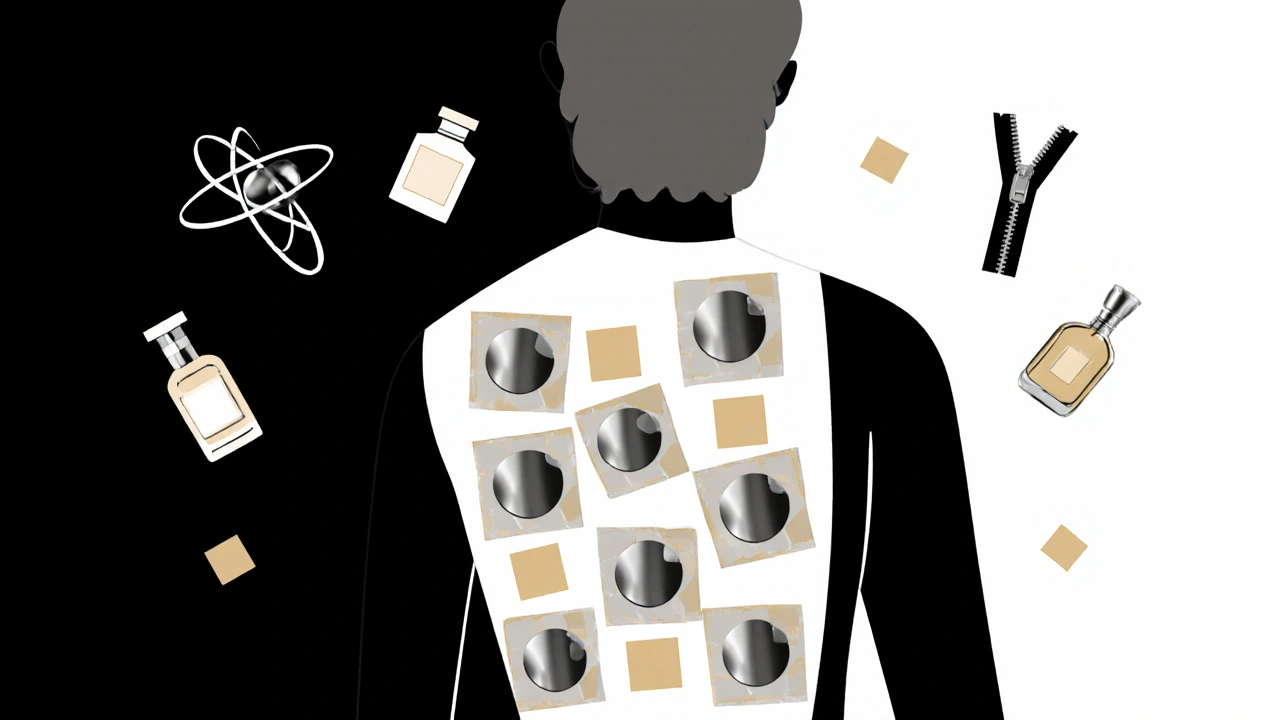
Contact Allergy: Patch Testing for Metals and Fragrances
- Nov, 19 2025
- 13
Patch testing is the most reliable way to identify contact allergies to metals like nickel and fragrances in everyday products. Learn how the test works, why it’s more accurate than guessing, and how avoiding triggers can clear up stubborn rashes.
Categories
- Health and Medicine (78)
- Health and Wellness (57)
- Medicine (37)
- Women's Health (11)
- Mental Health (10)
- Men's Health (7)
- Beauty and Wellness (4)
- Health Information (4)
Archives
- April 2026 (3)
- March 2026 (11)
- February 2026 (11)
- January 2026 (25)
- December 2025 (28)
- November 2025 (25)
- October 2025 (27)
- September 2025 (14)
- August 2025 (3)
- July 2025 (2)
- June 2025 (2)
- May 2025 (3)
- online pharmacy
- medication safety
- generic drugs
- dietary supplement
- health benefits
- dietary supplements
- prevention
- fertility
- online pharmacy Australia
- side effects
- QT prolongation
- medication side effects
- diabetes medications
- GLP-1 agonists
- nocebo effect
- brand vs generic
- treatment
- treatment options
- benefits
- connection