
Medication and Breastfeeding: Safe Drugs, Risks, and What to Avoid
When you're breastfeeding, every pill you take could reach your baby — not because it's designed to, but because your body doesn't draw a line between you and your child. Medication and breastfeeding, the practice of using drugs while nursing, requires careful balancing of maternal health and infant safety. Also known as lactation drug safety, it's not about avoiding all meds — it's about choosing the right ones at the right time. Many mothers panic when told to stop their antidepressants, blood pressure pills, or even antacids. But the truth? Most medications are safe in small amounts, and stopping them can be far more dangerous than taking them.
One key related concept is simethicone, a common gas-relief medication that doesn’t absorb into the bloodstream and is considered safe during breastfeeding. Also known as infant gas treatment, it passes through your system and into breast milk in negligible amounts — if at all. That’s why it’s often recommended for new moms dealing with bloating or discomfort. But not all drugs are this harmless. lactation drug interactions, how medications affect milk supply or infant development. Also known as nursing medication risks, this is where things get tricky — especially with antibiotics, painkillers, or thyroid meds. Some drugs, like certain antihistamines or decongestants, can dry up your milk. Others, like some antidepressants or seizure medications, may build up in your baby’s system over time. That’s why timing matters. Taking a dose right after nursing gives your body hours to clear it before the next feeding.
You’ll also find that breastfeeding medication safety, the science and guidelines around which drugs are low-risk during nursing. Also known as drug transfer into breast milk, it’s not guesswork — it’s backed by decades of research from pediatric pharmacologists and lactation specialists. The goal isn’t perfection. It’s smart choices. A mom on warfarin? Safe. One on lithium? Needs close monitoring. A parent using diclofenac gel for back pain? Minimal risk because it doesn’t enter milk in meaningful amounts. But take a drug like certain ADHD medications or chemotherapy agents? Those are red flags.
What you’ll see in the posts below isn’t a list of dos and don’ts — it’s real-world examples. One post breaks down why simethicone is fine, another explains how antacids can interfere with antibiotics, and a third warns about drugs that affect milk supply. You’ll learn how to talk to your pharmacist, how to read labels, and when to ask for alternatives. No fearmongering. No blanket rules. Just facts, timing tips, and what actually works for moms who need to stay healthy while feeding their babies.
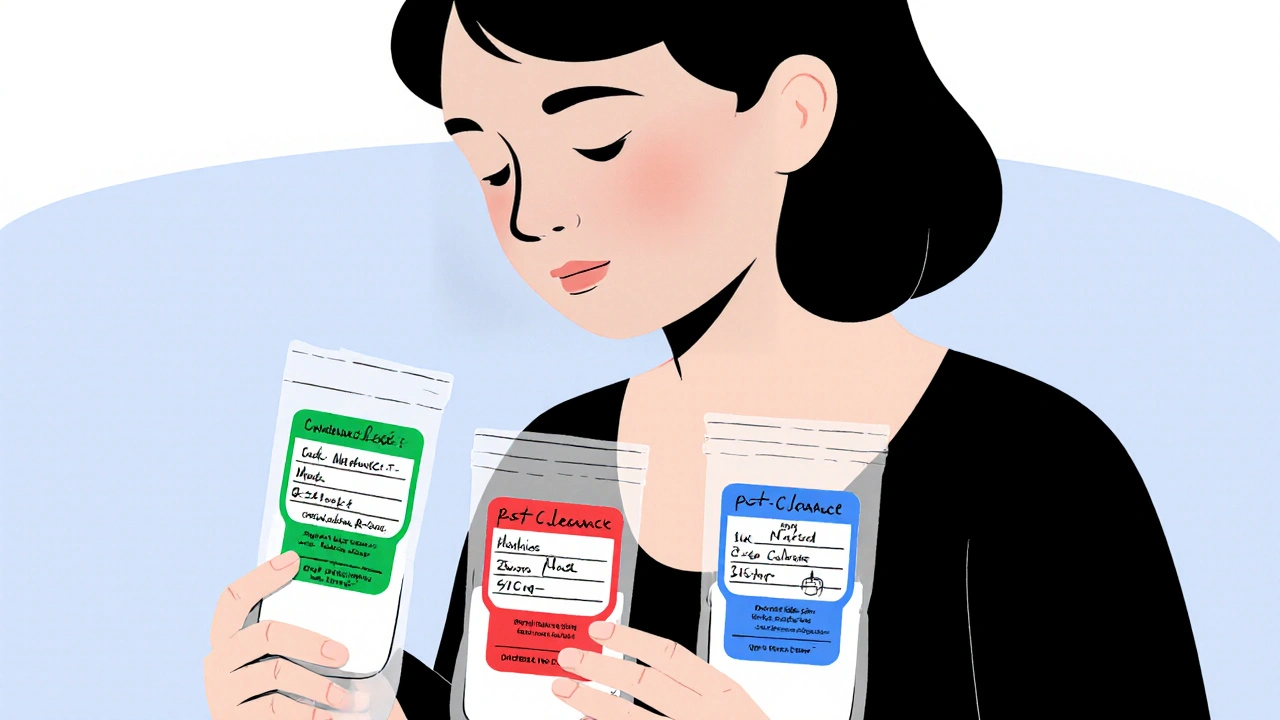
How to Store and Label Breast Milk When Taking Temporary Medications
- Nov, 18 2025
- 14
Learn how to safely store and label breast milk when taking temporary medications. Most meds are safe-no need to pump and dump. Just follow simple labeling rules to protect your baby and avoid wasting milk.
Categories
- Health and Medicine (78)
- Health and Wellness (57)
- Medicine (37)
- Women's Health (11)
- Mental Health (10)
- Men's Health (7)
- Beauty and Wellness (4)
- Health Information (4)
Archives
- April 2026 (3)
- March 2026 (11)
- February 2026 (11)
- January 2026 (25)
- December 2025 (28)
- November 2025 (25)
- October 2025 (27)
- September 2025 (14)
- August 2025 (3)
- July 2025 (2)
- June 2025 (2)
- May 2025 (3)
- online pharmacy
- medication safety
- generic drugs
- dietary supplement
- health benefits
- dietary supplements
- prevention
- fertility
- online pharmacy Australia
- side effects
- QT prolongation
- medication side effects
- diabetes medications
- GLP-1 agonists
- nocebo effect
- brand vs generic
- treatment
- treatment options
- benefits
- connection