
Generic vs Brand Name Drugs: What You Really Need to Know
When you pick up a prescription, you might see two names: one you recognize from TV ads, and another that’s cheaper but looks totally different. That’s the generic vs brand name, two versions of the same medicine—one sold under a company’s trademark, the other after the patent expires. Also known as off-patent drugs, generics aren’t knockoffs—they’re required by law to have the same active ingredient, strength, and effect as the original. The FDA makes sure they work the same way, in the same amount of time, for the same conditions. So why do brand names cost five times more? It’s not because they’re better. It’s because the company paid to develop it, run trials, and market it. Once the patent runs out, anyone can make the same drug—and they do, at a fraction of the price.
Some people worry that generics don’t work as well, or that they cause more side effects. But here’s the truth: if your body reacts differently to a generic, it’s usually because of the fillers—like dyes, preservatives, or binders—not the medicine itself. These inactive ingredients don’t affect how the drug works, but they can cause rare allergies or stomach upset in sensitive people. That’s why your doctor might stick with a brand if you’ve had a reaction before. But for 9 out of 10 people, the generic is just as safe and just as effective. You’re not saving money by risking your health—you’re saving money by choosing a scientifically proven alternative.
Think about it this way: if your heart medication is metoprolol, a beta-blocker used to treat high blood pressure and heart conditions, it doesn’t matter if you get it as Lopressor or just metoprolol tartrate. The active molecule is identical. Same with atorvastatin, the cholesterol-lowering drug sold as Lipitor. The brand name might have a fancy label, but the pill in your hand does the same job. And when you’re on multiple meds—like warfarin, a blood thinner that needs careful dosing—switching between brands and generics can actually make your treatment less stable if you’re not tracking it. That’s why consistency matters more than the label.
So when should you choose generic? Almost always. Unless your doctor specifically says otherwise, go with the cheaper option. It’s not a compromise—it’s smart. And if you’re on a fixed income, or juggling several prescriptions, switching to generics could save you hundreds—or even thousands—each year. You’re not giving up quality. You’re just cutting out the marketing fluff.
Below, you’ll find real-world guides on how generic and brand drugs interact with other medicines, how to spot when a switch might cause issues, and what to do if your insurance pushes you toward one over the other. These aren’t theoretical tips—they’re from people who’ve been there, from managing blood thinners to avoiding allergic reactions to fillers. You don’t need to guess. You just need to know what to look for.
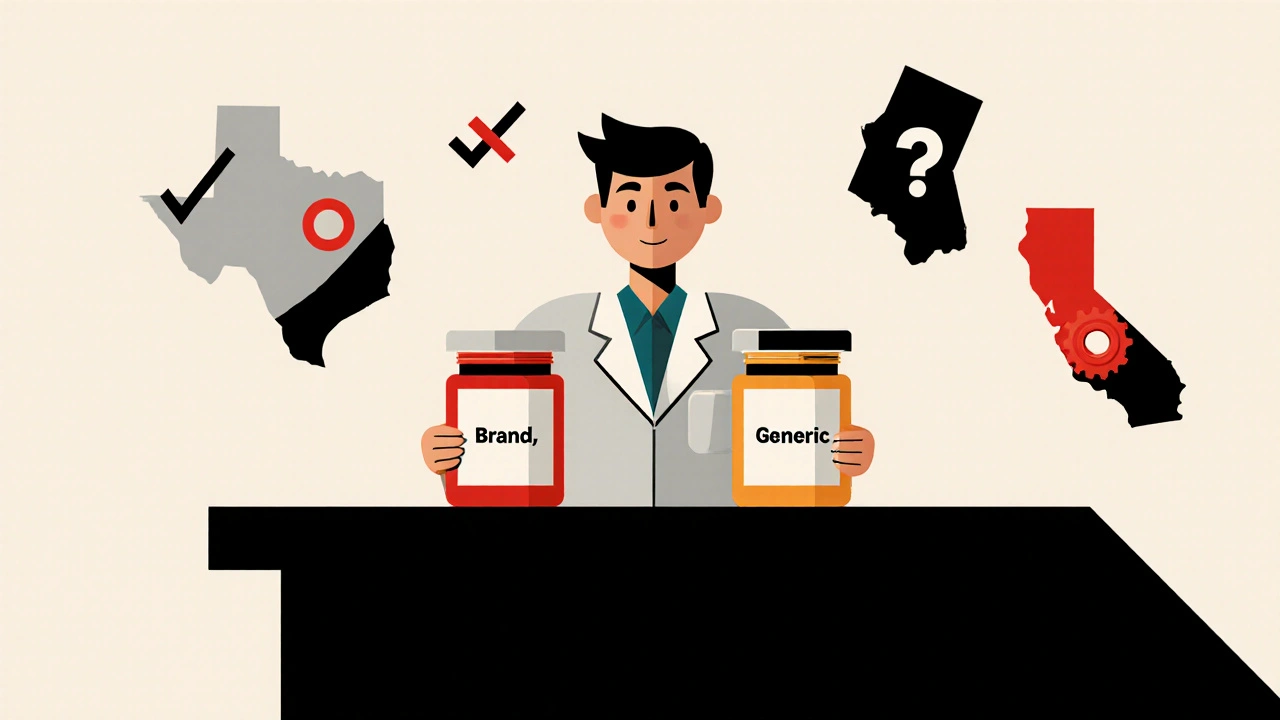
State Laws on Generic Drug Substitution: What Pharmacists and Patients Need to Know
- Nov, 17 2025
- 15
State laws on generic drug substitution vary widely across the U.S., affecting how pharmacists swap brand-name drugs for cheaper generics. Know your rights, your state’s rules, and when substitution could impact your health.
Categories
- Health and Medicine (78)
- Health and Wellness (57)
- Medicine (37)
- Women's Health (11)
- Mental Health (10)
- Men's Health (7)
- Beauty and Wellness (4)
- Health Information (4)
Archives
- April 2026 (3)
- March 2026 (11)
- February 2026 (11)
- January 2026 (25)
- December 2025 (28)
- November 2025 (25)
- October 2025 (27)
- September 2025 (14)
- August 2025 (3)
- July 2025 (2)
- June 2025 (2)
- May 2025 (3)
- online pharmacy
- medication safety
- generic drugs
- dietary supplement
- health benefits
- dietary supplements
- prevention
- fertility
- online pharmacy Australia
- side effects
- QT prolongation
- medication side effects
- diabetes medications
- GLP-1 agonists
- nocebo effect
- brand vs generic
- treatment
- treatment options
- benefits
- connection