
Generic Substitution: What It Is and Why It Matters for Your Medications
When you pick up a prescription, you might get a pill that looks different from what you’re used to. That’s generic substitution, the practice of replacing a brand-name drug with a chemically identical generic version. Also known as drug interchange, it’s a standard part of modern pharmacy practice—and it’s saving billions every year without lowering effectiveness. The FDA requires generics to have the same active ingredient, strength, dosage form, and route of administration as the brand-name version. They’re tested to work the same way in your body. Most people don’t notice a difference, and studies back that up—like the one from the FDA that found no significant difference in outcomes between generics and brands across 50 common drugs.
But generic drugs, lower-cost versions of brand-name medications approved by regulatory agencies aren’t always accepted without question. Some patients worry about inactive ingredients—fillers, dyes, or coatings—that can differ between brands. For most, this doesn’t matter. But if you have a rare allergy to a dye like FD&C Red No. 40, or if you’re sensitive to lactose, those small differences can cause issues. That’s why pharmacists check your profile before swapping. And if your doctor writes "Do Not Substitute" on the script, that’s legally binding. You’re not stuck with generics unless you agree.
Brand-name drugs, medications developed and marketed under a proprietary name by the original manufacturer cost more because of research, marketing, and patent protection. Once the patent expires, other companies can make the same drug. The price drops—sometimes by 80% or more. That’s why insurers push for generics. But cost isn’t the only factor. In places like nursing homes or public clinics, using generics helps stretch limited budgets so more people get treated. It’s not just about saving money—it’s about access.
Still, not all drugs are easy to swap. Things like blood thinners, thyroid meds, or seizure drugs need extra care because small changes in absorption can matter. That’s why you’ll often see pharmacists double-check when switching warfarin or levothyroxine. If you’re on one of these, your doctor might prefer you stick with the same maker—even if it’s generic—just to keep your levels stable. It’s not about distrust in generics. It’s about precision.
What you’ll find in this collection are real-world stories and science-backed tips about how generic substitution plays out in daily life. From seniors managing multiple meds to parents giving kids their first generic antibiotic, these posts show how the system works, where it stumbles, and how to speak up if something feels off. You’ll learn how to spot red flags in your pill bottle, when to ask for a specific brand, and why your pharmacist might ask you a weird question about your last refill. This isn’t theory. It’s what happens when a $200 pill becomes a $5 pill—and you’re the one taking it.
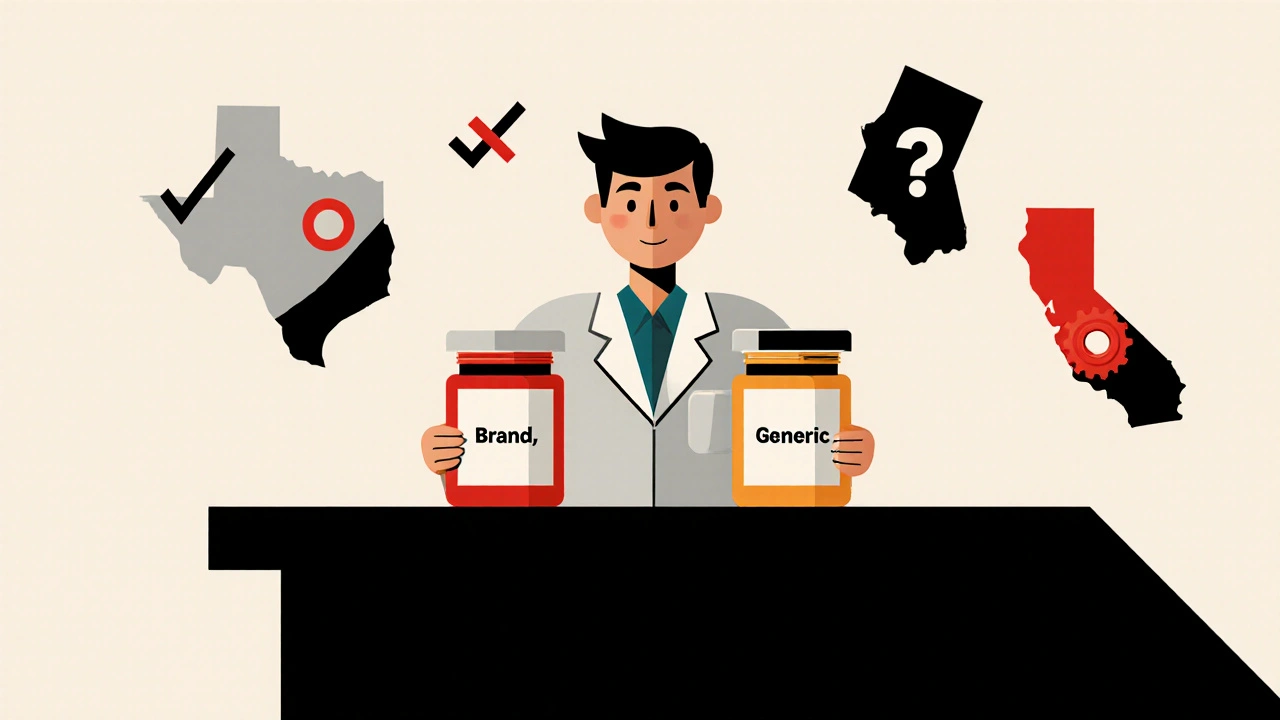
State Laws on Generic Drug Substitution: What Pharmacists and Patients Need to Know
- Nov, 17 2025
- 15
State laws on generic drug substitution vary widely across the U.S., affecting how pharmacists swap brand-name drugs for cheaper generics. Know your rights, your state’s rules, and when substitution could impact your health.
Categories
- Health and Medicine (78)
- Health and Wellness (57)
- Medicine (37)
- Women's Health (11)
- Mental Health (10)
- Men's Health (7)
- Beauty and Wellness (4)
- Health Information (4)
Archives
- April 2026 (3)
- March 2026 (11)
- February 2026 (11)
- January 2026 (25)
- December 2025 (28)
- November 2025 (25)
- October 2025 (27)
- September 2025 (14)
- August 2025 (3)
- July 2025 (2)
- June 2025 (2)
- May 2025 (3)
- online pharmacy
- medication safety
- generic drugs
- dietary supplement
- health benefits
- dietary supplements
- prevention
- fertility
- online pharmacy Australia
- side effects
- QT prolongation
- medication side effects
- diabetes medications
- GLP-1 agonists
- nocebo effect
- brand vs generic
- treatment
- treatment options
- benefits
- connection