
Fragrance Allergy: What It Is, How It Triggers Reactions, and What to Avoid
When your skin reacts to a lotion, your nose burns after using shampoo, or you get a headache from candle smoke, you might be dealing with a fragrance allergy, an immune response to chemicals added to personal care and household products to create a smell. Also known as perfume allergy, it’s not just about disliking a scent—it’s your body treating common fragrance ingredients like invaders. Unlike a simple irritation, a true fragrance allergy involves your immune system overreacting, often leading to contact dermatitis, a red, itchy, sometimes blistering rash that shows up where the product touched your skin—like your neck from perfume, your hands from soap, or your face from moisturizer.
This isn’t rare. Studies show up to 1 in 5 people report sensitivity to fragranced products, and many don’t even realize it’s the scent causing the problem. The real issue? Fragrance isn’t one thing—it’s a mix of 30 to 40 chemicals, often hidden under the word "fragrance" or "parfum" on labels. That means even products labeled "unscented" or "natural" can contain masking agents that trigger reactions. Skin sensitivity, a broader term covering reactions from mild irritation to full-blown allergic responses is often the first warning sign. You might notice redness after using laundry detergent, a flare-up after getting a manicure, or worsening eczema after switching body wash. These aren’t coincidences—they’re clues.
Fragrance allergy doesn’t just affect the skin. It can trigger asthma, headaches, or breathing trouble, especially in enclosed spaces like offices or public restrooms. People with existing conditions like eczema or asthma are more likely to react, but anyone can develop it over time. The good news? You don’t need to live in a scent-free bubble. By learning how to read labels, spot hidden sources (like dryer sheets, air fresheners, and even some medications), and choosing products with minimal additives, you can cut down on reactions. Below, you’ll find real-life guides on avoiding triggers, managing symptoms, and understanding how common medications and daily products interact with your skin’s defenses. No fluff. Just what works.
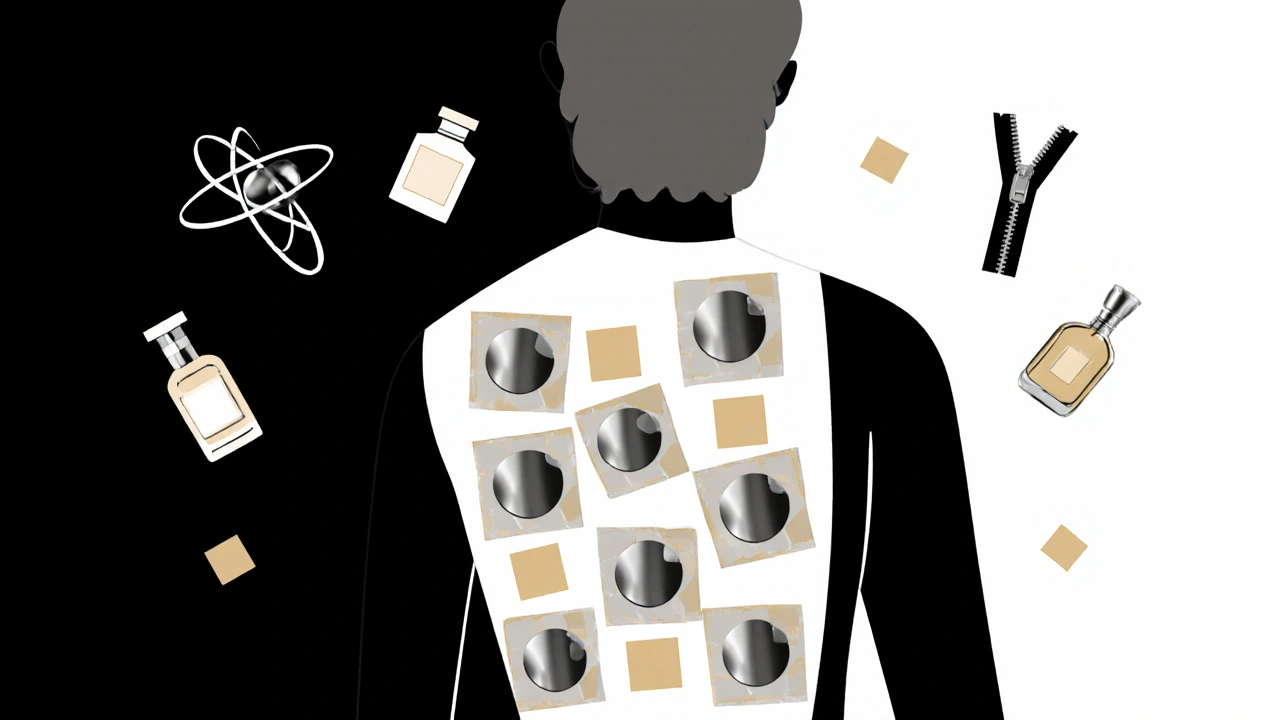
Contact Allergy: Patch Testing for Metals and Fragrances
- Nov, 19 2025
- 13
Patch testing is the most reliable way to identify contact allergies to metals like nickel and fragrances in everyday products. Learn how the test works, why it’s more accurate than guessing, and how avoiding triggers can clear up stubborn rashes.
Categories
- Health and Medicine (78)
- Health and Wellness (57)
- Medicine (37)
- Women's Health (11)
- Mental Health (10)
- Men's Health (7)
- Beauty and Wellness (4)
- Health Information (4)
Archives
- April 2026 (3)
- March 2026 (11)
- February 2026 (11)
- January 2026 (25)
- December 2025 (28)
- November 2025 (25)
- October 2025 (27)
- September 2025 (14)
- August 2025 (3)
- July 2025 (2)
- June 2025 (2)
- May 2025 (3)
- online pharmacy
- medication safety
- generic drugs
- dietary supplement
- health benefits
- dietary supplements
- prevention
- fertility
- online pharmacy Australia
- side effects
- QT prolongation
- medication side effects
- diabetes medications
- GLP-1 agonists
- nocebo effect
- brand vs generic
- treatment
- treatment options
- benefits
- connection