
FDA: What It Is, How It Shapes Your Medications, and What You Need to Know
When you pick up a pill at the pharmacy, the FDA, the U.S. agency that approves and monitors medications to ensure they’re safe and effective. Also known as the Food and Drug Administration, it’s the silent gatekeeper behind every prescription, over-the-counter drug, and even some supplements you use. It doesn’t just say "yes" or "no" to new drugs—it sets the rules for how they’re made, tested, labeled, and sold. If a drug doesn’t clear FDA standards, it doesn’t hit shelves. That includes generics, which must prove they work exactly like the brand-name version. But here’s the thing: the FDA doesn’t just approve drugs. It also tracks side effects after they’re out in the wild, forces recalls when something goes wrong, and decides if a medication can be sold without a prescription.
Behind every post on this page is a thread tied to the FDA’s influence. Take generic substitution—some states let pharmacists swap brand drugs for cheaper generics, but the FDA says they must be bioequivalent. That’s why you’ll see articles on when substitution might not be safe, especially with drugs like warfarin or epilepsy meds. Then there’s medication safety, the practice of using drugs without causing harm, often guided by FDA warnings and labeling requirements. Think of how the FDA requires black box warnings on drugs like antipsychotics for risks like neuroleptic malignant syndrome, or how it pushes for clearer labeling on antibiotics to avoid interactions with antacids. Even drug approval, the formal process the FDA uses to evaluate new medications before they reach patients shapes what’s available to you. The delay in approving a new diabetes drug for seniors? That’s the FDA’s review process at work. The sudden removal of a pain gel because of contamination? That’s post-market surveillance.
What you’ll find here isn’t a list of FDA press releases. It’s real-world stories of how the FDA’s rules touch your life: how a patch test for nickel allergy got approved, why you can’t just mix caffeine with warfarin, how the FDA’s stance on QT-prolonging drugs affects heart rhythm safety, and why your pharmacist can’t always swap out your blood pressure pill without checking state laws. These aren’t abstract policies—they’re the reason your breast milk stays safe while you take a short-term med, why your elderly parent’s meds are being cut back, and why your child’s EpiPen has clear instructions. The FDA doesn’t make your decisions, but it sets the boundaries. And knowing how it works means you can ask better questions, spot red flags, and take control of what goes into your body.
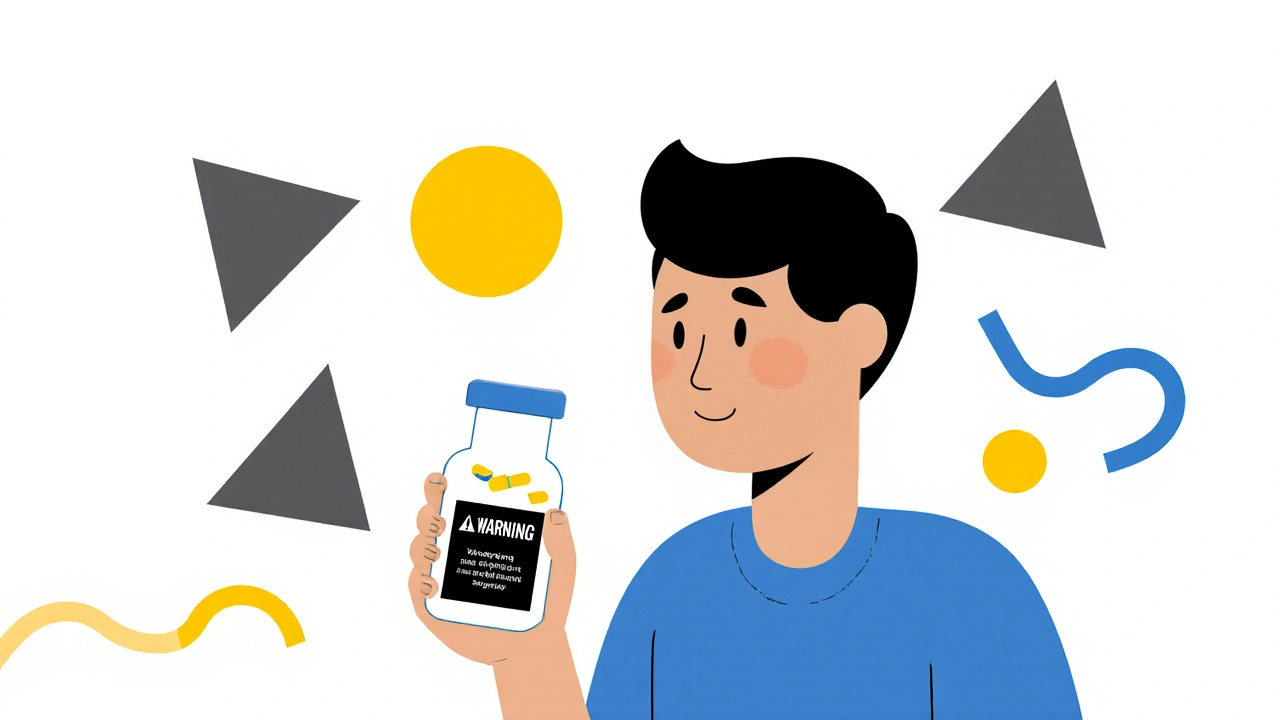
Suicidal Thoughts on Antidepressants: What the Black Box Warning Really Means
- Nov, 15 2025
- 7
The FDA's Black Box warning on antidepressants alerts users to increased suicidal thoughts in young people. But the real story is more complex - untreated depression is far more dangerous. Here's what you need to know.
Categories
- Health and Medicine (78)
- Health and Wellness (57)
- Medicine (37)
- Women's Health (11)
- Mental Health (10)
- Men's Health (7)
- Beauty and Wellness (4)
- Health Information (4)
Archives
- April 2026 (3)
- March 2026 (11)
- February 2026 (11)
- January 2026 (25)
- December 2025 (28)
- November 2025 (25)
- October 2025 (27)
- September 2025 (14)
- August 2025 (3)
- July 2025 (2)
- June 2025 (2)
- May 2025 (3)
- online pharmacy
- medication safety
- generic drugs
- dietary supplement
- health benefits
- dietary supplements
- prevention
- fertility
- online pharmacy Australia
- side effects
- QT prolongation
- medication side effects
- diabetes medications
- GLP-1 agonists
- nocebo effect
- brand vs generic
- treatment
- treatment options
- benefits
- connection