
Beers Criteria: What Every Senior and Caregiver Needs to Know
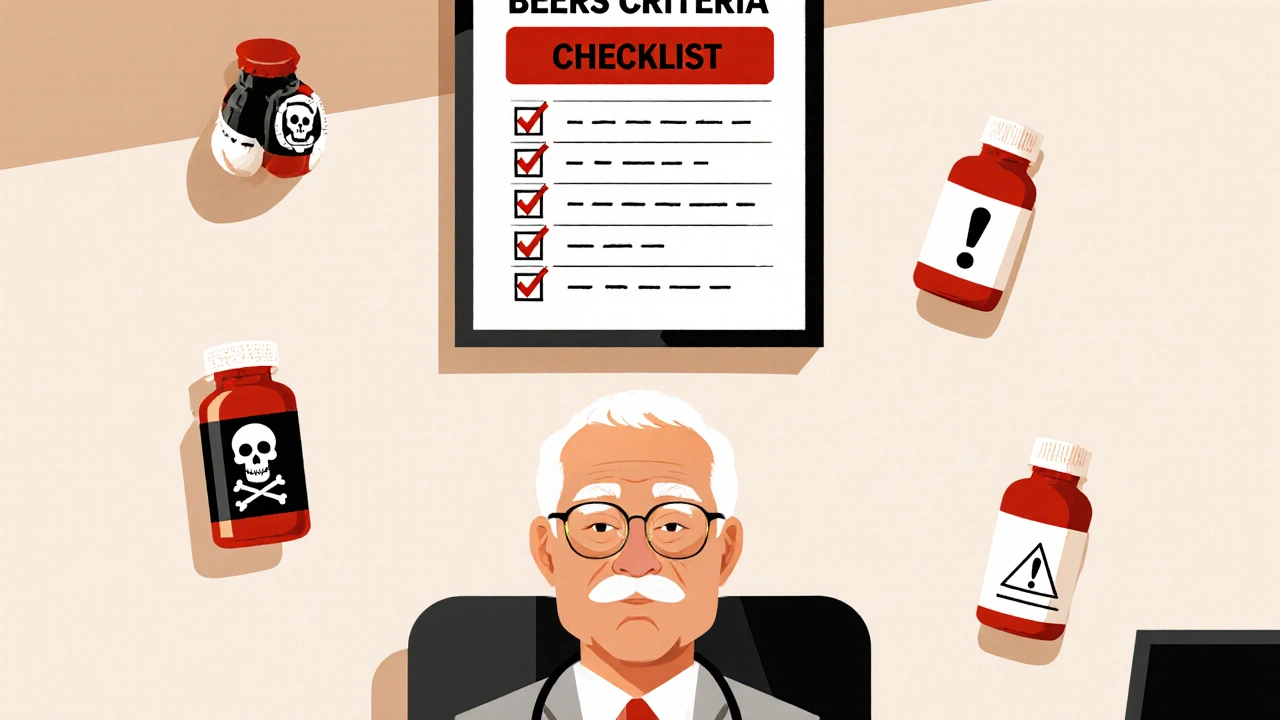
When it comes to medications for older adults, not all pills are created equal. The Beers Criteria, a regularly updated list of potentially inappropriate medications for adults 65 and older, developed by the American Geriatrics Society. It’s not a ban—it’s a guide to help doctors and families avoid drugs that do more harm than good in seniors. Every year, thousands of older people end up in the ER because of side effects from medicines that were never meant for them. Some of these drugs were prescribed for conditions that don’t even apply anymore. Others interact badly with common health issues like kidney problems, dementia, or heart disease.
The Beers Criteria doesn’t just list bad drugs—it explains polypharmacy, the dangerous habit of taking five or more medications at once. It points out which drugs raise fall risk, worsen confusion, or cause dangerous drops in blood pressure. For example, anticholinergics like diphenhydramine (Benadryl) might help with allergies or sleep, but they’re linked to memory loss and delirium in seniors. Benzodiazepines like diazepam? They increase the chance of a hip fracture by 40%. And NSAIDs like ibuprofen? They can cause internal bleeding or kidney failure in older bodies.
What makes the Beers Criteria powerful is that it’s based on real-world data—not theory. It’s updated every three years after reviewing hundreds of clinical studies. It doesn’t just say "don’t use this." It tells you why and what to use instead. For instance, instead of sleeping pills like zolpidem, it suggests non-drug fixes like sleep hygiene. For chronic pain, it pushes physical therapy and acetaminophen over long-term opioids or NSAIDs. And for overactive bladder? It warns against oxybutynin and tolterodine, which fog the mind, and recommends bladder training or mirabegron instead.
Doctors don’t always know the Beers Criteria inside out. Many still prescribe these risky drugs because they’re cheap, familiar, or easy to write. But if you’re caring for an older parent—or if you’re over 65 yourself—it’s your job to ask: "Is this on the Beers list?" Bring the list to your next appointment. Print it. Highlight the drugs you’re taking. Ask: "Is there a safer option?" The drug interactions between common meds and supplements can be just as dangerous as the drugs themselves. That’s why so many of the posts here focus on how antacids mess with antibiotics, how caffeine changes how warfarin works, or why calcium pills can ruin osteoporosis treatment. These aren’t random issues—they’re all part of the same puzzle: seniors on too many pills, with too little oversight.
Below, you’ll find real stories and practical advice from people who’ve been there. From avoiding dangerous sleep aids to understanding why a simple painkiller could be risky, these guides show you how to spot trouble before it happens. You won’t find fluff here—just clear, evidence-backed ways to cut the clutter and keep your meds safe, simple, and effective.
Geriatric Medication Safety: How to Protect Elderly Patients from Harmful Drugs
- Nov, 21 2025
- 15
Geriatric medication safety is critical for protecting older adults from harmful drug interactions. Learn how the Beers Criteria, deprescribing, and pharmacist-led teams are reducing hospitalizations and improving care for seniors.
Categories
- Health and Medicine (78)
- Health and Wellness (57)
- Medicine (37)
- Women's Health (11)
- Mental Health (10)
- Men's Health (7)
- Beauty and Wellness (4)
- Health Information (4)
Archives
- April 2026 (3)
- March 2026 (11)
- February 2026 (11)
- January 2026 (25)
- December 2025 (28)
- November 2025 (25)
- October 2025 (27)
- September 2025 (14)
- August 2025 (3)
- July 2025 (2)
- June 2025 (2)
- May 2025 (3)
- online pharmacy
- medication safety
- generic drugs
- dietary supplement
- health benefits
- dietary supplements
- prevention
- fertility
- online pharmacy Australia
- side effects
- QT prolongation
- medication side effects
- diabetes medications
- GLP-1 agonists
- nocebo effect
- brand vs generic
- treatment
- treatment options
- benefits
- connection