
Allergic Contact Dermatitis: Causes, Triggers, and How to Manage It
When your skin turns red, itchy, and flaky after touching something harmless—like your watch, earrings, or even hand soap—you’re likely dealing with allergic contact dermatitis, a delayed immune reaction to substances that touch your skin. Also known as allergic eczema, it’s not contagious, not caused by stress, and not just dry skin—it’s your body saying "no" to a specific chemical. Unlike irritant dermatitis, which happens to anyone with enough exposure, allergic contact dermatitis only affects people who’ve become sensitized over time. That’s why you might use the same lotion for years and suddenly break out.
This condition is tied to nickel, a metal found in jewelry, belt buckles, and even smartphone casings, and fragrances, hidden in everything from lotions to laundry detergent. Other common triggers include poison ivy, a plant oil that affects nearly 85% of people after repeated exposure, and preservatives, like parabens and formaldehyde releasers used in cosmetics. You don’t need to be allergic to all of them—just one can set off a reaction that lasts weeks.
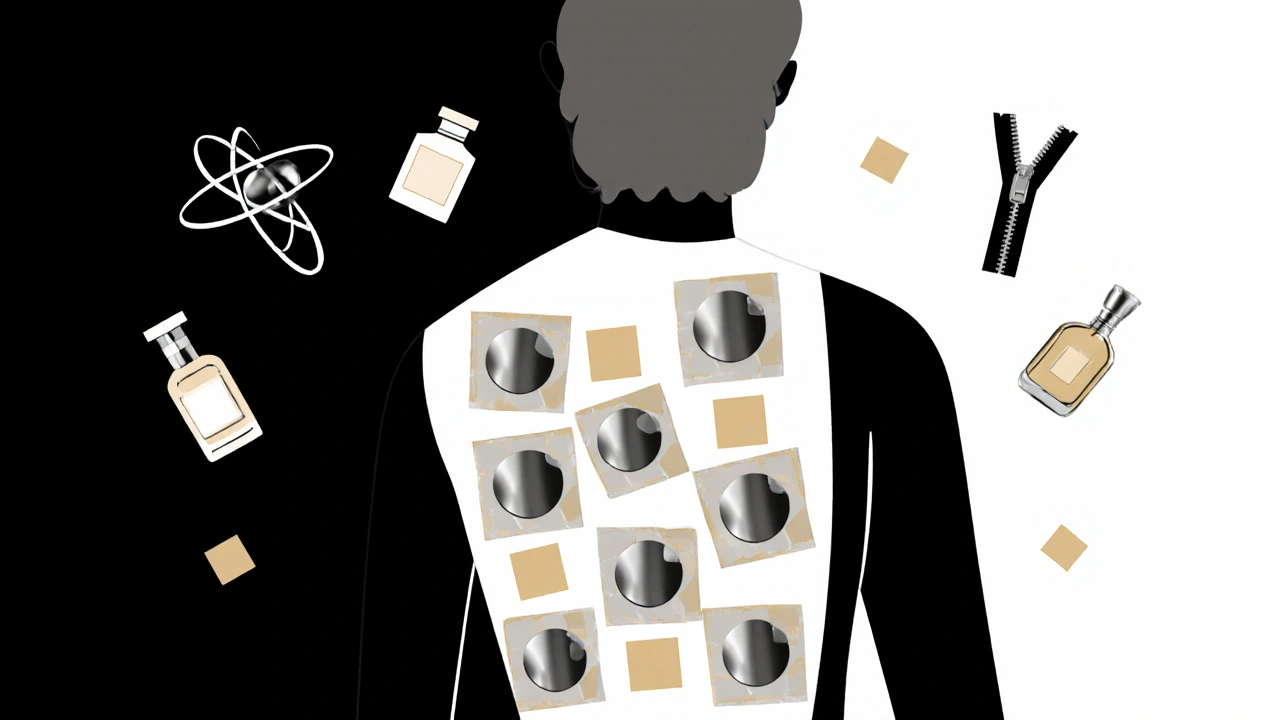
What makes this tricky is the delay. You might touch something at 9 a.m., and not see a rash until 48 hours later. That’s why people often blame the wrong thing—like a new soap, when it’s actually the metal in their new phone case. The only reliable way to know what’s causing it is patch testing, a simple clinic procedure where small amounts of common allergens are taped to your back for 48 hours. It’s not painful, it’s not invasive, and it’s the only way to stop guessing.
Once you know your trigger, avoiding it is the real treatment. No cream will fix it if you keep touching the allergen. But when the rash is already there, topical steroids, like hydrocortisone or stronger prescription versions, can calm the inflammation fast. Over-the-counter antihistamines won’t help much—this isn’t a histamine-driven allergy like hay fever. It’s T-cells attacking your skin, and they need local steroids to quiet down.
Many of the posts here focus on how medications, skin products, and even daily habits can trigger or worsen skin reactions. You’ll find guides on how mupirocin can cause resistance if misused, how azelaic acid and niacinamide help clear acne without irritating sensitive skin, and how certain antibiotics or topical treatments might accidentally worsen your dermatitis. There’s also advice on managing skin sensitivity while taking blood pressure meds like ramipril, or using products during breastfeeding.
You don’t have to live with itchy, flaky skin. Once you identify the trigger, you can take control. The next steps aren’t about more creams or more pills—they’re about knowing exactly what to avoid, and how to treat the flare-ups safely. Below, you’ll find real, practical advice from people who’ve been there—and the medical insights that actually help.
Contact Allergy: Patch Testing for Metals and Fragrances
- Nov, 19 2025
- 13
Patch testing is the most reliable way to identify contact allergies to metals like nickel and fragrances in everyday products. Learn how the test works, why it’s more accurate than guessing, and how avoiding triggers can clear up stubborn rashes.
Categories
- Health and Medicine (78)
- Health and Wellness (57)
- Medicine (37)
- Women's Health (11)
- Mental Health (10)
- Men's Health (7)
- Beauty and Wellness (4)
- Health Information (4)
Archives
- April 2026 (3)
- March 2026 (11)
- February 2026 (11)
- January 2026 (25)
- December 2025 (28)
- November 2025 (25)
- October 2025 (27)
- September 2025 (14)
- August 2025 (3)
- July 2025 (2)
- June 2025 (2)
- May 2025 (3)
- online pharmacy
- medication safety
- generic drugs
- dietary supplement
- health benefits
- dietary supplements
- prevention
- fertility
- online pharmacy Australia
- side effects
- QT prolongation
- medication side effects
- diabetes medications
- GLP-1 agonists
- nocebo effect
- brand vs generic
- treatment
- treatment options
- benefits
- connection