
Save Money on OTC Medications: Store Brands vs. Name Brands
 Jan, 31 2026
Why You’re Probably Paying Too Much for OTC Medicine
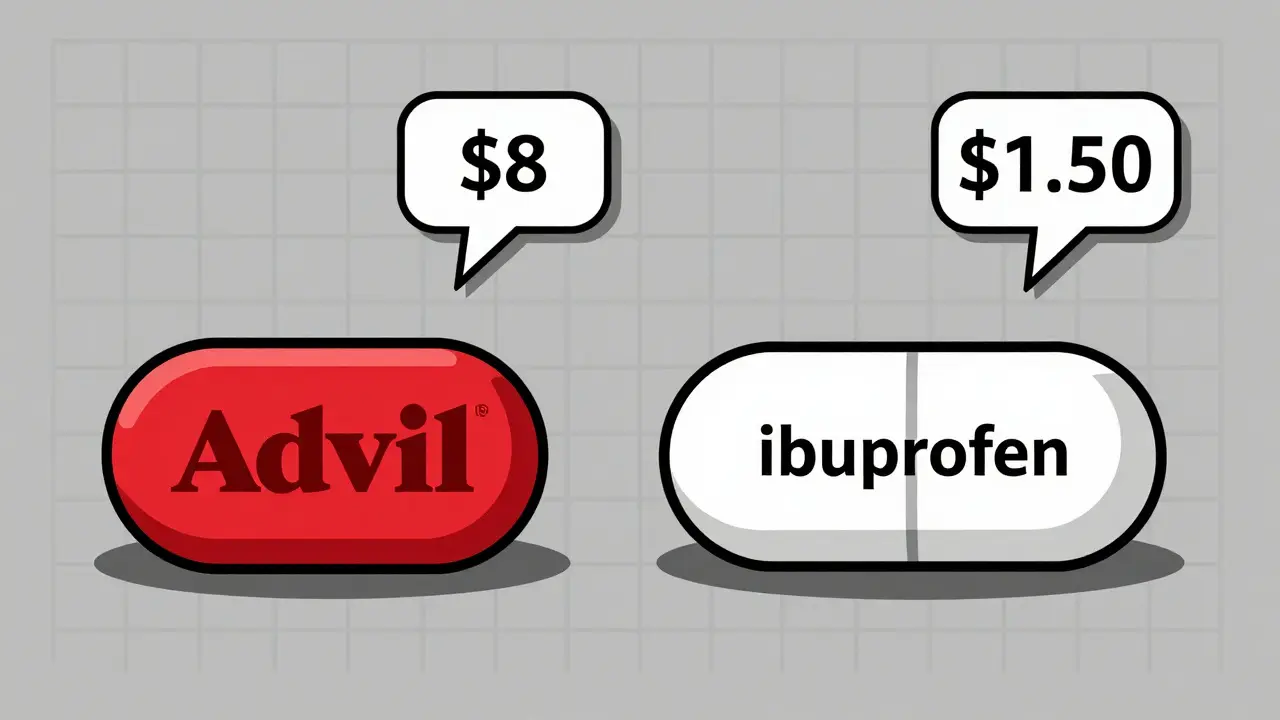
You walk into the pharmacy aisle, looking for pain relief. There’s Advil on one shelf, and a plain bottle labeled ibuprofen on the other. The price difference is huge - $8 versus $2. You pause. Is the cheaper one just as good? Or are you risking your health to save a few bucks?
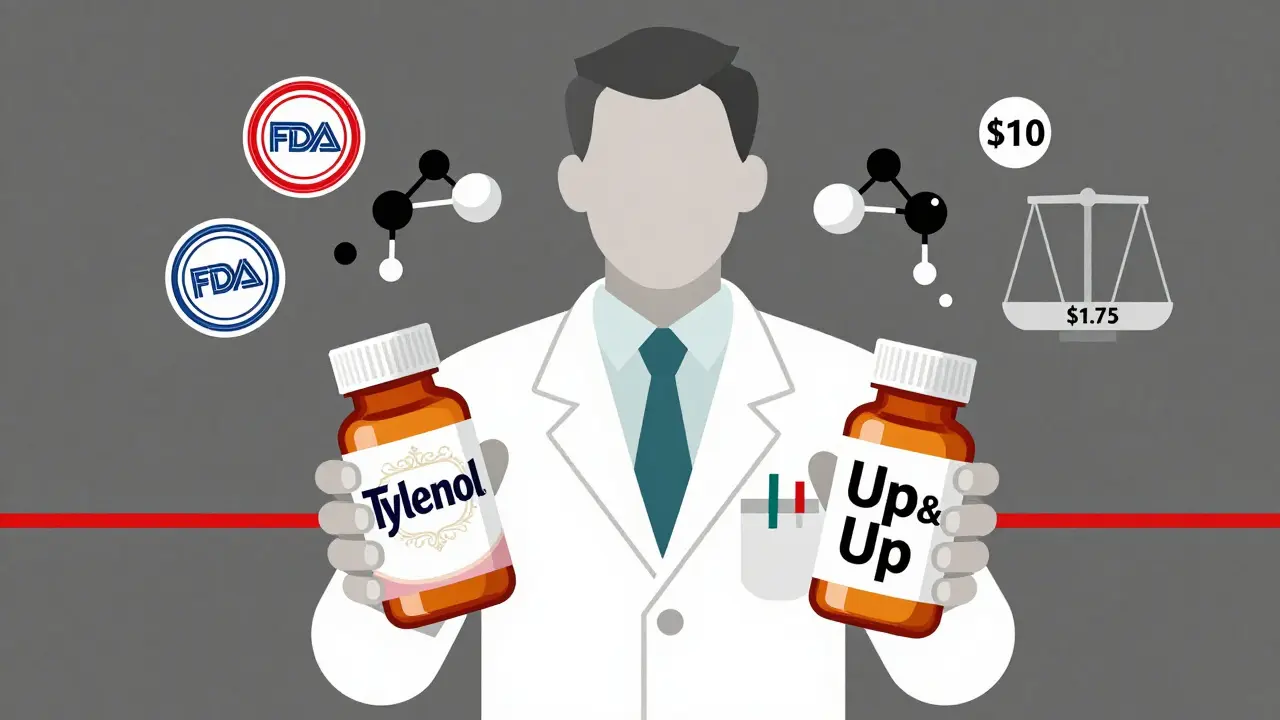
The truth? The generic bottle isn’t a downgrade. It’s the exact same medicine. The FDA requires store-brand OTC medications to contain the same active ingredients, in the same strength, and delivered the same way as their name-brand cousins. That means CVS Health ibuprofen works just like Advil. Target’s Up & Up acetaminophen does the same job as Tylenol. The only real difference? The price tag - and sometimes, the color of the pill.
How Store Brands Are Exactly the Same as Name Brands
Store brands aren’t copies. They’re legally required to be identical in how they work inside your body. The FDA calls this bioequivalence. That means the active ingredient - the part that actually relieves pain, reduces fever, or stops allergies - enters your bloodstream at the same rate and in the same amount as the brand-name version.
Here’s what’s in both: the same dose of ibuprofen, acetaminophen, loratadine, or dextromethorphan. The same tablet, capsule, or liquid form. The same instructions on the label. The same safety testing. The same manufacturing rules.
Manufacturers of store brands don’t get a free pass. Every facility that makes generic OTC drugs is inspected by the FDA - just like the ones making name brands. In 2022, the FDA did over 3,500 inspections of generic drug plants. No shortcuts. No exceptions.
A 2021 study from the National Center for Biotechnology Information found that, on average, generic and brand-name drugs differ by only 3.5% in how quickly they’re absorbed. The FDA allows up to 25%. So even that tiny difference is well within safe limits.
The Real Difference: Inactive Ingredients and Packaging
If the medicine works the same, why do store brands look different? Because of trademark laws. You can’t sell a pill that looks exactly like Advil. So generic versions use different shapes, colors, or coatings. That’s it.
The real variation comes from inactive ingredients - things like dyes, fillers, flavors, and preservatives. These don’t affect how the drug works. But they can matter to you.
Some people are sensitive to certain dyes or flavorings. If you’ve ever had a rash, upset stomach, or strange taste after taking a generic, it’s likely one of these ingredients. That’s not the medicine failing. It’s your body reacting to something extra.
For most people, this isn’t a problem. But if you’ve had reactions before, check the ingredient list. It’s on every drug facts label. The active ingredient is always listed first. That’s what you need to match.
How Much Money Can You Actually Save?
Let’s be real - this isn’t about saving $1. It’s about saving $50 a year, or $500 over five years.
For common OTC meds, store brands cost 80-85% less than name brands. That’s not a guess. It’s backed by University Hospitals’ 2022 analysis and GoodRx’s 2023 data.
Here’s what that looks like in real dollars:
- Advil (ibuprofen): $8 for 100 tablets → Generic: $1.50
- Tylenol (acetaminophen): $10 for 100 tablets → Generic: $1.75
- Claritin (loratadine): $18 for 30 tablets → Generic: $3.50
- Robitussin (dextromethorphan): $12 for 12 oz → Generic: $2.50
That’s not a small savings. That’s enough to cover a month’s worth of groceries for many households.
And you’re not alone. IQVIA’s 2023 report shows store brands make up 67% of all OTC units sold. People are choosing them - because they work, and they’re cheap.
What Doctors and Pharmacists Really Use
Would you trust your own medicine to someone who doesn’t use it themselves?
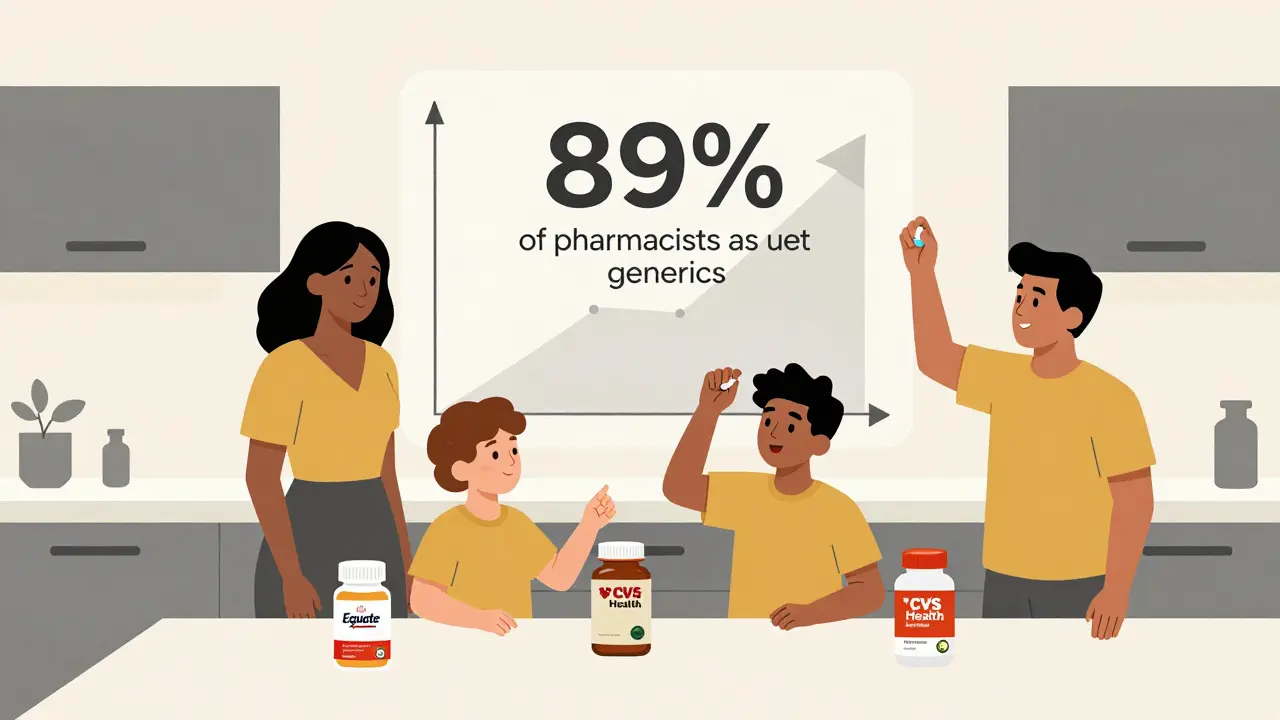
A University of Chicago study in 2021 found that 82% of physicians and 89% of pharmacists use store-brand OTC meds for themselves and their families. That’s not a coincidence. That’s expertise.
Pharmacists at CVS, Walgreens, and Walmart get training on generic equivalency. In a 2023 Pharmacy Times survey, 92% of them said they’re confident recommending store brands. They’re not pushing them because they’re cheap. They’re pushing them because they’re just as good.
Even on Reddit’s r/pharmacy community, a 2023 thread with nearly 250 comments showed 89% of users reporting no difference between store and name brands for common pain and allergy meds.
When You Might Need the Name Brand
There are rare cases where a store brand doesn’t work as well - not because the medicine is weaker, but because of how your body reacts to the extras.
Some people notice a difference in taste with liquid cold medicines. Others get minor stomach upset from a dye or filler they’re sensitive to. A small number - about 0.7% of users based on FDA data - report side effects linked to inactive ingredients.
If you’ve tried a generic and it didn’t help, or you had an unexpected reaction, go back to the name brand. That’s not failure. That’s personal physiology.
But don’t assume it’s the medicine. Check the label first. Maybe the generic you tried had a different filler than the one you used before. Try a different store brand. Target’s Up & Up might work where CVS’s didn’t. It’s worth testing a few before giving up.
How to Choose the Right Store Brand (Without Getting Confused)
Here’s how to pick the right one every time:
- Look at the Drug Facts label. The first thing listed is the active ingredient. Match that exactly to your name-brand drug.
- Check the strength. Is it 200 mg ibuprofen? Same as Advil? Good.
- Compare dosage forms. Tablet? Capsule? Liquid? Same as before?
- Read the inactive ingredients. If you’ve had reactions before, avoid dyes like FD&C Red No. 40 or preservatives like sulfites.
- Try one brand at a time. Don’t switch between CVS, Walmart, and Target all at once. Test one, give it a few doses, then decide.
Most people get the hang of this after two or three purchases. It’s not rocket science. It’s reading a label.
What’s Changing in the OTC Market
Store brands aren’t just cheap knockoffs anymore. Retailers are investing heavily in them.
Walmart’s Equate line has over 1,200 OTC products. Target’s Up & Up has 950. CVS Health’s private label makes up 37% of their OTC sales. In 2023, retailers spent $1.2 billion improving formulations - better coatings, smoother pills, tastier liquids.
Some stores are even adding transparency. CVS now puts QR codes on store-brand packaging. Scan it, and you get the full ingredient list, manufacturing info, and even batch testing results. Walgreens launched a pharmacist consultation service just for store-brand questions.
Grand View Research predicts store brands will make up 72% of all OTC unit sales by 2028. That’s not a trend. That’s the new normal.
Don’t Fall for the Myth
A 2023 Kaiser Family Foundation survey found that 41% of Americans still believe name brands are more effective. That’s a myth. A dangerous one.
It’s not about brand loyalty. It’s about money. And it’s not about trust - it’s about information. The FDA says it clearly: “Generic drugs are just as effective as their branded counterparts.”
Every time you choose a store brand, you’re not cutting corners. You’re making a smart, science-backed choice.
Final Thought: Your Health, Your Wallet
There’s no reason to pay more for the same medicine. The science is clear. The data is solid. Even the people who know the most about drugs - doctors, pharmacists, researchers - use generics every day.
Save the name brand for when you need it. Use store brands for everything else. Your wallet will thank you. And your body? It won’t even notice the difference.
Donna Macaranas
February 1, 2026 AT 13:22Just switched to store-brand ibuprofen last year and haven’t looked back. Saved like $60 in six months. My back still doesn’t hurt less, but my bank account does. Win-win.
Lisa Rodriguez
February 2, 2026 AT 01:49I used to think generics were sketchy until my pharmacist told me she buys the CVS brand for her kids. Now I check the active ingredient first, skip the fancy packaging, and put the extra cash toward coffee. No regrets.
Bob Cohen
February 2, 2026 AT 10:02Oh wow so the FDA says it’s the same? Shocking. I guess all those expensive commercials were just convincing us to pay more for the same blue pill. Who knew capitalism could be this transparent?
Naomi Walsh
February 3, 2026 AT 09:57Let’s be honest - if you’re buying store-brand medicine, you’re probably also buying store-brand logic. The FDA’s standards are a baseline, not an endorsement. I stick with name brands because I refuse to gamble with my physiology.
Aditya Gupta
February 5, 2026 AT 09:03generic = same stuff cheaper. why overpay? my mom in india uses generic for everything. she’s 72 and still runs marathons. no joke.
Nidhi Rajpara
February 6, 2026 AT 14:51While it is true that the active ingredients are identical, one must not overlook the potential for excipient-related adverse reactions, which, though statistically infrequent, can be clinically significant in sensitive individuals. The regulatory framework ensures equivalence, but individual biochemistry remains variable and non-negotiable.
Jamie Allan Brown
February 8, 2026 AT 09:28I used to be skeptical too - until I tried a generic allergy pill and didn’t get the weird metallic taste I got from Claritin. Turns out, the dye in the name brand was the issue. Now I always check the inactive ingredients. Small change, big difference.
Jaden Green
February 8, 2026 AT 16:02They’re all the same, right? Sure. But have you ever wondered who’s really behind those generic labels? Big pharma owns most of the generic manufacturers too. The ‘cheap’ version is just a different brand on the same factory line - and they’re still making the same profit, just with cheaper packaging. You’re not beating the system. You’re just paying them in a different currency.
Angel Fitzpatrick
February 10, 2026 AT 08:55Oh, so now we’re supposed to trust the FDA? The same agency that let OxyContin through? The same ones who approved thalidomide in the 50s? You think they’re checking every batch? Nah. They inspect one plant in China every five years and call it a day. That QR code on CVS? It’s a placebo. The real data is buried under NDAs and corporate secrecy. You’re not saving money - you’re funding a surveillance-laced pharmaceutical cartel.
Nicki Aries
February 10, 2026 AT 23:02Wait - I just realized something. I’ve been buying Target’s Up & Up for two years, and I’ve never had a problem - but last month, I switched to Walmart’s Equate, and I got a headache. So I went back. And guess what? The headache disappeared. It’s not the ibuprofen - it’s the filler. Always test one brand at a time. Seriously. Don’t be like me and assume they’re all the same. They’re not.
Nancy Nino
February 12, 2026 AT 20:02It is imperative to underscore that the economic advantages conferred by store-brand pharmaceuticals are not merely fiscal - they represent a paradigmatic shift in consumer autonomy, wherein rational, evidence-based decision-making supersedes brand-driven psychological conditioning. One must not underestimate the societal implications of this transition.