
Respiratory Depression from Opioids and Other Medications: Critical Signs You Can't Ignore
 Dec, 9 2025
Respiratory Depression Risk Assessment Tool
When someone takes an opioid - whether it’s prescribed for pain after surgery or misused recreationally - their breathing can slow down until it stops. This isn’t rare. It’s not a myth. It’s opioid-induced respiratory depression, and it kills people every day, often silently, in hospital rooms, nursing homes, and even at home. The worst part? Most of these deaths are preventable if you know what to look for - and when to act.
What Does Respiratory Depression Actually Look Like?
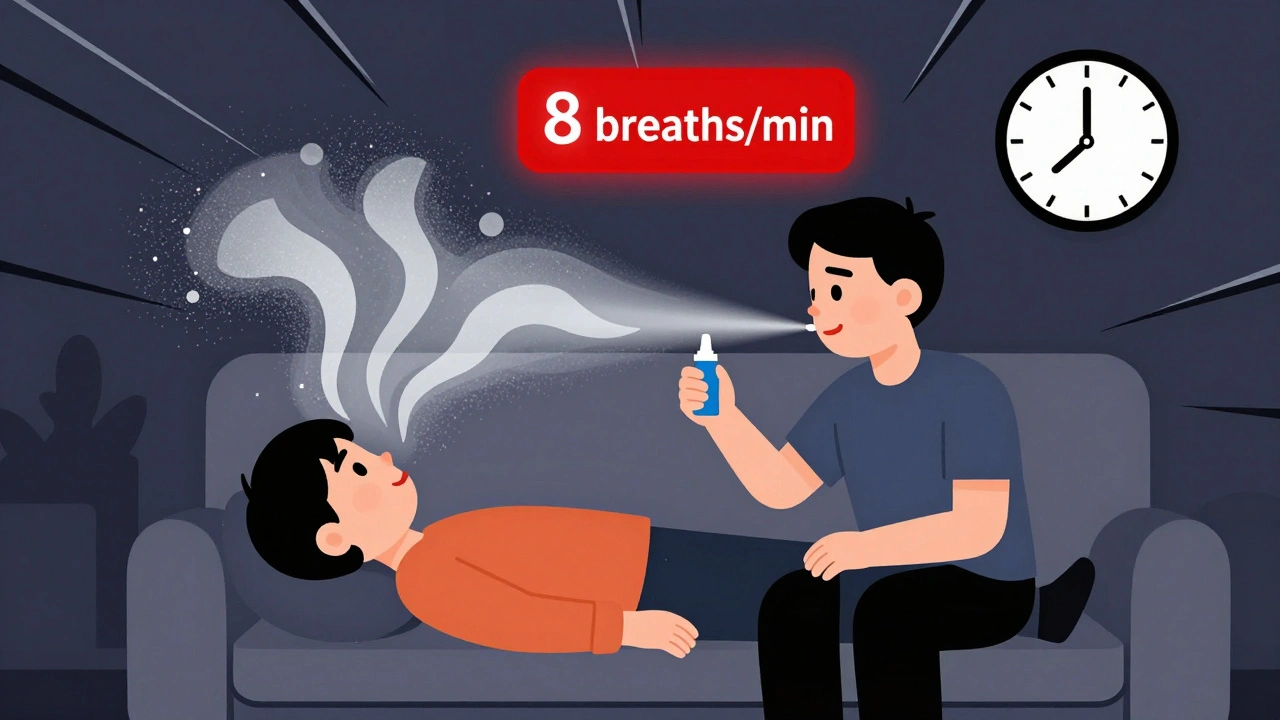
It doesn’t always mean someone is gasping or turning blue. In fact, the most dangerous cases look almost calm. The person might be lying still, eyes closed, skin normal color. But their breathing is shallow, slow, and irregular - sometimes fewer than 8 breaths per minute. That’s not sleepy. That’s failing. Their body has lost its automatic drive to breathe. The brainstem, which normally responds to rising carbon dioxide or falling oxygen, stops reacting. Even when oxygen levels drop dangerously low, their body doesn’t panic. It just keeps breathing poorly.
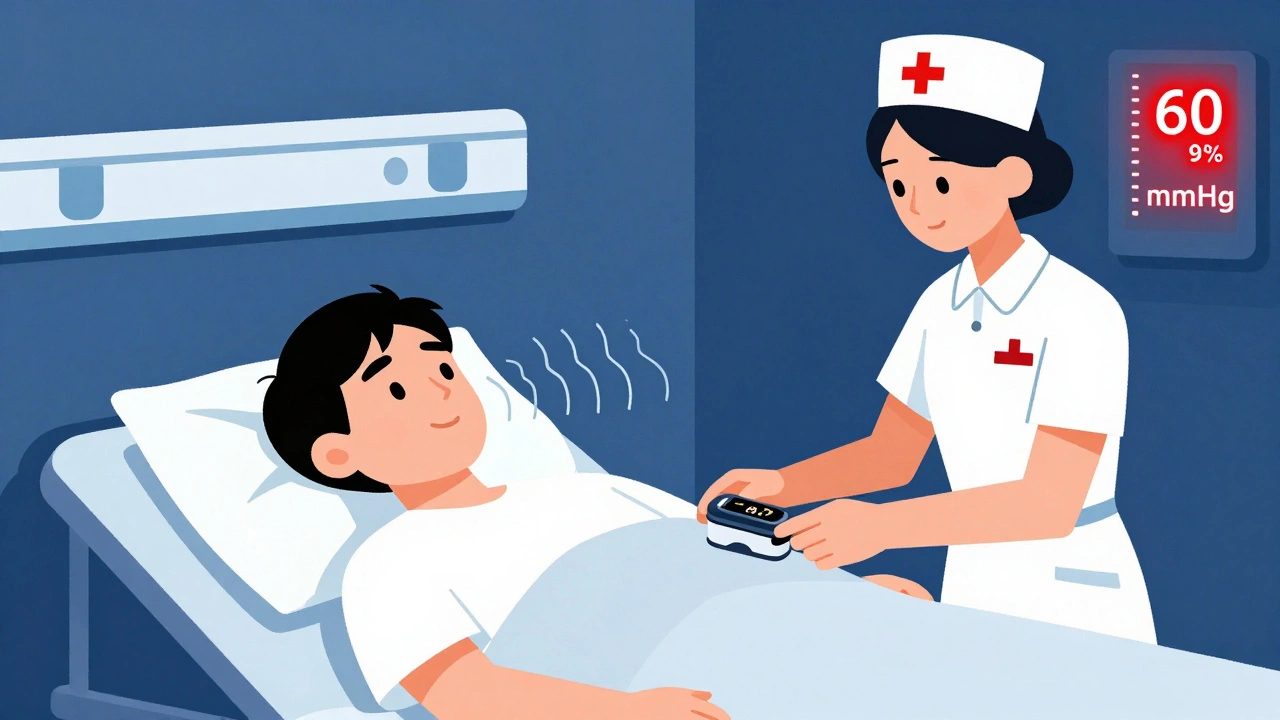
Supplemental oxygen can hide this. A patient on a nasal cannula might still have an oxygen saturation of 92%, but their carbon dioxide levels could be spiking to 60 mmHg or higher - a silent killer. Without capnography, you won’t see it. That’s why relying only on pulse oximetry is risky. The body isn’t getting enough air. It’s just being tricked into thinking it is.
The Real Red Flags - Beyond Slow Breathing
Slow breathing is the core sign, but it rarely comes alone. Look for the full cluster:
- Extreme drowsiness or inability to wake up, even with loud stimuli
- Confusion, disorientation, or slurred speech
- Dizziness or lightheadedness that doesn’t improve with sitting up
- Nausea and vomiting - present in over 65% of confirmed cases
- Headache - often severe and persistent
- Tiredness that feels deeper than normal fatigue - 78% of patients report this
- Fast heart rate (tachycardia) - counterintuitive, but common as the body tries to compensate
These aren’t side effects. They’re warning signs. If you see two or more of these in someone who’s taken an opioid or other sedative, treat it like an emergency - even if their oxygen looks okay.
Who’s at Highest Risk?
Not everyone who takes opioids gets respiratory depression. But certain people are far more vulnerable:
- People over 60 - their bodies clear drugs slower, and their respiratory drive is naturally weaker
- Women - they’re 1.7 times more likely to experience it, possibly due to body composition and metabolism differences
- Opioid-naïve patients - those who’ve never taken opioids before are 4.5 times more at risk than those with tolerance
- People with multiple health conditions - each additional illness like COPD, heart failure, or sleep apnea increases risk by nearly 3 times
- Anyone mixing opioids with other CNS depressants - benzodiazepines, alcohol, sleep aids, or even some antihistamines
The most dangerous combo? Opioid plus benzodiazepine. That mix increases the chance of respiratory depression by 14.7 times. That’s not a small risk. That’s a red flag that should stop any prescription cold.
Why Hospitals Are Still Failing
Even in modern hospitals, respiratory depression slips through the cracks. Why?
First, vital signs are often checked only every 4 hours. That means a patient is unmonitored 96% of the time. If someone starts breathing slowly at 10 p.m., they might not be found until 2 a.m. - by then, it’s too late.
Second, staff don’t always recognize the signs. Only 42% of nurses correctly identify early respiratory depression in simulation tests. They see “sleepy patient” and think “normal post-op.” They don’t see the subtle changes in breathing pattern, the delayed response to pain, the irregular rhythm.
Third, alarm fatigue is real. When monitors beep constantly for minor changes, staff start ignoring them. In 68% of hospital units, alarms are routinely silenced or turned off. That’s not negligence - it’s system failure.
What Works - Proven Prevention Strategies
Some hospitals have cut respiratory depression cases by nearly half. How? Three things:
- Continuous monitoring for high-risk patients - anyone with two or more risk factors gets pulse oximetry and capnography hooked up all night, not just checked every 4 hours.
- Pharmacist-led opioid dosing - pharmacists review every opioid prescription for drug interactions, patient history, and proper dosing based on tolerance. They catch dangerous combinations before they’re given.
- Mandatory staff training - nurses, aides, and even receptionists learn to spot the signs. They’re not just trained - they’re tested.
And it’s working. Hospitals using these protocols have seen a 47% drop in respiratory depression events. It’s not magic. It’s basic, consistent care.
The Lifesaving Drug - Naloxone
If respiratory depression happens, naloxone is the antidote. It reverses opioid effects within minutes. But it’s not a cure-all.
Naloxone wears off faster than most opioids. A patient might wake up, breathe normally for 30 minutes - then crash again as the opioid kicks back in. That’s why monitoring must continue for hours after naloxone is given.
Also, giving too much naloxone can cause violent opioid withdrawal - sweating, shaking, vomiting, and extreme pain. For cancer patients on long-term opioids, this can be unbearable. That’s why trained staff titrate naloxone slowly - enough to restore breathing, not enough to cause agony.
Every hospital should have naloxone available. Every family member caring for someone on opioids should know where it is and how to use it. Nasal spray versions are easy. No training needed.
The Bigger Picture - It’s Not Just Opioids
Opioids get all the attention, but they’re not the only drugs that shut down breathing. Benzodiazepines like Xanax or Valium. Sleep meds like Ambien. Muscle relaxants. Even some antidepressants in overdose. Alcohol - especially mixed with any of these - is a silent partner in many deaths.
The mechanism is the same: central nervous system depression. The brain stops telling the lungs to breathe. The signs are identical. The treatment? Naloxone only works for opioids. For other drugs, it’s about support - oxygen, ventilation, time.
That’s why it’s critical to know what someone took. If they’re unresponsive and you don’t know if it was an opioid or something else - give naloxone anyway. It won’t hurt if it’s not an opioid. And if it is, you just saved their life.
What You Can Do Right Now
If you or someone you care for is on opioids or other sedatives:
- Ask your doctor: “Is this the lowest effective dose?”
- Ask: “Are there any other meds I’m taking that could make this worse?”
- Never mix opioids with alcohol or sleep aids - not even one drink.
- Keep naloxone at home if someone is on opioids long-term. Know how to use it.
- Monitor breathing for at least 2 hours after a new dose, especially in older adults or opioid-naïve patients.
- If breathing slows, becomes irregular, or the person can’t be woken - call emergency services immediately. Don’t wait.
This isn’t about fear. It’s about awareness. Respiratory depression doesn’t happen suddenly. It creeps in. It hides behind calmness. But if you know the signs, you can stop it before it’s too late.
Can you die from respiratory depression caused by opioids even if you’re not an addict?
Yes. In fact, most fatal cases happen in people who took opioids exactly as prescribed - after surgery, for chronic pain, or following an injury. Addiction isn’t required. All that’s needed is a dose that overwhelms the brain’s breathing control center. Opioid-naïve patients, older adults, and those on multiple medications are at highest risk - even if they’ve never misused drugs.
Does supplemental oxygen prevent respiratory depression?
No. Oxygen keeps blood oxygen levels up, but it doesn’t fix the root problem: the brain isn’t telling the lungs to breathe. A patient can have 95% oxygen saturation and still be retaining deadly levels of carbon dioxide. This is called “hidden hypercapnia.” Relying on oxygen alone can delay recognition and treatment, making outcomes worse.
How long does it take for respiratory depression to become life-threatening?
It can happen in as little as 10 to 20 minutes after a high dose, especially with intravenous opioids. In slower-onset cases - like oral doses or in elderly patients - it may take hours. But once breathing drops below 8 breaths per minute and oxygen saturation falls below 85%, brain damage can begin within minutes. Time is critical.
Can wearable devices detect opioid-induced respiratory depression?
Some newer smart monitors - like those from Masimo and Philips - combine pulse oximetry, capnography, and AI algorithms to predict respiratory depression up to 15 minutes before symptoms appear. These are used in hospitals, not consumer wearables. Consumer fitness trackers cannot reliably detect this condition. They measure heart rate and movement, not breathing depth or carbon dioxide levels.
Is respiratory depression more common in hospitals or at home?
Most documented cases happen in hospitals, especially after surgery. But the real number is likely higher at home. Many deaths go unreported because they’re labeled as “natural causes” or “overdose” without recognizing the role of prescribed medications. Patients discharged on opioids with no follow-up monitoring are at serious risk - especially if they’re elderly or on other sedatives.
What should I do if I suspect someone is experiencing respiratory depression?
Call emergency services immediately. Try to wake the person. If they’re unresponsive and you have naloxone, administer it right away - even if you’re unsure it’s an opioid. If they’re not breathing, start rescue breathing. Don’t wait. Don’t assume they’ll wake up. Respiratory depression doesn’t resolve on its own. Every minute counts.
Sarah Clifford
December 10, 2025 AT 11:55This is wild, but I swear my uncle died from this after his knee surgery. They said it was 'natural causes.' No one even mentioned opioids. Like, come on.
Regan Mears
December 11, 2025 AT 17:06I can't believe how many people still think oxygen is a fix-all. It's not. It's a band-aid on a bullet wound. The brain stops telling the lungs to breathe-that's the real killer. And yeah, nurses aren't trained to catch it early. I've seen it happen. We need continuous monitoring, not hourly checks. It's not optional-it's basic safety.
Stephanie Maillet
December 11, 2025 AT 18:47It’s fascinating, really, how our bodies are designed to survive-but also how easily that design can be undone by a single molecule. The brainstem, this ancient, automatic part of us, just… shuts down. Not because it’s weak, but because it’s been overridden. And we treat it like a side effect? We’re not just failing patients-we’re failing our own biology. We need to stop seeing this as medical error and start seeing it as systemic neglect.
Kaitlynn nail
December 12, 2025 AT 20:24So… opioids = bad. Naloxone = good. Got it. Moving on.
Michelle Edwards
December 13, 2025 AT 09:57This is so important. My mom’s on long-term opioids for chronic pain, and I didn’t even know about the 8-breaths-per-minute warning. I’m keeping naloxone in the medicine cabinet now. And I told my whole family how to use it. Thank you for sharing this. You might’ve just saved someone’s life.
Jack Appleby
December 15, 2025 AT 07:37Let’s be clear: the notion that 'opioid-naïve patients are 4.5x more at risk' is statistically sound-but only if you control for age, renal function, and concurrent CNS depressants. Most studies don’t. Also, capnography isn’t 'luxury tech'-it’s the gold standard. If your hospital doesn’t use it for high-risk patients, they’re practicing negligence, not medicine. And yes-benzos + opioids = death cocktail. Period.
Nikki Smellie
December 15, 2025 AT 18:12Are you aware that this whole 'opioid crisis' is a pharmaceutical industry scam? They pushed these drugs while knowing the risks. And now they're hiding behind 'medical necessity.' The FDA is complicit. Hospitals? They're paid per procedure, not per patient outcome. Naloxone? It's a Band-Aid. The real solution? Burn the whole system down. 💔👁️🗨️
Neelam Kumari
December 17, 2025 AT 05:17Wow. So you wrote a 2000-word essay… and still didn’t mention that most of these deaths happen because doctors are lazy and don’t adjust doses for elderly patients. Or maybe they just don’t care. 🤷♀️