
Questions to Ask Your Pharmacist About Potential Drug Interactions
 Dec, 4 2025
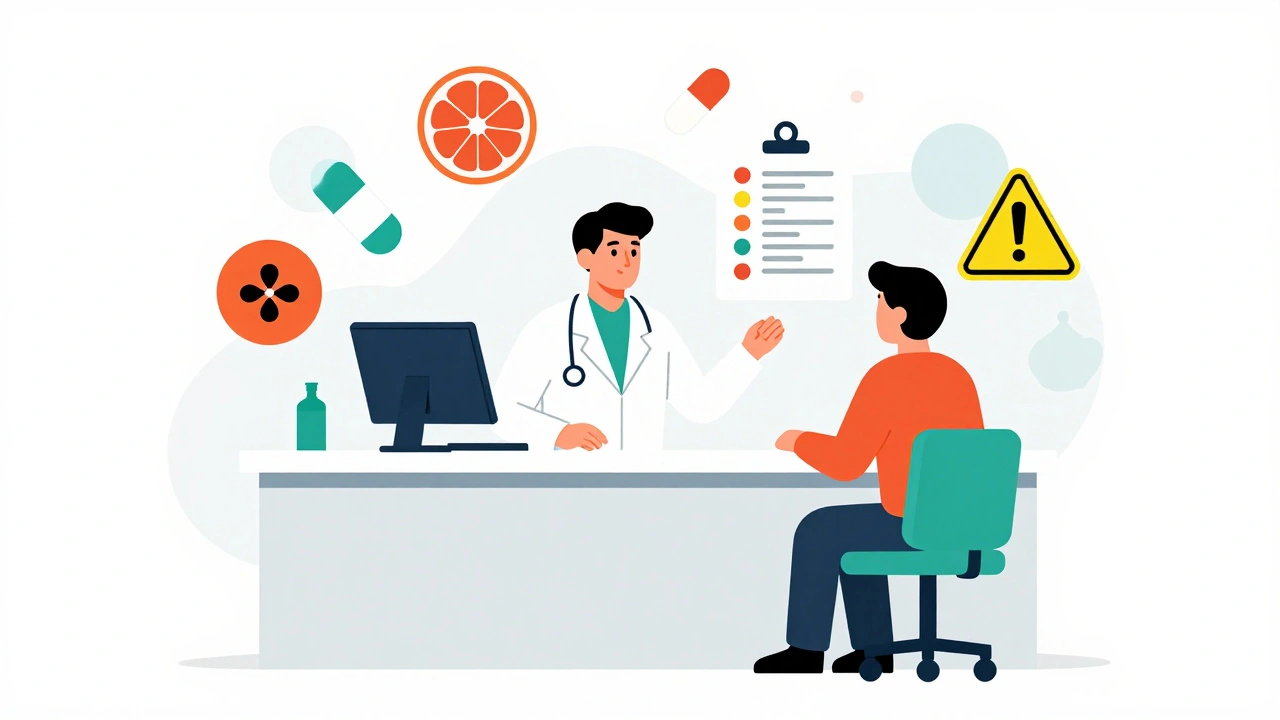
Every year, over 1.3 million people in the U.S. end up in the emergency room because of dangerous drug interactions. Many of these cases are preventable - and the person who can help you avoid them isn’t your doctor, but your pharmacist.
You don’t need to wait until something goes wrong. Before you even take a new pill, you should know exactly how it might react with what you’re already taking. That’s why asking the right questions at the pharmacy isn’t optional - it’s essential.
What exactly is a drug interaction?
A drug interaction happens when one substance changes how another substance works in your body. It could be another prescription, an over-the-counter painkiller, a vitamin, a herbal supplement, or even grapefruit juice. These interactions can make a drug less effective, cause unexpected side effects, or create serious health risks.
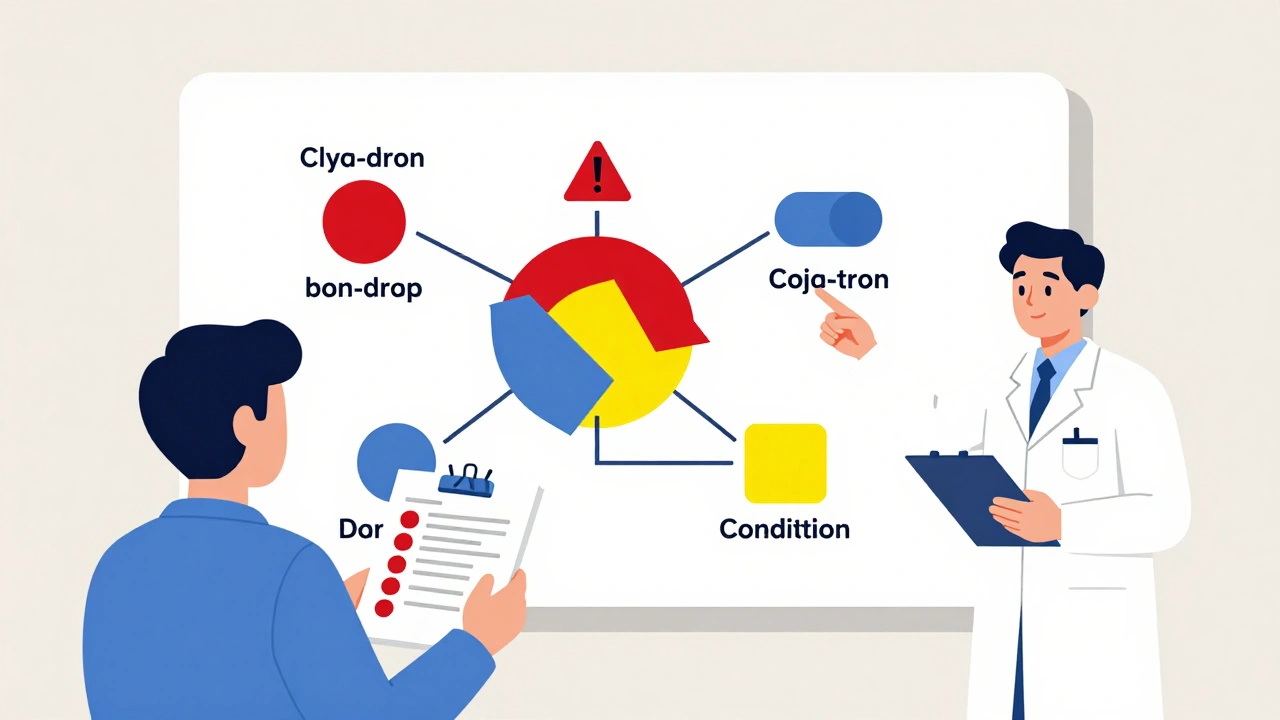
There are three main types:
- Drug-drug: When two or more medications react (like blood thinners and NSAIDs).
- Drug-food/beverage: When food or drink affects absorption (like grapefruit juice and statins).
- Drug-condition: When a medical condition makes a drug unsafe (like decongestants raising blood pressure in people with hypertension).
Some interactions are mild. Others can lead to hospitalization - or worse. That’s why you need to treat every new medication like a potential wildcard.
What should you ask your pharmacist before taking a new medication?
Don’t just take the prescription and walk out. Bring your list. Ask these questions - and mean it.
- Can this medicine interact with anything else I’m taking? This includes every pill, patch, inhaler, injection, and supplement. Don’t leave out the “harmless” ones like melatonin, fish oil, or turmeric. They can still cause problems.
- Should I avoid any foods, drinks, or alcohol? Grapefruit juice can make cholesterol drugs 15 times stronger. Alcohol can double the drowsiness from anxiety meds. Even a single glass can be risky. Ask specifically about your favorite foods or drinks.
- What are the warning signs of a bad reaction? You need to know what to watch for. Dizziness? Rapid heartbeat? Unusual bruising? Nausea that won’t go away? These aren’t just side effects - they could be red flags.
- Will this interfere with my existing health conditions? If you have high blood pressure, diabetes, kidney disease, or liver problems, some drugs can make them worse. A common OTC decongestant like pseudoephedrine can spike your blood pressure. Your pharmacist knows which ones to avoid.
- When and how should I take this? Some pills need to be taken on an empty stomach. Others must be taken with food to reduce irritation. Timing matters. Taking a medication two hours before or after another can prevent a dangerous interaction.
- Do any of my current meds affect how this one works? Your body breaks down drugs using liver enzymes. Some medications block or speed up those enzymes. For example, St. John’s wort can make birth control, antidepressants, and even some heart drugs stop working. Ask if your current meds are “inhibitors” or “inducers” of CYP3A4 or CYP2C19 - even if you don’t know the terms, your pharmacist will understand.
- Is there a safer alternative if this one causes issues? Sometimes, switching to a different drug in the same class avoids the interaction entirely. Don’t assume you’re stuck with the first option.
- How do I know if a supplement is safe with my prescriptions? Nearly 77% of American adults take supplements. Most don’t realize they’re drugs too. Vitamin K can make warfarin useless. Calcium can block thyroid meds. Ask about every herbal product, even if it says “natural.”
What information should you bring to the pharmacy?
Pharmacists can’t help if they don’t know the full picture. Don’t rely on memory. Bring this:
- A written list of every medication you take - including dosages and how often (e.g., “Lisinopril 10mg once daily”)
- All over-the-counter drugs - pain relievers, sleep aids, antacids, cold medicine
- Every vitamin, mineral, or supplement - even if you only take it once a week
- A note on herbal products - echinacea, ginkgo, ginger, turmeric, CBD
- Your usual diet - especially if you drink grapefruit juice, eat aged cheese, or consume alcohol regularly
- Your current health conditions - even ones you think are “under control”
Pharmacists are trained to look at your full profile: age, kidney function, liver health, allergies, and more. The more you give them, the better they can protect you.
Why don’t doctors always catch this?
Doctors are busy. They might not know about every supplement you take. They might not see your full medication list unless it’s all in one system. And even if they do, they’re not trained to spot every possible interaction like a pharmacist is.
Pharmacists are the only healthcare professionals whose entire job is to review drug interactions. They use real-time software that checks for over 100,000 possible interactions - but those systems only work if the data is complete.
Studies show that even the best electronic systems miss about 18% of dangerous interactions - because patients forget to mention their herbal tea or their daily protein shake.
What are the most dangerous interactions right now?
Some combinations are more common - and more deadly - than others:
- Warfarin + vitamin K-rich foods (kale, spinach, broccoli): Can make your blood clot dangerously or bleed uncontrollably.
- Statins + grapefruit juice: Can cause muscle damage and kidney failure.
- MAO inhibitors + aged cheese, cured meats, red wine: Can trigger a sudden, life-threatening spike in blood pressure.
- SSRIs + St. John’s wort: Can cause serotonin syndrome - a rare but fatal condition.
- Diabetes drugs + alcohol: Can cause dangerously low blood sugar, especially if you skip meals.
- Antibiotics + birth control pills: Some antibiotics (like rifampin) can reduce effectiveness - even if your doctor says it’s “rare.”
If you take any of these medications, ask specifically about these risks. Don’t assume your pharmacist will bring it up.
How often should you review your meds with a pharmacist?
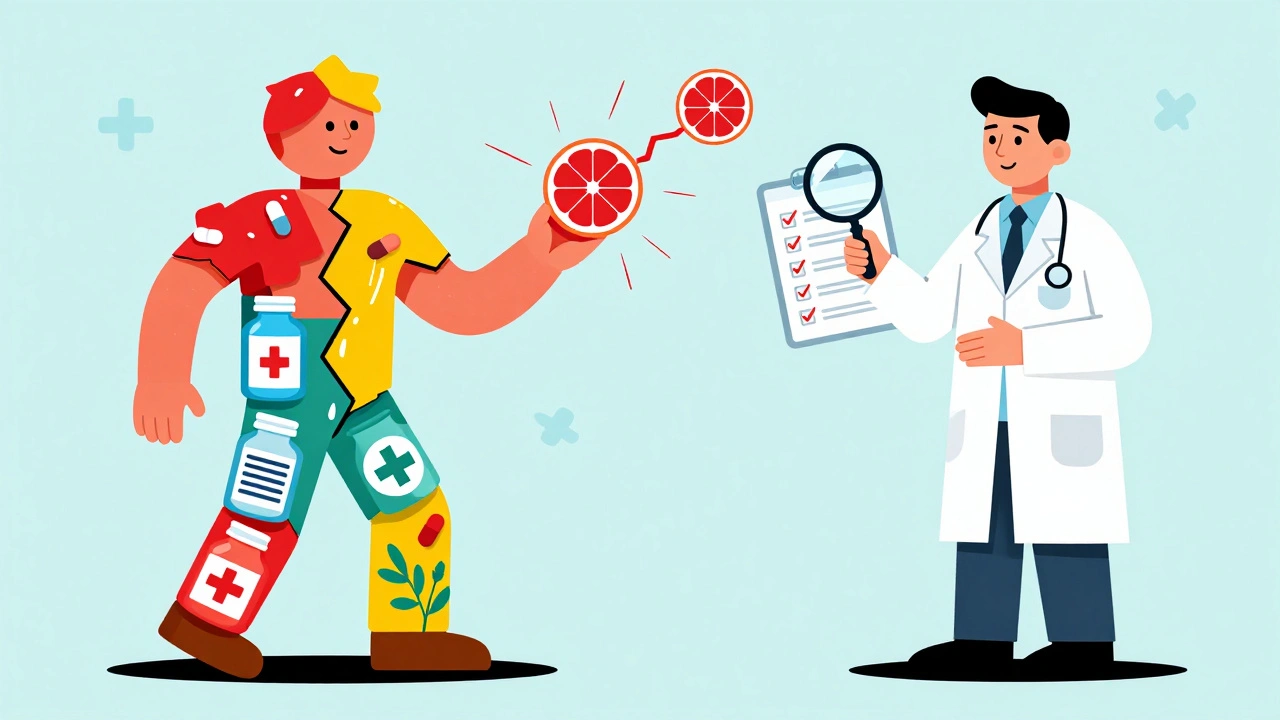
At least once a year - but ideally every time you get a new prescription.
Medication lists grow over time. A pill you started three months ago might now be interacting with something you’ve been taking for years. The most common culprit? The newest drug.
Pharmacists at major chains like CVS and Walgreens now offer free medication reviews. Ask for one. It takes 15 minutes. It could save your life.
What if you’re on 5+ medications?
You’re not alone. Nearly half of adults over 65 take five or more daily medications. That’s called polypharmacy - and it’s the #1 risk factor for dangerous interactions.
But it’s not just seniors. Younger adults are taking more meds too - for anxiety, sleep, pain, and chronic conditions. The number of people taking five or more drugs jumped 28% between 2010 and 2022.
If you’re on multiple medications, don’t just rely on your doctor’s checklist. Go to the pharmacy and say: “I’m on six medications. Can you tell me if any of them are fighting each other?”
Pharmacists can help you simplify. Sometimes, they can suggest combining pills, switching to safer alternatives, or stopping something you no longer need.
What’s the bottom line?
Drug interactions aren’t rare. They’re common. And they’re preventable.
Your pharmacist isn’t just the person who hands you your pills. They’re your last line of defense. They know what your doctor might miss. They’ve seen what happens when people don’t ask questions.
Next time you pick up a prescription, don’t just say thanks and leave. Sit down. Ask the questions. Bring your list. Be specific. Your life might depend on it.
aditya dixit
December 5, 2025 AT 21:14Most people treat pharmacies like a vending machine for pills. But if you actually sit down and talk to the pharmacist like a human, they’ll spot things your doctor missed-like that turmeric supplement you take for ‘inflammation’ wrecking your blood thinner. It’s not magic, it’s just training. They see 50+ med lists a day. You only have one. Let them help.
Lynette Myles
December 6, 2025 AT 13:09They’re not just checking interactions-they’re tracking your every pill to sell you more. Big Pharma owns the software. They flag ‘dangerous’ combos so you’ll buy their ‘safer’ version. Ask for the raw data. They won’t give it.
Jimmy Jude
December 7, 2025 AT 06:20Let’s be real-this whole ‘ask your pharmacist’ thing is just corporate propaganda to make you feel better about being medicated. You don’t need to ‘review’ your meds. You need to question why you’re on them in the first place. Who decided you needed five pills to live? Not you. Not your body. Someone in a suit with a spreadsheet.
I stopped taking everything except water and sunlight. My blood pressure? Better. My anxiety? Gone. No interaction. No side effects. Just me.
Chris Brown
December 8, 2025 AT 22:36It is, in fact, a moral imperative to disclose every substance ingested, whether pharmaceutical, botanical, or otherwise, to one’s pharmacist. Failure to do so constitutes an act of negligence bordering on self-harm. The integrity of the healthcare system depends on transparency, not convenience.
One cannot reasonably expect a pharmacist to divine the contents of one’s medicine cabinet from a vague recollection. The burden of responsibility lies with the patient. Period.
Carole Nkosi
December 10, 2025 AT 18:00You think this is about safety? It’s about control. They want you dependent. They want you coming back every month. They profit from your confusion. You think they care if you live? They care if you keep buying. That ‘free review’? It’s a trap. They’ll find something ‘wrong’ so you’ll buy their brand-name replacement. Wake up.
Mellissa Landrum
December 11, 2025 AT 02:42grapefruit juice + statins = bad? yeah right. my uncle took 2 gallons a day and lived to 92. also, who even uses warfarin anymore? they got them new pills now. and why are we still using paper lists? just scan your barcode. smh.
Mark Curry
December 12, 2025 AT 00:06Good stuff. I just started taking metformin and asked my pharmacist about alcohol. She said ‘one beer once in a while is fine, but don’t drink on an empty stomach.’ Simple. Helpful. No drama. Just facts. 😊
Manish Shankar
December 13, 2025 AT 22:28While the information presented is both comprehensive and commendable, I must emphasize the profound responsibility borne by the individual in maintaining an accurate and updated pharmacological profile. In my native India, where polypharmacy is increasingly prevalent among urban populations, the absence of centralized medical records renders the pharmacist’s role not merely advisory, but indispensable. I have personally witnessed a 72-year-old patient avoid a life-threatening interaction solely because she brought a handwritten list, including her daily turmeric paste and neem tablets. This practice, though simple, is a quiet act of dignity and self-preservation.
luke newton
December 15, 2025 AT 02:17You people are missing the point. This whole ‘ask your pharmacist’ thing is just a distraction. The real problem is that doctors are overprescribing because they’re paid by the pill. They don’t care if you live or die-they care if you refill. The pharmacist? They’re just the guy who gets paid to say ‘yes’ to the script. You think they’re your ally? They’re a cog. And you’re the fuel.
I used to take 8 meds. Now I take zero. I eat real food. Walk. Breathe. And guess what? I’m healthier than half the people in this thread. You don’t need more questions. You need to stop listening to people who profit from your sickness.