
Prescription Assistance Programs: How Drug Manufacturers Help You Afford Medications
 Dec, 10 2025
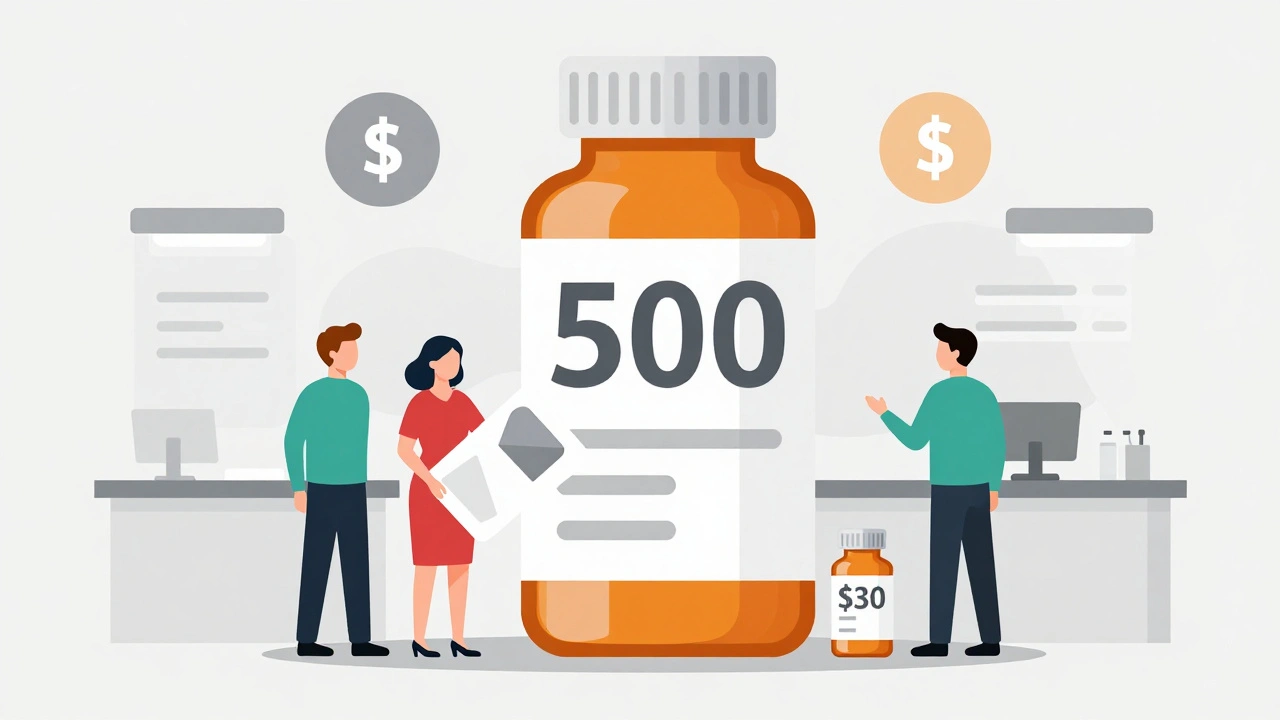
When your prescription costs $500 a month and your insurance only covers $50, what do you do? For millions of Americans, the answer isn’t just cutting back on pills-it’s turning to prescription assistance programs run directly by drug manufacturers. These aren’t charity handouts. They’re structured, official programs designed to bridge the gap between what you can afford and what your medicine actually costs.
Two Kinds of Help: Copay Cards and Free Medicines
Pharmaceutical companies offer two main types of assistance: copay assistance programs and Patient Assistance Programs (PAPs). They sound similar, but they’re built for completely different people.Copay assistance is for people who have insurance-Medicare, Medicaid, or private plans-but still pay too much out of pocket. Think of it like a coupon you swipe at the pharmacy. The manufacturer pays the difference between what your plan says you owe and what the drug actually costs. For example, if your asthma inhaler costs $300 and your copay is $150, the copay card might cover $120, leaving you with just $30. Some programs cap how much they’ll pay per year-$10,000 is common. Others limit it per month, like $150 max. You’ll often see these cards for specialty drugs: biologics for rheumatoid arthritis, cancer treatments, or rare disease therapies. About 85% of specialty drugs now come with some kind of manufacturer copay card.
Patient Assistance Programs (PAPs) are for people without insurance or with very little. If you make under 400% of the Federal Poverty Level-roughly $60,000 a year for a family of four-you might qualify for free or deeply discounted meds. These aren’t coupons. You apply, send in tax forms, proof of income, and a doctor’s note. If approved, you get the medicine shipped to your home or picked up at a pharmacy at no cost. Some PAPs, like Teva’s Cares program, cover dozens of generic and brand-name drugs. Others are limited to just one or two.
Why Your Insurance Might Block These Programs
Here’s the catch: your insurance plan might not let you use the copay card the way you expect. Many insurers now use something called a copay accumulator. That means the manufacturer’s money doesn’t count toward your deductible or out-of-pocket maximum. So even if your copay card saves you $100 a month, your deductible still stays at $5,000. That’s a big deal. It means you’ll stay in the coverage gap longer, paying full price until you hit that high threshold.Twenty-two states have passed laws to stop this practice. But in most places, insurers can still do it. And if you’re on Medicare Part D, the rules are even trickier. Manufacturer copay assistance doesn’t count toward your True Out-of-Pocket (TrOOP) costs, which determines when you exit the coverage gap. So you might pay less each month-but you’ll stay stuck in the donut hole longer. That’s why some people end up paying more overall, even with a card.
And if you’re on Medicaid? Most manufacturer copay programs won’t work for you. Medicaid rules in 78% of states ban these cards because they believe the programs drive up drug prices by pushing people toward expensive brand-name drugs instead of cheaper generics. PAPs, on the other hand, are usually allowed-but many still exclude Medicaid and Medicare recipients. So if you’re on government insurance, you might be stuck paying full price, even if you’re low-income.

Who Benefits-and Who Gets Left Out
In 2022, drug companies gave away $24.5 billion in assistance, helping 12.7 million people. That’s a huge number. Without these programs, experts estimate over 2 million more people would skip doses or stop taking their meds entirely because of cost.But the system isn’t fair. A 2022 study in JAMA Internal Medicine found copay assistance programs may actually increase total drug spending by $1.4 billion a year. Why? Because when patients pay less out of pocket, they’re more likely to choose the brand-name drug-even when a generic exists. Drugmakers benefit. Insurers pay more. And taxpayers end up footing the bill through higher premiums and government programs.
Meanwhile, the people who need the most help often struggle the most to get it. Applying for a PAP can take 45 to 60 minutes per program. You need tax returns, pay stubs, doctor letters. If you’re working two jobs, don’t have a computer, or speak limited English, it’s nearly impossible. A 2022 survey found only 37% of eligible patients even knew these programs existed.
And here’s the silent problem: PAPs don’t count as insurance. So if you rely on them, you’re not building any coverage. If your income rises even a little, you lose everything. There’s no safety net. That’s why experts say these programs are a band-aid-not a cure-for broken drug pricing.
How to Find and Use These Programs
You don’t need to guess or call 10 pharmacies. There’s a free, official tool called the Medicine Assistance Tool (MAT), run by the pharmaceutical industry group PhRMA. It’s searchable by drug name, condition, or income level. It pulls up every program you might qualify for-copay cards, PAPs, even nonprofit grants.For copay cards:
- Ask your doctor if a copay card exists for your prescription.
- Get the card printed or emailed to you.
- Bring it to the pharmacy with your insurance card.
- The pharmacist will apply it automatically.
For PAPs:
- Go to MAT and search your drug.
- Click on the PAP option.
- Download the application form.
- Gather your documents: last two pay stubs, tax return, proof of residency, and a signed form from your doctor.
- Mail or upload the application.
- Wait 2-4 weeks for approval.
Some programs auto-renew. Others need you to reapply every year. Keep track. Missing a deadline means losing your meds.
What’s Changing-and What’s Coming
The government is starting to pay attention. In October 2023, the Department of Health and Human Services proposed new rules requiring drugmakers to report exactly how much they spend on copay assistance. California passed a law in January 2024 forcing companies to disclose those numbers publicly.Pharmacy systems are also improving. MAT now connects directly to major pharmacy databases. If you’re eligible, the discount can be applied at checkout without you even lifting a finger.
But bigger changes are coming. Analysts predict the total value of these programs will hit $38 billion by 2027. Meanwhile, 14 more states are considering laws to ban copay accumulators. If those pass, patients will finally see the full benefit of the cards they’re given.
Still, the root problem remains: drug prices are too high. These programs keep people alive-but they don’t fix the system. Until that changes, millions will keep relying on coupons and paperwork just to stay healthy.
What to Do Right Now
If you’re struggling to pay for prescriptions:- Ask your doctor: "Is there a copay card or PAP for this drug?" Don’t assume they know-many don’t.
- Search MAT at medicationassistancetool.org. It’s free, confidential, and works on any phone.
- If you’re on Medicare or Medicaid, ask your pharmacist or social worker about state-specific help programs.
- Don’t skip doses. Even one missed pill can make your condition worse-and cost more in the long run.
These programs aren’t perfect. But for now, they’re the only thing standing between you and going without your medicine. Use them. Ask for help. And don’t let bureaucracy stop you from getting what you need.
Paul Dixon
December 12, 2025 AT 09:28Man, I had no idea copay cards could mess with your deductible like that. My mom’s on insulin and she’s been using one for years-never realized she’s still stuck in the donut hole. This post opened my eyes. Thanks for laying it out so clear.
Katherine Liu-Bevan
December 12, 2025 AT 10:49There’s a critical gap here: PAPs require documentation most low-income folks don’t have easy access to. Tax returns? Pay stubs? If you’re gig-working or undocumented, you’re screwed. These programs aren’t designed for the most vulnerable-they’re designed to look good in PR reports. The real fix? Price caps. Not coupons.
Courtney Blake
December 13, 2025 AT 23:36Oh please. Another ‘drug companies are saints’ article. They give away $24B? That’s pocket change compared to the $200B they rake in. These programs exist to keep brand-name drugs dominant. They’re not charity-they’re market manipulation. And now you’re telling people to use them like it’s a win? Wake up.
Jean Claude de La Ronde
December 15, 2025 AT 02:45so like… the pharma bros are the good guys now? cool cool. next they’ll be handing out free hugs and tax deductions. i’m just here wondering how many of these ‘free’ meds come with a side of ‘please don’t sue us’ fine print. also, why does the tool have a .org domain but is run by phrma? smells like a lobbyist’s christmas list.
Eddie Bennett
December 15, 2025 AT 14:57I’ve been on a biologic for MS for 5 years. Copay card saved my life. But yeah, my deductible didn’t move an inch. I’m paying full price on everything else because of it. It’s a trap. They make you feel grateful while the system keeps grinding you down.
Vivian Amadi
December 15, 2025 AT 17:12You’re all missing the point. If you’re poor enough to need PAPs, why are you even on brand-name drugs? Generic exists. Ask your doctor. Stop being lazy. This isn’t a crisis-it’s poor decision-making.
Aman deep
December 15, 2025 AT 20:00bro i tried applying for a PAP last year… spent 3 hours filling forms, called my doc 4 times, mailed stuff, then got a letter saying ‘not eligible due to income verification mismatch’… and i was under 400% fpl. the system is broken like a wifi router in a basement. i love that mat tool tho-saved me 2 weeks of crying into my keyboard 🙏
Monica Evan
December 17, 2025 AT 19:06For anyone struggling: call your local community health center. They have case workers who help with PAP applications for free. No computer? No problem. They’ll print, mail, and even call your doctor for you. I’ve seen it work. It’s not glamorous but it’s real help. Don’t give up.
Jim Irish
December 18, 2025 AT 23:25The most important thing to remember is this: these programs are not healthcare. They are temporary fixes to a broken pricing model. Until drug pricing is regulated, no coupon, card, or application will solve the core problem. We must demand systemic reform, not just individual workarounds.