
Pharmacist Counseling Scripts: Training Materials for Generic Patient Talks
 Dec, 15 2025
When a pharmacist hands you a new prescription, they’re not just giving you pills. They’re handing you a chance to get better. But too often, that chance gets lost in the shuffle. Rushed interactions, unclear instructions, and patients leaving with more questions than answers - it’s a common problem. That’s where pharmacist counseling scripts come in. These aren’t robotic scripts to read word-for-word. They’re structured tools that help pharmacists deliver the right information, every time - even when they’re seeing 20 patients an hour.
Why Scripts Matter More Than You Think
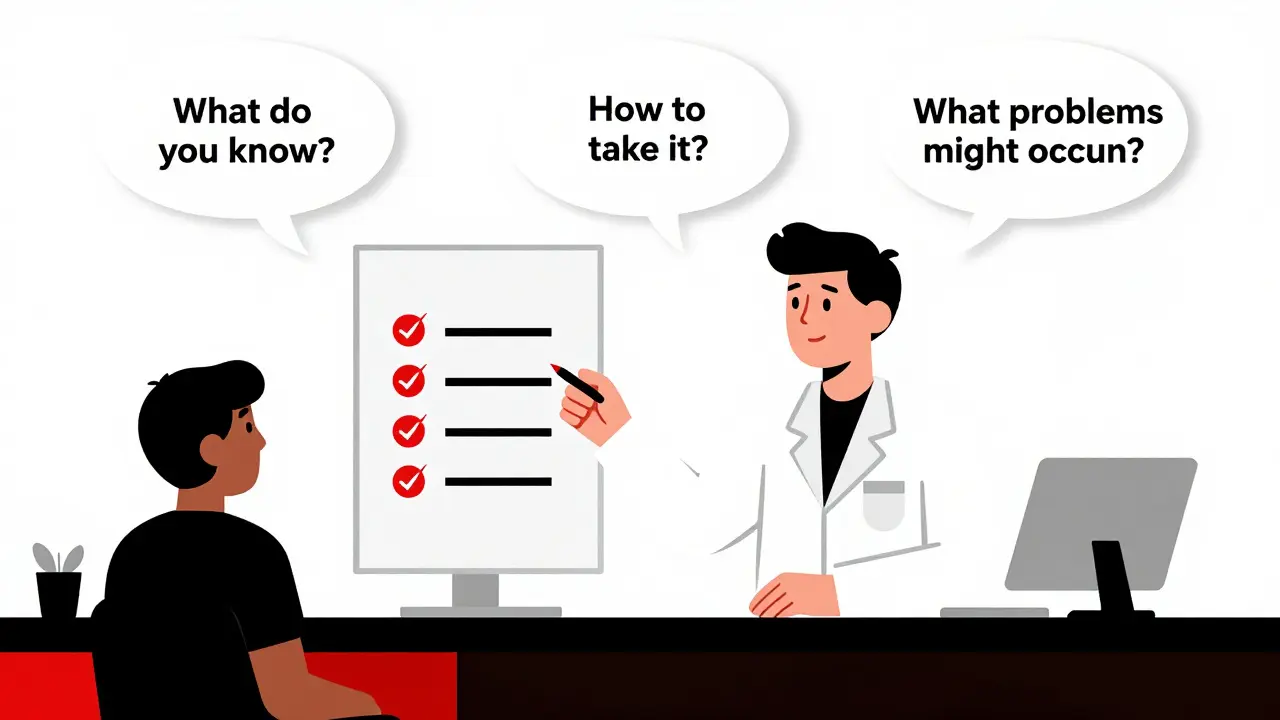
In 1990, the U.S. government passed OBRA '90, a law that changed everything. It said: if you want to get paid for dispensing Medicaid prescriptions, you must counsel patients. Not just offer it. Not just say, “Do you have any questions?” - actually counsel them. That’s when pharmacies started building scripts. Not because they wanted to, but because they had to. But here’s the twist: the best scripts don’t feel like scripts at all. They’re frameworks. Think of them like a recipe. You don’t follow every step blindly. You adjust based on who’s eating. A 78-year-old with three chronic conditions needs different info than a 22-year-old picking up antibiotics for the first time. The core of every solid script? Three questions. That’s it. From the Indian Health Service model, widely taught in pharmacy schools:- What do you already know about this medicine?
- How should you take it?
- What problems might you run into?
What’s Actually Required by Law
Let’s cut through the noise. OBRA '90 didn’t invent counseling - it just made it mandatory. But what exactly must you cover? The federal baseline is clear:- The name and description of the drug
- The dosage form (pill, liquid, patch?)
- How to take it (with food? at night?)
- The dose and how often
- How long to take it
- Special instructions (avoid alcohol? store in fridge?)
- Common serious side effects
How Scripts Are Used in Real Pharmacies
You won’t find many pharmacists reading from a printed page anymore. Most use digital checklists inside their pharmacy software. Walgreens, CVS, and big chains have integrated scripts into their EHR systems. When a prescription is filled, the system auto-pops up a checklist:- [ ] Discussed name and purpose
- [ ] Explained dosage and timing
- [ ] Warned about drowsiness
- [ ] Asked teach-back question
The Teach-Back Method: Your Secret Weapon
Here’s what separates good counseling from great counseling: teach-back. It’s simple. After you explain, you ask: “Can you tell me how you’ll take this?” Not “Do you understand?” That’s a yes/no trap. People say yes even when they’re lost. A patient says: “I take it when I feel pain.” But the pill is meant for daily use, not as-needed. That’s a red flag. You correct it right then. ASHP guidelines say this isn’t optional - it’s essential. And it works. Studies show patients who use teach-back are 30% more likely to take their meds correctly. That’s huge. Medication non-adherence costs the U.S. $312 billion a year. Most of that is preventable.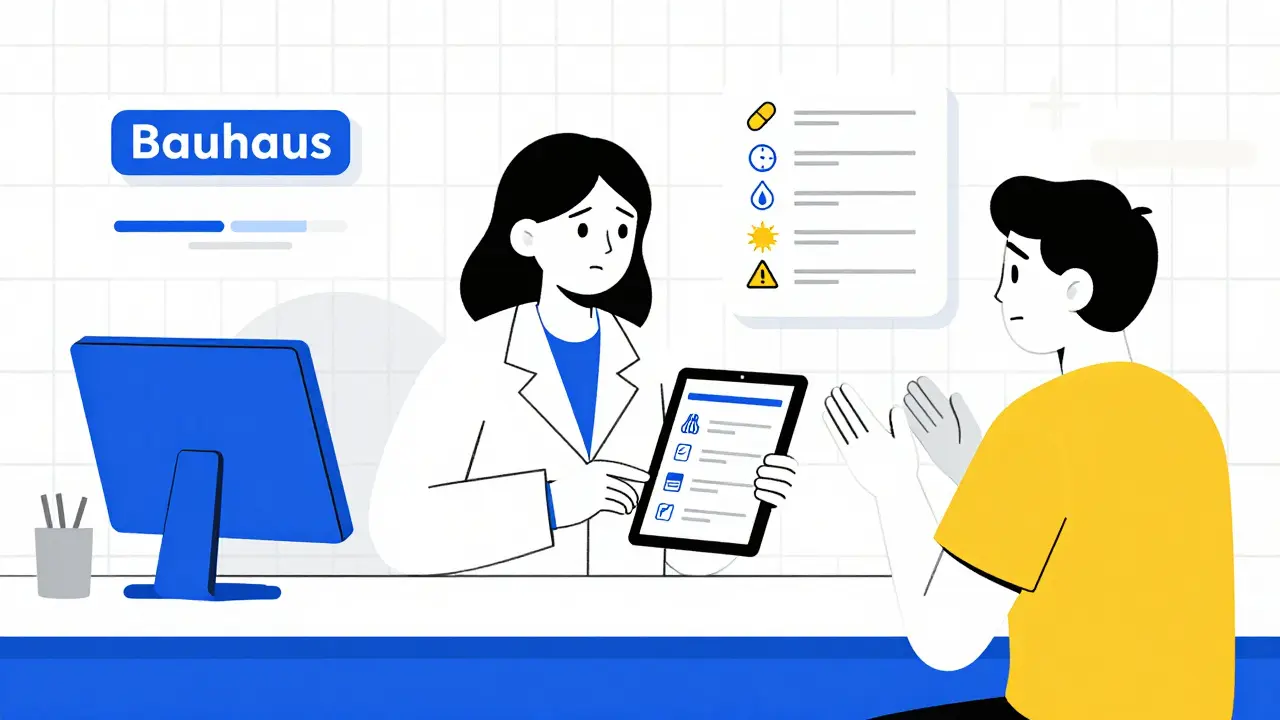
What Happens When You Don’t Use Scripts
Imagine a patient gets a new anticoagulant - warfarin. The pharmacist doesn’t use a script. They say, “Take one daily. Watch for bleeding.” That’s it. Three days later, the patient goes to the ER after a nosebleed that won’t stop. Why? They didn’t know they couldn’t take ibuprofen. Didn’t know they needed weekly blood tests. Didn’t know their diet mattered. All of that was missed. Without structure, critical info slips through. Scripts aren’t about control. They’re about safety.Training New Pharmacists: From Script to Skill
Pharmacy schools don’t teach counseling by handing out scripts. They teach it by role-playing. Students practice with actors playing patients - some confused, some angry, some pretending to be deaf. It takes 8 to 12 weeks before a new pharmacist stops reading scripts like a teleprompter. That’s when they start listening. When they learn to pause. When they realize the best script is the one that sounds like a conversation. The American Pharmacists Association says counseling has five pillars:- Interview the patient
- Get their history
- Teach them
- Give written info
- Talk face-to-face
Language Barriers and Remote Counseling
Not every patient speaks English. Not every patient can come to the counter. That’s where adaptation matters. Many pharmacies now use Language Access Network to print instructions in 150+ languages. For telehealth counseling, pharmacists use video calls with interpreters built into their systems. One community pharmacy in Sydney uses a tablet with live translation - the patient sees the interpreter on screen while the pharmacist speaks naturally. And HIPAA? Always in play. Even over Zoom. Even when talking to a family member. You need written consent before sharing details.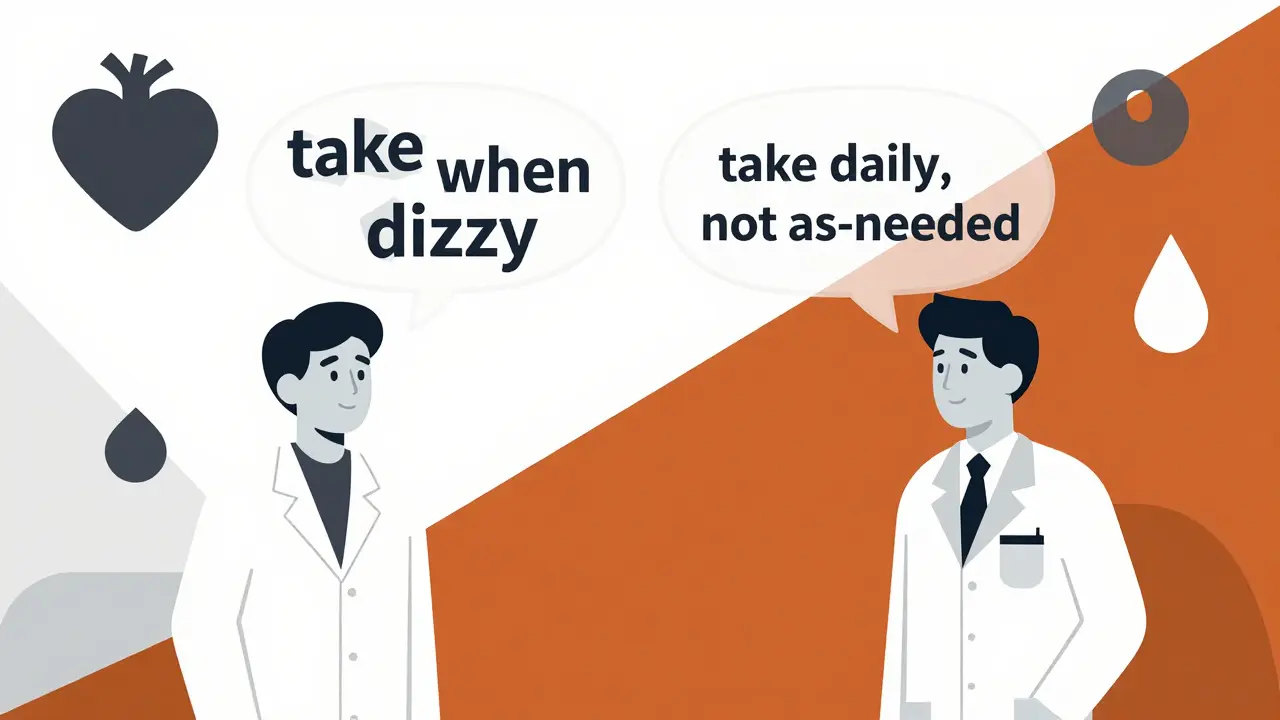
The Future: AI That Listens
The next big thing isn’t a new script. It’s a smart assistant. CVS and Walgreens are testing AI tools that listen to patient responses during counseling and suggest follow-up points in real time. If a patient says, “I feel tired,” the system prompts the pharmacist: “Ask if they’re taking it at night. Mention drowsiness is common.” Pilot data shows patient comprehension jumps 23% compared to static scripts. That’s not science fiction. That’s 2025.What You Should Do Today
If you’re a pharmacist:- Start with the three-question framework. It’s simple, proven, and covers 90% of cases.
- Use teach-back every time. Don’t ask if they understand. Ask them to explain it back.
- Know your state’s rules. Check your pharmacy board’s website - they list what’s required.
- Don’t use corporate scripts that feel unnatural. Adapt them. Make them yours.
- Track your outcomes. Did the patient refill? Did they come back with side effects? That’s the real measure of success.
- Practice scripts until they feel automatic - then break them.
- Role-play with patients who say “I don’t care” or “I’m fine.” That’s where the real learning happens.
- Learn the legal baseline, then go beyond it. Your patients will thank you.
Frequently Asked Questions
Are pharmacist counseling scripts mandatory by law?
Yes, under OBRA '90, pharmacists must counsel Medicaid patients. But requirements vary by state. Thirty-two states only require you to offer counseling, while 18 require you to actually provide it. For controlled substances like opioids, federal rules add extra mandatory topics like naloxone education and safe disposal.
What are the three core questions in pharmacist counseling scripts?
The widely used framework asks: 1) What do you already know about this medicine? 2) How should you take it? 3) What problems might you run into? These questions uncover misunderstandings, confirm dosing knowledge, and identify potential side effects before they become emergencies.
Is the teach-back method really that effective?
Yes. Studies show patients who repeat instructions in their own words are 30% more likely to take medications correctly. It’s not about testing them - it’s about catching errors. If they say, “I take this when I feel dizzy,” but it’s for high blood pressure, you fix it right then.
Can I use the same script for every patient?
No. Scripts are templates, not scripts to read aloud. A diabetic patient on a new statin needs different info than a teenager on antibiotics. The best pharmacists adapt the structure to the person - not the other way around. Rigidity reduces effectiveness.
How do pharmacists document counseling?
Most pharmacies use electronic checklists in their system. They record whether counseling was offered, accepted, and provided. They also note the patient’s level of understanding - not just “yes” or “no,” but “limited,” “partial,” or “good.” Some states, like California, require detailed notes on what was said. Others accept simple checkboxes.
What’s the biggest mistake pharmacists make with counseling scripts?
Reading them verbatim. It makes the interaction feel robotic. Patients tune out. The goal isn’t to check boxes - it’s to build trust. Use the script as a guide, not a script. Listen. Pause. Respond. That’s where real patient education happens.
How do language barriers affect counseling?
They’re a major challenge. One in five patients in Australia and the U.S. speaks a language other than English at home. Pharmacies now use pre-printed instructions in over 150 languages and telephonic interpreters during video or in-person counseling. Never rely on family members to translate - it’s unsafe and violates HIPAA.
Are there tools to help with counseling scripts?
Yes. Many pharmacies use commercial tools like ScriptAssist, PharmCounsel, or integrated EHR modules. These provide pre-built templates, documentation checklists, and even AI prompts that adapt to patient responses. Pricing ranges from $49 to $299 per month per workstation. Chain pharmacies use them at 98% adoption; independents are catching up.
James Rayner
December 16, 2025 AT 16:25Cassandra Collins
December 17, 2025 AT 12:37Mike Smith
December 19, 2025 AT 07:30Ron Williams
December 20, 2025 AT 11:17Kitty Price
December 20, 2025 AT 14:05Aditya Kumar
December 21, 2025 AT 07:22Colleen Bigelow
December 21, 2025 AT 11:31Andrew Sychev
December 23, 2025 AT 05:02Kim Hines
December 23, 2025 AT 07:09Joanna Ebizie
December 23, 2025 AT 14:08Elizabeth Bauman
December 25, 2025 AT 07:59