
Osteoporosis Medications: How Bisphosphonates and Calcium Work Together (and When They Fight)
 Nov, 27 2025
Bisphosphonate & Calcium Timing Calculator
Bisphosphonates like alendronate, risedronate, and zoledronic acid work best when taken at least 30-60 minutes apart from calcium supplements. Taking them together can reduce medication effectiveness by up to 90%, increasing your risk of fractures.
This tool helps you calculate the optimal timing for your medications based on your daily schedule.
Set Your Medication Schedule
Optimal Timing
You should take your bisphosphonate first thing in the morning on an empty stomach with water. Then wait before taking calcium.
Why this timing matters
Calcium and bisphosphonates bind together in your stomach, reducing absorption by up to 90%. Waiting 30-60 minutes prevents this interaction.
Your Schedule
Bisphosphonate:
Calcium:
Tips for Success
- Use a pill organizer with labeled compartments
- Set two alarms: one for bisphosphonate, one for calcium
- Stay upright for 30-60 minutes after taking bisphosphonate
- Take calcium with food (calcium citrate can be taken on empty stomach)
Imagine taking a pill every week to protect your bones, only to find out you’ve been doing it wrong this whole time. That’s the reality for thousands of people on bisphosphonates for osteoporosis. The problem isn’t the medicine-it’s how and when they take calcium. This isn’t just a minor detail. Getting the timing wrong can cut the drug’s effectiveness by up to 90%. And if you’re not getting results, you’re at real risk of breaking a hip, a spine, or a wrist-fractures that can change your life forever.
Why Bisphosphonates Are a Big Deal
Bisphosphonates like alendronate, risedronate, and zoledronic acid are the most common drugs used to treat osteoporosis. They don’t build new bone. Instead, they slow down the cells that break it down-osteoclasts. Think of your skeleton like a construction site: osteoblasts build, osteoclasts tear down. In osteoporosis, the demolition crew gets out of control. Bisphosphonates step in and shut them down, helping preserve bone density. Clinical trials show these drugs reduce spine fractures by 40-50% and hip fractures by 20-25%. That’s not small. It’s life-changing.What’s surprising is that the fracture protection is stronger than what you’d expect just from increased bone density. Recent studies suggest bisphosphonates also improve bone quality by stabilizing the tiny network of osteocytes-cells that sense stress and signal repairs. So even if your DEXA scan doesn’t jump dramatically, your bones are getting tougher.
The Calcium Problem
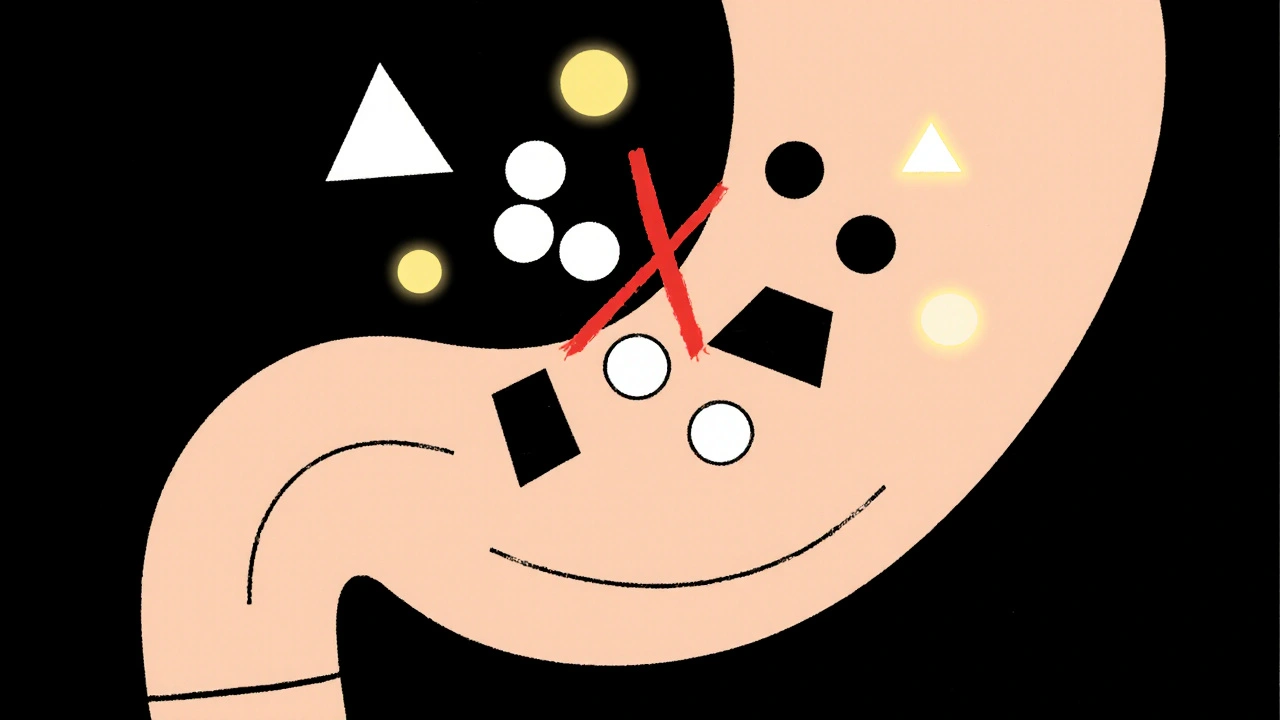
Here’s where things go sideways. Calcium is essential. Your body needs it to make bone, and without enough, even the best bisphosphonate won’t work. Guidelines from the American College of Rheumatology, the Endocrine Society, and the International Osteoporosis Foundation all say you need 500-1,000 mg of supplemental calcium daily on top of what you eat. But here’s the catch: calcium and bisphosphonates don’t get along in your gut.When calcium and bisphosphonates meet in your stomach, they bind together into an insoluble complex. It’s like mixing oil and water-they just won’t mix properly. That means your body can’t absorb the bisphosphonate. Studies show absorption drops by up to 90% if you take calcium at the same time. That’s not a 10% loss. That’s losing almost all the benefit.
And it’s not just a theory. Real-world data backs this up. A 2006 study by Procter & Gamble found that 40% of patients were taking calcium within hours of their bisphosphonate. Many thought, “I need calcium, so I’ll take it with my pill.” That’s exactly the wrong move.
The Right Way to Take Them
The rules are simple, but strict. Follow them exactly:- Take your bisphosphonate first thing in the morning, on an empty stomach. No food. No coffee. No juice. No tea. Just plain water.
- Stay upright (sitting or standing) for at least 30 to 60 minutes after taking it. Lying down increases the risk of esophageal irritation.
- Wait at least 30-60 minutes before eating, drinking anything else, or taking any other medication-including calcium.
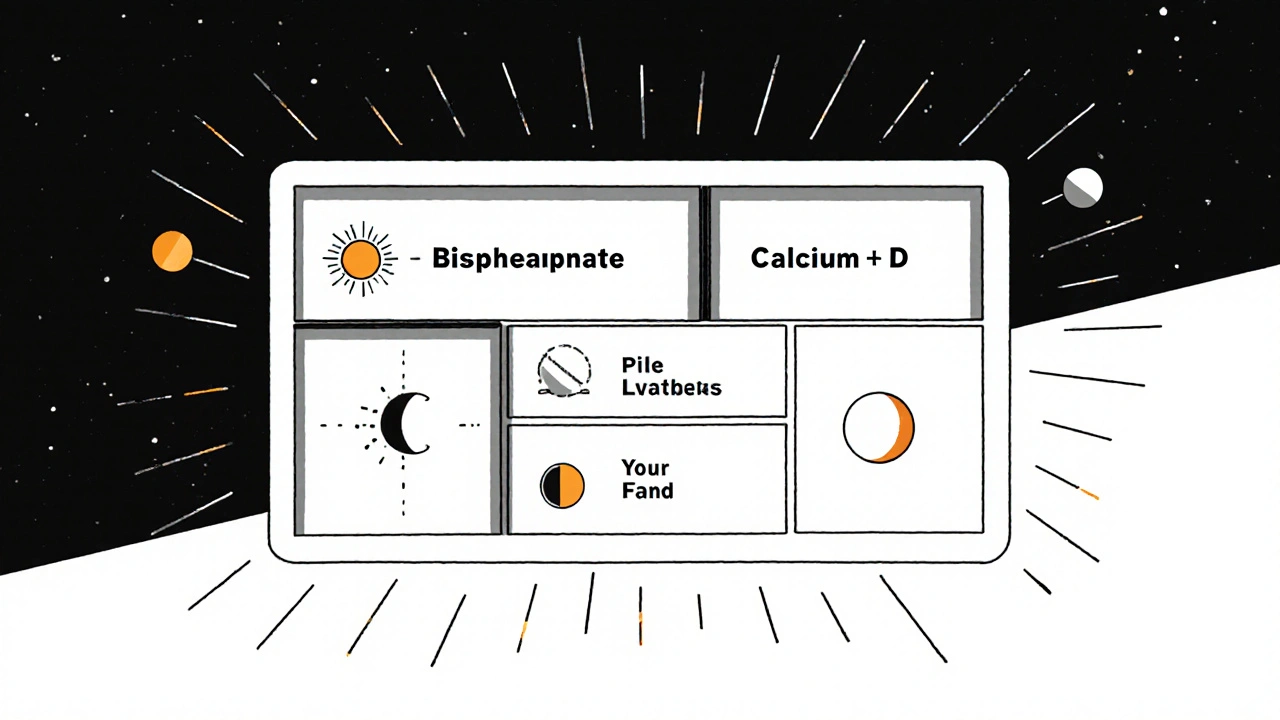
- Take your calcium supplement later in the day. Lunch or dinner is fine. Some people split it: 500 mg at lunch, 500 mg at dinner. That’s better than one big dose.
It sounds rigid, and it is. But this isn’t optional. This is how the science works. Skipping these steps isn’t just inconvenient-it’s dangerous.
What Happens When You Get It Wrong
The consequences aren’t always obvious. You might not feel anything different. But your bones are paying the price.A 2022 survey by the National Osteoporosis Foundation found that 58% of people stopped taking their bisphosphonates within the first year. Why? The top reasons were GI side effects (31%), feeling like it wasn’t working (28%), and difficulty managing the timing rules (23%). That last one? That’s the one we can fix.
People on Reddit’s r/Osteoporosis forum say they’re confused. They take their pill, then grab their calcium gummy or tablet right after. They think they’re doing the right thing. But they’re sabotaging the treatment. One user wrote: “I took my Fosamax and then ate breakfast like normal. I didn’t realize I was wasting it.”
Esophageal irritation is another risk if you don’t stay upright. It’s not common, but it happens. Cleveland Clinic data shows 28% of patients who didn’t follow timing rules reported mild burning or discomfort. That’s avoidable.
Solutions That Actually Work
The good news? There are tools to help.One of the most effective is combination packaging. Actonel with Calcium is a pre-packaged weekly system: one blister has the risedronate tablet, and another has six calcium carbonate tablets. The packaging reminds you: “Take this pill first. Wait 30 minutes. Then take these.”
On Drugs.com, users gave it a 4.2 out of 5. One verified review said: “The calendar system made me actually remember when to take the calcium. I used to forget or mix them up. Now I don’t.”
If you’re not on a combo pack, use a pill organizer with labeled compartments. Put your bisphosphonate in the morning slot. Put your calcium in the afternoon or evening slot. Set phone alarms: one for the pill, one for the calcium. Simple, but powerful.
Vitamin D Is Non-Negotiable
Calcium doesn’t work alone. Your body needs vitamin D to absorb it. The Endocrine Society recommends 800-1,000 IU of vitamin D daily for people on osteoporosis meds. Many people are deficient, especially in places like Melbourne where winter sunlight is limited. A blood test can check your levels. If you’re under 75 nmol/L, your doctor should prescribe a supplement.Some calcium supplements already include vitamin D. Check the label. Look for “elemental calcium” and “IU of vitamin D.” Avoid products with added magnesium or zinc unless your doctor says so-they can interfere too.
The Bigger Picture: Risk vs. Reward
It’s natural to worry about side effects. Osteonecrosis of the jaw (ONJ) and atypical femur fractures sound scary. But here’s the truth: ONJ affects fewer than 1 in 10,000 people per year on bisphosphonates. Atypical fractures? About 1 in 1,000 to 1 in 10,000 per year.Compare that to hip fractures. One in five people who break a hip die within a year. That’s not a statistic-it’s a reality. And bisphosphonates cut that risk significantly. The number needed to treat to prevent one hip fracture over three years is 44. That means for every 44 people on the drug, one fracture is prevented. The risk of harm is tiny compared to the risk of doing nothing.
Doctors now talk about “drug holidays.” After 3-5 years of treatment, if your fracture risk is low, you might pause the bisphosphonate. But calcium and vitamin D? Those stay. Bone health doesn’t turn off when you stop the pill.
What to Do Right Now
If you’re on a bisphosphonate:- Check your current routine. Are you taking calcium within two hours of your pill?
- Call your pharmacy. Ask if a combination pack like Actonel with Calcium is available for your medication.
- Set two alarms: one for your bisphosphonate, one for calcium, six hours apart.
- Ask your doctor for a vitamin D blood test. Don’t guess-test.
- Don’t stop your medication because it’s hard. Fix the timing. The benefit is real.
If you’re not on medication but have osteoporosis or high fracture risk, talk to your doctor about whether bisphosphonates are right for you. Don’t wait until you break a bone to act. Prevention isn’t optional-it’s essential.
Final Thought
Osteoporosis isn’t just about being old. It’s about bone strength, timing, and consistency. Bisphosphonates are powerful tools. Calcium and vitamin D are their partners. But they only work if you treat them like a team-not a free-for-all. Get the timing right, and you’re not just taking pills. You’re protecting your future.Can I take calcium with my bisphosphonate if I just wait a few minutes?
No. Even waiting 10-15 minutes isn’t enough. Studies show calcium can still block up to 70% of bisphosphonate absorption if taken within an hour. The standard recommendation is 30-60 minutes after the bisphosphonate, and only after you’ve eaten nothing else. Don’t guess-follow the full window.
What if I forget and take calcium with my bisphosphonate?
If you accidentally take calcium with your bisphosphonate, skip that dose. Don’t double up later. Wait until the next scheduled day. Taking two doses close together increases side effects without improving results. Consistency over time matters more than perfection in one dose.
Are all calcium supplements the same?
No. Look for “elemental calcium” on the label. Calcium carbonate (found in Tums) is the most common and cheapest, but it needs stomach acid to absorb-so take it with food. Calcium citrate can be taken on an empty stomach and is better for people on acid-reducing meds. For osteoporosis, 500-1,000 mg of elemental calcium daily is the goal, split into two doses.
Can I get enough calcium from food alone?
It’s possible, but hard. One cup of milk has about 300 mg. A serving of yogurt, 250-300 mg. A cup of cooked kale, 90 mg. To hit 1,000 mg from food alone, you’d need to eat dairy or fortified foods at every meal. Most people fall short. Supplements are usually needed to reach the recommended amount, especially when you’re on osteoporosis meds.
Do bisphosphonates work if I don’t take calcium?
They’ll work a little-but not nearly as well. Clinical trials like FIT and VERT only showed strong fracture reduction when patients were also getting enough calcium and vitamin D. Without them, the drug’s ability to prevent fractures drops significantly. Think of calcium as the foundation-bisphosphonates are the reinforcement. You need both.
How long should I stay on bisphosphonates?
Most people take them for 3-5 years. After that, your doctor will reassess your fracture risk using tools like FRAX. If your risk is low, you may take a “drug holiday”-pause the medication while still taking calcium and vitamin D. If your risk is high, you may continue. Never stop without talking to your doctor.
Is there a better alternative if I can’t handle the timing?
Yes. Denosumab (Prolia) is an injectable option given every six months. It doesn’t require fasting or timing rules. But it’s not for everyone-it requires regular injections and carries its own risks. Talk to your doctor. The right choice depends on your health, preferences, and fracture risk-not just convenience.
Leah Doyle
November 28, 2025 AT 18:19Thank you for this. I’ve been taking my Fosamax and then immediately eating yogurt like it’s no big deal… 😅 I just set two alarms-one for 7 AM and one for 5 PM. Feels weird to wait 30 minutes after a pill, but I’d rather not break a hip at 65.
Alexander Rolsen
November 30, 2025 AT 12:26So you’re telling me the entire medical establishment is wrong? That 40% of patients are dumb? That’s rich. I’ve been taking calcium with my bisphosphonate for 8 years and I’m still walking. Your ‘90% effectiveness loss’ is a scare tactic. The real problem? Pharma wants you dependent on more pills.
Madison Malone
December 1, 2025 AT 06:48Hey, I get where you’re coming from-but if you’re still walking, that’s great! Maybe your body just handles it differently. But for a lot of us, especially older women with low bone density, this timing thing is the difference between staying active and ending up in a wheelchair. I switched to the combo pack last year and honestly? Life’s easier now. No more guessing.
Graham Moyer-Stratton
December 3, 2025 AT 04:01Pharma lies. Calcium is natural. Pills are poison. Take sun. Walk. Stop trusting doctors.
tom charlton
December 4, 2025 AT 11:38While I appreciate the clinical data presented, I must emphasize that adherence to pharmacological regimens remains a persistent public health challenge. The temporal separation of bisphosphonate and calcium administration is not merely a pharmacokinetic consideration but a behavioral intervention requiring patient education, systemic support, and longitudinal follow-up. The cited 90% absorption reduction is statistically significant and clinically actionable.
Jacob Hepworth-wain
December 4, 2025 AT 15:18I used to be the guy who took everything at breakfast. Then I broke my wrist lifting a grocery bag. That’s when I started reading. The combo pack saved me. Now I take my pill with water before my coffee, stand by the window, and only eat after I’ve watched two episodes of my show. Works. Simple. No drama.
Chris Kahanic
December 5, 2025 AT 12:01Interesting piece. I’ve been on alendronate for four years. My DEXA improved slightly, but I never felt like I was getting better. I didn’t realize calcium timing could be the issue. I’ve been taking it at lunch. Should I move it to dinner? And is vitamin D3 better than D2?
Craig Hartel
December 5, 2025 AT 13:59Hey Chris, I’m on the same meds! Vitamin D3 is definitely better-it’s the form your body actually uses. And yeah, dinner’s fine for calcium, even better if you eat it with a little fat (like olive oil on greens). I take mine with my salmon. Also, don’t stress if you miss a dose once. Just get back on track. You got this.
Michelle N Allen
December 6, 2025 AT 03:49I read this whole thing and I’m still not sure if I’m supposed to take calcium in the morning or afternoon or if I should just eat more kale or if the doctor is lying or if I’m just too lazy to care. I mean it’s a pill. Why does it have to be so complicated. I’ll just keep doing what I’m doing. I’m 72. I’ve survived this long. Maybe I’ll survive another 10.
Alexis Mendoza
December 6, 2025 AT 22:22It’s funny how we treat our bodies like machines that need perfect programming. But we’re not robots. We forget. We get tired. We eat breakfast because we’re hungry, not because we read a study. Maybe the real solution isn’t stricter rules, but better drugs. Or maybe we need to accept that aging isn’t about avoiding fractures, but living well even if we have them. I’m not saying give up. I’m saying don’t let fear rule your routine.