
Nocebo Effect: How Negative Expectations Undermine Generic Medications
 Dec, 15 2025
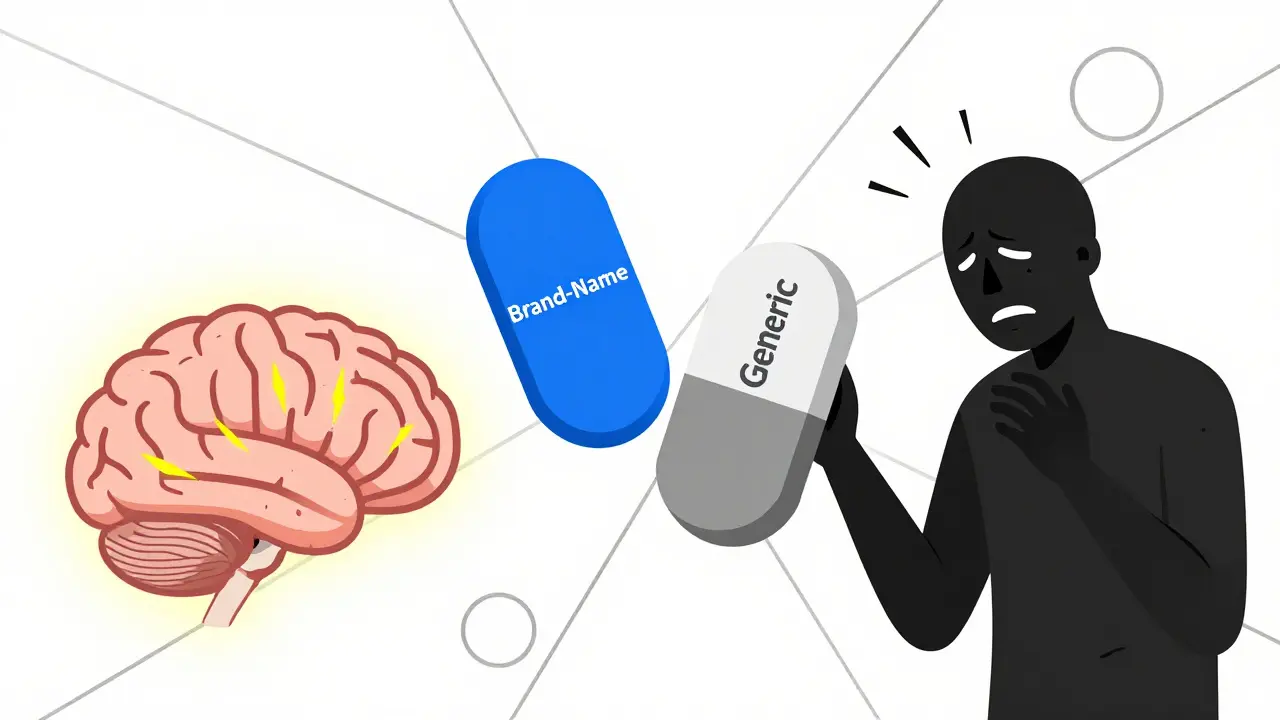
When you switch from a brand-name pill to a generic version, your body doesn’t suddenly stop working right. But your mind might. And that’s where the nocebo effect comes in.
It sounds impossible: you’re taking the exact same chemical, the same dose, made in the same factory under the same rules. Yet suddenly, you feel dizzy. Your muscles ache. You’re tired all the time. You swear it’s the new pill. But here’s the truth - it might not be the drug at all. It’s your expectation.
This isn’t superstition. It’s science. The nocebo effect is the dark twin of the placebo effect. Where placebo makes you feel better because you believe a treatment will help, nocebo makes you feel worse because you believe it will hurt. And when it comes to generic medications, this psychological reaction is happening more often than anyone wants to admit.
What Exactly Is the Nocebo Effect?
The word "nocebo" comes from Latin - "I shall harm." It was coined in the 1960s to describe the opposite of placebo - "I shall please." While placebo responses can improve outcomes, nocebo responses can sabotage them.
Studies show that when people are told a treatment might cause side effects, they’re far more likely to report them - even if the treatment is just a sugar pill. In clinical trials, about 1 in 5 people taking a placebo report side effects. Nearly 1 in 10 drop out of studies because they think the treatment is making them sick. And here’s the kicker: those side effects are real to them. Headaches, nausea, fatigue - they’re not imagined. Their bodies are reacting to belief, not chemistry.
When you switch from a branded antidepressant to its generic version, and your doctor says, "It’s the same thing, just cheaper," you might feel fine. But if you’ve heard stories online, seen a warning label that says "may cause mood swings," or your neighbor said her cousin had a breakdown after switching - your brain starts scanning for problems. Every twinge, every yawn, every bad day gets blamed on the pill.
Why Generics Trigger the Nocebo Effect More Than Anything Else
Generic drugs are chemically identical to their brand-name counterparts. They contain the same active ingredient, the same dosage, the same release mechanism. They’re tested to meet strict bioequivalence standards. The FDA and EMA require them to work just as well.
But they look different. They cost less. And that’s where the problem starts.
People associate price with quality. A cheaper pill feels like a compromise. A pill with a different shape, color, or logo feels "not the same." Even if you know intellectually that it’s the same drug, your subconscious doesn’t care. It’s wired to notice differences - especially when they’re framed as risks.
Research from Auckland University found that patients switched from brand-name to generic antidepressants reported 32% more side effects - not because the drug changed, but because they were told it was a switch. The control group, who were told the medication was unchanged, reported only 12% more side effects.
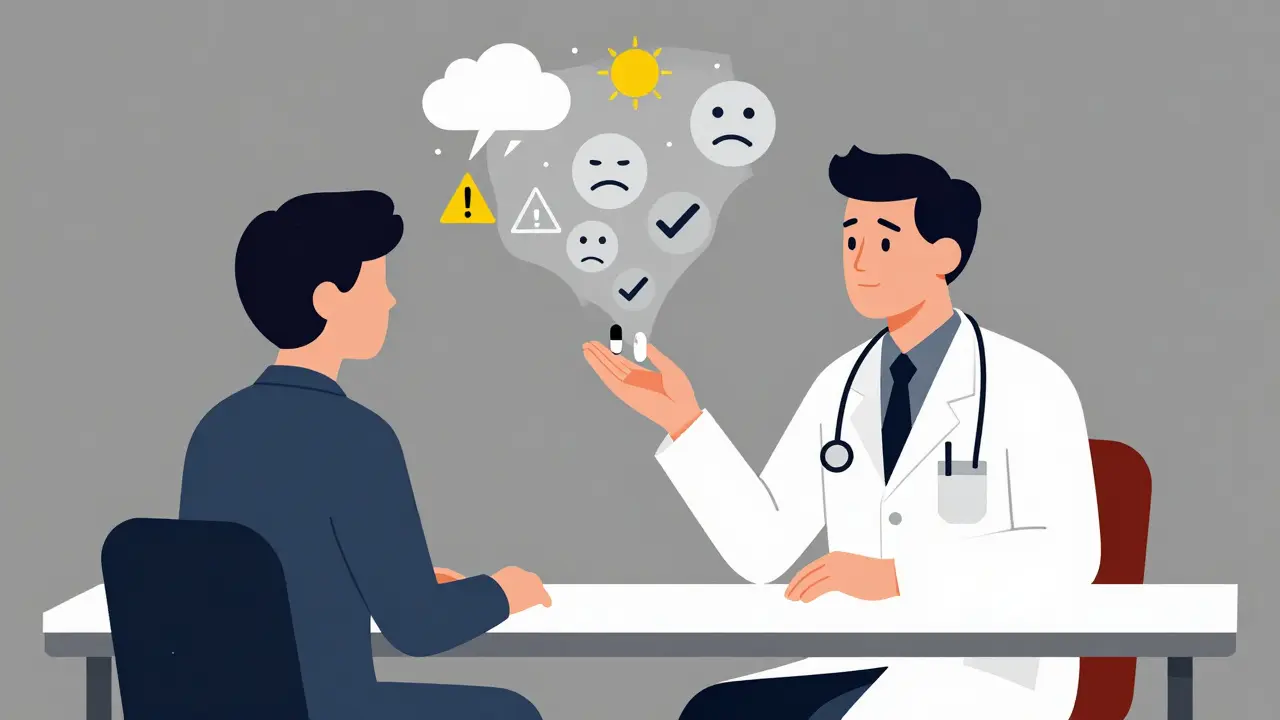
And it’s not just patients. Doctors matter too. When a physician says, "I’m not sure about this generic," or "Some people don’t tolerate it well," they’re planting the seed. Even a pause before saying "it’s the same" can trigger doubt. In one study, telling patients "this is a generic version that might not work as well" increased reported side effects by 65%.
Real Cases: When the Mind Makes You Sick
In New Zealand in 2017, a major switch happened from one brand of venlafaxine (an antidepressant) to its generic version. At first, there was no spike in adverse reports. Then the media picked it up. Headlines screamed: "Patients Report New Side Effects After Generic Switch." Suddenly, reports to the national monitoring system jumped - even though the drug hadn’t changed.
Same thing happened with statins. In one study, patients reported muscle pain after switching to generic atorvastatin. When they were switched back to the brand-name version, their symptoms improved. But when they were switched back to the generic - and told it was the same drug - the pain came back. Even though they were taking the exact same pill.
One man in Melbourne, who’d been on generic lisinopril for years without issue, started feeling dizzy after his pharmacy switched to a different generic brand. He called his doctor. His blood pressure was fine. His labs were normal. He was told it was likely the nocebo effect. He didn’t believe it - until he was given a third generic version, identical to the first one he’d been on. The dizziness vanished.
Reddit threads are full of stories like this. "Switched to generic fluoxetine - now I can’t sleep." "Generic metformin gave me nausea I never had on the brand." "My anxiety got worse after the pharmacy changed my pill." In nearly every case, the symptoms disappeared when they were switched back - not because the drug changed, but because their belief changed.
How Your Brain Turns Normal Sensations Into Side Effects
Your body is always sending signals. Muscle tension. Fatigue. Head pressure. Digestive gurgles. These are normal. Most of the time, you ignore them.
But when you’re told a medication might cause headaches, your brain starts paying attention. Every mild ache becomes a symptom. Every tired morning becomes proof the drug isn’t working. You start checking your pulse. You track your mood. You Google every sensation.
Neuroscience shows this isn’t just "thinking too much." Brain scans reveal that negative expectations activate the same areas that process pain and anxiety. In one study, patients told an epidural would feel like a "bee sting" reported significantly more pain than those told it would be "comfortable" - even though the needle and dose were identical.
With opioids, positive expectations doubled pain relief. Negative expectations wiped it out completely. That’s how powerful belief is.
And with generics? You’re not just expecting a side effect - you’re expecting a failure. That’s a heavy psychological load.
How to Fight the Nocebo Effect - Without Lying
You don’t need to lie to patients. You just need to reframe.
Instead of saying: "This is the generic version," say: "This is the same medication you were on, just made by a different company that meets the same strict standards. It’s been tested to work exactly the same way. Many people save money without losing effectiveness."
Instead of saying: "Some people have trouble with generics," say: "Most people switch without any issues. If you notice anything unusual, we’ll check it out - but it’s often not the drug itself."
Studies show that when clinicians use positive framing, patient-reported side effects drop by 37%. When doctors get training on the nocebo effect, adverse reports during generic switches fall by 28%.
Pharmaceutical companies are catching on. Pfizer’s generic atorvastatin campaign in 2021 included patient materials that focused on equivalence, not differences. They saw a 22% drop in adverse event reports.
Even the FDA now advises that patient leaflets for generics avoid language that might trigger fear. No "may cause," no "some users report," no comparisons to the brand. Just facts: same active ingredient, same effect, same safety profile.
The Real Cost of the Nocebo Effect
It’s not just about feeling bad. It’s about money.
Generics make up 90% of prescriptions in the U.S. But they account for only 24% of drug spending. That’s because people stop taking them - not because they don’t work, but because they think they don’t.
JAMA Internal Medicine estimates that nocebo-related discontinuation of generic drugs costs the U.S. healthcare system $1.2 billion a year. That’s $1.2 billion in unnecessary brand-name prescriptions, doctor visits, lab tests, and emergency visits - all because someone believed a pill wouldn’t work.
The World Health Organization lists "negative perceptions about generic medicines" as a top barrier to treatment adherence in two out of three countries.
And it’s getting worse. As more countries push for generic substitution to cut costs, the risk of nocebo-driven non-adherence rises. Without better communication, we’re trading savings for suffering.
What’s Next? AI, Genetics, and the Future of Expectations
Researchers are now using AI to personalize how patients hear about generics. A 2023 trial in The Lancet tested a tool that adjusts messaging based on a patient’s anxiety level, past experiences, and beliefs. It cut nocebo responses by 41%.
Harvard is studying genes linked to how people process expectations. Early findings suggest variations in the COMT gene might make some people more prone to nocebo effects. In the future, we might screen for susceptibility - not to stop generics, but to tailor communication.
By 2025, 75% of healthcare systems using generic substitution are expected to have formal nocebo mitigation programs. That means training for pharmacists, revised patient handouts, and scripts for doctors.
It’s not about convincing people generics are perfect. It’s about helping them understand: the pill doesn’t change. Your belief does. And that’s something you can control.
What You Can Do Today
- If you’re switching to a generic: remind yourself - it’s the same drug. Same chemistry. Same results.
- Don’t Google symptoms right after the switch. Wait a week. Most side effects from nocebo fade as your brain adjusts.
- If you feel worse, talk to your doctor - but don’t assume it’s the pill. Ask: "Could this be my mind reacting?"
- If you’re a provider: avoid words like "alternative," "substitute," or "cheaper." Use "equivalent," "same active ingredient," and "proven effective."
- Share stories of people who switched without issues. Positive expectations are contagious.
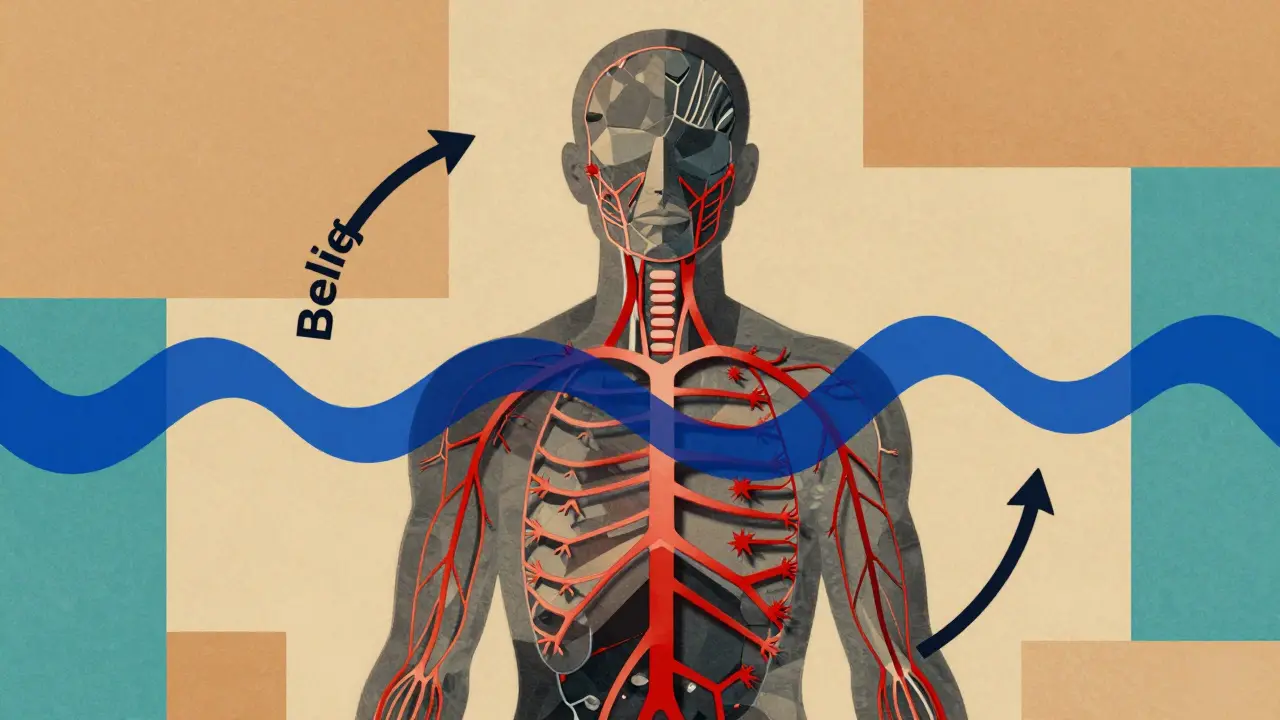
The nocebo effect isn’t weakness. It’s human. Our brains are prediction machines. They use past experience, stories, and cues to guess what’s coming next. When the cue is "generic = worse," the brain delivers - even if the drug doesn’t.
Breaking that cycle isn’t about denying feelings. It’s about changing the story.
Sinéad Griffin
December 16, 2025 AT 04:13Rulich Pretorius
December 17, 2025 AT 23:27Thomas Anderson
December 19, 2025 AT 00:14Dwayne hiers
December 19, 2025 AT 09:20Jonny Moran
December 19, 2025 AT 15:25Alexis Wright
December 20, 2025 AT 14:15jeremy carroll
December 22, 2025 AT 04:07Natalie Koeber
December 22, 2025 AT 04:48Wade Mercer
December 23, 2025 AT 18:35Sarthak Jain
December 25, 2025 AT 07:35Tim Bartik
December 26, 2025 AT 19:47Edward Stevens
December 28, 2025 AT 09:18Daniel Thompson
December 28, 2025 AT 13:10Daniel Wevik
December 29, 2025 AT 15:26Rich Robertson
December 31, 2025 AT 07:07