
Medication Safety for Chronic Conditions: Essential Long-Term Use Tips
 Jan, 4 2026
Taking medication every day for years isn’t just routine-it’s life-saving. But it’s also risky. If you’re managing diabetes, high blood pressure, arthritis, or heart disease, you’re likely on more than one drug. And the longer you take them, the more things can go wrong. Medication errors aren’t rare. They’re common. And they’re often preventable.
Why Long-Term Medication Use Is Different
Short-term meds-like antibiotics or painkillers after surgery-have clear start and end dates. Chronic condition meds don’t. You take them for years, sometimes for life. That changes everything. Your body changes. Other meds get added. Memory slips. Bottles pile up. Side effects creep in. What started as a simple fix becomes a complex system that’s easy to break.
The average person over 65 takes five or more prescription drugs daily. That’s called polypharmacy. And it’s not just about quantity. It’s about combinations. A painkiller and a blood thinner together? That’s a bleeding risk. A sleep aid and a blood pressure pill? That’s dizziness, falls, hospital trips. The World Health Organization says nearly 1 in 20 older adults suffers a serious adverse reaction from their meds each year. Most of these are avoidable.
Keep a Living Medication List
Don’t rely on memory. Don’t trust your pharmacy’s printout. Don’t assume your doctor remembers what you’re on. Write it down. Keep it updated. And carry it with you.
Your list needs more than names. Include:
- Exact drug name (brand and generic if you know it)
- Dosage (e.g., 10 mg, 500 mg)
- How often (once daily, twice a day, as needed)
- Why you’re taking it (e.g., "for high blood pressure," "for joint pain")
- When you started
- Any side effects you’ve noticed
Update this list every time your doctor changes something-even if it’s just a dose tweak. Keep a printed copy in your wallet. Save a digital version on your phone. Show it to every new provider, every ER visit, every pharmacist. This simple habit cuts medication errors by nearly 40% during care transitions.
Know Your Pill Schedule
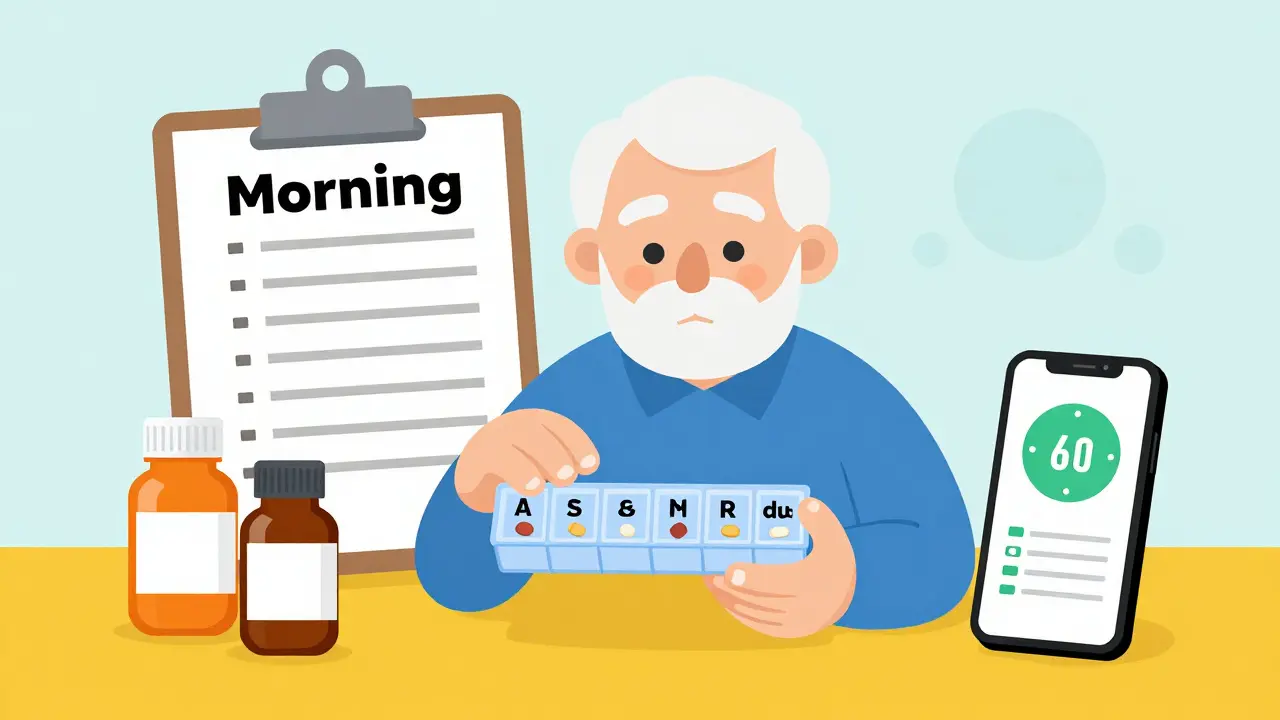
"Take once daily" sounds easy. But what does that mean? Morning? With food? Before bed? If you’re on four different pills with different schedules, it gets messy fast.
Use a pill organizer. Not the cheap kind that holds a week’s worth. Get one with compartments for morning, afternoon, evening, and night. Fill it every Sunday. Set phone alarms for each dose. Don’t skip doses because you feel fine. That’s how high blood pressure sneaks up on you. That’s how blood sugar spikes without warning.
And don’t assume "as needed" means "whenever I want." If your doctor says "take one for pain as needed," they mean only when pain is moderate to severe-not every time you feel a twinge. Overuse leads to tolerance, side effects, and worse outcomes.
Review Your Meds Every Six Months
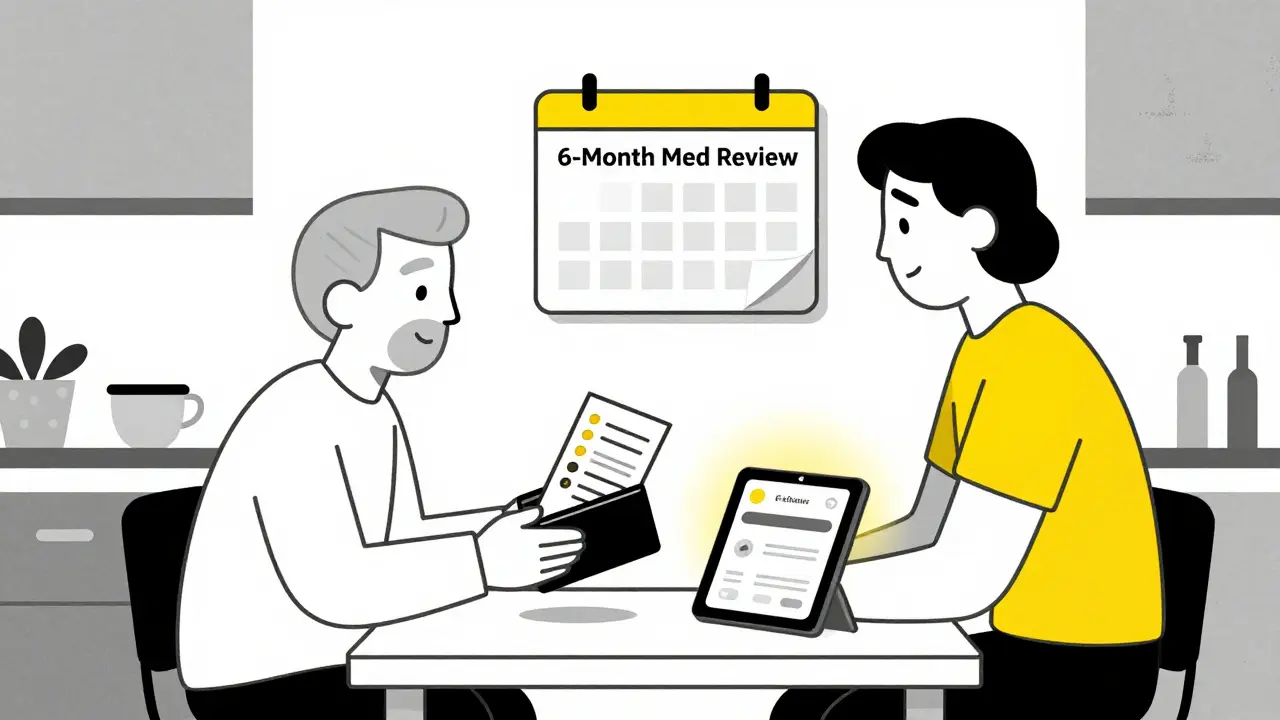
Doctors don’t always ask. You have to. Every six months, schedule a dedicated med review. Bring your living list. Ask:
- Is every pill still necessary?
- Can any be stopped or lowered?
- Are there newer, safer options?
- Are any of these interacting with each other?
Studies show that when pharmacists lead these reviews, patients are 30% less likely to be hospitalized for medication problems. You don’t need a specialist. Your GP or community pharmacist can do it. Just ask. Don’t wait for your next check-up. Book a separate 20-minute appointment. Call it a "medication check-up."
Watch for Hidden Side Effects
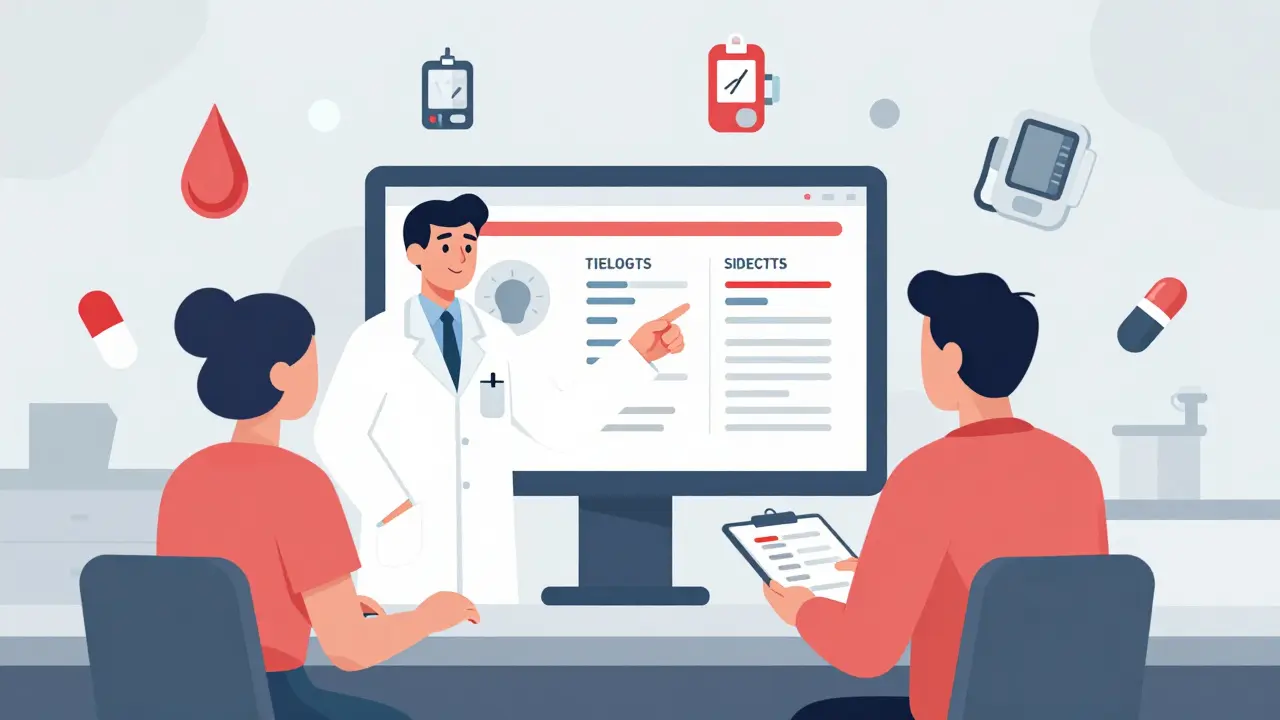
Side effects aren’t always obvious. They don’t always say "nausea" or "dizziness." Sometimes, they look like aging.
Feeling more tired than usual? Could be your statin. Trouble remembering names? Might be your sleep aid. Falling more often? Could be the combination of your blood pressure pill and painkiller. Constipation? Could be your opioid or anticholinergic.
Track changes. Keep a small notebook or use a notes app. Write down: "Started new pill on Jan 10. Now I’m dizzy after lunch." That kind of detail helps your doctor spot patterns. Many side effects are reversible-if caught early.
Don’t Mix Medications Without Asking
Over-the-counter drugs, supplements, herbal teas-they’re not harmless. A common painkiller like ibuprofen can raise your blood pressure and hurt your kidneys if you’re already on a diuretic. Garlic supplements thin your blood. St. John’s Wort can make your antidepressant useless. Even grapefruit juice can turn a cholesterol drug into a poison.
Before you take anything new-ask your pharmacist. Not your friend. Not Google. The pharmacist. They see drug interactions daily. They know what’s dangerous. They’ll tell you if it’s safe.
Use Technology Wisely
Technology isn’t magic, but it helps. Use apps that send reminders. Try ones that let you scan your pill bottles and track doses. Some sync with your pharmacy and alert you when refills are due.
Barcode systems at pharmacies reduce dispensing errors by over 50%. Electronic health records help your doctor see your full history. If your clinic uses them, make sure your medication list is up to date in their system.
But don’t let tech replace human checks. If your phone alarm goes off and you’re not sure why, don’t take it. Call your pharmacy. Ask.
Cost Shouldn’t Stop You
If you’re skipping doses because of price, you’re not alone. One in four Australians with chronic conditions cuts pills in half or skips them to save money. That’s dangerous.
Ask your doctor about generic versions. Ask your pharmacist about patient assistance programs. Some drug companies give free meds to low-income patients. Community health centers often have discount programs. Never be embarrassed to ask. Your health is worth more than the cost.
Build a Support System
Managing meds long-term is exhausting. You don’t have to do it alone.
Designate one family member or friend to help. Maybe they refill prescriptions. Maybe they remind you. Maybe they keep a backup list. Make it official. Write it down: "[Name] is my medication helper."
Join a patient support group. Talk to others on long-term meds. You’ll learn tricks you never thought of. You’ll feel less alone.
When in Doubt, Pause
If you’re unsure about a pill-don’t take it. Call your doctor. Call your pharmacist. Wait. It’s better to miss one dose than to take the wrong one.
Medication safety isn’t about perfection. It’s about awareness. It’s about asking questions. It’s about staying in control-even when your body feels like it’s failing.
Chronic illness doesn’t have to mean constant risk. With the right habits, your meds can keep you alive and well-for decades.
Katie Schoen
January 5, 2026 AT 03:15Mukesh Pareek
January 6, 2026 AT 07:14Ryan Barr
January 7, 2026 AT 17:56Wesley Pereira
January 9, 2026 AT 17:08Amy Le
January 11, 2026 AT 03:46Kiran Plaha
January 11, 2026 AT 08:30Tiffany Adjei - Opong
January 11, 2026 AT 14:41Saylor Frye
January 12, 2026 AT 06:06Isaac Jules
January 12, 2026 AT 06:11Joann Absi
January 12, 2026 AT 21:42Molly McLane
January 13, 2026 AT 05:57Katelyn Slack
January 13, 2026 AT 19:10Lily Lilyy
January 14, 2026 AT 10:31Melanie Clark
January 15, 2026 AT 11:51Harshit Kansal
January 17, 2026 AT 10:06