
Medical Alert Bracelets: When and Why They Matter for Drug Safety
 Jan, 14 2026
Medication Safety Assessment Tool
Your Medication Safety Assessment
Answer these questions to determine your need for a medical alert bracelet and the critical information to include.
Imagine you collapse in public. You can’t speak. Your phone is in your bag. Your wallet is lost. In those first critical minutes, the only thing standing between you and a deadly mistake is a simple bracelet on your wrist. For people managing serious medications or allergies, this isn’t hypothetical-it’s life-or-death.
Why a Medical Alert Bracelet Isn’t Just a Piece of Jewelry
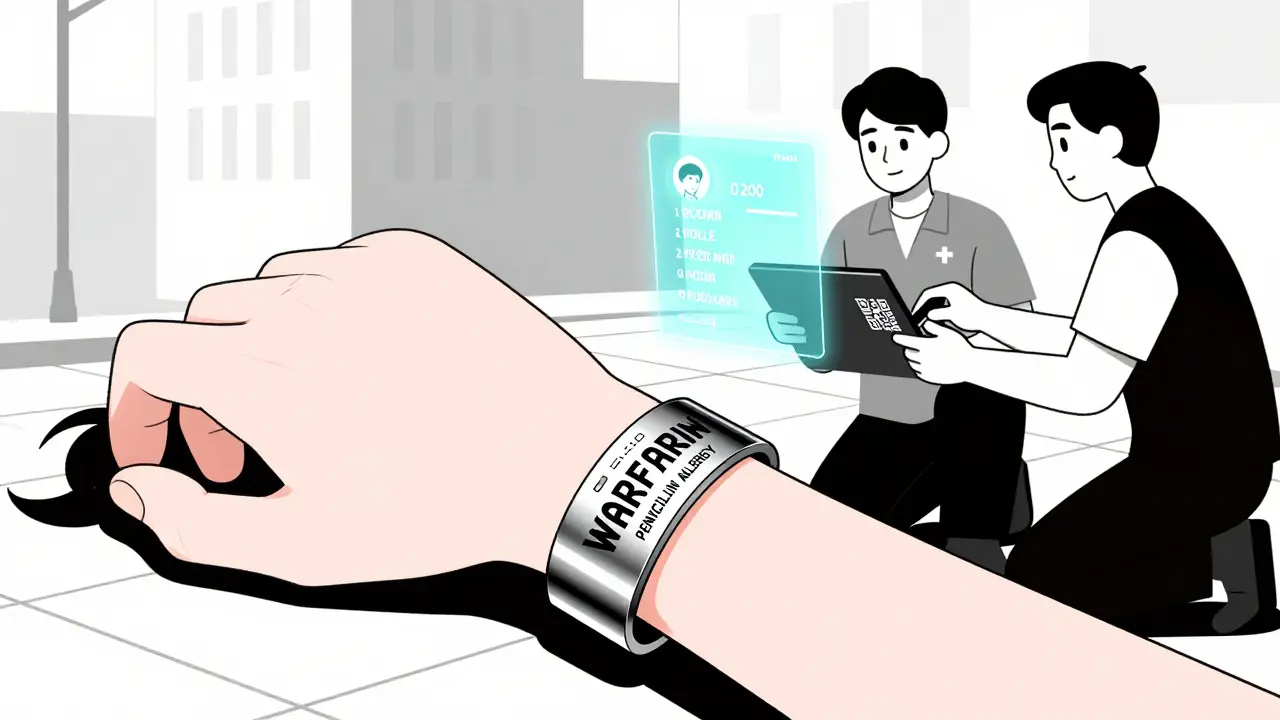
Medical alert bracelets aren’t fashion accessories. They’re emergency communication tools. First responders are trained to look at wrists and necks the moment they arrive at a scene. If you’re unconscious, confused, or in shock, you can’t tell them you’re on warfarin, allergic to penicillin, or diabetic with insulin dependence. But your bracelet can. The American College of Emergency Physicians confirms that nearly 30% of medication errors in emergency rooms happen because doctors don’t know what drugs a patient is taking. That’s where these bracelets step in. They don’t just say "diabetic" or "allergic." They name the exact drugs. That detail changes everything. In 2022, a study in the Journal of Emergency Medicine found that 37% of ER errors involved medications. Many of those errors were preventable. A bracelet with "WARFARIN" or "ANAPHYLACTIC TO PENICILLIN" stops a nurse from giving you a drug that could kill you.What Information Actually Saves Lives
Not all information on a bracelet matters equally. First responders prioritize what’s most urgent. According to ACEP guidelines, the order is clear:- Drug allergies - especially penicillin, NSAIDs, aspirin, latex, and sedatives. Penicillin allergies alone affect 10% of Americans. Giving it to someone allergic can trigger anaphylaxis in under five minutes.
- Critical medications - blood thinners like warfarin, rivaroxaban, or apixaban. These require special handling during trauma. If you’re bleeding internally, giving you a clotting agent could be fatal. Knowing you’re on a blood thinner changes the entire treatment plan.
- Chronic conditions with medication protocols - Type 1 vs. Type 2 diabetes, epilepsy, heart failure, or kidney disease. For diabetics, it’s not enough to say "diabetic." You need to specify if you’re insulin-dependent. Giving insulin to someone with low blood sugar? That’s dangerous. Giving glucose to someone who needs insulin? Also dangerous.
Traditional vs. QR Code Bracelets: Which One Actually Works Better?
You’ve probably seen two kinds: engraved metal and QR code bracelets. Traditional metal bracelets have space for maybe three to five key items. That’s fine if you’re on one blood thinner and have one major allergy. But if you’re on five medications, have three allergies, and have diabetes, heart disease, and asthma? You’re out of room. That’s where QR code bracelets come in. Brands like MedicAlert Foundation started offering them in 2018. Scan the code with your phone, and it pulls up your full digital profile: every medication, dosage, pharmacy, doctor contacts, and even your advance directives. The profile updates in real time if your doctor changes your prescription. In 2024, MedicAlert launched SmartProfile, which syncs with pharmacy databases. If your pharmacist adds a new drug, your bracelet’s digital profile updates automatically. That’s huge. Because here’s the problem most people don’t think about: 35% of users never update their bracelets after changing medications. Outdated info is worse than no info.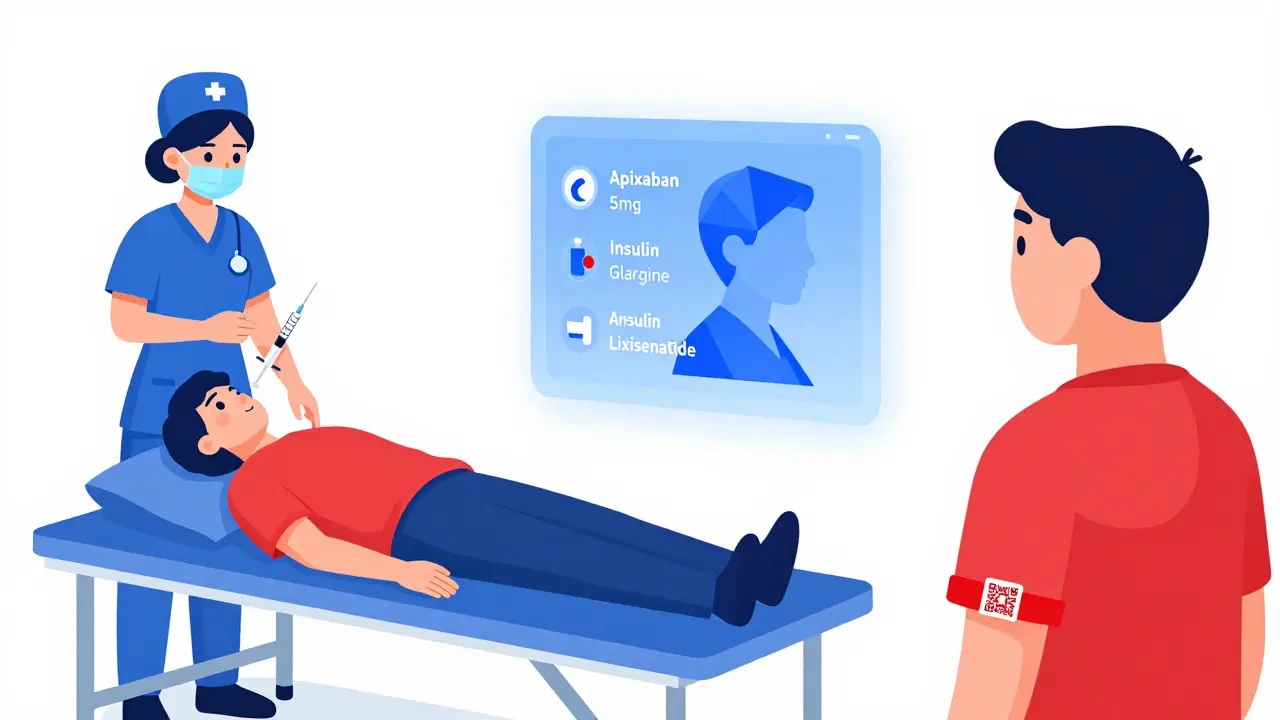
Real Stories: When the Bracelet Made the Difference
On Reddit, user "AllergicAmy" posted about her 2022 emergency. She was rushed to the ER with appendicitis. The doctor was about to prescribe penicillin. The nurse noticed her bracelet: "ANAPHYLACTIC TO PENICILLIN." They switched antibiotics immediately. She later learned that without it, she’d have gone into cardiac arrest within minutes. Trustpilot reviews for MedicAlert show 4.7 out of 5 stars from over 1,200 users. Sixty-three percent say they bought it specifically because of drug safety. One man with atrial fibrillation on apixaban said his bracelet stopped paramedics from giving him aspirin during chest pain. Aspirin can increase bleeding risk with anticoagulants. He credits the bracelet with saving his life. But it’s not perfect. Consumer Reports found 12% of users complained their bracelet didn’t have enough space. One man wrote: "It just said ‘ON BLOOD THINNERS.’ They still had to run three tests to figure out which one. Took 45 minutes. I almost bled out waiting."Who Needs One the Most?
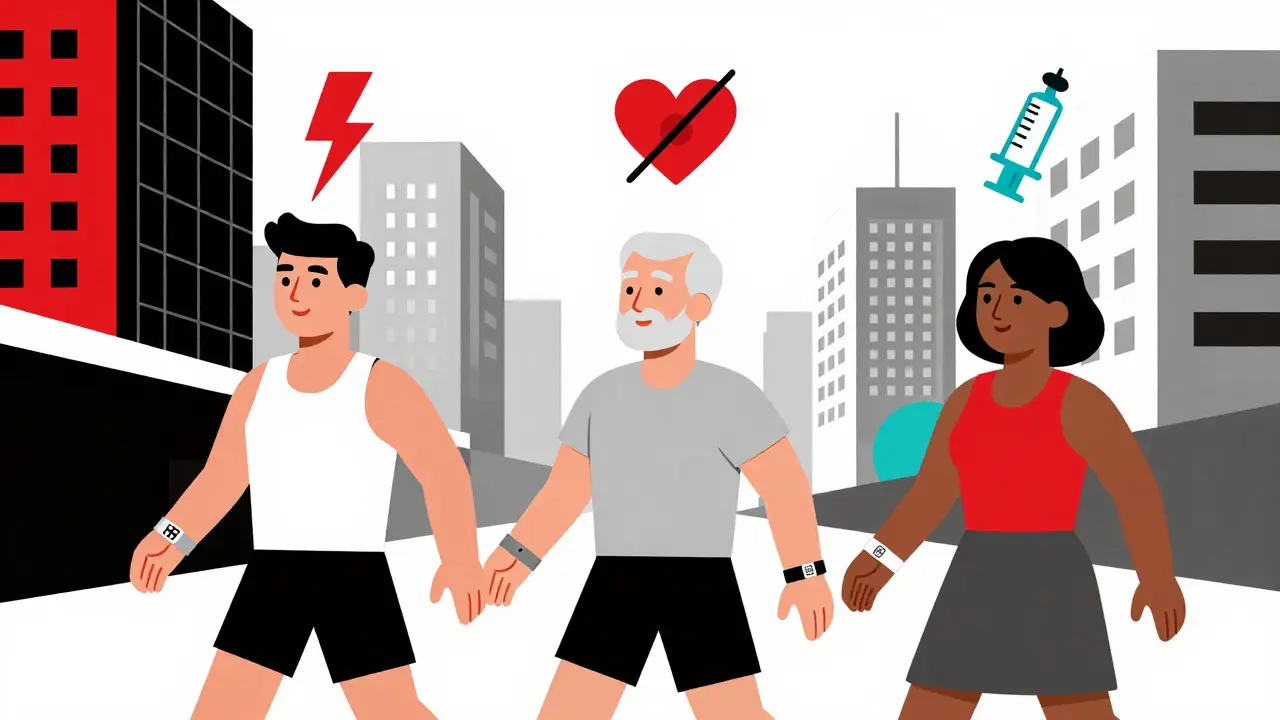
You don’t need to be elderly or frail to benefit. Here’s who’s most at risk:- People on blood thinners (warfarin, Eliquis, Xarelto, etc.) - 41% of users wear them
- Those with severe allergies (penicillin, sulfa, NSAIDs, latex) - 33%
- Diabetics on insulin - 28%
- People with epilepsy, heart conditions, or kidney disease requiring specific meds
- Anyone taking five or more medications
Cost, Support, and Keeping It Updated
A basic engraved bracelet from MedicAlert costs $49.99. QR code versions start at $69.99, but come with a $59.99 annual fee to maintain your digital profile. Medical Guardian’s 2025 system, which links the bracelet to a 24/7 monitoring service, starts at $29.95/month. The real cost isn’t money-it’s forgetting to update. If you stop taking a drug, change doses, or add a new one, your bracelet becomes a liability. The American Pharmacists Association says 35% of users don’t update after a medication change. The fix? Set a calendar reminder every time your doctor adjusts your meds. Or use a digital profile that auto-updates via pharmacy sync. MedicAlert’s SmartProfile does this. Others don’t. Customer service matters too. MedicAlert scored 4.3/5 in J.D. Power’s 2024 study. Smaller brands? Around 3.1/5. You want someone who answers the phone when you’re confused.The Bigger Picture: Why This Matters Now
The global medical ID market hit $287 million in 2023 and is growing at 6.2% yearly. Why? Because hospitals are catching on. The 2022 CARES Act requires ERs to check for medical IDs. The American Hospital Association says 67% of U.S. hospitals now include ID verification in standard intake. In March 2024, ACEP updated its guidelines to recommend including NDC drug codes on bracelets. These are the unique barcodes assigned to every medication. Even if a doctor doesn’t know "Lixisenatide," they can scan the code and know exactly what it is. Future systems will connect directly to hospital EHRs. Epic and Cerner are building APIs so your bracelet’s digital profile updates when your doctor changes your meds in the system. That could cut the 35% update failure rate by half. But here’s the gap: only 14% of EMTs get formal training on reading complex medication info from IDs. That’s a problem. A bracelet won’t help if the person checking it doesn’t know what to look for.What to Do Today
If you’re on blood thinners, insulin, or have severe allergies:- Get a bracelet. Choose QR code if you’re on multiple meds.
- Put the top three items first: allergies, blood thinners, diabetes status.
- Use exact names: "Warfarin," not "blood thinner." "Penicillin," not "antibiotic allergy."
- Register your digital profile. Update it every time your meds change.
- Wear it every day. 73% of emergencies happen when you’re away from home.
Do medical alert bracelets really work in emergencies?
Yes. First responders are trained to check for them. In 89% of cases where a bracelet is present and legible, emergency staff use the information correctly, according to GoodRx. Studies show they reduce medication errors by about 28% in unconscious patients, per data from the American College of Emergency Physicians.
What if my bracelet doesn’t have enough space for all my meds?
Prioritize: allergies first, then blood thinners, then chronic conditions. Use abbreviations like "WARFARIN" instead of "warfarin sodium." For complex regimens, choose a QR code bracelet. It links to a full digital profile with every drug, dosage, and pharmacy contact. The engraved part just says "SEE QR CODE" or "FULL MED LIST ONLINE."
Are QR code bracelets reliable if my phone is dead or I don’t have service?
Yes. First responders carry phones or tablets. They don’t need your phone. They scan the code with their own device. Even if you’re unconscious, they can access your profile. Some systems also include a backup printed summary on the back of the bracelet.
Can I just write my info on a piece of paper in my wallet?
No. Wallets get lost, torn, or left behind. Emergency responders check wrists and necks-every time. They don’t search pockets. A bracelet is visible, durable, and always there. Paper doesn’t survive a car crash or fall. A metal or silicone bracelet does.
Do I need to wear it 24/7?
Yes. The National Council on Aging found that 73% of emergencies happen when people are away from home-shopping, traveling, or out for a walk. You can’t predict when you’ll need help. Wearing it daily is the only way to ensure protection.
Is there a cheaper alternative to branded medical alert bracelets?
You can buy engraved metal bracelets from Etsy or Amazon for under $20. But they don’t come with digital profiles, customer support, or updates. If you’re on multiple medications or have serious allergies, the added cost of a branded system with digital sync is worth it. Your safety isn’t the place to cut corners.
Dan Mack
January 15, 2026 AT 04:38Amy Vickberg
January 17, 2026 AT 03:22Crystel Ann
January 18, 2026 AT 00:43Jan Hess
January 19, 2026 AT 00:26Annie Choi
January 19, 2026 AT 00:50Mike Berrange
January 20, 2026 AT 09:39Nishant Garg
January 20, 2026 AT 16:32Sohan Jindal
January 21, 2026 AT 09:56Frank Geurts
January 21, 2026 AT 14:11Arjun Seth
January 23, 2026 AT 04:11Ayush Pareek
January 23, 2026 AT 21:50Iona Jane
January 24, 2026 AT 08:28Jaspreet Kaur Chana
January 25, 2026 AT 17:15Haley Graves
January 26, 2026 AT 09:53