
Managing Hypoglycemia from Diabetes Medications: A Practical Step-by-Step Plan
 Dec, 22 2025
Hypoglycemia Risk Calculator
Hypoglycemia Risk Assessment
This tool estimates your personal risk of experiencing hypoglycemia based on your medications, lifestyle, and health factors. The assessment uses the HYPO-RESOLVE scoring system with 82% accuracy.
Low blood sugar isn’t just a nuisance-it can be dangerous. If you’re taking insulin, sulfonylureas, or meglitinides for diabetes, you’re at real risk of hypoglycemia. Blood glucose below 70 mg/dL triggers symptoms like shaking, sweating, and confusion. Below 54 mg/dL, you could pass out or have a seizure. This isn’t rare. About 1 in 4 people on insulin have a severe low at least once a year. And many don’t see it coming.
Know Your Medication Risk
Not all diabetes drugs cause low blood sugar the same way. Some are safe on their own. Others are risky, especially when combined.- High risk: Insulin (all types), glimepiride, glipizide, glyburide, repaglinide, nateglinide. These force your body to make or use more insulin, no matter what your blood sugar is. About 15-40% of users get low blood sugar each year.
- Low risk: Metformin, GLP-1 agonists (like semaglutide), SGLT2 inhibitors (like empagliflozin). These rarely cause lows unless taken with insulin or sulfonylureas.
If you’re on a sulfonylurea like glyburide, you’re 2.5 times more likely to have a low than someone on a DPP-4 inhibitor like sitagliptin. Older sulfonylureas like glyburide are riskier than newer ones like glimepiride. Switching can cut your risk by 20-30%.
Recognize the Signs Before It’s Too Late
Your body gives you clues. Learn them.- Early warning (65-70 mg/dL): Sweating, shaking, heart racing, hunger, dizziness. These are your body’s alarm system.
- Danger zone (below 54 mg/dL): Confusion, slurred speech, weakness, blurred vision, seizures. At this point, you might not be able to treat yourself.
Some people lose these warnings. That’s called hypoglycemia unawareness. It affects 25% of type 1 patients after 20 years and 10% of type 2 patients after 15 years. If you’ve had a low without warning before, you’re at higher risk. Talk to your doctor about adjusting targets.
Use the 15-15 Rule-Correctly
When your blood sugar drops below 70 mg/dL, you need fast-acting sugar. Not bread. Not fruit juice. Not candy bars.The 15-15 rule works 89% of the time if done right:
- Take 15 grams of pure glucose. That’s 3-4 glucose tablets, 4 oz of regular soda (not diet), or 1 tablespoon of honey.
- Wait 15 minutes.
- Check your blood sugar again.
- If it’s still below 70, repeat.
Most people mess this up. They eat a banana (too slow), drink diet soda (zero effect), or snack on crackers (too complex). Glucose tablets are the gold standard-fast, measured, and reliable. A pack of 20 costs $8-$12. Keep them everywhere: car, purse, desk, bedside.
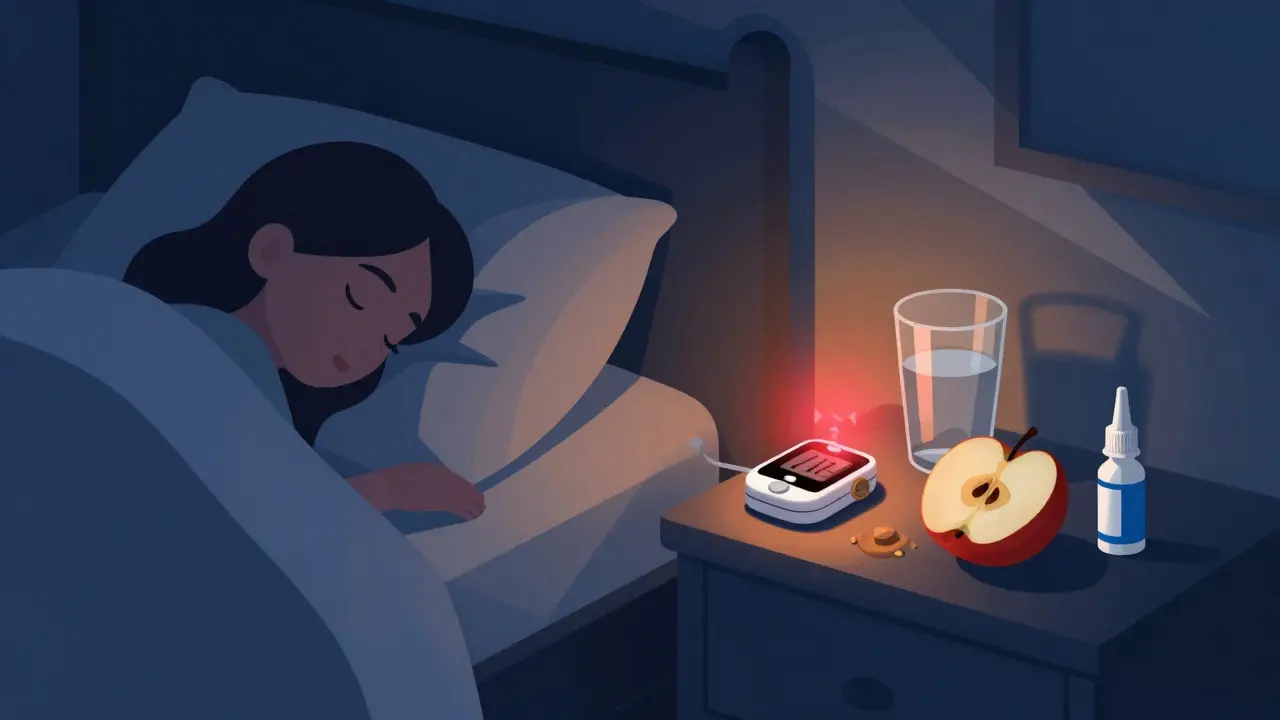
Prevent Nighttime Lows
Nocturnal hypoglycemia is scary. You wake up sweaty, with a headache, or not at all. It’s the leading cause of diabetes-related deaths during sleep.Here’s how to reduce it:
- Check your blood sugar before bed. If it’s below 100 mg/dL, eat 15g of carbs with protein-like a small apple with peanut butter.
- Avoid alcohol at night. It blocks your liver from releasing glucose. It’s responsible for 22% of severe lows in people under 40.
- Adjust your insulin dose if you exercised that day. Physical activity can cause lows up to 24 hours later.
- Use a continuous glucose monitor (CGM). It alerts you if your sugar drops while you sleep. Studies show CGMs reduce nighttime lows by 48%.
Many people disable CGM alarms because they’re “too annoying.” But if you’re on insulin, that’s like driving with your seatbelt off. The Freestyle Libre 3 costs about $89 a month. Medicare now covers it for all insulin users. It’s worth every cent.
Carry Emergency Glucagon
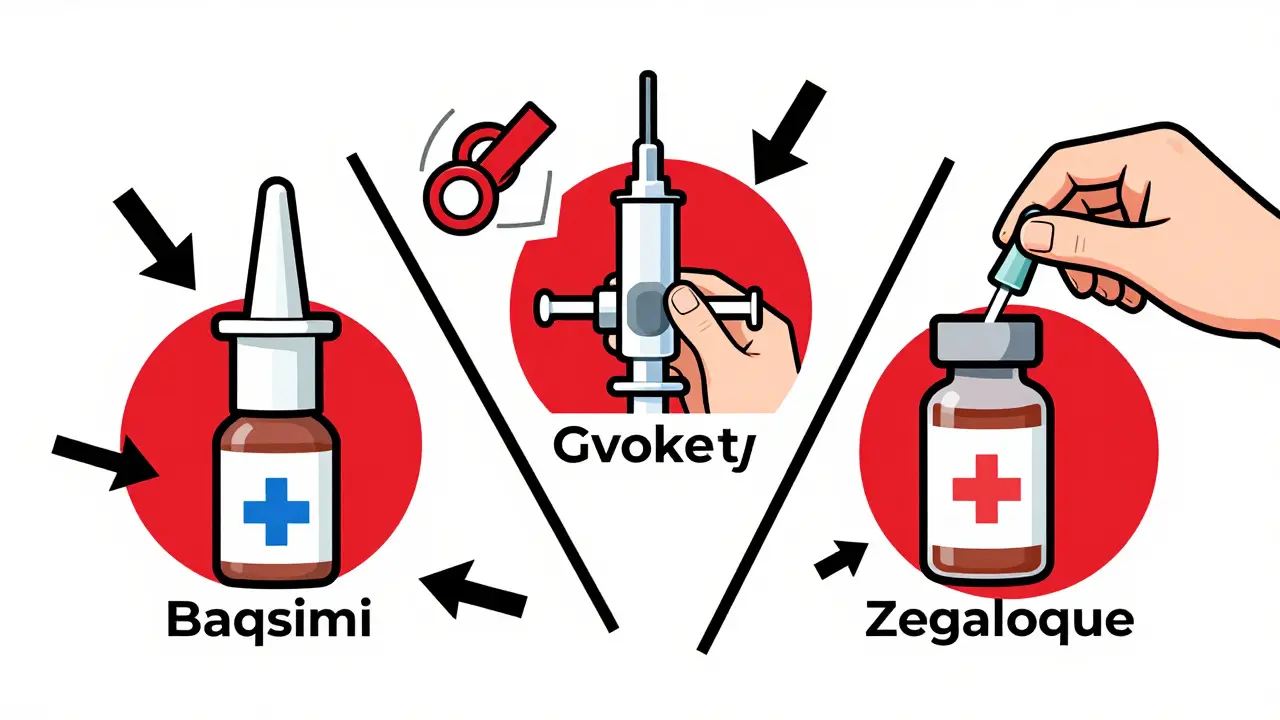
If you pass out or can’t swallow, you need someone to give you glucagon. It’s not optional. It’s life-saving.Traditional glucagon kits require mixing powder and liquid-takes 3 minutes. You won’t have time in a crisis.
New options are faster:
- Baqsimi: Nasal spray. One puff. No needles. $250.
- Gvoke: Prefilled syringe. Just inject. $350.
- Zegalogue: Liquid glucagon. Ready to use. $275.
Keep one at home, one at work, one in your bag. Teach your partner, kids, coworkers how to use it. If you’re on insulin, your emergency kit should be as essential as your phone.
Avoid These Common Traps
Many lows happen because of habits people don’t realize are dangerous.- Skipping meals: 68% of people on forums say they skip meals to avoid highs-only to end up with a low. Don’t do it.
- Exercise without adjusting: Walking, cycling, even gardening can drop your sugar. Eat 15g of carbs before or reduce insulin by 20-30% if you’re active.
- Drinking alcohol: Especially on an empty stomach. It masks low symptoms and stops your liver from releasing glucose.
- Taking beta-blockers: Common for high blood pressure. They hide the shaking and racing heart-your body’s early warning. If you’re on both, talk to your doctor about switching your BP med.
Track Patterns, Not Just Numbers
Logging your lows isn’t about guilt. It’s about finding the pattern.People who log their lows consistently reduce them by 37% in three months. But only 28% keep it up beyond six weeks.
Use a simple log:
- Time of low
- Blood sugar reading
- Medication taken (type and dose)
- Food eaten (and when)
- Exercise done
- Alcohol consumed
Look for trends: Do lows happen after lunch? After walking the dog? After skipping breakfast? Your doctor can adjust your insulin timing or dose based on this.
The Joslin Diabetes Center found that patients using this detailed log reduced lows by 52% compared to those using vague notes.
Ask for Help-Before It’s an Emergency
You shouldn’t manage this alone. Ask your doctor for a hypoglycemia risk assessment. The 8-point HYPO-RESOLVE score predicts severe lows with 82% accuracy. It checks things like age, kidney function, history of lows, and medication type.Also ask:
- Can I switch to a lower-risk medication?
- Should I get a CGM?
- Can I reduce my insulin dose if I’m not hitting my HbA1c goal?
Targeting HbA1c below 7% isn’t always safe. For older adults or those with heart disease, a target of 80-130 mg/dL before meals is better. Your doctor should personalize this.
What’s Changing in 2025
New tools are making hypoglycemia easier to prevent:- Smart insulin pens: Devices like InPen track your doses and suggest adjustments. Costs $150 upfront, $50/month for sensors.
- AI-powered insulin dosing: Systems like Control-IQ on Tandem pumps automatically adjust insulin based on trends. They cut nighttime lows by 3.1 hours per night.
- Medicare coverage: Now covers CGMs for all insulin users. No more denials.
- Glucagon reformulation: New liquid glucagon (Zegalogue) works in 10 seconds-not 3 minutes.
These aren’t luxury items. They’re safety tools. The cost of one hospital visit for a severe low can be $10,000. The cost of a CGM? $1,200 a year.
If you’re on insulin or sulfonylureas, you’re not just managing diabetes-you’re managing a silent danger. The tools are here. The knowledge is here. What’s left is to use them.
siddharth tiwari
December 23, 2025 AT 14:26they say glucose tablets are gold standard but have u seen the price? in india its like 300 rupees for 10 tabs and no insurance covers it. meanwhile the doctor pushes glyburide like its free candy. we all know who really profits here.
Diana Alime
December 25, 2025 AT 12:38ok but why is everyone acting like this is new info? i’ve had type 2 for 12 years and my nurse gave me glucose tabs when i was diagnosed in 2012. also why is no one talking about how glyburide is basically a death sentence for elderly people??
Adarsh Dubey
December 25, 2025 AT 16:35the 15-15 rule is solid but the real issue is access. i live in a rural town in india and glucose tablets are not sold in any pharmacy nearby. i use honey in a small squeeze bottle. it works. not ideal but it’s what’s available. also, i keep a few pieces of jaggery in my pocket just in case. simple, cheap, and effective.
Bartholomew Henry Allen
December 26, 2025 AT 02:50if you are on insulin and you let yourself get low then you are not serious about your health. america is full of people who want free stuff and then blame the system when they make dumb choices. get a CGM. learn the 15-15 rule. stop being lazy. this is not rocket science.
Jeffrey Frye
December 26, 2025 AT 11:17the data here is statistically thin. 1 in 4 people on insulin have a severe low? source? where’s the peer-reviewed study? also the cost comparisons ignore inflation and regional pricing. baqsimi at $250? in some states it’s covered under medicaid. in others it’s a luxury. this reads like a pharma ad disguised as medical advice. also why no mention of glucagon resistance in obese patients? just saying.
Andrea Di Candia
December 27, 2025 AT 08:51i just want to say thank you for writing this. i’ve been scared to talk about my lows because people think i’m just being dramatic. but this? this is the kind of stuff that saves lives. i started keeping glucose tabs in my bra after my last episode. i know it sounds weird but i don’t care. i’m alive. if you’re reading this and you’re scared? you’re not alone. we’ve got this. 💪❤️
Usha Sundar
December 29, 2025 AT 06:46glucagon is a joke. my husband tried to use the old kit when i passed out. he cried. he couldn’t mix it. now we have baqsimi. it’s like a nasal spray for your life. i’m not joking. this saved me.
Wilton Holliday
December 29, 2025 AT 21:28love this thread. seriously. to everyone who’s struggling: you’re not failing. you’re learning. if you’ve made it this far, you’re already stronger than you think. start small. one glucose tab in your pocket. one CGM alarm turned on. one conversation with your doc. you don’t have to fix everything today. just keep going. i believe in you. 🙌