
Intentional Overdose: Mental Health Support and Crisis Resources
 Feb, 27 2026
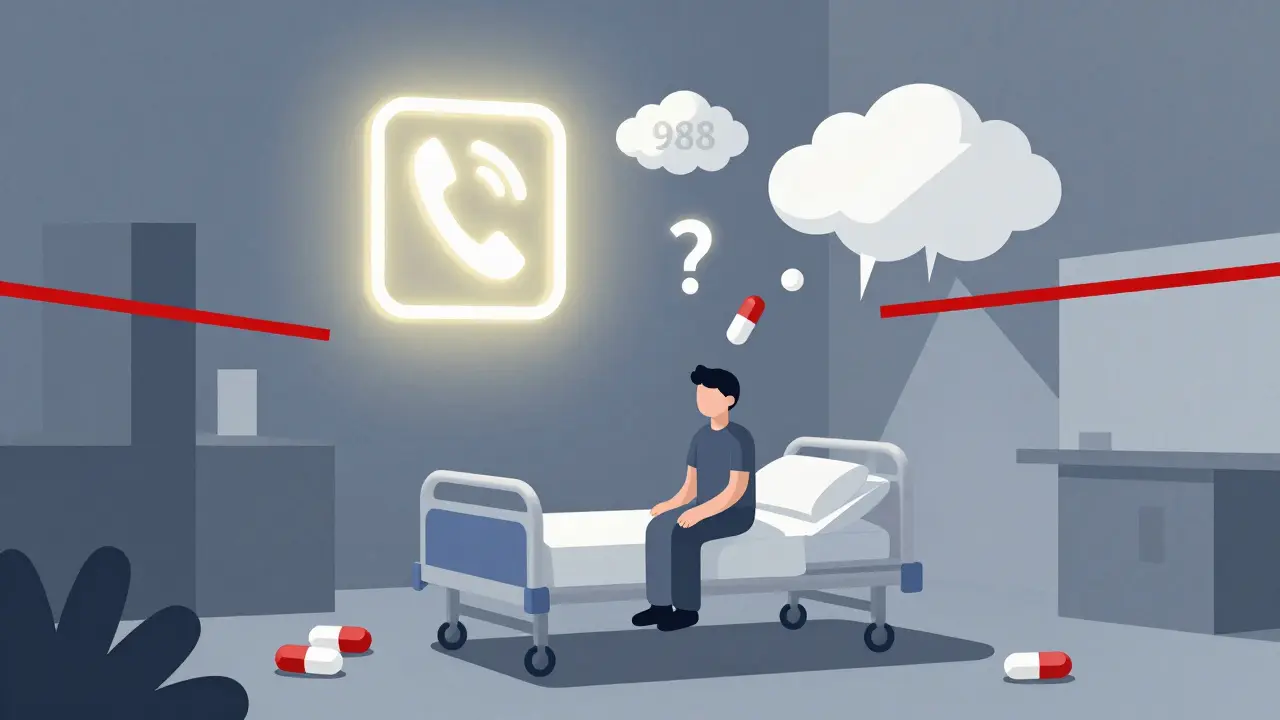
When someone takes too many pills on purpose, it’s not just a medical emergency-it’s a cry for help. Intentional overdose is one of the most common ways people attempt suicide, especially among teens and young adults. Unlike accidental overdoses from substance use disorders, intentional overdoses are driven by deep emotional pain, hopelessness, or the belief that no one understands. The good news? Many of these attempts can be prevented. The bad news? The systems meant to help are stretched thin, underfunded, and sometimes unreachable when they’re needed most.
Why People Choose Overdose as a Method
People don’t wake up one day and decide to end their lives. Often, it’s the result of months-or years-of untreated depression, trauma, isolation, or financial stress. When someone chooses an intentional overdose, it’s usually because the method feels accessible, quiet, and controllable. Prescription painkillers, sleep aids, or even over-the-counter pain relievers like acetaminophen are common choices. They’re often already in the home, easy to hide, and perceived as less violent than other methods. But the reality is far more painful than it seems. An overdose doesn’t always work quickly. Acetaminophen can cause liver failure over days. Opioids can lead to respiratory arrest, but not always immediately. Survivors often face permanent organ damage, brain injury, or long hospital stays. And even if they survive, the emotional toll can be heavier than before. According to the CDC, intentional overdose accounts for 15-20% of all suicide deaths in the U.S. That’s thousands of lives lost each year. And while overall overdose deaths dropped by nearly 24% between 2023 and 2024, experts warn that this decline is mostly due to fewer accidental overdoses from illicit drugs-not fewer suicide attempts. The real number of intentional overdoses may not be falling at all.Who’s Most at Risk
Suicide doesn’t pick favorites, but it does target certain groups more heavily. Adolescents aged 12 to 17 saw a drop in suicide attempts from 3.6% in 2021 to 2.7% in 2024, according to SAMHSA. But that still means over 2.8 million teens experienced depression severe enough to interfere with daily life. Many of them don’t have access to therapists, school counselors, or even a trusted adult to talk to. Adults aged 45 to 64 have the highest suicide rate-20.2 deaths per 100,000 people. Many in this group are dealing with job loss, chronic illness, divorce, or the death of a loved one. They’re less likely to seek help, and more likely to die before anyone notices. Racial disparities are stark. Black and American Indian/Alaska Native communities face the highest rates of fatal overdose incidents. These communities often have less access to mental health care, more stigma around seeking help, and fewer crisis services in their neighborhoods. Rural areas are another crisis zone. Suicide rates there are 25% higher than in cities, but access to mental health providers is 40% lower. A person in a small town might drive two hours just to see a therapist-and even then, the waitlist is six weeks long.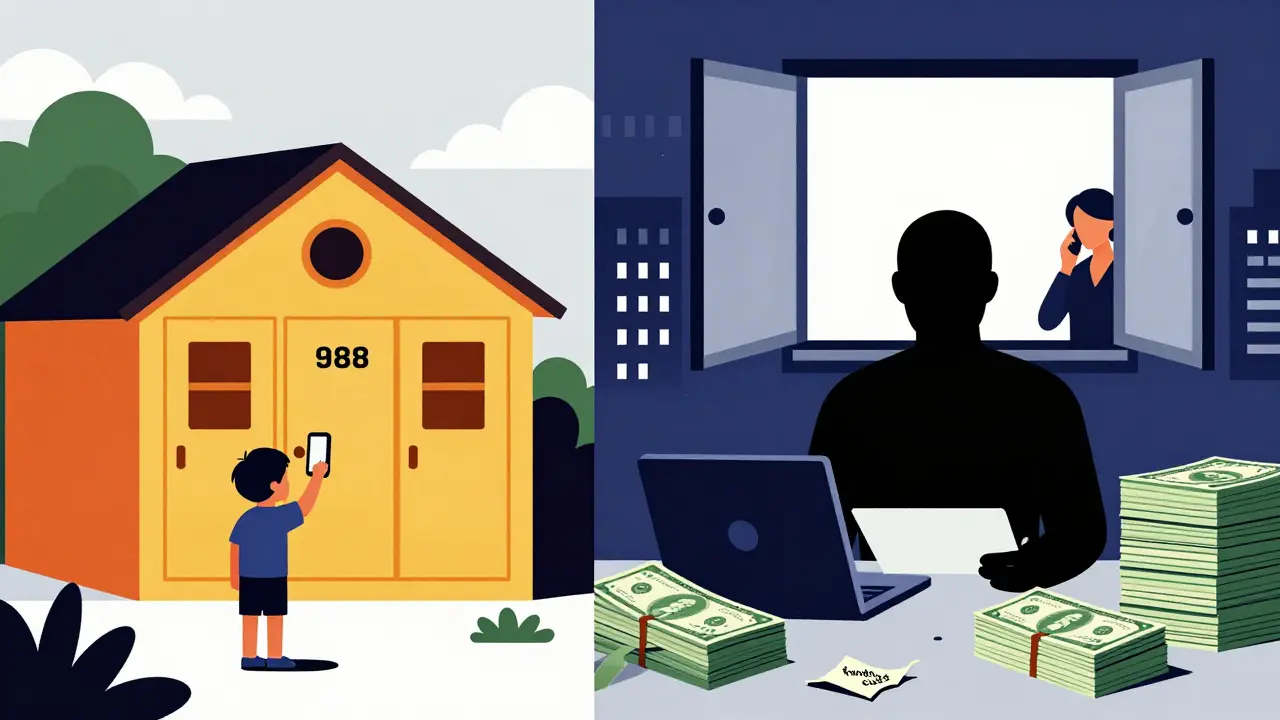
What’s Working: The 988 Lifeline and Other Resources
Since the 988 Suicide & Crisis Lifeline launched in July 2022, it’s become the first line of defense for millions. In 2024 alone, it handled 4.7 million contacts-up 32% from the year before. People call, text, or chat when they’re in crisis. One Reddit user, 'AnxietySurvivor89,' shared: “When I called 988 after taking too many pills, the counselor stayed on the line until EMS arrived 18 minutes later-that probably saved my life.” The Crisis Text Line (text HOME to 741741) handled 3.2 million conversations in 2024, with messages answered in under a minute. These services aren’t perfect, but they’re lifelines. Trained responders don’t judge. They listen. They help people breathe. They connect them to local help. Other tools matter too. SAMHSA’s National Helpline (1-800-662-4357) provides free, confidential referrals to treatment centers. Mental Health America’s online screening tools help people understand if they’re in danger. Apps like Talkspace and BetterHelp offer therapy, though they’re not crisis tools. But here’s the problem: 42% of people who call for same-day crisis help can’t get through. Wait times for SAMHSA’s helpline jumped from 2.4 minutes in 2022 to 5.7 minutes in 2024. That’s three extra minutes of pain for someone who might not have three minutes left.The Broken System: Staffing, Funding, and Access
The U.S. has about 1 mental health provider for every 320 people at risk. Experts say we need 1 for every 250. That gap isn’t just a number-it means people wait too long. It means counselors are burned out. It means crisis centers are closing. In 2024, staff turnover at SAMHSA-funded centers rose 37%. Why? Low pay, high stress, and no job security. Many crisis workers make less than $45,000 a year, despite handling life-or-death calls 12 hours a day. And now, proposed federal budget cuts could slash $1.07 billion from SAMHSA in FY 2026. That’s not just funding-it’s the difference between 100 crisis centers staying open and 30 of them shutting down. The CDC’s National Injury Center funds 80% of state suicide prevention programs. If that funding disappears, rural clinics, school outreach programs, and community-based interventions vanish with it. A 2023 study showed that raising the minimum wage by $1 reduced suicide attempts by 15.4%. That’s policy working. But without funding, those programs die.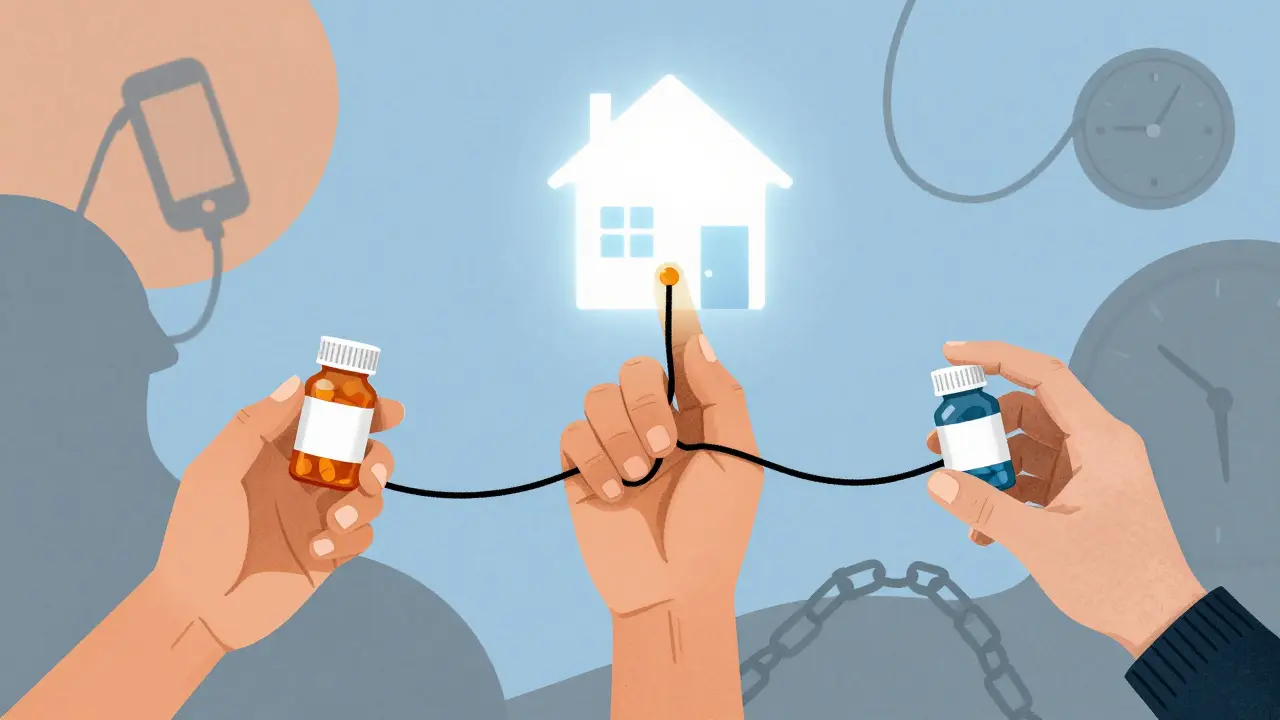
What You Can Do
You don’t need to be a therapist to save a life. Sometimes, all it takes is one conversation.- If someone talks about wanting to die, don’t panic. Don’t dismiss them. Say: “I’m here. Tell me what’s going on.”
- Keep the 988 number saved in your phone. Share it with friends, family, coworkers.
- If you have unused medications at home, lock them up or dispose of them safely. Many overdoses happen because pills are easy to reach.
- Support local mental health organizations. Volunteer. Donate. Ask your city council to fund crisis services.
- If you’re struggling, call 988. Text 741741. Reach out. You are not alone.
The Path Forward
The drop in overdose deaths since 2023 proves something: when we invest in prevention, people live. The CDC’s data shows we can reverse this trend. But only if we act. We need better pay for crisis workers. We need more funding for rural clinics. We need mental health care in schools, workplaces, and emergency rooms-not just in therapy offices. We need to treat suicide prevention like the public health emergency it is. The next time someone tries to end their life with an overdose, let’s make sure the next call they make doesn’t go unanswered.What should I do if someone I know is threatening an intentional overdose?
Stay calm. Don’t leave them alone. Call 988 immediately. If they’re in immediate danger, call 911. Remove any pills or substances if it’s safe to do so. Listen without judgment. Say, “I care about you, and I want to help you get through this.” Don’t promise secrecy. Their life is more important than privacy.
Can overdose attempts be prevented before they happen?
Yes. Most suicide attempts are impulsive, often occurring within minutes of deciding to act. Limiting access to lethal means-like locking up medications, reducing pill quantities at home, or using pill dispensers-can prevent many deaths. Studies show that people who survive an overdose attempt rarely go on to die by suicide later. That’s why early intervention matters. Therapy, medication, peer support, and crisis planning can stop an attempt before it starts.
Is 988 available 24/7? Is it free?
Yes. The 988 Suicide & Crisis Lifeline is free, confidential, and available 24 hours a day, 7 days a week. You can call, text, or chat online. No insurance is required. No questions are asked about immigration status or ability to pay. The service connects you to local counselors who understand your situation and can guide you to the right resources.
Why are overdose deaths declining, but suicide rates still high?
The decline in overdose deaths is mostly due to fewer accidental overdoses from drugs like fentanyl, thanks to harm reduction efforts like naloxone distribution and supervised injection sites. But intentional overdoses-those tied to suicide-are not falling at the same rate. Many people attempting suicide still have access to pills, and mental health care remains out of reach for millions. The drop in overall numbers doesn’t mean the crisis is over-it means we need to focus more on suicide-specific prevention.
What’s the difference between substance use disorder and intentional overdose?
Substance use disorder is when someone uses drugs or alcohol compulsively, often despite harm. Their goal is to feel better, numb pain, or escape reality. Intentional overdose is a suicide attempt. The person doesn’t want to use the drug-they want to end their life. While some people struggle with both, they require different responses. Addiction treatment helps with dependence. Crisis intervention and mental health care help with suicidal thoughts.
Can minors call 988 without parental consent?
Yes. Minors can call or text 988 without parental permission. Counselors are trained to handle these calls with care, balancing confidentiality with safety. If a minor is at risk, the counselor will work with them to create a safety plan and may involve a trusted adult if necessary-but only if it’s safe to do so. No one is forced to speak with their parents unless they’re in immediate danger.
How can I support someone who survived an overdose attempt?
Recovery after a suicide attempt is long and lonely. Don’t say, “I’m glad you’re alive.” Instead, say, “I’m here for you, no matter what.” Encourage them to keep seeing a therapist. Offer to help them find resources. Check in regularly-even a text saying “Thinking of you” matters. Avoid pressuring them to “get over it.” Healing isn’t linear. Your presence can be part of their recovery.
Are there free mental health services for people without insurance?
Yes. Federally funded community health centers offer sliding-scale therapy based on income. Many universities with psychology programs provide low-cost counseling through training clinics. SAMHSA’s National Helpline (1-800-662-4357) can connect you to free or low-cost services in your area. Crisis centers also often provide short-term counseling even if you’re uninsured.
Intentional overdose isn’t just a statistic. It’s a person. A parent. A student. A neighbor. We can’t fix everything overnight. But we can start by making sure the next person who reaches out doesn’t get hung up on a busy line.
Sumit Mohan Saxena
February 28, 2026 AT 00:00Intentional overdose is not merely a behavioral issue but a systemic failure in public health infrastructure. The data presented is unequivocal: access to care is the primary determinant of survival. The 988 Lifeline's 32% increase in utilization underscores demand, yet staffing shortages render it insufficient. The CDC's 1:320 provider-to-at-risk-person ratio is untenable; the recommended 1:250 is still inadequate for population density in rural and marginalized communities. Without structural investment-particularly in Medicaid expansion, community health worker programs, and crisis stabilization units-we are merely rearranging deck chairs on the Titanic.
Katherine Farmer
March 1, 2026 AT 11:33Let’s be honest-the entire narrative here is performative. You cite statistics like they’re gospel, but where’s the accountability? People don’t ‘choose’ overdose because they’re in pain-they choose it because they’re weak, entitled, and unwilling to endure discomfort. The real crisis isn’t lack of funding; it’s a culture that rewards self-victimization and pathologizes resilience. We’ve turned suicide into a moral spectacle, and now we’re begging for taxpayer dollars to fund therapy for those who can’t handle adulting. Stop coddling. Start expecting.
Angel Wolfe
March 1, 2026 AT 20:01988 is a scam run by the WHO and Big Pharma to push antidepressants. They don't want you to get better-they want you dependent. They're flushing your meds down the toilet so you'll keep calling. And don't get me started on how the CDC is just a puppet for the UN's globalist agenda. They lowered overdose numbers by reclassifying deaths-same as with COVID. The truth? Suicide rates are skyrocketing and they're covering it up. Lock up your pills? HA. They're already tracking your medicine cabinet via smart devices. Wake up people!
Sophia Rafiq
March 2, 2026 AT 10:18Honestly the 988 thing is kinda wild how fast it scaled. I had a friend text 741741 after a bad breakup last year and got a reply in 42 seconds. No judgment, just someone saying ‘you’re not alone.’ That’s the whole point. The system’s broken but the lifelines? They work. We just gotta stop making them feel like a last resort. Also-locking up meds is lowkey genius. My mom did that after my uncle’s attempt. Zero incidents since. Simple > complicated.
Martin Halpin
March 3, 2026 AT 12:01Now let me tell you something you won’t hear from any official report-there’s a hidden epidemic of elder suicide in rural America that’s being completely ignored because it doesn’t fit the narrative of ‘teen mental health crisis.’ My uncle, 71, died by overdose in Nebraska last year. He’d been prescribed opioids after a back surgery, then lost his pension, his wife, and his dog-all in six months. No one checked on him. No outreach. No crisis worker within 80 miles. The data you cite? It’s skewed toward urban youth because that’s where funding goes. The real victims are the silent ones-the ones who don’t have smartphones, don’t know what 988 is, and just… stop eating. And we’re talking billions in cuts? We’re not just defunding services-we’re erasing entire generations.
Justin Ransburg
March 5, 2026 AT 03:18Every single statistic in this post is a reason to act-not to despair. The fact that 988 handled 4.7 million contacts means millions reached out. That’s hope. That’s people choosing life. We need to scale what works: peer support networks, mobile crisis units, school-based mental health clinics. We need to pay frontline workers living wages. We need to treat mental health like we treat heart disease-with urgency, funding, and dignity. This isn’t about politics. It’s about people. And if we can fund wars, space missions, and corporate tax breaks-we can fund this. The question isn’t ‘can we?’ It’s ‘will we?’
Brandie Bradshaw
March 5, 2026 AT 05:47It’s not about access-it’s about meaning. People don’t overdose because they lack resources-they overdose because they’ve been convinced, over years, that their existence is a burden. Therapy won’t fix that. Connection will. Not ‘call 988’ connection. Real, messy, inconvenient, human connection. The kind where you show up with soup. The kind where you sit in silence. The kind where you say, ‘I don’t know how to fix this, but I won’t leave.’ We’ve outsourced empathy to hotlines and apps. And now we’re surprised when people feel alone. We need to rebuild community-not just funding streams.
Lisa Fremder
March 6, 2026 AT 22:23Why are we even talking about this? It’s a free country. If someone wants to kill themselves, let them. They’re not paying taxes. They’re not contributing. They’re just draining resources. Why should I pay for their therapy? Why should my taxes go to some guy in Ohio who can’t handle his divorce? We’re not a welfare state. We’re not a hospital. We’re America. Stop coddling. Stop enabling. Stop pretending this is a crisis that needs saving. It’s just people being weak.
Full Scale Webmaster
March 7, 2026 AT 17:20Oh my god this post is so deep I’m crying. I mean, I’ve been there. I took 18 Advil once after my dog died. I thought I’d just sleep. But I woke up in the ER with my mom screaming and nurses yelling about liver enzymes. I didn’t want to die. I just wanted the pain to stop. And you know what? The counselor on 988 didn’t ask me why. She just said, ‘I’m here.’ And she stayed on the line for 27 minutes. That’s it. That’s all. No judgment. No lecture. Just presence. And now I’m in therapy. And I’m alive. And if you’re reading this and you’re hurting? Please. Just call. Even if you think no one cares. Someone does. I’m here. And I’m not alone. And neither are you.