
Indian Generic Manufacturers: The World's Pharmacy and Exports
 Mar, 23 2026
When you take a pill for high blood pressure, diabetes, or an infection, there’s a good chance it came from India. The country doesn’t just make medicines-it supplies them to over 150 nations, from rural clinics in Africa to major hospitals in the United States. India produces generic drugs at prices 30% to 80% lower than branded versions, making life-saving treatments accessible to billions who otherwise couldn’t afford them. This isn’t luck. It’s the result of decades of deliberate policy, massive infrastructure, and a workforce built for precision at scale.
How India Became the Pharmacy of the World
In the 1970s, India changed the rules. It passed a new Patents Act that allowed local companies to copy patented drugs as long as they made them differently. No more waiting for expensive brands to expire. No more paying monopoly prices. Suddenly, Indian manufacturers could reverse-engineer medicines developed in the U.S. or Europe and sell them for a fraction of the cost. This wasn’t piracy-it was policy. And it worked.
By 2023-24, India’s pharmaceutical industry was worth $50 billion. Projections say it will hit $130 billion by 2030. Why? Because the world needs cheap, reliable drugs. And India delivers. It supplies about 20% of all global pharmaceutical exports by volume. That’s more than any other country. It also makes over 60% of the world’s vaccines, including those used in global immunization programs.
The Scale of Production
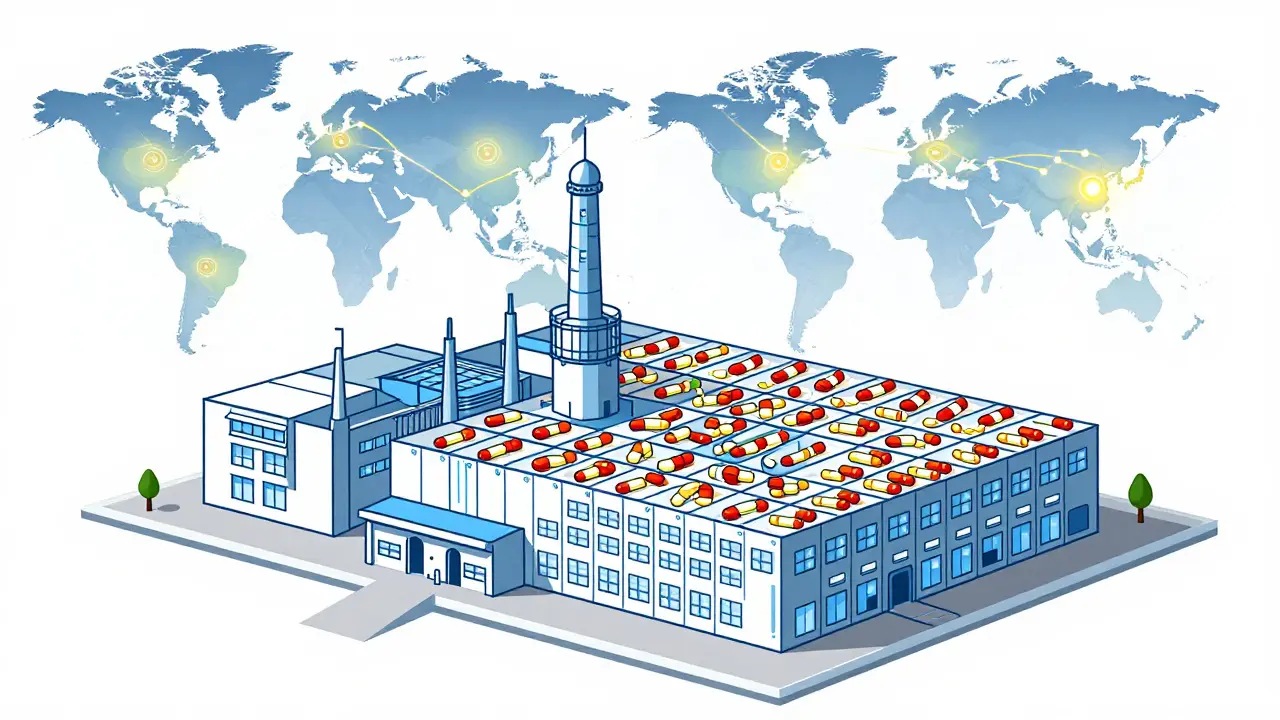
Think about that number: 10,000 manufacturing units. That’s how many drug factories operate in India. Among them, 650 are approved by the U.S. Food and Drug Administration (FDA)-more than any other country outside the U.S. Another 2,000+ meet WHO-GMP standards, the global benchmark for quality. These aren’t small labs. These are large, automated plants churning out millions of tablets, capsules, and injections every day.
India produces over 60,000 different generic medicines and more than 500 active pharmaceutical ingredients (APIs). These include drugs for cancer, heart disease, mental health, diabetes, and infections. Companies like Sun Pharma, Cipla, and Dr. Reddy’s don’t just make pills-they specialize in complex forms like extended-release tablets, transdermal patches, and injectables that require advanced technology and strict controls.
Who Uses Indian Generic Drugs?
The answer is almost everyone. In the United States, Indian manufacturers supply about 40% of all generic prescriptions. That’s nine out of every ten pills dispensed as generics. In the UK, Indian generics make up 33% of NHS prescriptions. In Sub-Saharan Africa, they cover about half of all medicines used. In countries where out-of-pocket spending on health is high, Indian drugs are often the only affordable option.
For example, in HIV treatment, Indian generics dropped the cost of antiretroviral therapy from $10,000 per patient per year to just $100. That’s not just savings-that’s survival. Doctors Without Borders confirmed that Indian-sourced antimalarials and antibiotics maintain 95% efficacy in field conditions, even in remote areas with poor refrigeration.
Why Indian Drugs Are So Cheap
It’s not just labor costs. It’s a system. India has a deep talent pool of chemists, engineers, and quality control experts trained to meet global standards. Manufacturing costs are low because of scale, efficient supply chains, and decades of experience. But quality? That’s not an accident either.
Today, FDA inspection compliance rates for Indian facilities are 85-90%, up from 60% in 2015. That means most plants now pass rigorous checks on cleanliness, documentation, and process controls. The industry has also adopted electronic common technical documents (eCTD), making regulatory submissions faster and more accurate. Still, challenges remain. Translation errors in paperwork still cause 22% of FDA observations. And some batches of drugs-like levothyroxine-have had inconsistent dissolution rates, leading to complaints.
The API Problem: India’s Weak Link
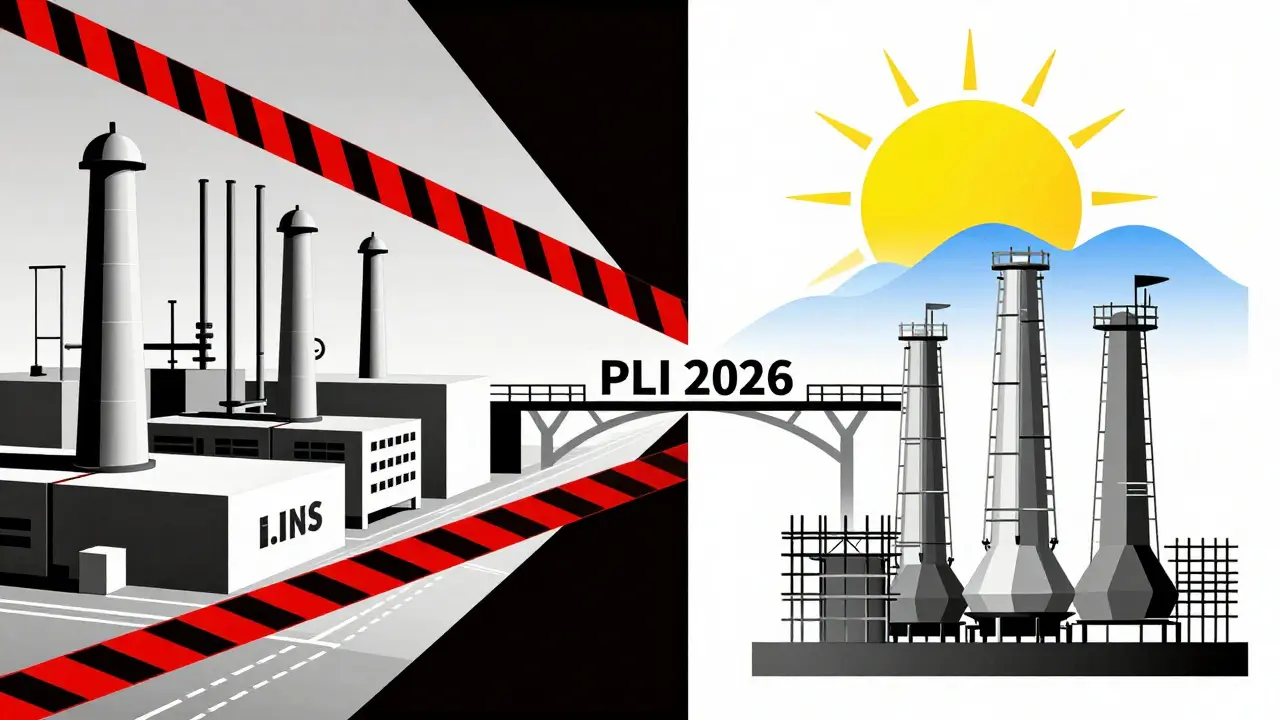
Here’s the catch: India makes drugs, but it doesn’t make enough of the raw ingredients. About 70% of its active pharmaceutical ingredients (APIs) come from China. That’s a vulnerability. During the pandemic, when China locked down, drug supplies slowed. The Indian government responded with a ₹3,000 crore ($400 million) Production Linked Incentive (PLI) scheme to build domestic API capacity. The goal? Self-sufficiency. By 2026, India aims to produce 53% of its own APIs. It’s a race against time.
Building API plants is expensive. It takes $20-50 million and 18-24 months to get a facility approved. Many smaller companies can’t afford it. That’s why the government is stepping in-with subsidies, tax breaks, and faster approvals. If it works, India could break its dependence on China and become a true end-to-end manufacturer.
Beyond Generics: The Rise of Biosimilars
India isn’t just copying old drugs. It’s moving into the next frontier: biosimilars. These are highly complex, biologic drugs that mimic expensive treatments for cancer, arthritis, and autoimmune diseases. They’re not pills. They’re made from living cells. Developing them requires advanced labs, deep expertise, and huge investments.
Companies like Biocon and Dr. Reddy’s are spending over $500 million a year on biosimilar research. Today, biosimilars make up 8% of India’s pharmaceutical export value-up from 3% in 2020. That’s a big jump. And it’s the key to moving from volume to value. While India supplies 20% of global generic volume, it only captures about 10% of the global generics market by revenue. That’s because most of its exports are low-cost, high-volume drugs. Biosimilars change that. They’re priced higher, have longer patent protection, and appeal to wealthier markets.
Challenges and Misconceptions
Not all stories about Indian generics are positive. Some reports have highlighted dangerous batches of drugs exported to other countries. These are rare-less than 1% of total shipments-but they make headlines. The truth? Most Indian manufacturers are compliant. The FDA inspects more facilities in India than in any other country outside the U.S. And compliance rates are now on par with global averages.
Another issue: packaging and shipping. Patients in the U.S. and Europe sometimes report differences in pill color, size, or taste compared to branded versions. That’s because generics aren’t exact copies-they’re bioequivalent. The active ingredient is the same, but fillers and coatings can vary. That doesn’t mean they’re less effective. In fact, 87% of users on PharmacyChecker.com rate Indian generics as satisfactory, mostly because of cost.
Shipping delays and inconsistent packaging account for 23% and 17% of negative reviews, respectively. These aren’t quality issues-they’re logistics problems. Many Indian exporters are small firms without the infrastructure of big pharma. That’s changing as larger players take over more of the export market.
The Future: From Pharmacy to Innovation Hub
India’s goal isn’t just to keep making cheap pills. It wants to lead. The government launched Pharma Vision 2047, aiming for $190 billion in pharmaceutical exports by 2047. That’s not just growth-it’s transformation. The plan focuses on three things: mastering biosimilars, achieving API self-sufficiency, and improving regulatory compliance to 95%+.
By 2030, India could be producing over 100 biosimilars. It’s already the top supplier of generic insulin, hepatitis C drugs, and tuberculosis treatments. The next step? Developing its own novel drugs. Some companies are starting clinical trials for new molecules. It’s early, but it’s happening.
India won’t replace Pfizer or Roche. But it doesn’t need to. Its role isn’t to invent the next breakthrough drug. It’s to make sure that breakthrough reaches everyone-even the poorest villages, even in the most remote corners of the world. And for now, no other country can do that at scale.
Are Indian generic drugs safe to use?
Yes, the vast majority are safe. Over 650 Indian manufacturing plants are approved by the U.S. FDA, and more than 2,000 meet WHO-GMP standards. Compliance rates for inspections are now at 85-90%, matching global averages. While isolated cases of poor-quality batches have occurred, they represent less than 1% of total exports. Regulatory oversight has improved dramatically since 2015.
Why are Indian generic drugs so much cheaper than branded ones?
Indian manufacturers avoid the high costs of drug discovery and marketing that branded companies pay. They focus on producing existing drugs after patents expire, using efficient production, skilled labor, and economies of scale. This allows them to cut prices by 30-80% without sacrificing quality. The 1970 Patents Act also legally enabled this model, letting Indian firms reverse-engineer drugs without paying licensing fees.
Do Indian generic drugs work as well as branded drugs?
Yes, they are required to be bioequivalent-meaning they deliver the same amount of active ingredient into the bloodstream at the same rate as the branded version. Studies show 95%+ efficacy in real-world use, including in Africa and South Asia. Minor differences in fillers or coatings may affect taste or appearance, but not effectiveness. Over 87% of users report satisfaction with Indian generics on PharmacyChecker.com.
How much of the U.S. generic drug market comes from India?
India supplies about 40% of all generic drugs dispensed in the United States. That’s more than any other country. It’s especially dominant in high-volume drugs like antibiotics, blood pressure medications, and diabetes treatments. The U.S. relies on Indian manufacturers because they offer the best balance of price, quality, and scale.
Is India working to reduce its dependence on Chinese APIs?
Yes. India currently imports about 70% of its active pharmaceutical ingredients (APIs) from China. To reduce this risk, the government launched a ₹3,000 crore ($400 million) Production Linked Incentive (PLI) scheme in 2020. The goal is to achieve 53% self-sufficiency in API production by 2026. New manufacturing hubs are being built, and tax incentives are encouraging domestic production. This is one of the biggest shifts in India’s pharma strategy in decades.
What’s Next for Indian Generic Manufacturers?
The next decade will decide whether India remains the pharmacy of the world-or becomes its innovation engine. The tools are there: skilled workers, modern factories, global trust, and government backing. The challenges? Dependence on China, slow adoption of novel drugs, and the need to move up the value chain.
But history shows India doesn’t back down from big goals. From producing vaccines for global immunization to cutting HIV drug prices by 99%, the country has already rewritten the rules of global health. The question now isn’t whether it can do more. It’s whether the world is ready for what comes next.
rebecca klady
March 24, 2026 AT 13:15I’ve been taking Indian generics for my blood pressure for years-never had an issue. My pharmacist said they’re FDA-approved, and honestly, I’d rather pay $5 a pill than $50.
Namrata Goyal
March 26, 2026 AT 11:40Oh please. India’s ‘pharmacy of the world’ is just a glorified chemical dump with FDA inspections they game like a video game. I’ve seen bottles with moldy labels shipped to rural clinics. They call it ‘affordable’-I call it colonial capitalism with a smiley face.
Jefferson Moratin
March 28, 2026 AT 05:35The real story here isn’t about price or volume-it’s about epistemic justice. The 1970 Patents Act didn’t just enable generic production; it rejected the Western notion that innovation must be monetized through monopoly. India didn’t break the system-it exposed its moral bankruptcy. When a life-saving drug costs $10,000 because of patent enforcement, the system isn’t broken-it’s designed that way. India’s model isn’t an alternative. It’s a correction.
Marissa Staples
March 30, 2026 AT 01:39I love that India’s making biosimilars now. It’s like they’re not just copying-they’re evolving. I used to think generics were just cheap knockoffs, but learning how much science goes into bioequivalence? Mind blown. Also, the PLI scheme for APIs? That’s actually smart policy. Not just ‘make stuff cheap’-but ‘make the whole supply chain resilient.’
Rachele Tycksen
March 31, 2026 AT 20:17wait so indian drugs are 40% of us prescriptions?? i had no idea. my pills look different every time but they work so idc lol
Stephen Alabi
April 2, 2026 AT 13:16While the narrative of Indian pharmaceutical dominance is superficially appealing, one must interrogate the structural dependencies embedded within this model. The 70% API importation from China represents not merely an economic vulnerability but a strategic existential risk. Furthermore, the assertion that compliance rates are ‘on par with global averages’ is misleading without contextualizing the sheer volume of inspections-India is scrutinized more precisely because its output is disproportionately large. One cannot equate frequency of inspection with equivalence of quality. The system is robust only inasmuch as it is constantly policed.
Agbogla Bischof
April 4, 2026 AT 07:03As a pharmacist in Lagos, I can confirm: Indian generics save lives daily. We get shipments every two weeks-no delays, no corruption, no middlemen. The WHO-GMP certification matters. The FDA approval? Even more. I’ve seen patients cry when they get their HIV meds for $10 instead of $1,000. This isn’t charity-it’s engineering. And yes, the API push? Long overdue. China’s supply chain is fragile. India’s building resilience. Respect.
Pat Fur
April 5, 2026 AT 09:39India doesn’t just make drugs. It makes dignity.