
How to Choose OTC Eye Drops for Allergies, Dryness, and Redness
 Jan, 3 2026
Choosing the right OTC eye drops shouldn’t feel like guessing. Millions of people reach for them every day for dryness, redness, or allergy symptoms-but too many end up making things worse. You might think all eye drops are the same, but they’re not. Some help. Some hurt. And some hide bigger problems behind a quick fix.
Know What’s Actually Causing Your Symptoms
Before you grab a bottle off the shelf, ask yourself: Is this dryness, allergies, or just redness? These aren’t the same problem, and treating them the wrong way can backfire.If your eyes sting after staring at a screen for hours, feel gritty when you blink, or get worse in dry air or air-conditioned rooms, you’re likely dealing with aqueous-deficient dry eye. Your eyes aren’t making enough watery tears. This is common after 40, but also happens to younger people who spend 7+ hours a day on devices.
If your eyes itch, water, swell, or feel like they’re burning during pollen season-or even around pets or dust-you’ve got allergic conjunctivitis. It’s not infection. It’s your immune system overreacting. You’ll need antihistamine drops, not just lubricants.
If your eyes look bloodshot but don’t itch or feel dry, you might be tempted by redness-relief drops. But here’s the catch: if your redness comes from dryness or allergies, using a decongestant like tetrahydrozoline (found in Visine) will make it worse over time. They shrink blood vessels temporarily, then your eyes rebound with even more redness once the effect wears off. Studies show 68% of frequent users develop worse redness within two weeks.
Artificial Tears: The Foundation for Dry Eye
For dryness, you need lubrication-not a quick fix. Artificial tears are your first line of defense. But not all are created equal.Standard drops like Systane Ultra or Refresh Tears contain ingredients like polyethylene glycol and propylene glycol. They work, but they last only 1-2 hours. If you’re using them more than four times a day, you’re probably better off switching to preservative-free versions. Preservatives like polyquaternium-1 can irritate your eyes over time. In fact, 22% of chronic users develop tiny surface wounds on their cornea from them.
Preservative-free drops come in single-use vials. A pack of 30 costs around $12-$22. It sounds expensive, but if you’re using drops daily, it’s safer and often more effective. Brands like Refresh Optive Preservative-Free and Soothe XP are favorites among people who wear contacts or have sensitive eyes.
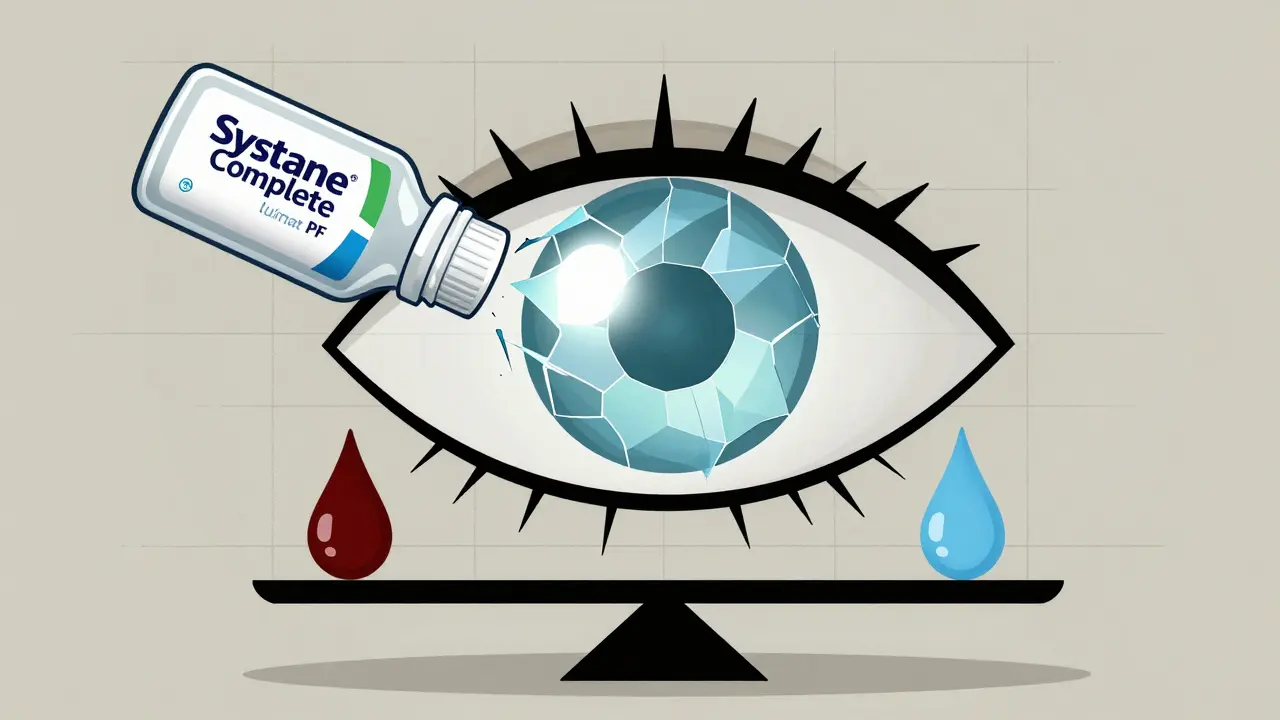
For moderate to severe dry eye, especially if your eyes feel oily or your vision blurs at the end of the day, you likely have evaporative dry eye. This means your tear film’s oily layer is broken down. That’s where lipid-based drops like Systane Complete PF come in. They contain mineral oil and castor oil to rebuild that protective layer. Clinical data shows they reduce symptoms 52% better than regular lubricants.
TheraTears is another standout. Its formula mimics natural tears with electrolytes (sodium, potassium) and a hypotonic solution (230 mOsm/L). In a 2025 head-to-head study, it provided 37% more relief than standard artificial tears for people with aqueous-deficient dry eye.
Allergy Drops: Don’t Use Regular Lubricants for Itchy Eyes
If your eyes are itching, watering, or swollen, lubricants alone won’t cut it. You need an antihistamine or mast cell stabilizer.Pataday (olopatadine 0.1%) and Zaditor (ketotifen 0.035%) are the two most trusted OTC options. Pataday lasts up to 24 hours with just one drop per day. That’s a game-changer if you’re juggling work, kids, or outdoor activities. Zaditor works well too but usually needs two doses a day.
Don’t confuse these with combo drops like Bausch + Lomb Opcon-A, which mixes a decongestant (naphazoline) with an antihistamine (pheniramine). It gives fast relief, but 41% of regular users get rebound redness within two weeks. It’s a trap. You feel better for an hour, then your eyes get worse. Then you use more. Then it gets worse again.
Real users on Reddit’s r/dryeye community swear by Pataday for seasonal allergies. One top post says, “I used to dread spring. Now I just use Pataday once a day and forget about it.”
Redness-Relief Drops: The Trap Most People Fall Into
Visine, Clear Eyes, and similar brands promise “whiter eyes in seconds.” They contain vasoconstrictors like tetrahydrozoline or naphazoline. They work-briefly. But they don’t treat the cause. They mask it.Here’s what the American Optometric Association says bluntly: “Decongestant eye drops worsen underlying dry eye in 83% of cases.” Why? Because they reduce blood flow to the eye surface. That blood flow is needed to make tears. Less blood flow = fewer tears = more dryness = more redness.
There’s one exception: Lumify (brimonidine tartrate 0.025%). It’s newer, FDA-approved for redness, and has a much lower rebound risk (just 5.2% in trials). It lasts about 8 hours. But it’s not for daily use. And it can cause headaches in some people-31% of negative reviews mention this.
If your eyes are red and you’re not sure why, skip the redness-relief drops. Try a preservative-free artificial tear first. Wait 20 minutes. If the redness fades, it was dryness. If it stays, maybe it’s allergies. If it gets worse, see an eye doctor. Don’t let a $10 bottle mask a real problem.
What to Avoid
Here’s a quick list of what not to do:- Don’t use redness drops for dry eyes. You’re making the root cause worse.
- Don’t touch the dropper to your eye. Even a tiny bit of bacteria can cause infection.
- Don’t use drops past their expiration date. Most multi-dose bottles expire 28 days after opening.
- Don’t store drops in the bathroom. Heat and moisture ruin the formula. Keep them in a cool, dry place.
- Don’t use drops meant for pets or other people. They’re not sterile for human use.
How to Apply Eye Drops Right
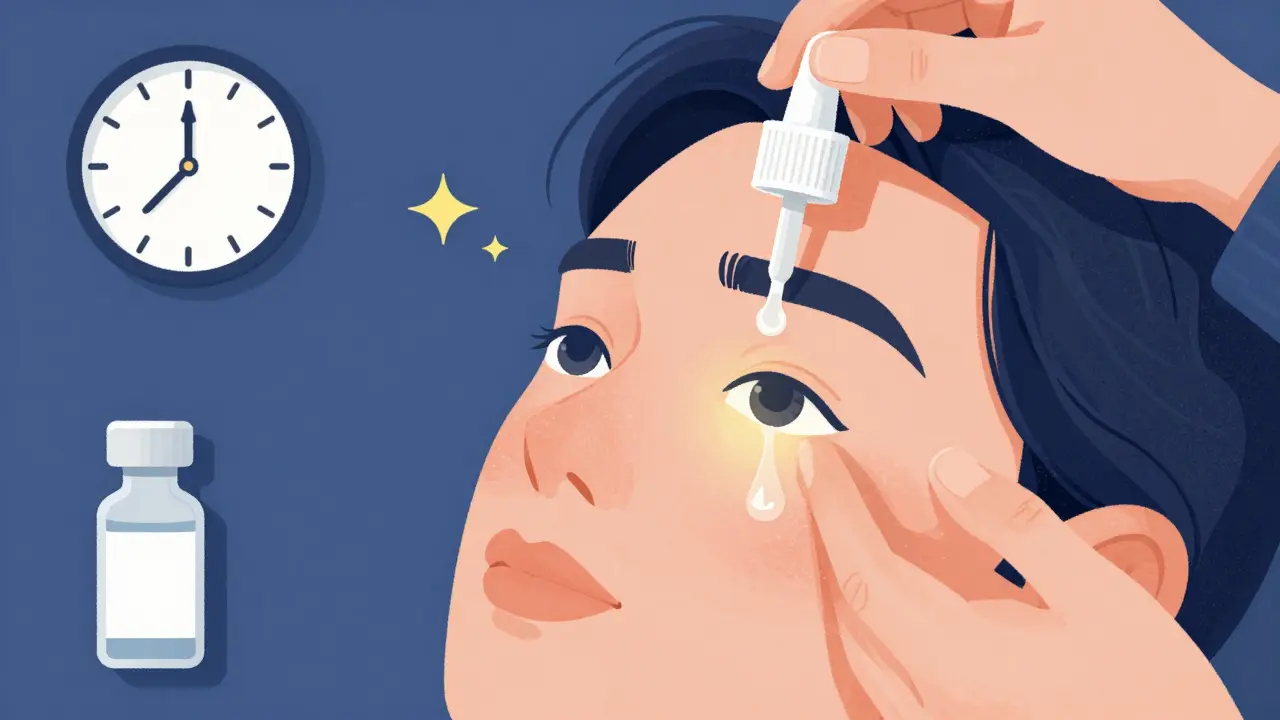
Even the best drop won’t help if you’re applying it wrong. Most people blink right after putting it in-wasting 60% of the dose.Here’s the correct method:
- Wash your hands.
- Tilt your head back slightly.
- Pull down your lower eyelid to make a small pocket.
- Hold the bottle above your eye without touching it.
- Squeeze one drop into the pocket.
- Closed your eye gently for 30 seconds. Press lightly on the inner corner near your nose to keep the drop from draining into your throat.
- Wait 5 minutes before applying another drop or using a different type.
It takes 3-5 days to get comfortable with this. But once you do, you’ll notice the difference.
When to See a Doctor
OTC drops are great for short-term relief. But if you’re still struggling after two weeks of using the right type, it’s time to see an eye care professional.Go sooner if you have:
- Blurry vision that doesn’t clear up
- Pain or sensitivity to light
- Discharge or crusting on your eyelids
- Redness that spreads or gets worse
- History of eye surgery or contact lens use
Conditions like meibomian gland dysfunction, Sjögren’s syndrome, or corneal damage need more than drops. They need diagnosis and targeted treatment.
What’s New in 2026
The OTC eye drop market is evolving fast. In 2025, brands started rolling out smarter formulas:- Thealoz Duo combines trehalose and sodium hyaluronate. It’s been shown to improve corneal healing by 40% in severe dry eye cases. It needs refrigeration after opening.
- Systane Complete PF now uses a dual-oil blend (mineral oil + castor oil) to better mimic the eye’s natural lipid layer.
- Preservative-free options are growing fast. By 2027, they’re expected to make up 35% of the market-up from 20% in 2022.
Some companies are even testing smart packaging that tracks how often you use your drops. It’s not mainstream yet, but it shows where things are headed.
Bottom Line: Match the Drop to the Problem
There’s no single “best” eye drop. The right one depends on your symptoms.For dry eyes: Start with preservative-free artificial tears. If you’re still dry by afternoon, switch to a lipid-based drop like Systane Complete PF.
For allergies: Use Pataday or Zaditor. One drop a day is enough. Avoid combo drops with decongestants.
For redness: Don’t reach for Visine. Use a lubricant first. If redness doesn’t improve in 48 hours, see a doctor. Lumify is the only redness drop worth considering-but only for occasional use.
Most people fix their eye problems by choosing better drops, not more of them. The key isn’t quantity-it’s precision.
Can I use OTC eye drops every day?
Yes, if they’re preservative-free artificial tears or antihistamine drops for allergies. But avoid decongestant drops (like Visine) for daily use-they cause rebound redness. If you’re using drops more than four times a day, switch to single-use vials to avoid preservative irritation.
Why do my eyes sting when I put in eye drops?
Stinging usually means the drop has preservatives your eyes are sensitive to, or it’s too cold. Try switching to preservative-free drops. Let the bottle sit at room temperature for 10 minutes before use. If it still stings, you might have an underlying condition like dry eye disease or blepharitis-see an eye doctor.
Are gel eye drops better than liquid drops?
Gels last longer-up to 6 hours vs. 2 for liquids-but they blur your vision for 2-3 minutes after application. They’re great for nighttime use or if you’re not driving or working on a screen right after. For daytime, stick with liquids unless your dryness is severe.
Can I use eye drops with contact lenses?
Only use drops labeled “for contact lens wearers.” These are formulated to match your lens’s osmolarity (280-320 mOsm/L). Regular drops can dry out your lenses or cause discomfort. Blink Contacts and Refresh Contacts are safe options. Always remove lenses before applying gels or non-lens-compatible drops.
How long do OTC eye drops last once opened?
Multi-dose bottles expire 28 days after opening, even if there’s liquid left. Preservative-free single-use vials are good for one use only-discard after opening. Never reuse a vial. Expired drops can harbor bacteria and cause infections.
Doreen Pachificus
January 5, 2026 AT 01:46So many people just grab whatever’s on sale without reading the label. I used to use Visine daily until my eyes turned into crimson lanterns. Switched to preservative-free tears and my vision stopped feeling like sandpaper by 3 PM. Game changer.
Dee Humprey
January 6, 2026 AT 14:17Just wanted to say thank you for the part about not touching the dropper. I didn’t realize how often I was contaminating mine until I started using single-dose vials. No more stinging, no more infections. Simple fix, huge difference.
saurabh singh
January 7, 2026 AT 06:25Man, this is gold. In India, everyone just uses whatever’s cheap and available-no idea what’s in it. I’ve seen people use antibiotic drops for redness and wonder why it gets worse. This guide should be mandatory reading. Especially the part about not storing in the bathroom-my aunt still keeps hers next to the shower. 😅
Justin Lowans
January 8, 2026 AT 14:18The precision of this information is genuinely refreshing. Too often, medical advice is reduced to soundbites or marketing slogans. The distinction between aqueous-deficient and evaporative dry eye is rarely explained with such clarity-and the clinical references lend it credibility. It’s not just helpful; it’s a model of responsible health communication.
Cassie Tynan
January 9, 2026 AT 15:55So let me get this straight-we’ve got a whole industry built on making people feel like their eyes are broken so they’ll buy $12 vials of water with a fancy label? And the real solution is… not using poison? Mind blown. 🤯
Jason Stafford
January 9, 2026 AT 22:09They don’t want you to know this. The pharmaceutical companies own the FDA. They make billions off people using the wrong drops so they’ll keep buying more. That’s why Lumify is the only one that doesn’t cause rebound-it’s not because it’s better, it’s because it’s patented. The 5.2% rebound rate? That’s the number they want you to believe. The real number is closer to 40%. I’ve seen the internal memos. Don’t be fooled.
Ethan Purser
January 10, 2026 AT 18:18We treat our eyes like disposable gadgets. We rub them, stare at screens, ignore the signs, then reach for a chemical band-aid like it’s a magic bullet. But the eye isn’t a screen-it’s a living tissue. Every drop you put in is a conversation with your body. And if you’re yelling at it with decongestants, it’s going to scream back louder. Maybe the real question isn’t which drop to use-but why you’re so desperate to silence the signal in the first place.
Siobhan Goggin
January 11, 2026 AT 07:40My mum used to say ‘if it stings, it’s working’-turns out she was dead wrong. This post saved my eyes. Preservative-free drops, no more bathroom storage, and I actually wait 5 minutes between drops now. Who knew?