
How Bioavailability Studies Work for Generic Drugs: Testing and FDA Approval
 Apr, 20 2026
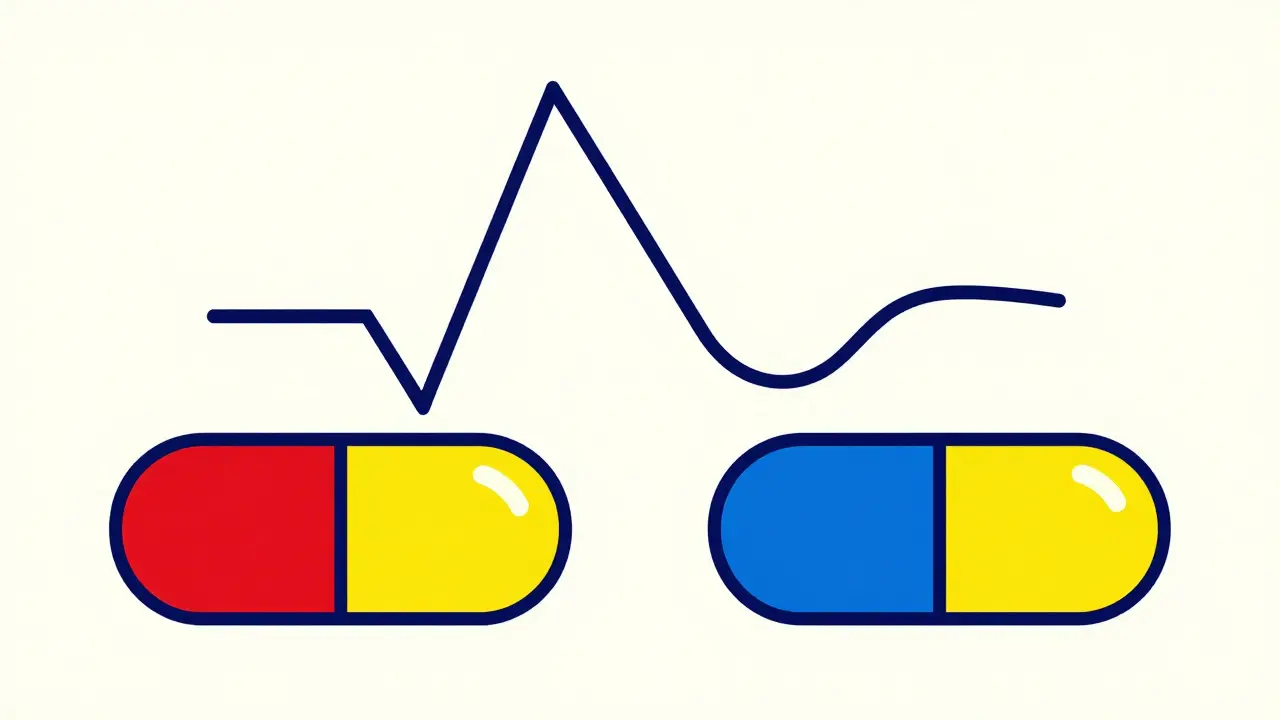
Ever wonder why a generic pill can be significantly cheaper than the brand-name version but still do the exact same thing in your body? It isn't just a guess by the pharmacist. Before a generic hits the shelves, it has to pass a rigorous scientific gauntlet. The goal isn't to prove the drug treats the disease-we already know that from the original brand-name trials-but to prove that the generic delivers the active ingredient into your bloodstream in the same way and at the same speed as the original.
This process centers on bioavailability studies is the scientific measurement of the rate and extent to which a drug's active ingredient is absorbed from a pharmaceutical product into the systemic circulation. Essentially, the FDA doesn't make generic companies repeat massive, years-long clinical trials on thousands of people. Instead, they use a shortcut called the Abbreviated New Drug Application (ANDA), which relies on proving bioequivalence. If the generic is bioequivalent to the brand, the law assumes it will have the same clinical effect.
What Exactly Is Being Measured?
When scientists run these tests, they aren't looking at whether you feel better; they are looking at your blood. They track three main pharmacokinetic variables to see how the drug behaves over time. Think of these as the "fingerprints" of the drug's performance in your body.
- AUC (Area Under the Curve): This is the total exposure. If you plot the drug concentration in the blood over time on a graph, the AUC is the total area beneath that line. It tells us the extent of absorption-basically, how much of the drug actually made it into your system.
- Cmax (Maximum Concentration): This is the peak. It's the highest concentration of the drug reached in the blood. This tells us the rate of absorption-how fast the drug hits its peak.
- Tmax (Time to Maximum Concentration): This is simply the clock time it takes to hit that Cmax. If a drug peaks too early or too late, it might change how the patient feels or how the drug works.
To get a generic approved, the ratio between the generic's AUC and Cmax and the brand's versions must fall within a very specific window. The gold standard is that the 90% confidence interval must be between 80% and 125%. While a 20% difference might sound like a lot, clinical judgment suggests that for most drugs, this variance doesn't actually change the medical outcome for the patient.
How the Testing Actually Happens
You can't just give a pill to one person and call it a day. Most studies use a "two-period, two-sequence crossover" design. In plain English: a group of healthy volunteers (usually 24 to 36 people) is split into two groups. Group A takes the brand-name drug first, then waits for a "washout period" (usually five times the drug's half-life) to make sure the first dose is completely gone. Then, they take the generic. Group B does the opposite. This way, every person acts as their own control, removing the variable of individual body chemistry.
The process is intensive. Nurses draw blood from volunteers at 12 to 18 different time points over several days. This data is then fed into a trapezoidal calculation to determine the AUC. If the generic's blood levels mirror the brand's levels closely enough, it passes the test.
| Metric | What it Measures | Standard FDA Acceptance Range | Impact of Failure |
|---|---|---|---|
| AUC | Total drug exposure (Extent) | 80% - 125% | Drug may be under-dosed or over-dosed |
| Cmax | Peak blood level (Rate) | 80% - 125% | Drug may act too slowly or cause peak-related side effects |
| Tmax | Time to reach peak | Comparable to reference | Delayed onset of action |

Why Some Drugs Have Stricter Rules
Not all drugs are created equal. For a standard blood pressure medication, a small variance in absorption is usually fine. But for Narrow Therapeutic Index (NTI) drugs, a tiny shift can be dangerous. Think of drugs like warfarin (a blood thinner) or digoxin (for heart failure). If these are 20% too strong, you risk toxicity; 20% too weak, and the drug fails to prevent a stroke.
For these sensitive medications, the FDA tightens the leash. Instead of the 80-125% range, they often require the generic to be within 90-111%. This ensures that the generic is almost a perfect clone of the original, leaving very little room for error.
The Challenge of "Complex Generics"
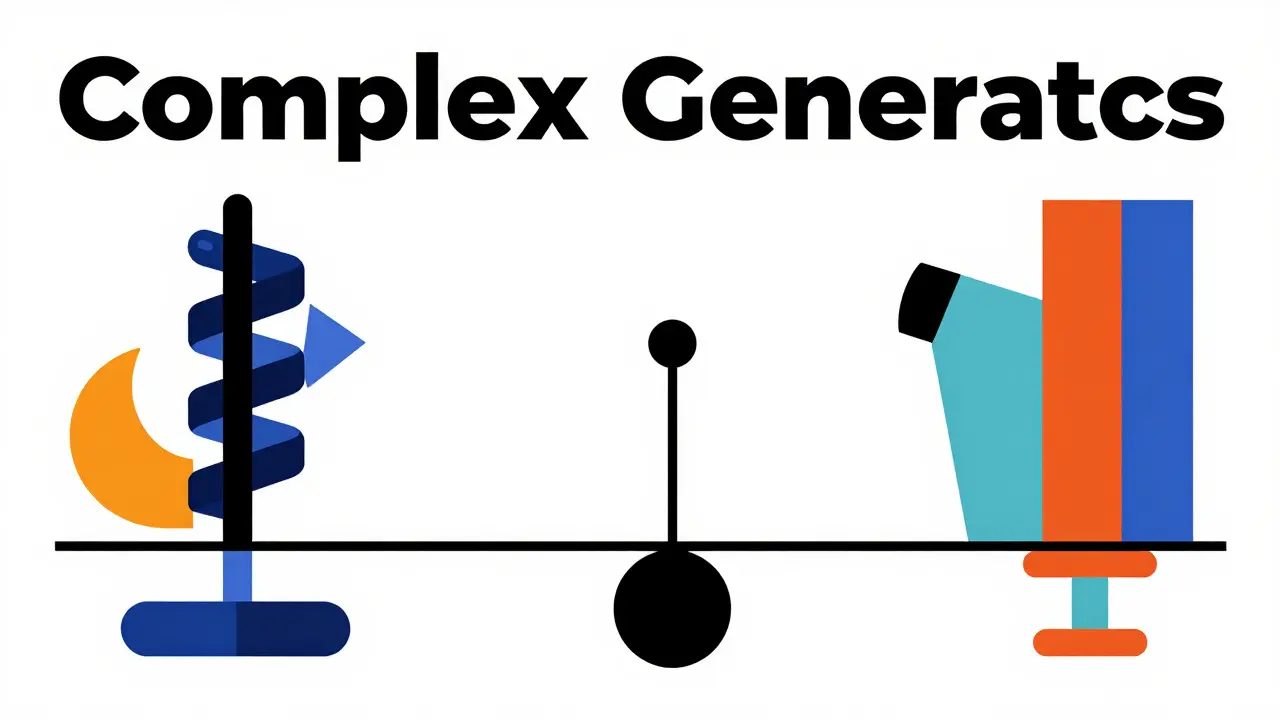
Standard tablets are easy to test because they just dissolve in the stomach. But what about a testosterone gel, an inhaler, or a long-acting injection? These are called complex generics. For these, a simple blood test might not be enough because the drug might not enter the bloodstream in a way that reflects how it actually works at the site of action (like in the lungs).
In these cases, the FDA may use pharmacodynamic studies. Instead of measuring the drug in the blood, they measure the effect. For a topical cream, they might measure how much a blood vessel constricts in the skin. They are also moving toward in vitro-in vivo correlation (IVIVC) models, using advanced lab simulations to predict how a drug will behave in a human, which could eventually reduce the need for some human trials.
Does This Always Work in the Real World?
Statistically, the system is a massive success. Over 15,000 generics have been approved since the 1984 Hatch-Waxman Act, and the vast majority of patients feel no difference. However, the real world is messier than a controlled study of 30 healthy volunteers. Some patients report "generic switch" issues. For example, people with epilepsy sometimes report increased seizures when switching brands.
Interestingly, when the FDA investigates these reports, they often find the issue isn't the bioequivalence of the drug itself, but rather other factors like how the patient is taking the medicine. That said, the agency continues to evolve. They now use "scaled average bioequivalence" for drugs that naturally vary a lot from person to person, widening the range to 75-133% if the drug's inherent variability is high enough that a strict 80-125% window would be scientifically impossible to meet.
Is a generic drug exactly the same as the brand name?
Not exactly. While the active ingredient is the same, the "inactive" ingredients (binders, fillers, dyes) often differ. Bioequivalence studies ensure that despite these different fillers, the active drug is absorbed into your body at the same rate and extent as the brand name.
Why does the FDA use a 80-125% range instead of 100%?
Human bodies are naturally variable. Even if you took the exact same brand-name pill twice, the amount absorbed would vary slightly. A 20% difference is generally considered clinically insignificant, meaning it won't change how the drug treats your condition.
What is a BCS waiver?
The Biopharmaceutics Classification System (BCS) categorizes drugs by solubility and permeability. For drugs that dissolve extremely fast and are easily absorbed (Class 1 and some Class 3), the FDA may waive the need for human bioequivalence studies if the manufacturer can prove the formulation is nearly identical to the brand.
Can I tell if my generic is bioequivalent?
Unless you are conducting a clinical trial, you can't measure it yourself. However, you can check the FDA's "Orange Book," which lists approved generic versions of brand-name drugs that have met these bioequivalence standards.
Do all generics have to undergo these tests?
Most do. However, some very simple drugs qualify for the BCS waivers mentioned above, and some highly complex generics use alternative testing methods like pharmacodynamic endpoints or in vitro dissolution tests if blood sampling isn't a viable way to measure the drug's effect.
Next Steps and Troubleshooting
If you are a patient feeling a difference after switching to a generic, your first step is to document the specific symptoms and the exact generic manufacturer (the company name on the bottle, not just the drug name). Not all generics are made by the same company, and while all must be bioequivalent, some people react differently to specific inactive fillers.
For those on high-risk medications (NTIs), talk to your doctor about a "dispense as written" (DAW) order. This tells the pharmacist to provide the specific brand your doctor prefers, bypassing the automatic generic substitution if your condition requires an extremely tight level of dosage consistency.