
Hepatocellular Carcinoma Surveillance and Treatment in Cirrhosis: What You Need to Know
 Mar, 20 2026
When you have cirrhosis, your liver is scarred and struggling. That doesn’t mean you’ll definitely get liver cancer-but your risk goes up sharply. About 80% of hepatocellular carcinoma (HCC) cases happen in people with cirrhosis. The good news? If you catch it early, survival rates jump from under 20% to over 60%. The catch? Most people don’t get screened. Only about 40% of those with cirrhosis in the U.S. receive the recommended checkups. That’s not because they don’t care-it’s because the system is messy, inconsistent, and often confusing.
Why Surveillance Matters More Than You Think
HCC doesn’t show symptoms until it’s advanced. By then, treatment options shrink fast. Surveillance isn’t about finding cancer early-it’s about finding it when it’s still small, treatable, and possibly curable. Studies show that regular screening increases survival by up to 37%. In one major study, patients who got checked every six months lived an average of three months longer than those who didn’t. That might not sound like much, but in liver cancer, three months can mean the difference between a transplant and hospice.
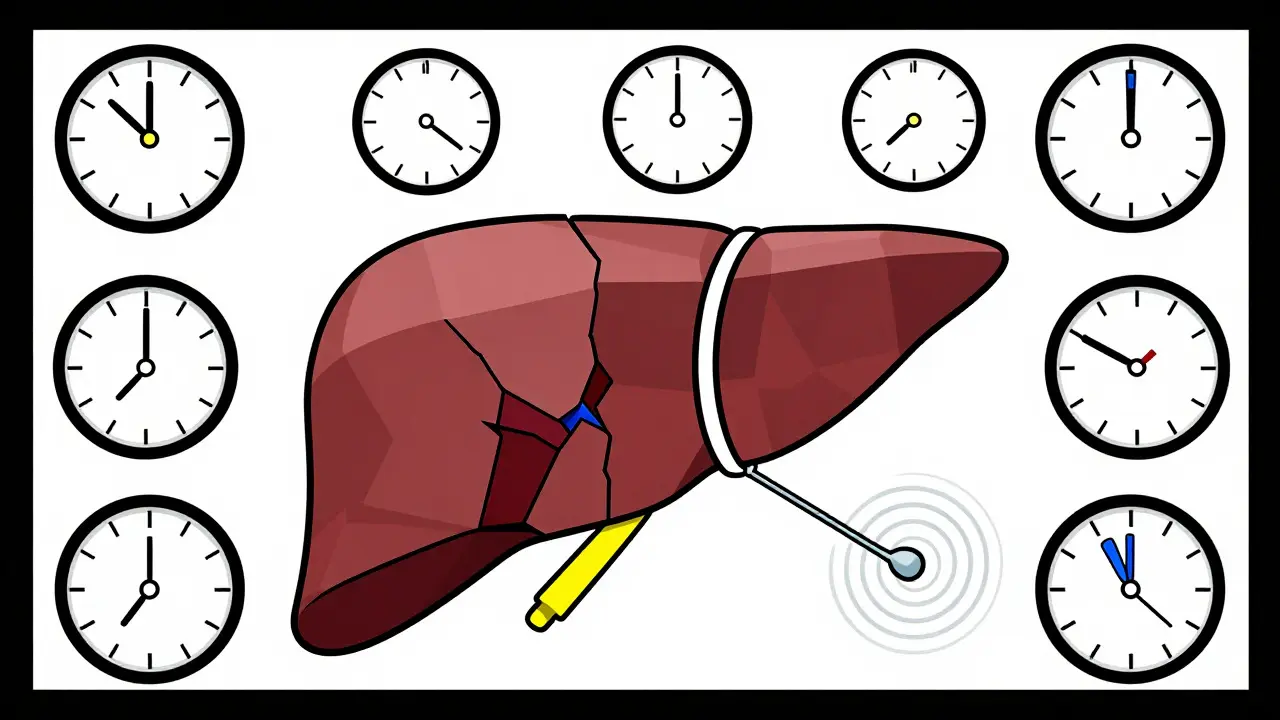
The standard tool? Ultrasound. It’s cheap, safe, and widely available. Every major guideline-from the American Association for the Study of Liver Diseases (AASLD) to the European Association for the Study of the Liver (EASL)-recommends a liver ultrasound every six months for adults with cirrhosis. Why every six months? Because HCC tumors typically grow 1 to 2 cm in that time. If you wait longer, you risk missing the window.
Who Gets Screened? The Rules Are Changing
For years, the rule was simple: if you have cirrhosis, you get screened. But that’s changing. The EASL’s 2023 Policy Statement introduced a smarter approach: risk-based surveillance. Not all cirrhosis is the same. A 55-year-old man with hepatitis B and low platelets has a much higher risk than a 65-year-old woman with mild fatty liver disease after successful treatment.
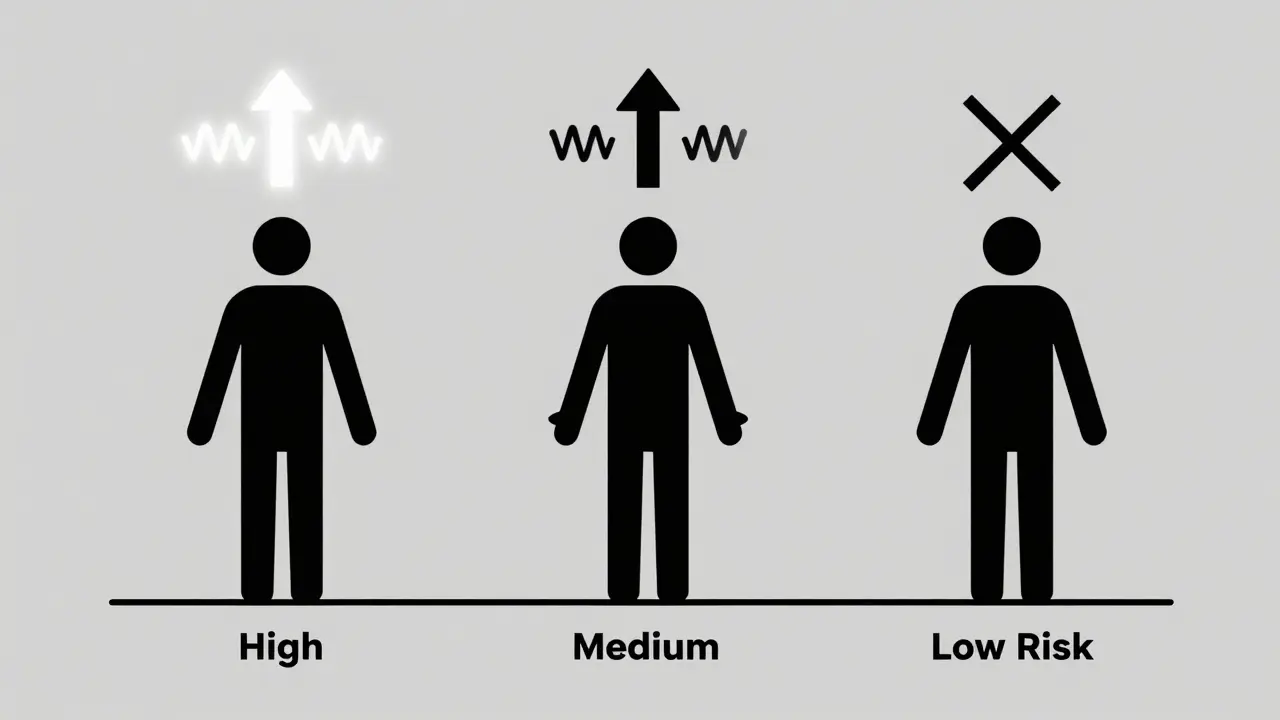
Now, patients are grouped into three tiers:
- High-risk (>2.5% annual risk): Ultrasound every 6 months-or even MRI if available.
- Medium-risk (1.5-2.5% annual risk): Standard 6-month ultrasound.
- Low-risk (<1.5% annual risk): Surveillance may not be needed.
This shift could cut unnecessary scans by 20-30%. It also means fewer people are left out. For example, patients with Child-Turcotte-Pugh (CTP) Class C cirrhosis-those with severe liver failure-are usually excluded from screening because their life expectancy is under two years. But if they’re on a transplant waitlist, they’re still screened. Why? Because if they get a transplant, they need to be cancer-free.
What Happens When Something Shows Up?
If your ultrasound finds a mass larger than 1 cm-or if your alpha-fetoprotein (AFP) blood test rises above 20 ng/mL-you don’t wait. You go straight to a contrast-enhanced CT or MRI. Ultrasound alone can’t confirm cancer. It can only raise suspicion. That’s where the Liver Imaging Reporting and Data System (LI-RADS) comes in. Updated in 2022, LI-RADS gives radiologists a clear scoring system. A score of 5 means “definitely HCC.” A score of 4 is “probably HCC.” And that’s enough to start treatment planning.
Don’t rely on AFP alone. It’s outdated. About 40% of early HCC cases don’t raise AFP levels. It’s still used in some places because it’s cheap, but it’s not reliable on its own. That’s why guidelines now say: if ultrasound looks suspicious, move to imaging-no matter what the blood test says.
Treatment Options: From Cure to Control
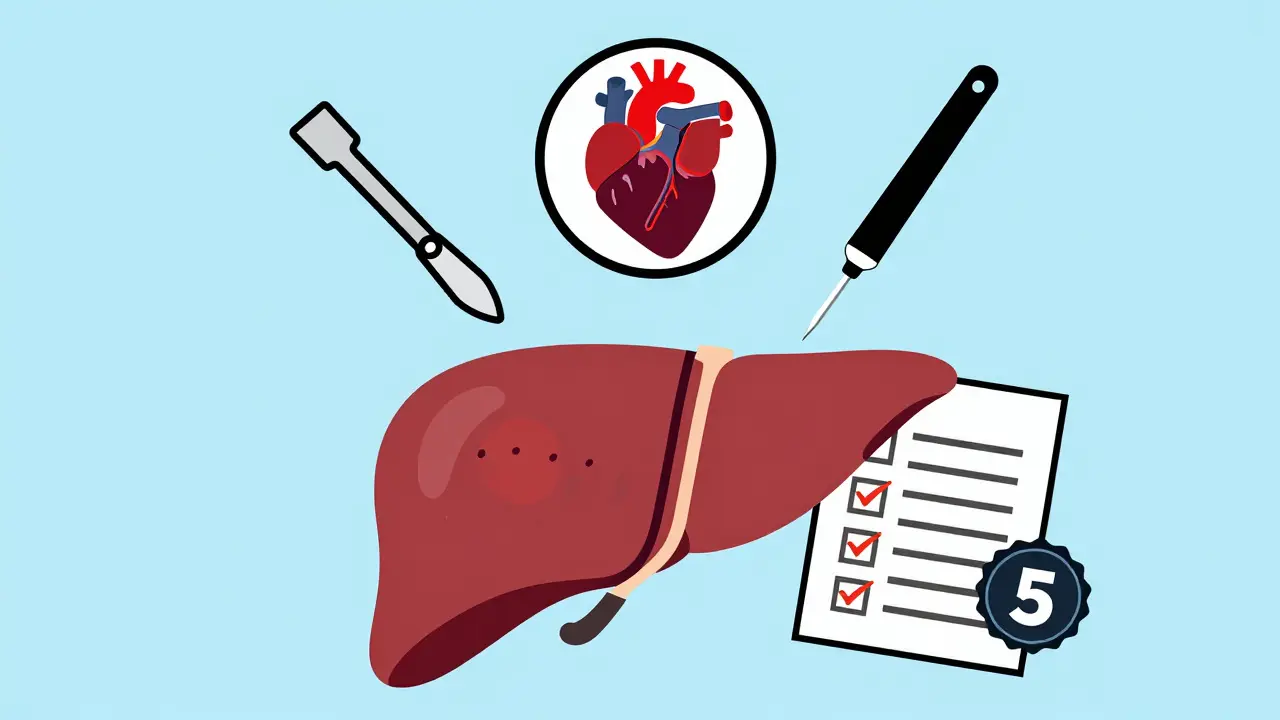
If HCC is caught early-stage 0 or A-the goal is cure. That means three main options:
- Surgical resection: Removing the tumor. Best if the rest of the liver is healthy and the tumor is small (≤5 cm) and isolated.
- Liver transplant: Replacing the whole liver. Ideal for patients with cirrhosis and small tumors (≤5 cm or up to 3 tumors under 3 cm). But you need to be on a waitlist, and donor livers are scarce.
- Ablation: Destroying the tumor with heat (radiofrequency) or cold (cryoablation). Used for tumors under 3 cm, especially if surgery isn’t safe.
For larger or more advanced tumors, treatments shift from cure to control:
- Transarterial chemoembolization (TACE): Blocking blood flow to the tumor while delivering chemo directly.
- Targeted drugs: Sorafenib, lenvatinib, and others slow tumor growth. Used when surgery and transplant aren’t options.
- Immunotherapy: Drugs like atezolizumab plus bevacizumab are now first-line for advanced cases. They help the immune system attack cancer cells.
- Radiation therapy: Especially newer forms like SBRT (stereotactic body radiotherapy), which can precisely target tumors without harming healthy tissue.
There’s no one-size-fits-all. Your treatment depends on tumor size, number, location, liver function, and overall health. That’s why a team approach-gastroenterologist, hepatologist, oncologist, surgeon-is critical.
Why So Many People Miss Screening
Guidelines are clear. But in practice? Only 30-50% of eligible patients get screened. Why?
- No reminders: Over two-thirds of clinics don’t have electronic alerts in their systems when a patient with cirrhosis is due for a scan.
- Patient barriers: 25-40% miss appointments. Some don’t understand why they need it. Others can’t afford transportation or time off work.
- Provider gaps: Primary care doctors often don’t know when to refer. Hepatologists are overloaded. Nurses spend an average of 25 minutes per patient just explaining why surveillance matters.
- Disparities: Black patients are 30% less likely to be screened than White patients. Medicaid patients are half as likely to get screened as those with private insurance.
Successful programs fix this. One VA hospital added automated reminders, assigned patient navigators, and trained staff to flag cirrhosis in the EHR. Result? Adherence jumped from 35% to 68%. That’s not magic-it’s system design.
What’s Coming Next?
The future of HCC screening is smarter, faster, and more personalized.
- AI-powered ultrasound: Tools like Medtronic’s LiverAssist (FDA-cleared in 2022) help technicians spot tiny tumors that the human eye might miss-improving detection by up to 22%.
- Blood biomarkers: The GALAD score (gender, age, AFP-L3, AFP, DCP) detects early HCC with 85% accuracy. The aMAP score (age, albumin, bilirubin, platelets) is being tested in real-world clinics. These could one day replace or reduce the need for ultrasound in low-risk groups.
- Faster MRIs: GE and Siemens are rolling out 5-7 minute liver MRIs that cost $350-400. That’s close to the cost of ultrasound. High-risk patients may soon get MRI instead of ultrasound as their first-line scan.
- Updated guidelines: AASLD is expected to release new guidance in late 2024. Early drafts suggest stronger support for risk stratification and the use of biomarkers alongside imaging.
By 2027, we may see a shift: instead of screening everyone with cirrhosis, we’ll screen based on your personal risk profile. Think of it like colon cancer screening-some people get colonoscopies every 10 years. Others get them every 3. Same idea.
What You Can Do
If you have cirrhosis:
- Ask your doctor: “Am I on the HCC surveillance list?”
- Confirm you’re getting an ultrasound every six months. Don’t rely on blood tests alone.
- Make sure your imaging is interpreted by someone trained in liver disease. Ask if LI-RADS was used.
- If you miss an appointment, reschedule immediately. Delaying by even three months can change your prognosis.
- Bring someone with you. Understanding your risk and next steps is hard when you’re overwhelmed.
If you’re a caregiver or family member: remind them. Help them schedule. Advocate. You might be the reason they live longer.
Is HCC the same as liver cancer?
Yes, hepatocellular carcinoma (HCC) is the most common type of primary liver cancer, making up 75-85% of all cases. Other types exist-like cholangiocarcinoma-but they’re rare. When doctors say "liver cancer," they usually mean HCC, especially in people with cirrhosis.
Can you survive HCC if it’s caught early?
Absolutely. When HCC is found in its earliest stages (BCLC stage 0 or A), survival rates jump to 50-70% over five years. Treatments like surgery, transplant, or ablation can cure it. The key is catching it before it spreads or grows too large. That’s why surveillance saves lives.
Do I need a biopsy if an ultrasound shows a tumor?
Not always. If a contrast-enhanced CT or MRI shows classic signs of HCC-like rapid uptake and washout of contrast-and you have cirrhosis, doctors can diagnose it without a biopsy. This is called the "non-invasive diagnostic criteria" under LI-RADS. Biopsies are only needed if the imaging is unclear or if the patient doesn’t have cirrhosis.
Why is AFP not enough for screening?
AFP is an old test. About 40% of early HCC cases have normal AFP levels. Also, AFP can rise due to other liver conditions like hepatitis flare-ups or regeneration after injury. Relying on AFP alone misses too many cancers. Ultrasound is far more reliable, even though it’s not perfect. That’s why guidelines now recommend ultrasound as the primary tool, with AFP as a possible add-on-not a replacement.
What if I can’t afford surveillance?
Ultrasound is usually covered by Medicare and most private insurers for patients with cirrhosis. If you’re uninsured or underinsured, ask about free or low-cost screening programs through local hospitals, community health centers, or liver foundations. Many offer sliding-scale fees or even free scans for high-risk patients. Delaying screening because of cost can cost you your life.
Can HCC come back after treatment?
Yes. Even after successful removal or ablation, new tumors can develop because the underlying liver disease (cirrhosis) is still there. That’s why lifelong surveillance continues after treatment. You’ll still need ultrasounds every six months, even if you’ve had surgery or a transplant. The goal isn’t just to treat the tumor-it’s to catch the next one before it grows.
Final Thought
HCC doesn’t have to be a death sentence. But it demands action-both from the medical system and from you. Surveillance isn’t optional. It’s your best shot at survival. The tools are here. The science is clear. What’s missing is consistency. If you have cirrhosis, don’t wait for symptoms. Don’t assume someone else will remind you. Ask. Follow up. Stay on the list. Your liver is fighting hard. The least you can do is show up for the checkup.
Bryan Woody
March 21, 2026 AT 02:00Let me tell you something real - if you’ve got cirrhosis and aren’t getting screened every six months, you’re playing Russian roulette with your liver. Ultrasound isn’t fancy, but it’s free, it’s safe, and it’s the only thing standing between you and a death sentence disguised as ‘late-stage cancer.’ I’ve seen too many guys wait until they’re jaundiced and vomiting to act. By then, it’s too late. Six months. Not seven. Not eight. Six. Period.
Sandy Wells
March 21, 2026 AT 16:40Why do we even bother with surveillance when half the time the system forgets you exist? I’ve been told to get screened and then never heard back. No reminder. No nurse. No email. Just silence. And then when you finally call, they say ‘oh we don’t do that here.’
Desiree LaPointe
March 21, 2026 AT 23:04Oh wow, risk stratification? How revolutionary. Next they’ll tell us not to feed the homeless because ‘some are just lazy.’ The system doesn’t care about your liver - it cares about your insurance code. They’ll screen the guy with the gold-plated HMO and ignore the one who works two jobs and can’t afford copays. This isn’t medicine. It’s actuarial math with a stethoscope.
Jackie Tucker
March 23, 2026 AT 09:53It’s fascinating how we’ve reduced human survival to percentages and risk tiers. A 65-year-old woman with mild fatty liver? Low risk? What about her decades of working night shifts, her three divorces, the whiskey she drank to cope? You can’t quantify trauma with a lab panel. But sure, let’s put her in tier three and call it ‘precision medicine.’
shannon kozee
March 24, 2026 AT 11:18Ultrasound every six months is standard for a reason. It’s not perfect, but it catches 80% of early tumors. Skip it, and you’re gambling with your life. Simple as that.
Paul Cuccurullo
March 26, 2026 AT 04:45I want to say thank you to whoever wrote this. It’s rare to see something this clear, this urgent, without sugarcoating. My dad had cirrhosis. He didn’t get screened. He passed in six months. I wish someone had told us this six months earlier. Please - if you’re reading this and you have cirrhosis - don’t wait. Don’t assume someone else will remind you. Go. Now.
Timothy Olcott
March 27, 2026 AT 09:326 months?? Bro that's too often 😅 I got a liver bro, not a Tesla that needs oil changes lol 🤡
matthew runcie
March 27, 2026 AT 14:00My doc told me to get screened. I went. They didn’t have the machine. Said I’d have to wait three months. Three months. I just turned 52. I’m not waiting three months for a scan that might save my life. I drove to the next county. Got it done. Don’t wait for the system to catch up. Do it yourself.
Nicole James
March 28, 2026 AT 17:53Who really benefits from this ‘surveillance’? Pharma? Hospitals? The ultrasound machine manufacturers? Think about it - every scan costs $500. Every MRI costs $3,000. Who’s making money off your fear? And why is there zero talk about why cirrhosis is rising? Glyphosate? Vaccines? Water fluoridation? Nobody’s asking the real questions.
Nishan Basnet
March 29, 2026 AT 20:47In India, we don’t have the luxury of risk tiers. If you have cirrhosis, you get scanned - because if you don’t, you die. No insurance, no bureaucracy, just survival. We don’t overthink it. We act. Maybe the West needs to stop optimizing and start saving lives.
Allison Priole
March 30, 2026 AT 07:43I used to think screening was just another medical hoop to jump through. Then my aunt got diagnosed at stage one because she showed up for her ultrasound. She’s alive today. Not because she was lucky - because she showed up. I wish I’d known sooner. So I’m telling you now - don’t skip it. Even if you’re tired. Even if you’re scared. Go.
Casey Tenney
March 31, 2026 AT 23:11People die because they’re too lazy to get an ultrasound. That’s the truth. No excuses.
Thomas Jensen
April 2, 2026 AT 12:14They’re not just ignoring cirrhosis - they’re gaslighting us. They say ‘it’s not urgent’ while the liver slowly turns to brick. And when you finally collapse? They say ‘why didn’t you come sooner?’ Like it was your fault. Like you didn’t have to work two jobs, raise kids, and pay rent. This isn’t healthcare. It’s a death sentence wrapped in a clipboard.