
Generic Drug Recalls and Safety Alerts: What Actually Triggers Them
 Jan, 16 2026
When you pick up a bottle of generic metformin or lisinopril, you expect it to work just like the brand-name version. You don’t think about where it was made, who tested it, or whether a single batch could be contaminated. But every year, thousands of these everyday medications are pulled from shelves-not because they’re ineffective, but because they’re dangerous. In 2024 alone, the FDA issued 347 drug recalls, and nearly 9 out of 10 of them involved real health risks. Most of these weren’t brand-name drugs. They were cheap, widely used generics. And the reason they’re recalled? It’s rarely one big mistake. It’s a chain of small failures-ones that should’ve been caught long before a patient swallowed a pill.
What Makes a Generic Drug Unsafe Enough to Recall?
The FDA doesn’t recall drugs on a whim. They have strict categories. Class I recalls are the most serious-these are the ones where a mistake could kill you. Think of the July 2024 case where potassium chloride injections were mislabeled. One vial said 10 mEq. It actually had 20 mEq. That’s double the lethal dose. Patients in ICUs got the wrong amount. Some died. That’s a Class I recall. It’s not about being slightly off. It’s about being deadly.
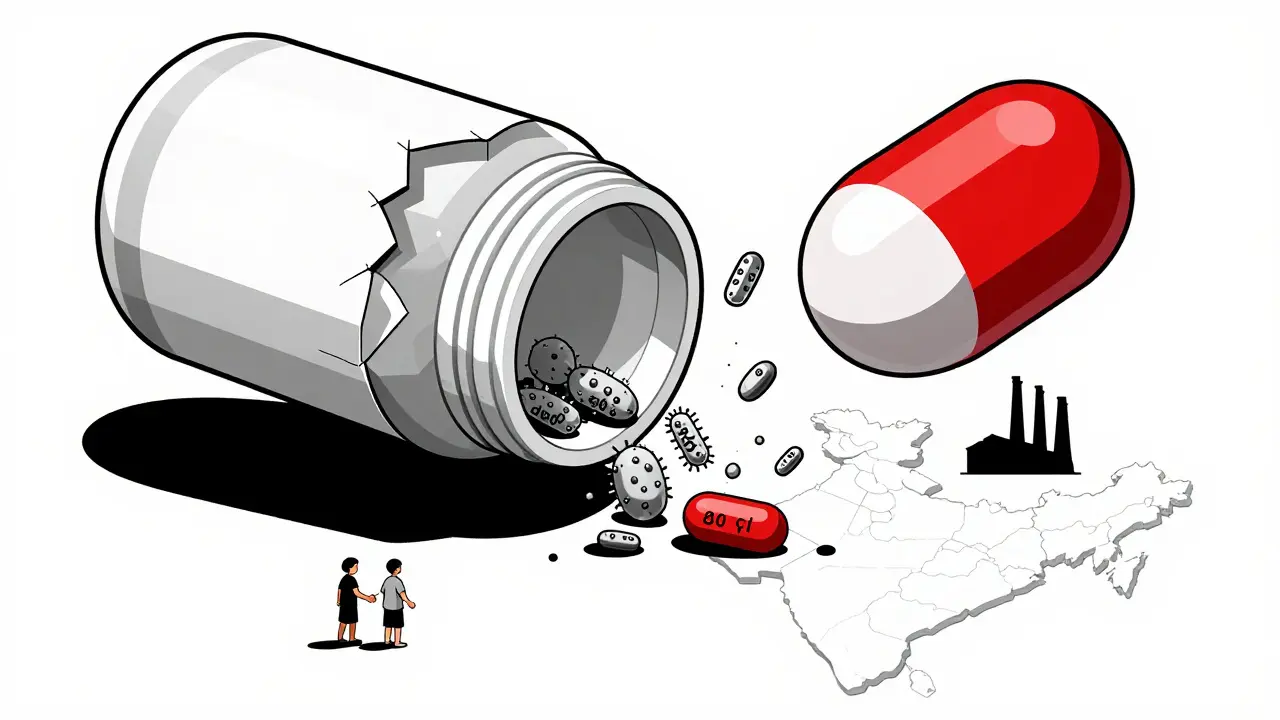
Class II recalls are more common. They don’t usually kill, but they can make you sick. In April 2025, Glenmark Pharmaceuticals recalled nearly 40 generic drugs because of contamination and poor manufacturing practices at their Indian plant. The pills weren’t sterile. Dust, microbes, even tiny metal particles were inside them. These aren’t visible. You can’t smell or taste them. But if you’re elderly, diabetic, or on immunosuppressants, that’s enough to trigger a serious infection.
Class III recalls are the least dangerous. These are labeling errors-wrong expiration dates, misspelled names, or missing instructions. They’re annoying, but rarely harmful. Still, even these get pulled because the FDA requires strict compliance. One wrong label can confuse a pharmacist. One confused pharmacist can give the wrong drug to the wrong patient.
The Real Culprits Behind Recalls
What causes these problems? It’s not random. The data shows clear patterns. About 37% of all drug recalls are due to sterility failures. That means bacteria or fungi got into the medicine during production. How? Poor air quality in the factory. Air filters not changed. Workers not wearing proper gear. Water used to make the pills not clean enough. The FDA requires endotoxin levels below 0.25 EU/mL for sterile drugs. Many foreign plants don’t meet that.
Another 12% of recalls are caused by particulate matter-tiny bits of glass, metal, or plastic in the solution. These can clog blood vessels. In 2023, a batch of generic IV antibiotics had visible fibers. Patients developed fever, chills, and blood clots. The factory admitted the filters were broken for six months.
Labeling errors? They make up 9%. But they’re dangerous because they lead to dosing mistakes. A pill labeled as 5 mg might be 10 mg. A liquid labeled for children might be adult strength. These aren’t manufacturing flaws. They’re human errors. And they’re preventable.
The most overlooked cause? Active ingredient potency. If a generic pill doesn’t contain the right amount of the drug, it won’t work. Or worse-it might overdose you. In 2024, a batch of generic metformin was found to have 40% less active ingredient than labeled. Patients with diabetes saw their blood sugar spike. No one noticed until three people were hospitalized.
Why Are Foreign Factories the Big Problem?
Eighty percent of the active ingredients in U.S. generic drugs come from just two countries: India and China. That’s not a coincidence. It’s cheaper. But it’s also riskier.
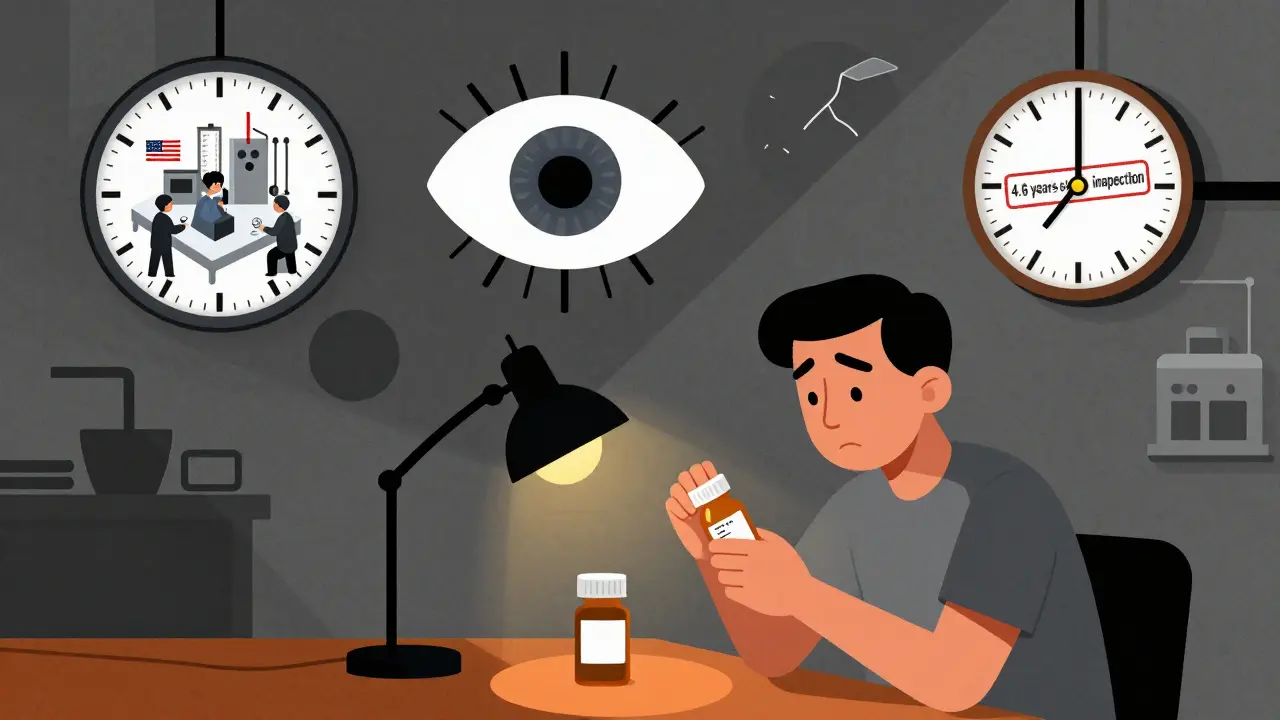
Domestic factories in the U.S. get inspected every 1.8 years on average. Foreign ones? Every 4.6 years. That’s more than four years without a single government check. In the Glenmark case, the FDA hadn’t visited their Indian plant in over four years. Journalists found the problems first. Not the regulators.
And when problems are found, the system relies on companies to report them. The FDA can’t force a recall. They can only ask. Most companies comply-but not always quickly. In the U.S., it takes an average of 42 days from when a problem is found to when the public is warned. In the EU, where recalls are mandatory, it’s 18 days. That’s more than a month of people taking potentially unsafe pills.
The FDA admits this. In February 2025, Commissioner Robert Califf told Congress their inspection budget only covers 17% of what’s needed. They simply can’t get to all the factories. And with 80% of ingredients coming from overseas, that’s a massive blind spot.
Who Notices the Problems First?
It’s not the FDA. It’s often patients, nurses, or pharmacists.
On Reddit’s r/Pharmacy, a nurse described contacting 127 patients after a recalled generic hydroxyzine was found to have inconsistent dosing. Only 38 had side effects-but every single one was terrified. No one had been told directly. They found out when their pharmacy called.
A 2025 AARP survey showed 78% of people would stop taking a recalled drug immediately-even if the FDA says to call their doctor first. That’s panic. And it’s understandable. Most people don’t know how to read a recall notice. Consumer Reports found 89% of patients found them confusing. One notice said “potential contamination.” What does that mean? Should I throw it out? Should I go to the ER?
Meanwhile, the FDA’s MedWatch system lets patients report bad reactions. But only 3.2% of people who could report actually do. That means for every 30 bad reactions, only one is recorded. The real number is probably ten times higher.
What Happens After a Recall Is Issued?
Once the FDA issues a recall, hospitals and pharmacies have 24 hours to check their inventory. They have 72 hours to notify patients. But that’s not always possible. Many patients don’t know which pharmacy they got the drug from. Or they got it months ago. Or they’re on Medicare and can’t afford to go back.
Large hospitals use automated systems to block recalled drugs from being ordered again. They create “do not purchase” lists. But smaller clinics? They still use paper logs. One pharmacy in Ohio kept ordering a recalled generic blood pressure pill for three weeks after the recall. They didn’t realize the lot number had changed.
Pharmacists now need about 40 hours of special training just to handle recalls properly. That’s not something most clinics pay for. And even then, tracking which lot number went to which patient is a nightmare. Eighty-two percent of hospitals say they struggle with this.
The Joint Commission requires all recall records to be kept for six years. That’s why most hospitals now use digital tracking systems. But again-smaller providers? They’re still behind.
What’s Changing-and What’s Not
The system is under pressure. In 2025, Congress introduced the Pharmaceutical Supply Chain Security Act. It would require foreign manufacturers to share real-time quality data with the FDA. That’s a big step. So far, only 18% of companies use blockchain to track drug shipments. That number is growing fast. If it hits 50% by 2027, recalls could be detected in hours, not weeks.
The FDA is also testing AI tools to predict which factories are most likely to fail. They’re analyzing inspection history, worker turnover, supplier changes, and even weather patterns (humidity affects sterile production). If the AI flags a plant, inspectors are sent immediately. It’s not perfect-but it’s better than waiting four years.
But here’s the problem: the FDA’s budget for foreign inspections is still $780 million short. That’s not a typo. That’s the gap between what’s needed and what’s funded. Without that money, inspections won’t increase. Factories won’t improve. And recalls will keep happening.
What You Can Do
You can’t control what’s made in a factory in India. But you can control what you do after a recall.
- Check the FDA’s Enforcement Reports monthly. They’re free and searchable. You don’t need to be a doctor to use them.
- If your pharmacy calls about a recall, don’t panic. Don’t stop the drug unless your doctor says so. But do get a replacement. Never keep a recalled pill.
- If you think a medication isn’t working-or is making you sick-report it to MedWatch. Even if you’re not sure. One report might be the first sign of a bigger problem.
- Ask your pharmacist: “Is this generic made in the U.S. or overseas?” You’d be surprised how often they know.
- Keep your prescriptions organized. Note the lot number on the bottle. If a recall happens, you’ll know if yours is affected.
Generic drugs save billions every year. They’re safe-most of the time. But safety isn’t automatic. It’s built by inspections, transparency, and accountability. And right now, that system is stretched thin. The next recall might not be about potassium chloride or hydroxyzine. It could be your blood thinner. Your insulin. Your heart medication. The system works best when people pay attention. Don’t wait for a headline. Check your pills. Ask questions. Stay informed.
Jodi Harding
January 18, 2026 AT 03:23They call it 'generic' like it's just a copy. Nah. It's a gamble with your life. I took a batch that didn't work-my BP went nuclear. Turned out the lot was from a factory that got flagged in 2023. No one told me. Just a quiet recall notice buried in email spam. I'm lucky I didn't end up in the ER.
Tyler Myers
January 18, 2026 AT 07:58Of course the FDA can't inspect every factory-because the pharmaceutical industry owns Congress. Big Pharma doesn't want you to know this, but 90% of the 'active ingredients' in your meds are made by Chinese state-owned labs with zero oversight. The FDA is a puppet. The real recall system? It's a PR stunt. They only act when someone dies on TV.
Nishant Sonuley
January 18, 2026 AT 22:41Let me tell you something-India makes over 40% of the world’s generic drugs, and yes, we have our flaws. But you think American factories are clean? I worked in a pharma plant in New Jersey once. The air filters? Changed once a year. The water? Filtered through a sieve. The inspectors? Came in, had coffee, took photos, left. The system is broken everywhere. It’s not about where it’s made-it’s about who’s paying for oversight. And right now, no one’s paying enough.
Andrew McLarren
January 18, 2026 AT 23:51While the systemic vulnerabilities in the global pharmaceutical supply chain are indeed concerning, it is imperative to recognize that regulatory agencies operate under constrained fiscal and logistical parameters. The disparity in inspection frequency between domestic and foreign facilities is not indicative of negligence, but rather a reflection of resource allocation under fiscal austerity. A more constructive approach would be to advocate for increased public funding and international regulatory harmonization, rather than fostering unwarranted distrust.
Andrew Short
January 19, 2026 AT 14:10You people are idiots. You think this is about 'safety'? It's about profit. Companies don't care if you die-they care if the lawsuit costs more than the recall. The FDA? They're paid off. The 'recall' is just a PR move to keep you from suing. And you? You keep buying the cheapest pill because you're too lazy to pay $10 more for a brand. You're complicit. Stop pretending you're a victim.
christian Espinola
January 21, 2026 AT 11:04Typo in the article: 'EU' is not 'European Union' in this context-it's 'Endotoxin Units'. Also, '40% less active ingredient' is statistically impossible without a lab error. Either the batch was mislabeled or the testing was flawed. Either way, this is a media scare, not a systemic failure. And yes, I read the FDA’s compliance reports. You didn't.
Chuck Dickson
January 21, 2026 AT 15:40Hey-this is important. Don’t just scroll past this. Your insulin, your blood pressure med, your antidepressant? It might be sitting on a shelf in a factory with broken air filters. But here’s the good news: YOU can change this. Check your lot numbers. Report weird side effects. Ask your pharmacist where it’s from. One person speaking up stops a recall from becoming a tragedy. You’re not powerless. Start today.
Dayanara Villafuerte
January 23, 2026 AT 08:58So I just Googled my metformin lot number… and it’s on the recall list 😳 I’ve been taking this for 8 months. My doctor never said a word. I’m not mad-I’m just… wow. 🤯 I’m going to call my pharmacy right now. Also, why does the FDA website look like it was built in 2003? 😭
Wendy Claughton
January 24, 2026 AT 21:03I’ve been reading this quietly… and I just want to say thank you for writing this. It’s scary, but also… necessary. I used to think generics were just cheaper. Now I know they’re a gamble-and I didn’t even know I was playing. I’m going to start writing down lot numbers. And I’m going to ask my pharmacist. I’m not scared anymore-I’m just… awake.
Jay Clarke
January 26, 2026 AT 07:17THEY’RE POISONING US AND WE’RE STILL BUYING IT. I saw a video of a guy in Ohio who got a batch of generic lisinopril with metal shavings in it. He had to get his kidney removed. The company? They paid a fine. The guy? He’s on dialysis. And the FDA? They posted a tweet. That’s it. That’s the system. We’re all just waiting for our turn.
Selina Warren
January 27, 2026 AT 14:55I work in a clinic. We get recall notices. We call patients. Half don’t answer. Some hang up. One woman said, 'I don’t have time for this-I’m on Medicare and I can’t afford to miss work.' So we send letters. Then we pray. This isn’t just about pills. It’s about who gets to be safe-and who gets forgotten.
Eric Gebeke
January 29, 2026 AT 10:39Oh wow, another ‘concerned citizen’ article. Let me guess-next you’ll tell me to ‘check your lot numbers’ like that’s some heroic act. Newsflash: I can’t afford to pay $200 for a brand-name drug. I don’t have time to Google recalls. And I’m not your moral lesson. The real problem? A system that forces people to choose between health and rent. Stop blaming the patient. Blame the CEOs.
Jake Moore
January 29, 2026 AT 21:48Just a quick tip: If you’re on a chronic med, sign up for FDA recall alerts via email. It’s free. And if your pharmacy doesn’t notify you when your med is recalled-switch pharmacies. There are over 60,000 in the US. You deserve better than silence.
Joni O
January 31, 2026 AT 20:57okay so i just looked up my blood pressure med… and it’s from india… and the lot number… i think it’s the one from april? i’m so scared right now. i didn’t even know i could check this. i’m going to call my pharmacist tomorrow. i’m sorry i didn’t know sooner. thank you for writing this.
Ryan Otto
February 1, 2026 AT 14:21It is patently obvious that the Western pharmaceutical hegemony has outsourced its moral responsibility to developing nations, then weaponizes the resulting failures to justify protectionist trade policy. The FDA's 4.6-year inspection cycle is not an oversight-it is a calculated strategy to maintain the illusion of safety while preserving profit margins. The real scandal? The fact that you believe this is a technical issue. It is a geopolitical one.