
FDA Classification of Serious Adverse Events Explained for Patients
 Feb, 25 2026
When you’re taking a new medication or joining a clinical trial, you’re likely to see terms like "serious adverse event" or "SAE" on forms, consent documents, or medication guides. If you’ve ever read that and thought, "Wait, does this mean I’m in danger?" - you’re not alone. Many patients confuse "serious" with "severe," and that mix-up can cause unnecessary fear - or worse, missed warning signs.
What Exactly Is a Serious Adverse Event?
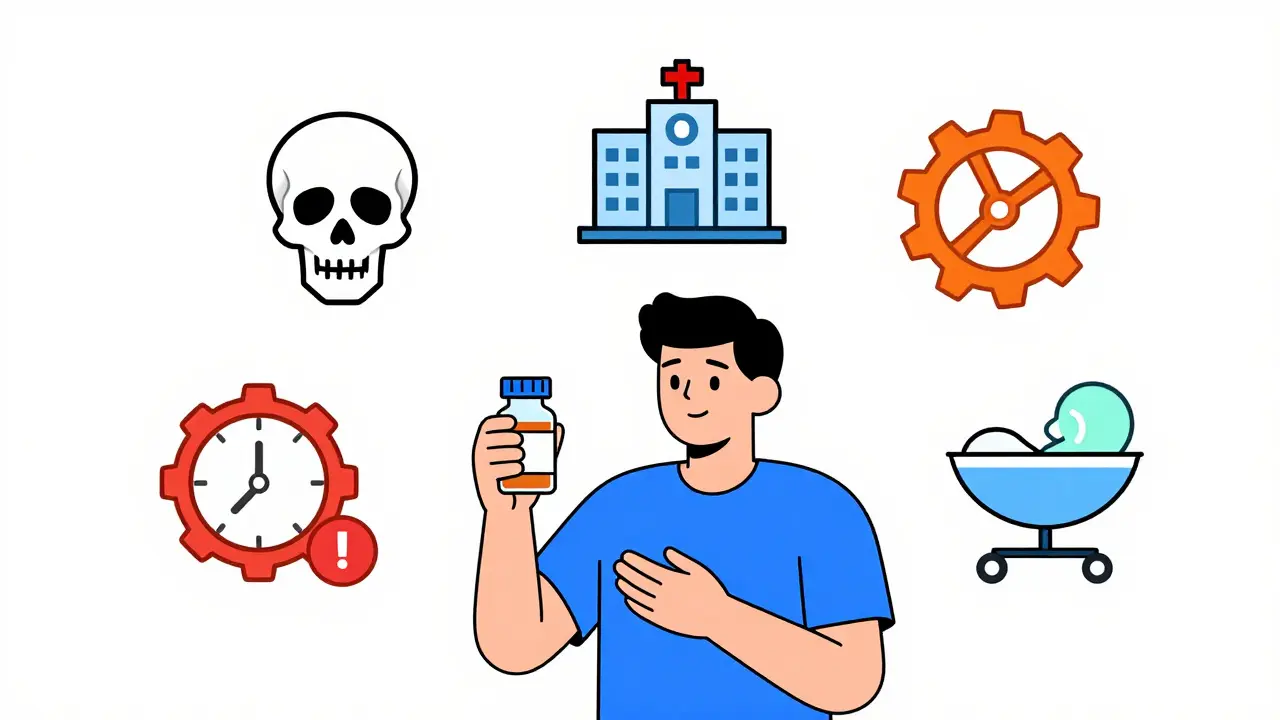
The U.S. Food and Drug Administration (FDA) doesn’t use "serious" the way most people do. To them, a Serious Adverse Event (SAE) isn’t just about how bad the symptom feels. It’s about what happens as a result. An SAE is any unexpected medical problem linked to a drug, vaccine, or medical device that leads to one of five specific outcomes:
- Death - even if it’s only suspected to be related to the treatment.
- Life-threatening - meaning you were in real danger of dying at the time the event occurred. This isn’t "I felt really sick" - it’s "I almost didn’t make it."
- Hospitalization - either you had to go in, or your stay got longer by at least 24 hours because of the event.
- Disability or permanent damage - something that changes your life long-term. Think nerve damage, loss of vision, or inability to work or care for yourself.
- Congenital anomaly or birth defect - if you’re pregnant and the treatment might have harmed the baby.
Here’s the twist: an event can be "serious" even if it doesn’t feel severe. For example, if you get a bad headache and end up in the ER because it won’t stop - even if doctors say it’s not life-threatening - that counts as an SAE because it led to hospitalization. On the flip side, a really painful rash (Grade 3 severity) that goes away in a week with an ointment? That’s not an SAE unless it caused hospitalization or another of the five outcomes.
Why This Distinction Matters
Doctors and researchers use this system to spot real safety signals - not just annoying side effects. The FDA doesn’t care if 100 people got a headache. They care if 5 people ended up in the ICU because of a drug. That’s how they catch problems before they become national crises.
In 2022 alone, the FDA used SAE data to issue 128 safety alerts and update 47 drug labels. That’s how we got warnings like "this medication may cause sudden liver failure" or "avoid this combo with alcohol." These changes didn’t come from lab tests - they came from real patients reporting what happened to them.
One of the biggest misunderstandings? Confusing "severe" with "serious." The National Cancer Institute uses a 5-point scale for severity:
- Grade 1: Mild - annoying but doesn’t interfere with daily life.
- Grade 2: Moderate - needs treatment, but not hospitalization.
- Grade 3: Severe - requires hospitalization or strong meds.
- Grade 4: Life-threatening - needs intensive care.
- Grade 5: Fatal.
But here’s the key: a Grade 3 event (severe) is only an SAE if it triggered one of the five outcomes above. In cancer trials, 68% of Grade 3-4 events were not classified as serious because they were expected, reversible, and didn’t lead to hospitalization or permanent harm. That’s why a patient might panic seeing "Grade 4 neutropenia" on their report - until their nurse explains: "That’s common with chemo. We treat it. You didn’t go to the hospital. So it’s not an SAE."
How Patients Are Supposed to Be Informed
By law, every drug that comes with a patient medication guide must have a "Warnings and Precautions" section. Look for phrases like:
- "Serious infections occurred in 2.3% of patients."
- "Hospitalization due to dehydration was reported in 1.1%."
- "Fatal liver injury has been reported."
These numbers aren’t guesses. They come from clinical trials where every SAE was recorded and reviewed by the FDA. If you’re in a trial, your consent form should explain what counts as an SAE - in plain language. The FDA now recommends that sponsors say: "An event that results in death, requires hospitalization, causes significant disability, or presents a life-threatening situation."
But here’s the problem: a 2022 survey found that 78% of patients didn’t understand the difference between serious and severe. One woman thought a Grade 3 rash meant she was in danger - when in reality, it was just a bad reaction that cleared up with steroids. Another man ignored early signs of high blood sugar because he thought "it wasn’t serious" - until he ended up in the ER with diabetic ketoacidosis. He later said: "I wish someone had told me hospitalization = serious."
What You Can Do
Understanding SAEs isn’t just about reading documents - it’s about knowing when to act.
- Know the five outcomes. Write them down: death, life-threatening, hospitalization, disability, birth defect. If any of these happen, it’s serious - even if it seems "minor."
- Ask: "Did this cause hospitalization or permanent harm?" If yes, it’s an SAE. If no, it’s probably just a bad side effect.
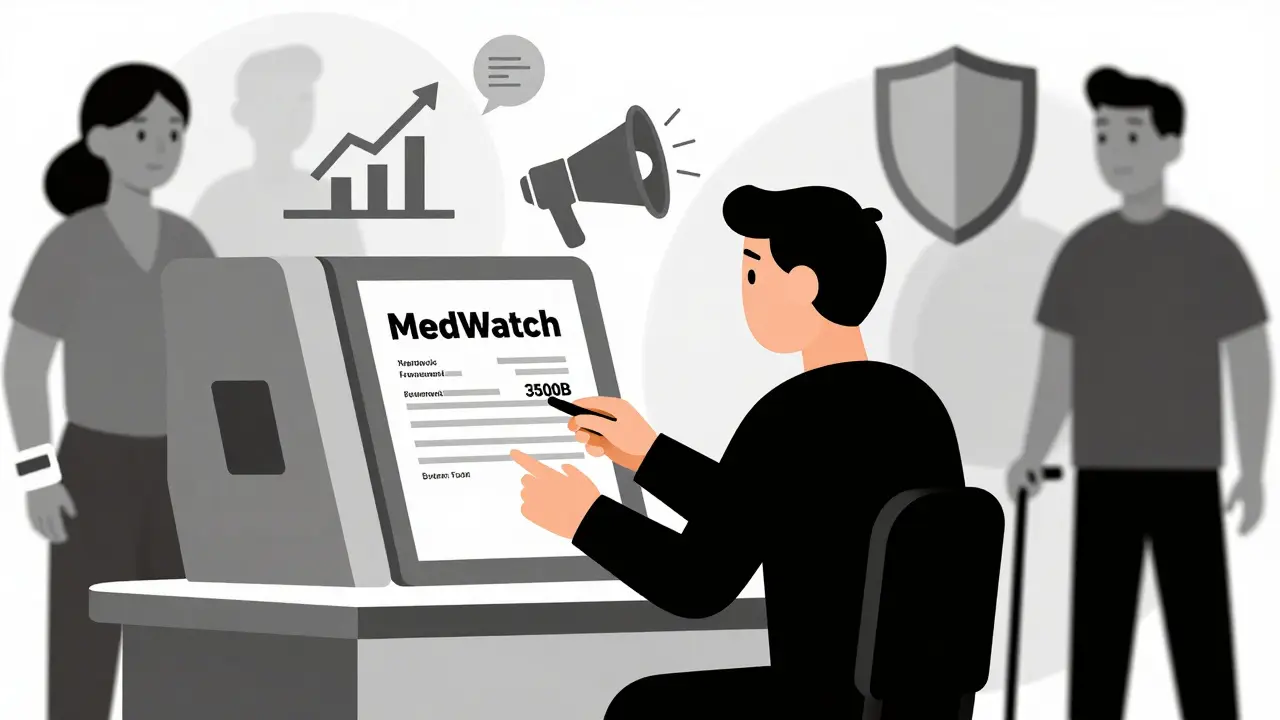
- Report anything unusual. You can file a report directly to the FDA using Form 3500B through their MedWatch program. In 2022, over 38,000 reports came from patients like you.
- Use plain language. If a medical document uses jargon, ask for a simple explanation. You have the right to understand what you’re signing up for.
The FDA’s Patient Engagement Advisory Committee just recommended that all clinical trial websites include a simple SAE summary by 2025. That’s progress. But until then, you need to be your own advocate.
What’s Changing in 2025 and Beyond
The FDA isn’t stopping. They’re working on tools to make this clearer:
- A new patient education portal launching in December 2024 - with videos, quizzes, and real stories.
- AI systems that now prioritize SAE reports for review, cutting response time from 30 days to 7.
- More trials now asking patients directly: "What would you consider a serious side effect?" - because your voice matters.
By 2026, we’ll likely see drug labels that say things like: "This medicine may cause hospitalization in 1 out of 50 people." Not "Grade 3 adverse event."
Final Thought: Your Experience Matters
The FDA’s system works because patients speak up. A single report can trigger a safety review. One woman in Ohio reported dizziness after taking a new blood pressure pill. Three months later, the FDA added a warning: "May cause sudden loss of consciousness in elderly patients." That warning saved lives.
You don’t need to be a scientist. You just need to know: if something makes you go to the hospital, change your life, or nearly kills you - it’s serious. And you have the right - and the power - to report it.
What’s the difference between a serious adverse event and a severe side effect?
A severe side effect describes how intense the symptom feels - like pain, nausea, or fatigue - using a grading scale (Grade 1 to 5). A serious adverse event (SAE) is defined by what actually happened: did it cause death, hospitalization, permanent damage, a life-threatening situation, or a birth defect? A Grade 3 side effect (severe) might not be an SAE if it didn’t lead to one of those five outcomes. An SAE can even come from a mild symptom if it caused hospitalization.
Do all bad reactions count as serious adverse events?
No. Only reactions that meet one of the FDA’s five specific criteria count as SAEs: death, life-threatening condition, hospitalization, permanent disability, or birth defect. Common side effects like headaches, dry mouth, or mild rashes - even if they’re very uncomfortable - usually don’t qualify unless they lead to one of those five outcomes.
Can I report an adverse event myself?
Yes. The FDA’s MedWatch program lets patients report adverse events directly using Form 3500B. You don’t need a doctor’s note. If you had a reaction after taking a medication, vaccine, or medical device - even if you’re not sure it was related - report it. In 2022, over 38,000 reports came from patients, helping the FDA catch safety issues earlier.
Why do some side effects get reported as serious even if they seem minor?
Because the FDA looks at the outcome, not the symptom. For example, a mild fever that leads to hospitalization because of dehydration counts as an SAE. A minor rash that causes a severe allergic reaction requiring emergency treatment also counts. It’s not about how bad the symptom feels - it’s about whether it forced you into the hospital or changed your life long-term.
Do all drugs have serious adverse events listed?
Yes. Every prescription drug and many over-the-counter medications must include a "Warnings and Precautions" section in their patient guide that lists known SAEs from clinical trials. The FDA requires this. If you don’t see it, ask your pharmacist or check the FDA’s website for the official drug label.
How do I know if an event I experienced was serious?
Ask yourself: Did this event cause me to be hospitalized, nearly die, become permanently disabled, or harm a pregnancy? If yes - it’s serious. If you’re unsure, talk to your doctor or call the FDA’s MedWatch hotline. It’s better to report something that turns out to be minor than to miss something that could help others.
Nandini Wagh
February 26, 2026 AT 19:33tia novialiswati
February 27, 2026 AT 10:48Lillian Knezek
February 28, 2026 AT 13:56Maranda Najar
February 28, 2026 AT 15:24Christopher Brown
March 1, 2026 AT 07:33Sanjaykumar Rabari
March 2, 2026 AT 07:16Kenzie Goode
March 3, 2026 AT 18:06Dominic Punch
March 4, 2026 AT 10:05Valerie Letourneau
March 5, 2026 AT 07:49Khaya Street
March 6, 2026 AT 07:47Brooke Exley
March 6, 2026 AT 08:57Lou Suito
March 6, 2026 AT 18:39lela izzani
March 7, 2026 AT 16:29Christopher Wiedenhaupt
March 9, 2026 AT 12:26tia novialiswati
March 10, 2026 AT 23:59