
Fall Prevention Strategies for Sedating Medications in Older Adults
 Dec, 26 2025
Fall Risk Medication Checker
Medication Risk Assessment
Enter medications you're taking to see how they affect your fall risk. This tool is designed for adults over 65 who want to discuss safer alternatives with their healthcare provider.
Current Medications
No medications added yet. Select medications from the dropdown above.
Fall Risk Assessment
Recommended Actions
Every year, more than 36 million older adults in the U.S. fall-many because of medications meant to help them sleep, calm down, or manage pain. These drugs, while helpful in the short term, can make walking unsteady, blur vision, or slow reaction time. The result? A trip down the stairs, a slip in the bathroom, or a collapse after standing up too fast. And for someone over 65, a fall isn’t just a bruise-it’s a broken hip, a hospital stay, or worse. The good news? Many of these falls can be prevented by looking closely at what’s in the medicine cabinet.
What Medications Raise Fall Risk?
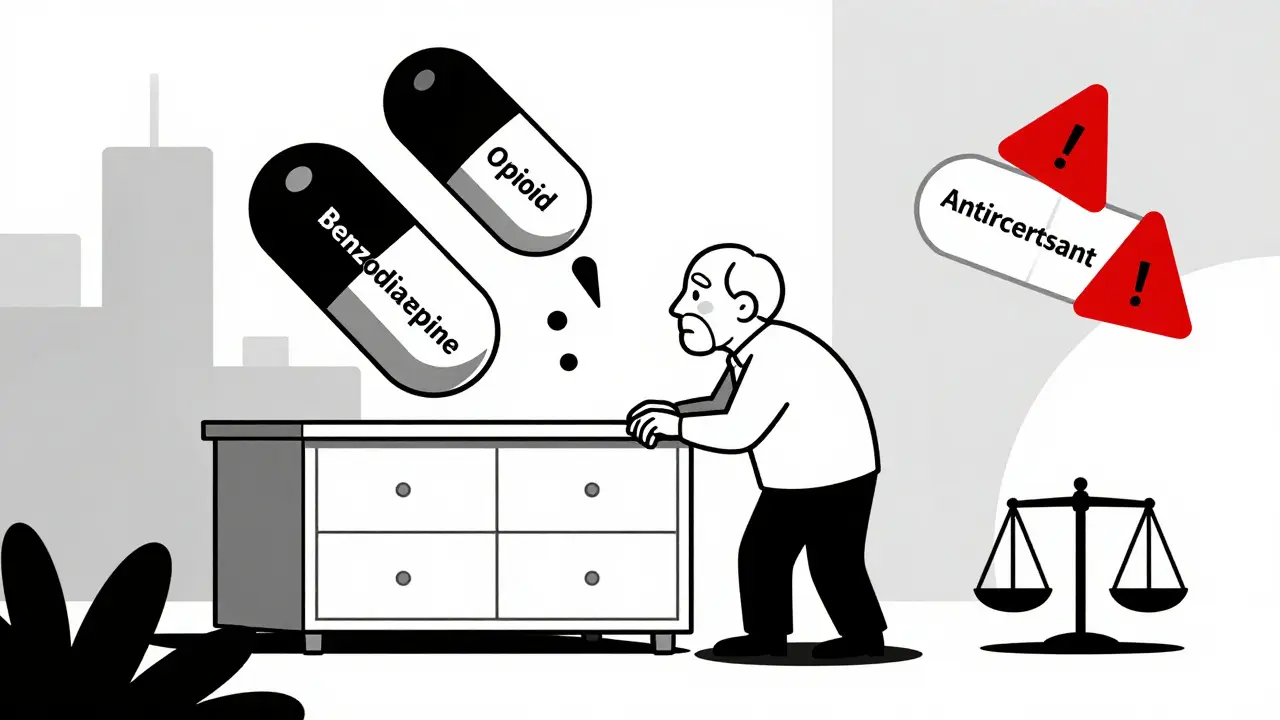
Not all medications are created equal when it comes to fall risk. The ones most likely to cause problems are called Fall Risk Increasing Drugs, or FRIDs. These include:- Benzodiazepines like diazepam (Valium) or lorazepam (Ativan)-often prescribed for anxiety or insomnia, but they linger in the body and cause drowsiness.
- Antidepressants, especially tricyclics like amitriptyline, which can cause dizziness and low blood pressure when standing.
- Opioids such as oxycodone or hydrocodone-painkillers that slow reflexes and cloud thinking, especially at higher doses.
- Antipsychotics like quetiapine or risperidone, sometimes used for dementia-related agitation, but they can make people unsteady and confused.
- Muscle relaxants like baclofen, which has one of the highest documented risks among its class.
- Antihypertensives, particularly when blood pressure drops too low after standing.
It’s not just one drug-it’s the combination. Taking three or more of these at once multiplies the risk. A person on an antidepressant, a sleep pill, and a painkiller might feel fine sitting down. But stand up? Their body doesn’t adjust fast enough. Blood pressure plummets. Their legs give out. That’s when the fall happens.
The STEADI-Rx Approach: A Proven System
The CDC’s STEADI-Rx program-short for Stopping Elderly Accidents, Deaths & Injuries-Rx-is the most structured way to tackle this problem. It’s not just a checklist. It’s a team effort between doctors, pharmacists, and patients.Here’s how it works in three steps:
- Screen: Ask every older adult if they’ve fallen in the past year. If yes, or if they feel unsteady, it’s time to review medications.
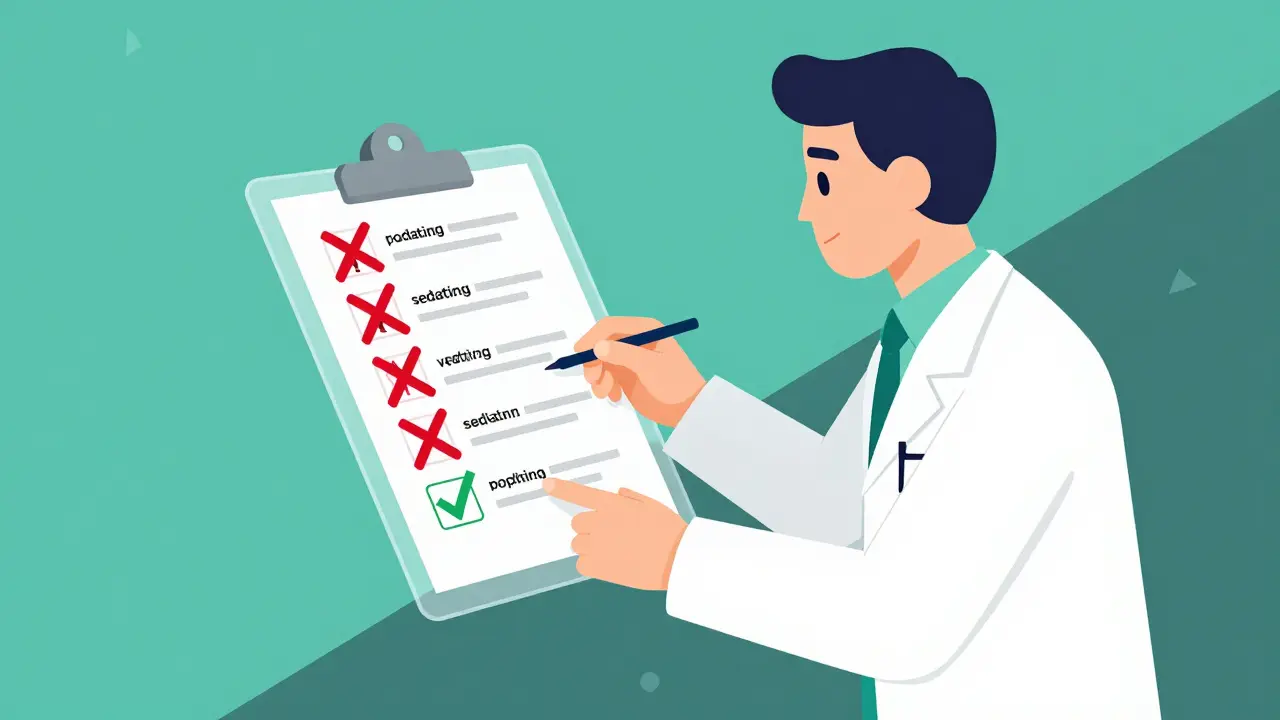
- Assess: Look at every pill they take. Which ones are sedating? Are any duplicates? Are they still needed? Pharmacists use tools like the Beers Criteria-a list of medications best avoided in older adults-to spot trouble.
- Intervene: This is where real change happens. Instead of just stopping a drug cold, the goal is to replace it with something safer, reduce the dose, or eliminate it entirely.
Studies show that 75% of the changes made through STEADI-Rx involve switching a high-risk drug for a lower-risk alternative. For example, replacing a benzodiazepine with cognitive behavioral therapy for insomnia cuts nighttime falls dramatically. One Reddit user shared that after switching from diazepam to therapy, their monthly falls dropped from 2-3 to zero over six months.
Medication Review Isn’t Enough Alone
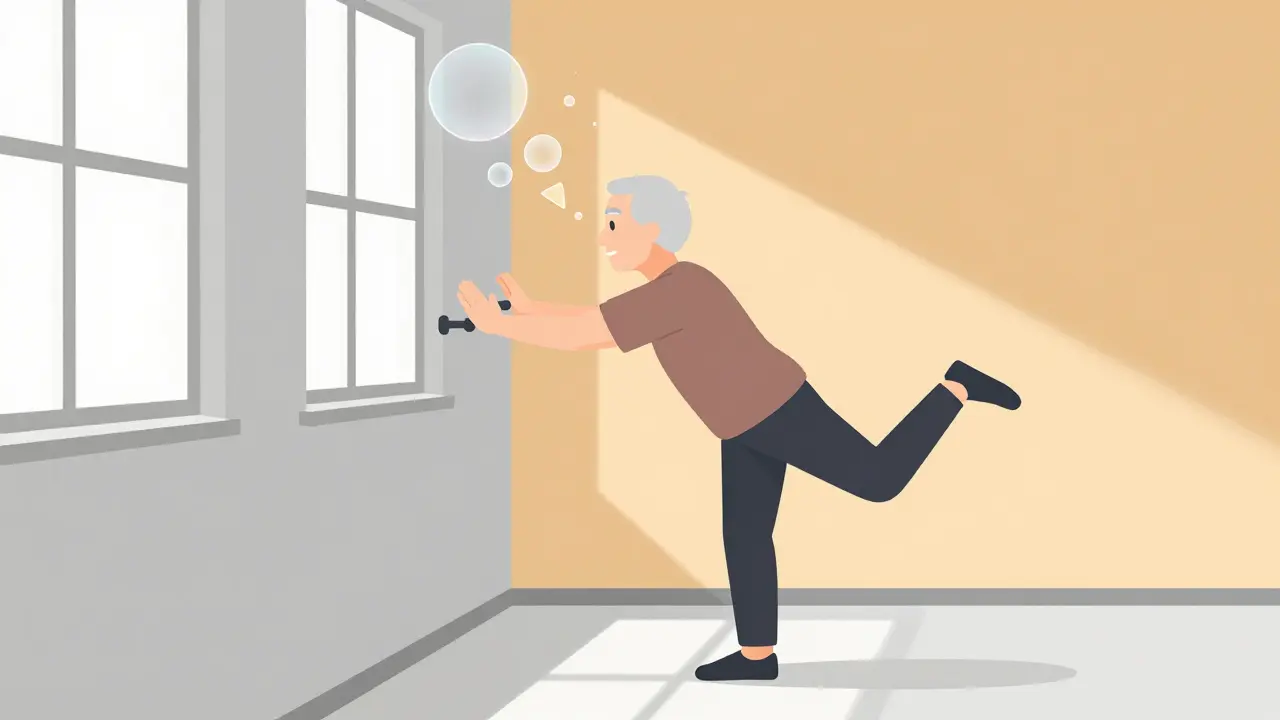
Looking at pills is powerful-but it’s not the whole answer. The strongest results come when medication review is paired with physical activity.Cochrane reviews show that exercise programs focused on balance, strength, and walking reduce the number of people who fall by 15-29%. Programs that meet 3-4 times a week for at least 12 weeks cut falls requiring medical care by 43% and fractures by 61%. It’s not about lifting heavy weights. It’s about standing on one foot, stepping over lines, moving slowly with control. Simple, daily movements make a huge difference.
Even something as basic as vitamin D-1,000 IU daily-can help, though evidence is mixed. The U.S. Preventive Services Task Force recommends 800 IU, while some studies find no benefit. Still, many older adults are deficient, and it’s low-risk. So it’s often included.
But here’s the key: if you only do one thing, do the medication review. Research from the University of Colorado says it’s the single most impactful intervention for fall prevention in older adults. Why? Because it removes the root cause. No sedating drug means no dizziness. No dizziness means no fall.
Why Do People Keep Taking Risky Medications?
You’d think once people know a drug is dangerous, they’d stop. But it’s not that simple.A 2021 survey by the National Council on Aging found that 63% of older adults struggled to reduce sedating meds because they feared withdrawal-panic attacks from stopping a sleep pill, worsening pain without an opioid, or feeling worse without an antidepressant. Many believe the drug is helping them, even if it’s slowly hurting them.
Doctors and pharmacists face hurdles too. Time is tight. Most primary care visits last 15 minutes. Pharmacists want to help, but only 45% say they have enough time to do full medication reviews. And not all prescribers welcome suggestions from pharmacists, even when backed by data.
That’s why communication matters. STEADI-Rx uses a simple form-called a Provider Consult Form-that pharmacists fill out and send to the doctor. It includes the patient’s three key questions: What’s the goal of this drug? Is it still working? Can we try something safer? If the doctor doesn’t respond within 7 days, the pharmacist follows up. This structure turns a good idea into real action.
What Can You Do Right Now?
You don’t need a fancy program to start. Here’s what anyone can do:- Make a list of every medication, supplement, and over-the-counter drug you take-including sleep aids, pain relievers, and antihistamines.
- Ask your pharmacist: “Which of these could make me unsteady or increase my fall risk?” They’re trained to spot this.
- Ask your doctor: “Is this still necessary? Can we try lowering the dose or switching to something less sedating?”
- Start moving. Even 10 minutes a day of heel-to-toe walking or standing on one foot improves balance. Look for a local senior exercise class-many are free.
- Remove home hazards. Install grab bars, remove loose rugs, add nightlights. But don’t stop there. Fixing your home won’t help if your meds are making you fall.
Don’t wait for a fall to happen. If you’re over 65 and taking any sedating medication, it’s time to have this conversation. The goal isn’t to stop everything. It’s to find the right balance-enough relief, without the risk.
What’s Changing in 2025?
The field is evolving fast. In 2023, the CDC updated its STEADI toolkit with new guidance on safely stopping benzodiazepines. More pharmacists are getting certified as Geriatric Pharmacotherapy Specialists-over 1,200 now hold the credential. Some states are expanding pharmacists’ authority to adjust certain medications without a doctor’s note, especially for blood pressure or sleep aids.Artificial intelligence is starting to help too. New tools in electronic health records now flag high-risk combinations automatically-like when a patient is prescribed an opioid and a benzodiazepine together. These alerts don’t replace judgment, but they make sure the conversation happens.
The big driver? Numbers. By 2040, 80 million Americans will be over 65. Falls will keep rising unless we act. And the cost? $418 million in medical expenses each year could be saved just by fixing medication-related fall risks. That’s not just money-it’s independence, dignity, and life.
Can stopping sedating medications really prevent falls?
Yes. Studies show that reducing or replacing sedating medications can cut fall risk by up to 40%. One major study found that medication reviews prevented 42,735 medically treated falls annually in the U.S. alone. The key is doing it safely-gradually, with medical supervision, and often paired with exercise.
Which is riskier: one high-dose sedative or three low-dose ones?
Three low-dose sedatives are often riskier. The danger isn’t just the strength of one drug-it’s the combined effect. Taking even small amounts of multiple sedating medications-like an antidepressant, a sleep pill, and a muscle relaxant-can overwhelm the body’s ability to stay balanced. The risk multiplies with each added drug.
Is it safe to stop a sedating medication on my own?
No. Stopping some sedating drugs suddenly can cause serious withdrawal symptoms-seizures, rebound anxiety, severe insomnia, or even delirium. Always work with your doctor or pharmacist to taper off safely. They’ll create a plan that reduces the dose slowly over weeks or months.
What’s the best non-sedating alternative to a sleep aid?
Cognitive behavioral therapy for insomnia (CBT-I) is the most effective long-term solution. Unlike pills, it teaches your brain to sleep naturally. Studies show it works better than sleep medications and has no side effects. Many community health centers offer CBT-I for free or low cost.
How often should older adults have their medications reviewed?
At least once a year-but more often if they’ve fallen, started a new drug, or changed doctors. Every time a new medication is added, it’s a chance to re-evaluate what’s already being taken. Many pharmacists offer free medication reviews during annual wellness visits.
Do all pharmacies offer medication reviews for fall risk?
Not all, but many do-especially those connected to health systems or Medicare Part D plans. Ask your pharmacist if they use the CDC’s STEADI-Rx guidelines. If they don’t, request a referral to a geriatric pharmacist or ask your doctor to initiate a medication therapy management (MTM) session, which is covered by Medicare for eligible patients.
Next Steps: What to Do Today
If you or someone you care for is over 65 and taking any sedating medication:- Write down every pill, patch, or supplement they take.
- Call your pharmacist and ask: “Which of these could increase fall risk?”
- Schedule a 15-minute appointment with the doctor to ask: “Can we reduce or replace any of these?”
- Sign up for a balance class at your local senior center or YMCA.
- Install grab bars in the bathroom and remove throw rugs.
Small steps, done now, prevent big tragedies later. Falls aren’t inevitable. With the right approach, they’re entirely avoidable.
josue robert figueroa salazar
December 26, 2025 AT 16:59My grandma took 4 of those pills and fell right through the bathroom door. No joke. She’s been in a wheelchair since. Don’t let them gaslight you into thinking it’s just aging.
david jackson
December 28, 2025 AT 10:03Let me tell you something that nobody in the medical industry wants you to know-these drugs aren’t prescribed to help you, they’re prescribed because it’s faster than listening. I watched my uncle go from a guy who gardened every morning to a zombie on a couch because his doctor handed him a script for lorazepam and called it a day. He didn’t even get a follow-up. The system doesn’t care if you live or die-it just cares that you didn’t file a lawsuit. And now? Now he’s got a hip replacement, a catheter, and a Medicaid bill that’ll outlive him. This isn’t medicine. It’s corporate triage with a stethoscope.
christian ebongue
December 30, 2025 AT 08:23pharmacists are the real heroes here. if your dr won’t listen, go to the pharmacy and ask them to do a med review. they’ve got the time, the training, and zero patience for your bullshit. just don’t forget to bring your whole pill bottle-yes, even the melatonin and the cough syrup.
jesse chen
December 31, 2025 AT 10:06Thank you so much for writing this! I’ve been begging my mom to get her meds reviewed for months, and she keeps saying, ‘But the sleep pill helps me!’ And I’m like, ‘Mom, you fell three times last month and you don’t even remember it!’ But now I’ve got this article to show her. I printed it out and put it on the fridge next to her pills. Maybe seeing it in black and white will help. Please, if you’re reading this-don’t wait for a fall to happen. Talk to your pharmacist today. They’re not just the people who hand you the pills-they’re your safety net.
Joanne Smith
January 1, 2026 AT 10:14Oh honey, you think benzodiazepines are bad? Try combining them with gabapentin and a TUMS that says ‘extra strength’ on the label. My aunt thought she was being smart-‘I’ll just take less of the sleep pill and more of the nerve pill.’ Turns out, nerve pills don’t care about your logic. She ended up in the ER after trying to ‘walk it off’ following a blackout in the pantry. Now she’s on a walking cane and a new diet: no more ‘quick fixes.’ The only thing that helped? CBT-I. And yes, it’s weird to talk to a stranger about your dreams-but it’s better than talking to the ER nurse about your broken pelvis.
Prasanthi Kontemukkala
January 2, 2026 AT 11:12This is so important. I work with seniors in India, and many of them take 5-6 pills a day without knowing why. Families often say, ‘The doctor gave it to them, so it must be okay.’ But no one ever asks if they still need it. I’ve started a little group-once a week, we sit with tea and go through their pill bottles together. No doctors, no pressure. Just questions: ‘Does this help you sleep?’ ‘Do you feel dizzy after?’ It’s small, but it’s something. And guess what? One lady stopped her muscle relaxant and started walking with her granddaughter every morning. No more falls. Just laughter. That’s the real medicine.
Alex Ragen
January 2, 2026 AT 20:24Let us not forget the existential weight of pharmaceutical dependency: we are not merely patients, but ontological subjects negotiating the commodified temporality of modern pharmacology. The benzodiazepine, in its chemical essence, is not merely a sedative-it is a metaphysical interruption of agency, a temporal suspension of selfhood. To discontinue it is not merely to alter physiology-it is to confront the void left by the erasure of chemical solace. And yet, the body, in its Aristotelian potentiality, yearns for equilibrium-not through substitution, but through the reclamation of natural rhythm. Is it not the height of hubris to believe that a pill can substitute for the soul’s need for rest?
Lori Anne Franklin
January 3, 2026 AT 12:54i just started taking a new blood pressure med and my legs feel like jello. i didn’t even think to ask if it could make me fall. i’m gonna call my pharmacist tomorrow. also, i’m gonna start standing on one foot while brushing my teeth. why not? it’s better than scrolling.
Bryan Woods
January 4, 2026 AT 08:33Well-researched and clearly articulated. The STEADI-Rx framework is underutilized in primary care settings, despite robust evidence supporting its efficacy. The integration of pharmacist-led medication reviews into routine geriatric care should be standard practice, not an exception. The cost-benefit analysis is overwhelmingly favorable, and the human impact is immeasurable.
wendy parrales fong
January 4, 2026 AT 20:14I used to think my dad was just getting older. He’d stumble, say he was fine, laugh it off. Then I found his pill bottle-7 different meds, 3 of them on the FRID list. We talked to his pharmacist. They cut one, lowered two, and got him into a balance class. Now he dances with his grandkids. Not because he’s fixed-he’s still old. But because he’s not drugged into a fog anymore. Sometimes the best medicine isn’t a pill. It’s a little courage. And a lot of love.
Jeanette Jeffrey
January 5, 2026 AT 17:09Of course you’re gonna fall if you’re on all those sedatives. It’s not a mystery-it’s a fucking joke. The system doesn’t care. Doctors are overworked, pharmacists are ignored, and old people are just… collateral. You think exercise helps? Sure, it does. But fix the damn meds first. Otherwise you’re just polishing the coffin.