
Drug Safety Monitoring: How the FDA Watches Generics After Approval
 Mar, 9 2026
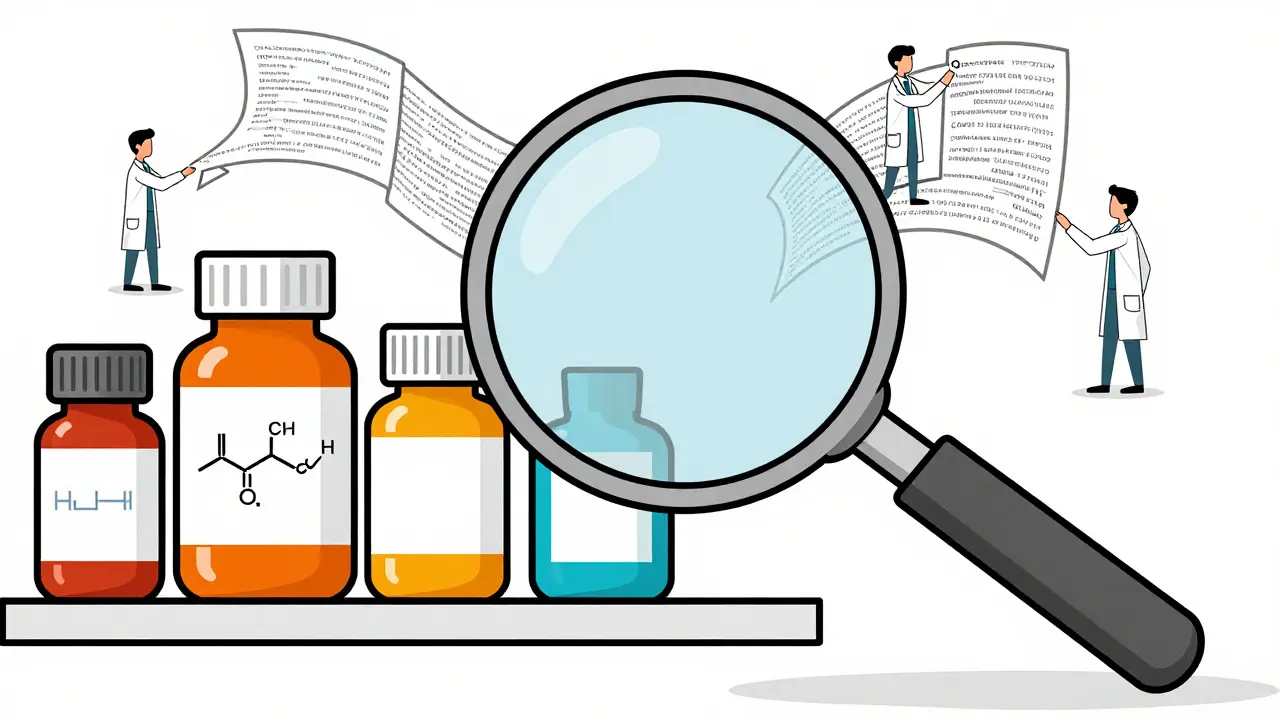
When you pick up a generic drug at the pharmacy, you expect it to work just like the brand-name version. But how do we know it’s safe after it hits the market? The FDA doesn’t just approve generics and walk away. There’s an entire system in place - constantly watching, analyzing, and reacting - to make sure these affordable medications stay safe for millions of Americans.
It’s easy to assume that because a generic drug passed its initial tests, it’s automatically safe forever. But that’s not how it works. Clinical trials for generics involve only 24 to 36 healthy volunteers. That’s not nearly enough to catch rare side effects, interactions with other drugs, or problems that only show up in older adults, pregnant women, or people with liver disease. Real-world use is where the full safety picture emerges - and that’s exactly what the FDA is monitoring.
How the FDA Tracks Problems After Approval
The FDA’s main tool for spotting trouble is the FDA Adverse Event Reporting System (FAERS). This is a massive database that collects reports of bad reactions, side effects, and even deaths linked to medications. In 2022 alone, over 2 million reports flowed into FAERS. These come from doctors, pharmacists, patients, and drug manufacturers. A single report might say, “My blood pressure spiked after switching to this generic lisinopril.” Another might note, “My child had a rash after using the generic albuterol inhaler.”
Teams of scientists, pharmacologists, and epidemiologists at the FDA’s Center for Drug Evaluation and Research (CDER) sift through these reports every day. They don’t just count them - they look for patterns. If 15 people report the same rare reaction to a specific generic version of a blood thinner, that’s a red flag. That’s when the FDA starts digging deeper.
The Sentinel Initiative: Real-Time Surveillance
FAERS is reactive - it waits for reports. But the FDA also has a proactive system called the Sentinel Initiative. Launched in 2008 and expanded under the 21st Century Cures Act, Sentinel uses electronic health records from over 100 million patients across hospitals, clinics, and insurers. It’s like having a live feed of what’s happening to people taking generics right now.
For example, if a new generic version of a cholesterol drug starts showing up in records as linked to muscle pain in older patients, Sentinel can detect that trend within weeks - not years. The system compares patients taking the generic to those taking the brand-name version. If the generic group has significantly more hospital visits for muscle damage, the FDA gets notified immediately. This is how they caught early signals of problems with certain generic statins years before they became widespread news.
Manufacturing Isn’t Just About Cost - It’s About Safety
Generics aren’t just copies. They’re chemically identical, but the inactive ingredients - the fillers, dyes, preservatives - can be different. These don’t affect how the drug works, but they can trigger allergies, intolerances, or even alter how the drug is absorbed. One patient might be fine with a generic made in India using corn starch. Another might have a severe reaction to the same drug made in the U.S. using wheat starch.
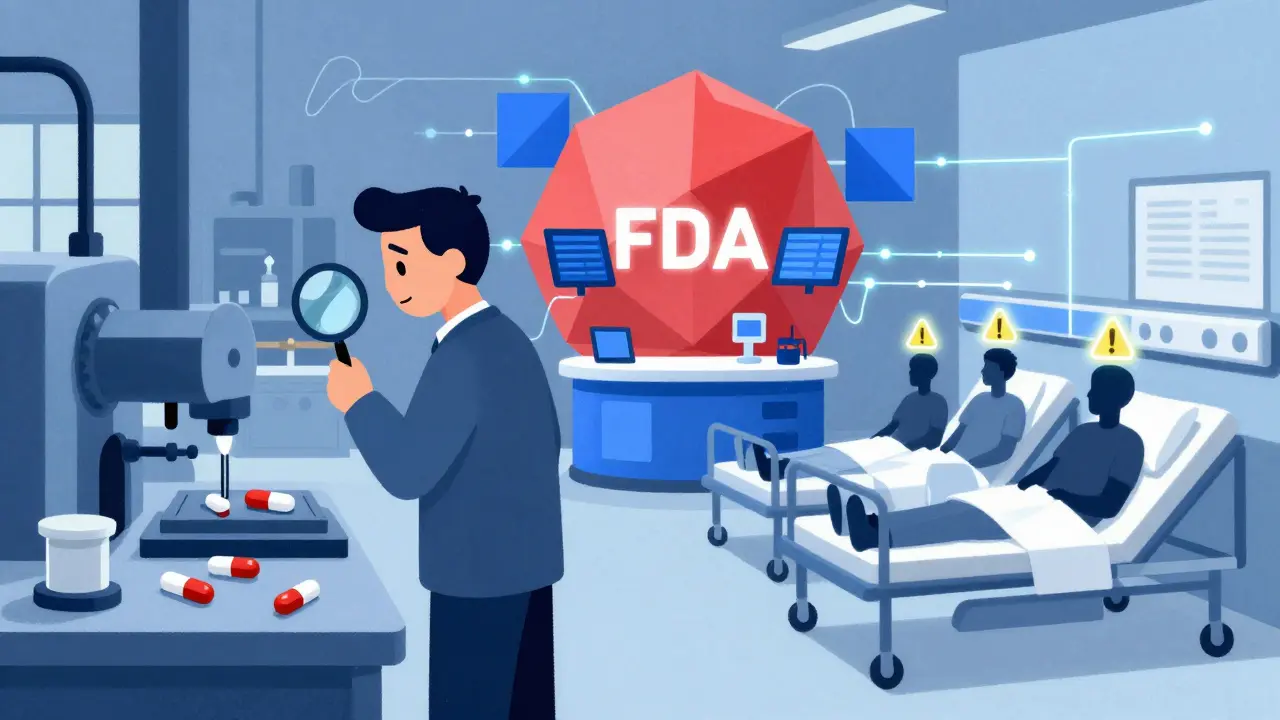
The FDA’s Office of Pharmaceutical Quality (OPQ) inspects over 1,800 manufacturing facilities each year - 1,200 in the U.S. and 600 overseas. These aren’t scheduled visits. Many are unannounced. Inspectors check everything: how raw materials are stored, whether equipment is cleaned properly, if lab tests are accurate. A single contaminated batch of a generic antibiotic can cause a nationwide recall. These inspections are the frontline defense against dangerous manufacturing shortcuts.
Impurities and Hidden Risks
Even tiny amounts of impurities - leftover chemicals from the manufacturing process - can be dangerous. The FDA sets strict limits based on how toxic each impurity is. For some drugs, the allowed limit is less than 0.1%. But detecting these requires advanced lab equipment and constant testing.
When a generic manufacturer submits an application, they must prove their product’s impurity profile matches the brand-name drug. But once it’s on the market, the FDA still monitors this. If a batch shows a new impurity - even at levels below the legal limit - it triggers a review. In 2021, the FDA pulled a generic version of a blood pressure medication after discovering a new impurity linked to liver damage in animal studies. That drug had been on shelves for over a year.
Why Some Generics Are Harder to Monitor
Not all generics are created equal. Simple pills like metformin or amoxicillin are easy to monitor. But complex products - like inhalers, injectables, or topical creams - are trickier. Their effectiveness and safety depend on how the drug is delivered, not just its chemical makeup.
For example, a generic asthma inhaler might have the same active ingredient, but if the propellant or nozzle design is slightly off, the dose delivered to the lungs can be 20% lower. That’s not enough to trigger a recall, but it’s enough to cause uncontrolled asthma in vulnerable patients. The FDA has struggled to build reliable monitoring systems for these types of products. That’s why the 2023 GDUFA III update specifically targeted complex generics - adding new requirements for post-market studies and real-world data collection.
What Happens When Something Goes Wrong?
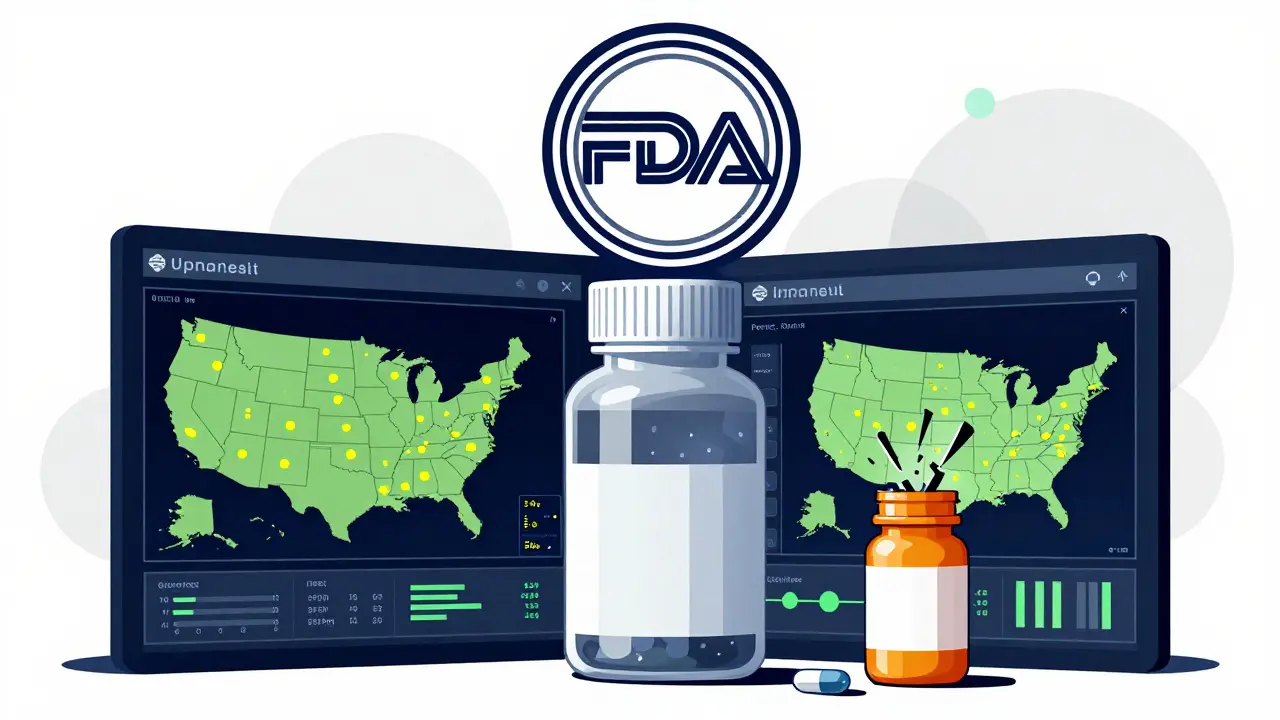
When the FDA finds a problem, they don’t just issue a warning. They act. Here’s what can happen:
- Label updates: The drug’s package insert gets revised to warn about new risks - like “may cause severe dizziness in elderly patients.”
- Dear Healthcare Provider letters: Doctors get direct notices advising them to monitor patients more closely.
- Voluntary recalls: The manufacturer pulls the batch from shelves. In 2023, over 40 generic drug recalls were initiated based on FDA findings.
- Market withdrawal: In rare cases, the entire product is pulled if the risk outweighs the benefit.
One major case in 2022 involved a generic version of a diabetes drug. After 12 reports of severe low blood sugar in elderly patients, the FDA reviewed data from Sentinel and FAERS. They found the generic had a 30% higher rate of hypoglycemia than the brand. The manufacturer was asked to update the label and add a boxed warning. Within six months, reports dropped by 70%.
The Bigger Picture: Why This Matters
Over 90% of prescriptions in the U.S. are filled with generics. They save Americans over $300 billion a year. But that also means more people are exposed to potential risks. A rare side effect affecting 1 in 10,000 users becomes a problem for 27,000 people when 270 million prescriptions are filled.
That’s why the FDA’s post-approval system isn’t optional - it’s essential. Without it, we’d be relying on luck. Instead, we have a system that uses real data, real patients, and real-time technology to catch problems before they become epidemics.
What You Can Do
You don’t have to wait for the FDA to find a problem. If you notice a new side effect after switching to a generic - especially if it’s different from what you experienced with the brand - report it. Use MedWatch, the FDA’s online reporting tool. Even one report can be the clue that starts a larger investigation.
Also, keep your pharmacy records. If you switch between different generic brands and notice changes in how you feel, write it down. That information can help your doctor - and eventually, the FDA - spot patterns.
Are generic drugs as safe as brand-name drugs?
Yes - but only if they’re properly monitored. All generics must prove they’re bioequivalent to the brand-name drug before approval. That means they deliver the same amount of active ingredient at the same rate. But safety after approval depends on ongoing surveillance. The FDA’s systems for tracking side effects, impurities, and manufacturing quality make sure generics stay safe long after they hit the shelf.
Can different generic versions of the same drug cause different side effects?
Yes. While the active ingredient is identical, the inactive ingredients - like dyes, fillers, or coatings - can vary between manufacturers. These differences can affect how the drug is absorbed or trigger allergic reactions in sensitive individuals. For example, one person might tolerate a generic made with corn starch but react badly to one made with wheat starch. That’s why the FDA tracks impurity profiles and manufacturing sources closely.
How does the FDA know if a generic drug is causing more problems than the brand?
The FDA compares reports in FAERS and data from the Sentinel Initiative. They look at the number of adverse event reports per prescription, the type of reaction, and whether it’s happening more often with a specific generic. If a generic version shows a statistically higher rate of a serious side effect - like liver injury or irregular heartbeat - compared to the brand, the FDA investigates further. They may request additional studies or require label changes.
Do generic drugs have less quality control than brand-name drugs?
No. Both generic and brand-name drugs must meet the same strict manufacturing standards - called cGMP (Current Good Manufacturing Practices). The FDA inspects both types of facilities with the same frequency and rigor. The difference isn’t in quality control - it’s in the scope of pre-approval testing. Brand-name drugs go through large clinical trials; generics rely on bioequivalence studies. That’s why post-market monitoring is so critical for generics.
What should I do if I think a generic drug is causing me harm?
Talk to your doctor first. Then, report it to the FDA through MedWatch - either online or by phone. Include details: the drug name (including manufacturer), when you started taking it, what symptoms you experienced, and whether you switched from another version. Your report helps the FDA detect patterns. Even if it seems minor, it could be part of a larger issue affecting others.
The system isn’t perfect - no system is. Underreporting is still a problem. Complex generics remain hard to track. But the tools the FDA uses today - real-time data, global inspections, targeted surveillance - are far more advanced than they were 10 years ago. And they’re working. Every year, hundreds of potential safety issues are caught before they become public health crises. That’s the quiet, behind-the-scenes work that keeps millions of people safe - and keeps the promise of affordable medicine alive.
Janelle Pearl
March 9, 2026 AT 20:53Just wanted to say thank you for laying this out so clearly. I work in pharmacy and see patients switch generics all the time - sometimes they don’t even realize they’ve been switched. One elderly lady came in crying because her ‘new’ blood pressure med made her dizzy. Turned out it was a different manufacturer. We didn’t catch it until she mentioned the pill color changed. This system? It’s the quiet hero.
Ray Foret Jr.
March 11, 2026 AT 14:05Yesss!! I’ve been saying this for years 😊 The FDA’s not perfect but they’re doing way more than people think. My uncle had a bad reaction to a generic statin - reported it on MedWatch, and 3 months later the label got updated. Felt good knowing I helped. Keep pushing people to report!! 🙌
Samantha Fierro
March 11, 2026 AT 19:42Thank you for this comprehensive overview. As a healthcare educator, I emphasize to my students that bioequivalence does not equal clinical equivalence in all populations. The variability in excipients, especially in patients with allergies or metabolic conditions, is a critical clinical consideration often overlooked in primary care. The Sentinel Initiative represents a monumental leap forward in pharmacovigilance.
Robert Bliss
March 12, 2026 AT 01:09My grandma took a generic heart med and started having weird palpitations. We switched back to brand and boom - gone. I never thought to report it. Guess I’m gonna do it now. Thanks for the nudge. 🤝
rafeq khlo
March 12, 2026 AT 16:08This system is a joke. You think the FDA actually cares? They’re just there to make pharma look good. Half the reports get buried. I’ve seen it. And those inspections? They’re scheduled like clockwork. You think they’re unannounced? Please. The manufacturers get warned a week before. This is all theater. The real problem? Profit over people. Always.
Neeti Rustagi
March 14, 2026 AT 10:26While the FDA’s surveillance mechanisms are commendable, I must emphasize that the structural imbalance in global manufacturing oversight remains a critical vulnerability. Over 60% of generic active pharmaceutical ingredients originate from facilities in India and China, many of which operate under regulatory frameworks with significantly less transparency. The absence of harmonized international auditing protocols creates systemic blind spots that FAERS and Sentinel, despite their sophistication, cannot fully mitigate. A robust, globally integrated pharmacovigilance architecture is not merely advisable - it is imperative.
Nicholas Gama
March 16, 2026 AT 07:11They’re lying. The FDA gets paid by pharma. The whole system is rigged. You think they’d pull a drug that saves billions? Please. The ‘impurities’? They’re just cover stories. The real reason? To scare you into buying brand name. You’re being manipulated.
Mary Beth Brook
March 18, 2026 AT 05:10Let’s be clear - American-made generics are held to the highest standards. Any foreign facility with violations gets flagged immediately. This isn’t about ‘globalization.’ It’s about national security. We can’t rely on overseas labs with sketchy records. FDA’s OPQ is doing its job - but Congress needs to fund more U.S.-based manufacturing. Period.
Leon Hallal
March 18, 2026 AT 11:39So you're telling me I'm supposed to trust some random pill from a factory in Bangalore that costs $2? I’ve been on this stuff for 5 years and I swear I feel worse every time I refill. I don’t care what the FDA says. I’m not a lab rat.