
Diabetes and Heart Disease: How Medications and Lifestyle Cut Your Risk
 Mar, 16 2026
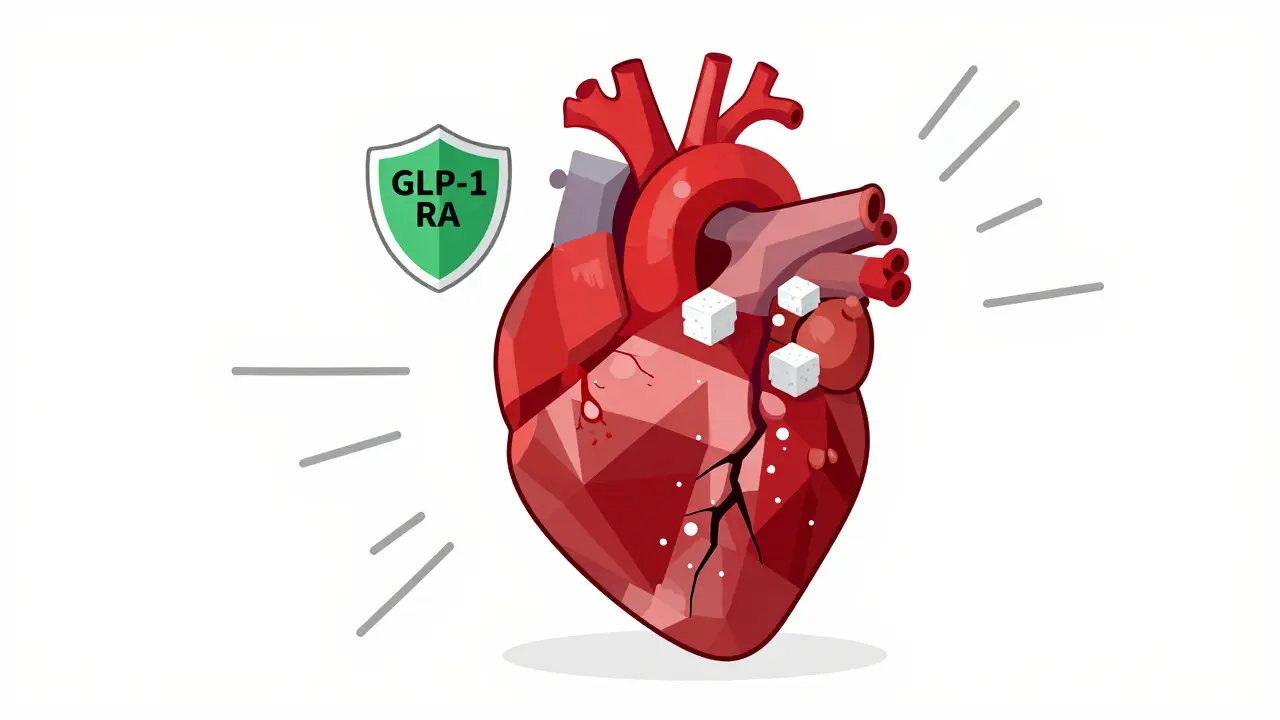
When you have type 2 diabetes, your heart isn’t just at risk-it’s under siege. About 65% of people with diabetes die from heart disease or stroke. This isn’t a coincidence. High blood sugar damages blood vessels over time, making them stiff, inflamed, and clogged. But here’s the good news: you can turn this around. Not with magic pills or extreme diets, but with two proven tools: modern medications and real-life lifestyle changes. Together, they don’t just manage diabetes-they protect your heart.
Why Diabetes and Heart Disease Go Hand in Hand
Diabetes doesn’t just affect your pancreas. It floods your body with excess glucose, which sticks to proteins in your blood and arteries. This builds up plaque, raises blood pressure, and makes your blood more likely to clot. Add in the fact that many people with diabetes also carry extra weight, have high cholesterol, or don’t move enough, and you’ve got a perfect storm for heart attacks and strokes.
The American Heart Association calls this the diabetic cardiovascular cascade. It’s not one problem-it’s a chain reaction. High blood sugar → insulin resistance → fat buildup → inflammation → narrowed arteries → heart attack. Breaking that chain is the goal. And it’s possible.
The New Medications That Are Changing the Game
For years, metformin was the go-to drug for type 2 diabetes. It helped with blood sugar, sure-but didn’t do much for your heart. That changed with the arrival of GLP-1 receptor agonists.
These injectable drugs-like semaglutide (Wegovy, Ozempic) and tirzepatide (Mounjaro, Zepbound)-do more than lower blood sugar. They trigger weight loss, reduce inflammation, and lower blood pressure. In the STEP 1 trial, people using semaglutide lost nearly 15% of their body weight on average. Tirzepatide pushed that even higher, with 22.5% weight loss in the SURMOUNT-1 study.
In 2023, the FDA gave Wegovy a historic approval: it became the first weight-loss drug cleared specifically to reduce heart attack, stroke, and cardiovascular death in adults with existing heart disease and obesity. That’s huge. It means these drugs aren’t just for weight-they’re for survival.
Compared to older drugs, the difference is stark. The LEADER trial showed liraglutide, another GLP-1 RA, cut major heart events by 13%. But when you combine these medications with lifestyle changes? The numbers jump even higher.
Lifestyle Changes That Actually Work (No Guesswork)
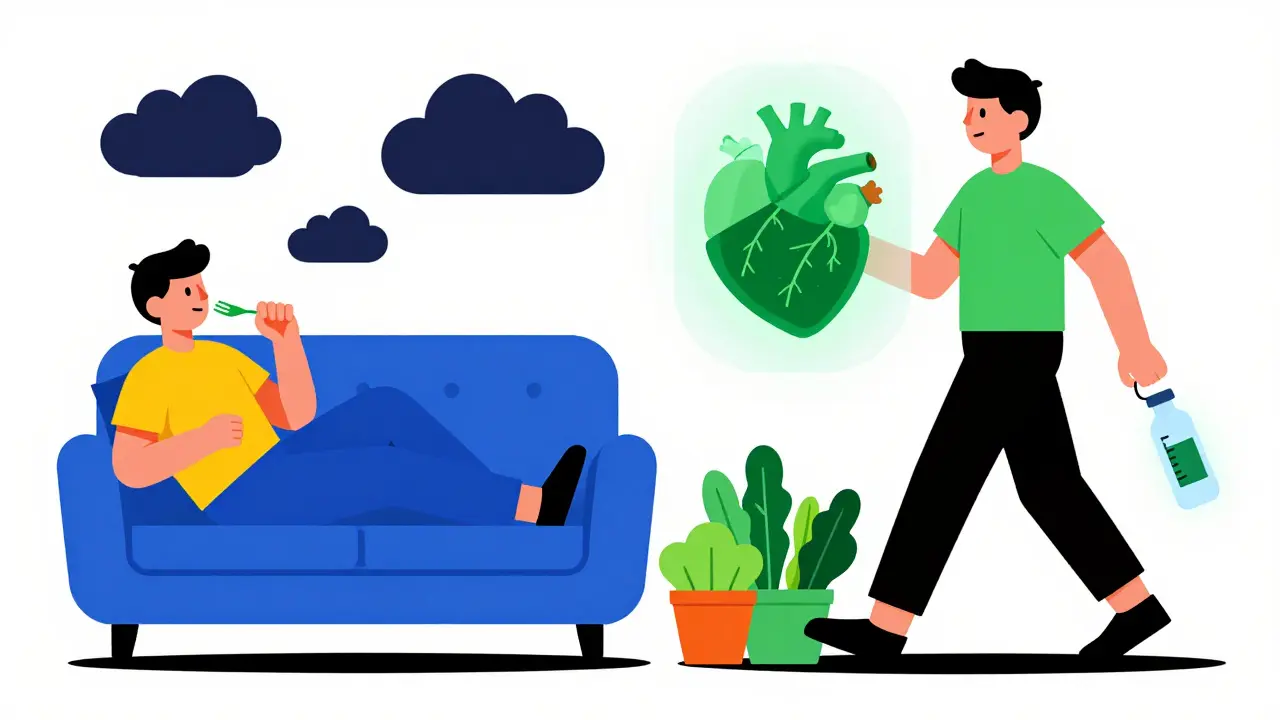
Medications give you a powerful tool. But lifestyle? It’s the foundation. And it’s not about perfection-it’s about consistency.
The American Diabetes Association doesn’t push one diet. Instead, they recommend patterns that work: Mediterranean, DASH, or plant-based eating. What does that look like in real life? More vegetables, legumes, nuts, and fish. Less processed food, sugary drinks, and fried stuff. You don’t need to count carbs. Just fill half your plate with non-starchy veggies, a quarter with lean protein, and a quarter with whole grains.
Exercise isn’t about running marathons. The goal is at least 30 minutes a day, most days of the week. You can break it into three 10-minute walks. A brisk walk after dinner, a bike ride on weekends, even dancing while you clean-counts. The Look AHEAD Trial showed that losing just 7% of your body weight improved blood pressure, blood sugar, and triglycerides. That’s about 15 pounds for someone who weighs 215.
Blood pressure targets are stricter for people with diabetes: below 130/80 mm Hg. That’s not a suggestion-it’s a medical goal. And it’s achievable. The CDC says 2 hours and 30 minutes of moderate activity a week cuts heart disease risk. That’s 30 minutes, five days a week. Simple.
Don’t forget sleep, stress, and connection. Poor sleep raises cortisol, which spikes blood sugar. Chronic stress tightens arteries. Loneliness? It’s as risky as smoking. Building in time to relax, sleep 7-8 hours, and connect with friends or family isn’t fluffy-it’s medical.
The Magic Number: Combining Both
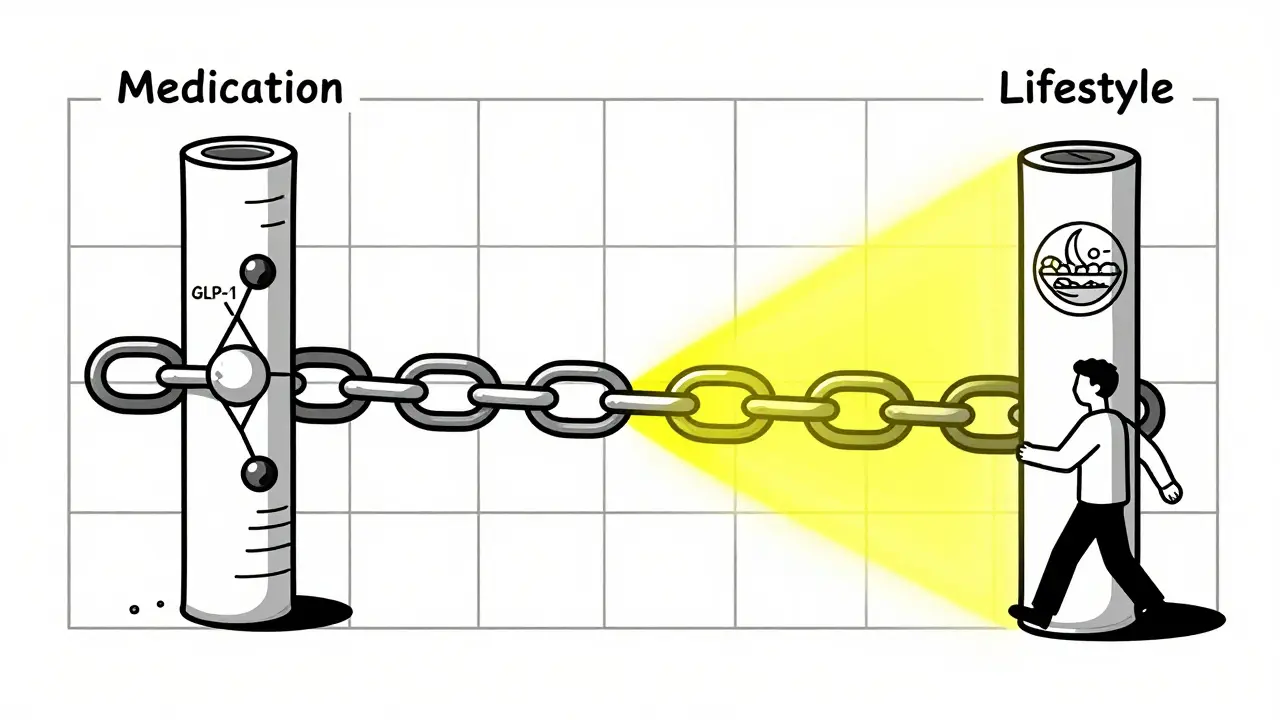
Here’s the most important thing: Neither alone is enough.
Research from the Department of Veterans Affairs found that veterans with diabetes who took a GLP-1 RA and followed eight heart-healthy habits-eating well, moving daily, not smoking, managing stress, sleeping well, limiting alcohol, maintaining healthy weight, and staying socially connected-cut their risk of heart attack or stroke by 63%. Those who only took the medication? A 20% drop. That’s a 43% boost from lifestyle.
Why? Because medications fix your biology. Lifestyle fixes your behavior. One lowers your blood sugar and weight. The other teaches you how to keep it low. One reduces inflammation. The other removes the triggers-like sugar, stress, and sitting all day.
The American College of Cardiology’s 2025 guidance says it plainly: Don’t make patients fail at lifestyle before offering medication. That’s a shift. For decades, doctors told people to lose weight first, then try pills. Now they say: if you’re at risk, start the medication and support the lifestyle changes at the same time.
What About Metformin? Is It Still Useful?
Yes. Metformin is still a safe, cheap, and effective drug for blood sugar control. But it doesn’t move the needle on heart risk like GLP-1 RAs do. If you’re on metformin and still overweight or have high blood pressure, adding a GLP-1 RA could be life-changing. It’s not about replacing metformin-it’s about upgrading your defense.
Think of it like this: metformin is your seatbelt. GLP-1 RAs are airbags. You still need the seatbelt, but the airbag saves lives when things go wrong.
Real Barriers-And How to Overcome Them
Let’s be honest. These medications cost money. Insurance doesn’t always cover them. In Australia, out-of-pocket costs can run over $100 a month. But talk to your doctor. There are patient assistance programs. Some pharmacies offer discounts. And if cost is a barrier, start with lifestyle. Even small changes-walking 15 minutes a day, swapping soda for water, cutting out late-night snacks-add up.
Side effects? Nausea is common at first, but most people adjust. Start low, go slow. Your doctor can help you find the right dose.
And if you feel overwhelmed? Don’t try to change everything at once. Pick one thing: maybe it’s a daily walk. Or adding vegetables to dinner. Master that. Then add the next. Progress beats perfection.
The Bigger Picture: This Isn’t Just About You
Over 1 billion people worldwide have obesity. In the U.S., 70% of adults are overweight or obese. That’s not a moral failing-it’s a public health crisis. And it’s driving heart disease in people with diabetes at record rates.
The approval of Wegovy for cardiovascular risk reduction in 2023 wasn’t just a drug launch. It was a turning point. It says: obesity is a disease. Heart disease in diabetics is preventable. And treatment doesn’t have to mean suffering.
By 2030, experts predict GLP-1 RAs will be standard care for high-risk patients. But that doesn’t mean lifestyle loses its value. In fact, it means both will become the new normal. The future isn’t pills or lifestyle. It’s pills and lifestyle.
Can I stop my diabetes medication if I lose weight through lifestyle changes?
Maybe-but not without your doctor’s guidance. Some people with early-stage type 2 diabetes who lose weight and improve their activity levels can reduce or even stop certain medications. But if you have heart disease, high blood pressure, or long-standing diabetes, stopping medication can be dangerous. Always work with your healthcare team. Lifestyle changes help, but they don’t replace medical oversight.
Do I need to take GLP-1 RAs forever?
For most people, yes. These medications work by changing how your body regulates appetite and metabolism. When you stop, weight and blood sugar often return. That doesn’t mean you’re failing-it means these drugs are treating a chronic condition, like high blood pressure or cholesterol. Think of them as tools to help you build healthier habits, not quick fixes.
Is it too late to make changes if I already had a heart event?
Never too late. Studies show that even after a heart attack, people with diabetes who start exercising, eat better, and take GLP-1 RAs reduce their risk of a second event by over 50%. Your heart is resilient. The sooner you act, the better-but improvement is possible at any stage.
What if I can’t afford GLP-1 RA medications?
Focus on the lifestyle factors you can control. Walking, eating more vegetables, reducing sugar, and managing stress still cut heart risk significantly. Talk to your doctor about lower-cost alternatives like metformin, or ask about patient assistance programs. Some clinics offer sliding-scale pricing. And remember: even small, consistent changes add up over time.
Can I use these strategies if I have type 1 diabetes?
Lifestyle changes-diet, exercise, blood pressure control-are just as important for people with type 1 diabetes. But GLP-1 RAs are not currently approved for type 1. They’re designed for type 2, where insulin resistance plays a role. Always consult your endocrinologist before trying new medications.
What Comes Next?
If you’re living with diabetes, your next step isn’t a radical overhaul. It’s one small, sustainable change. Maybe it’s swapping your morning sugary cereal for oatmeal with nuts. Or walking after dinner instead of scrolling on the couch. Maybe it’s asking your doctor if a GLP-1 RA could help you.
Heart disease isn’t inevitable. Not anymore. With the right tools-medication that works and lifestyle that sticks-you’re not just managing diabetes. You’re protecting your future.
gemeika hernandez
March 16, 2026 AT 17:28Stop waiting for a miracle. Just start.
Nicole Blain
March 16, 2026 AT 22:02Also, my jeans fit different. Not that I’m bragging. Just saying.
Kathy Underhill
March 18, 2026 AT 02:28True healing is not about control. It’s about harmony.
Sanjana Rajan
March 19, 2026 AT 11:34Kendrick Heyward
March 21, 2026 AT 03:54My grandma lived to 92 eating bacon and pie. You think she was on Ozempic? LOL.
Lauren Volpi
March 21, 2026 AT 07:50Go outside. Walk. Eat broccoli. Stop asking for magic. You’re not sick. You’re lazy.
cara s
March 22, 2026 AT 13:03Furthermore, the physiological mechanisms underpinning insulin sensitivity improvements through moderate aerobic activity are well-documented in peer-reviewed journals such as The Lancet and JAMA.
Amadi Kenneth
March 23, 2026 AT 12:26And the ‘lifestyle’ stuff? That’s distraction. They want you busy so you don’t ask why your insulin costs $300.
Check the patents. Check the lobbyists. This is all connected.
Shameer Ahammad
March 24, 2026 AT 10:28Consequently, pharmacological intervention must be coupled with behavioral modification to achieve durable remission.
Alexander Pitt
March 26, 2026 AT 04:19If you’re on metformin and still sedentary? You’re leaving protection on the table.
Manish Singh
March 27, 2026 AT 16:25These new drugs? They help. But they’re not replacing roti and dal. That’s the foundation.
Nilesh Khedekar
March 28, 2026 AT 01:15also why is everyone so obsessed with weight? my uncle is 250 lbs and his sugar is perfect. he walks 2 miles every day. maybe we should chill and just move more?
Robin Hall
March 28, 2026 AT 02:37Historical precedent suggests that medicalization of lifestyle conditions often precedes systemic dependency.
gemeika hernandez
March 29, 2026 AT 12:36It’s not about being perfect. It’s about being consistent. You don’t need a pill to do that.