
Cross-Border Pharmacy Services in the EU: How Generic Drug Mobility Works Today
 Dec, 21 2025
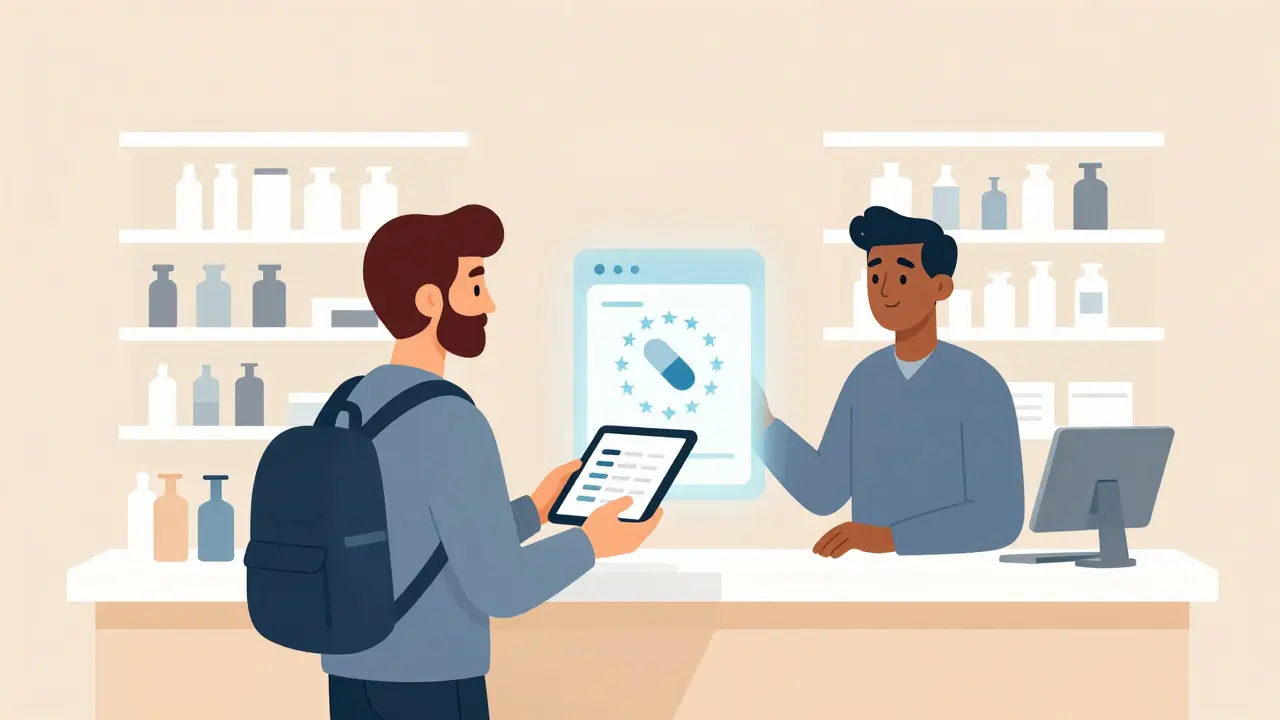
Imagine you’re on vacation in Spain, and your blood pressure medication runs out. Back home, you’ve been taking the same generic pill for years - cheap, effective, and covered by your insurance. But can you just walk into a pharmacy in Barcelona and get it? The answer isn’t simple. Thanks to new EU rules, you can - but only if you know how the system actually works. This isn’t science fiction. It’s happening right now across Europe, and it’s changing how millions of people get their medicines.
How the EU Makes Cross-Border Pharmacy Possible
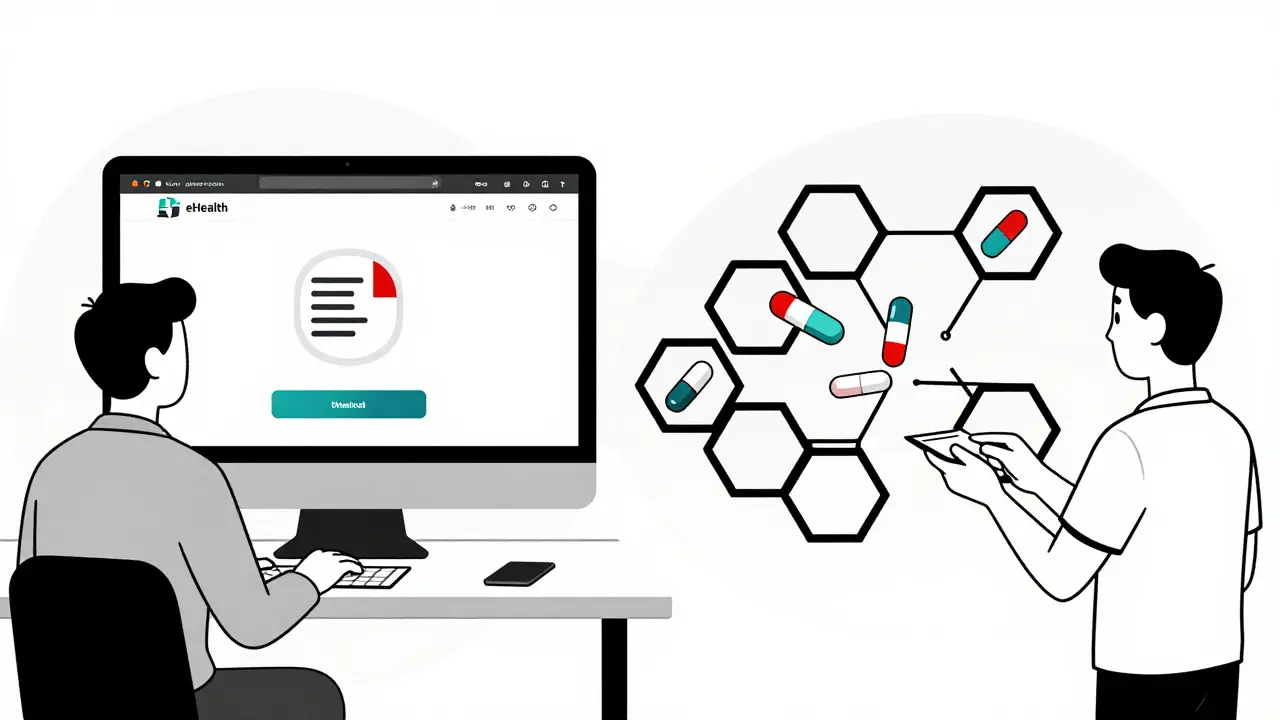
Since 2011, EU law has guaranteed patients the right to get healthcare - including prescriptions - in any member state. But for years, this was mostly theoretical. You’d need paper prescriptions, translations, and luck. Today, it’s digital. The ePrescription and eDispensation system, part of the MyHealth@EU infrastructure, lets you send your prescription electronically from your home country to a pharmacy in another EU nation. It’s live in all 27 EU and EEA countries. Iceland will join by August 2025, completing the network.Here’s how it works: You log into your national health portal - like Germany’s eHealth card system or France’s Ameli - and authorize a pharmacy abroad to access your digital prescription. The pharmacy sees your name, the drug, dosage, and prescriber details. No paper. No fax. No waiting. The system also pulls up your Patient Summary, which includes allergies, current meds, and past conditions, translated into the local language. That’s huge if you’re in Poland and your doctor wrote the script in Finnish.
What Generic Drugs Are Covered?
The system isn’t just for brand-name drugs. It’s built for generics - the same active ingredients, cheaper, and just as safe. If you take metformin for diabetes, atorvastatin for cholesterol, or levothyroxine for thyroid issues, you can get these exact generics across borders. The EU doesn’t restrict which generics you can access - only that they’re approved. That means if your home country uses a generic made in Hungary, and you’re in Italy, you can still get it, even if Italy’s local version has a different brand name.But here’s the catch: Not every pharmacy is set up for this. Only pharmacies connected to the eHDSI network can process ePrescriptions. In countries like Germany, Austria, and France, most pharmacies are linked. In others, like Romania or Bulgaria, adoption is slower. And some rural pharmacies still rely on paper. So while the system exists, your success depends on where you are.
Why Some People Still Can’t Get Their Meds
The biggest roadblock isn’t tech - it’s rules. Each country still runs its own pharmacy laws. Ireland, for example, won’t accept prescriptions from outside the EU/EEA. That means if you get a script from a UK telehealth app - even if it’s legit - Irish pharmacists are legally required to refuse it. Same goes for non-EU countries. The UK isn’t part of the system anymore, and prescriptions from its digital clinics are invalid in the EU.Even within the EU, differences cause confusion. Italy replaced paper prescription stickers with GS1 DataMatrix codes in February 2025. These are scannable barcodes that link to digital records. But if you’re from Spain and your prescription doesn’t have one, Italian pharmacists might delay filling it while they verify manually. Meanwhile, Germany requires pharmacists to confirm the prescriber is registered in the EU - a step that takes extra time.
Then there’s the language barrier. A prescription for “Lorazepam 1 mg” might be labeled “Lorazepam 1 mg” in English, but in Greece, it’s “Λοραζεπαμ 1 mg.” Pharmacists need to recognize the drug - and not all do. Training is inconsistent. A 2025 EAEP study found pharmacists need about 40 hours of specialized training to handle cross-border scripts reliably. Many haven’t had it.
Real Stories: What Patients Are Experiencing
People in border towns like Aachen (Germany) and Maastricht (Netherlands) rarely have problems. The cross-border healthcare networks there are decades old. A 2025 survey found 78% of patients in these areas successfully filled prescriptions abroad. But outside those zones? It’s hit or miss.One Reddit user from Dublin tried to refill her antidepressant in Portugal. She had an ePrescription, but the pharmacy didn’t recognize her country’s digital signature. She had to fly home to get a paper copy. Another couple from Sweden spent three days in Croatia waiting for their insulin. Their pharmacy didn’t have the exact generic, and the local one didn’t accept their eScript because the prescriber’s ID didn’t match their system’s format.
On the flip side, a retired teacher from Austria now buys her arthritis meds in Slovenia - 40% cheaper. She uses the ePrescription system, and it’s seamless. She says, “I used to pay €120 a month. Now I pay €70. I’m not breaking any rules. I’m just using what the EU gave me.”
The Hidden Players: E-Pharmacies and Regulatory Gaps
The rise of online pharmacies is shaking things up. The European Association of E-Pharmacies (EAEP) now represents 120 registered digital pharmacies across 15 countries. These aren’t shady websites - they’re licensed, regulated, and connected to national health systems. They can deliver generics directly to your door, even across borders.But only 8 EU countries have clear rules for how pharmacists should operate in e-pharmacies. That’s a problem. If a pharmacy in Estonia ships meds to Portugal, who checks if they’re following Portuguese labeling laws? Who enforces it? Right now, no one has a clear answer. The EU’s 2025 Regulation 2025/327 gives the Commission power to suspend services for data breaches or safety violations - but enforcement is patchy.
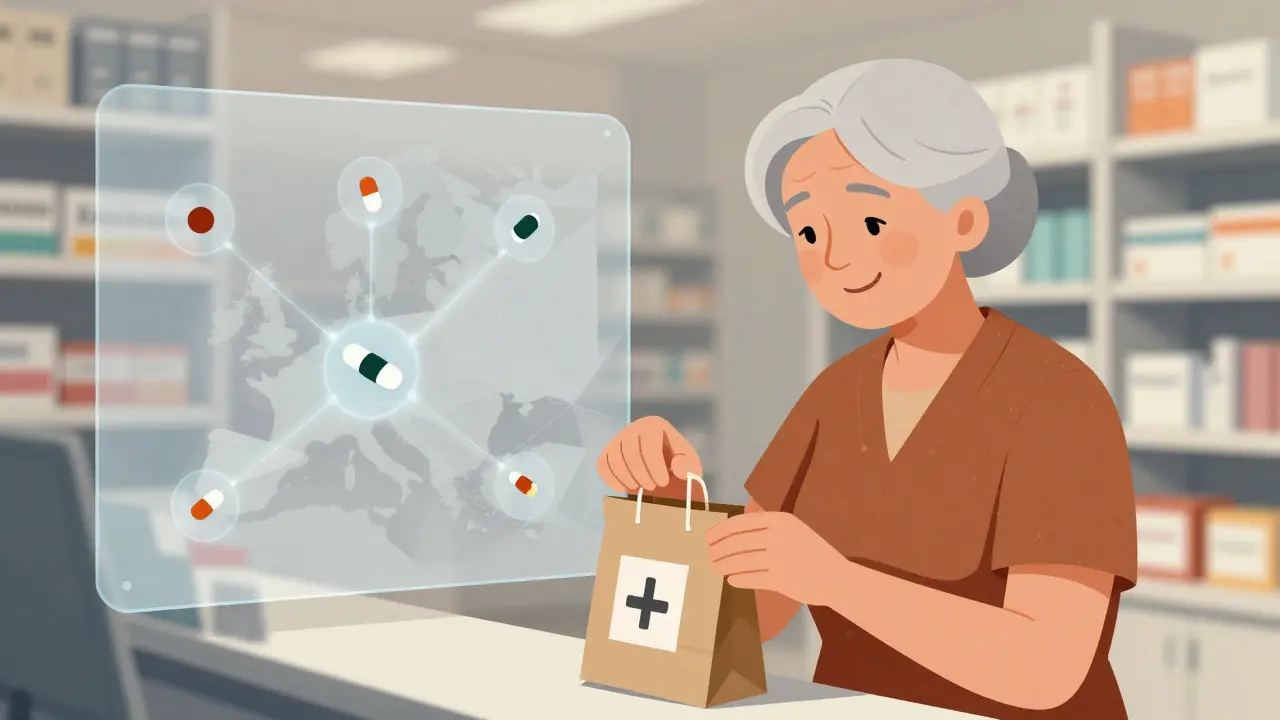
Meanwhile, the European Shortages Medicines Platform (ESMP) is now live. It tracks drug supply across borders in real time. If Spain runs out of a generic antibiotic, the system flags it. Pharmacies in France or Belgium can then redirect stock. This isn’t just about convenience - it’s about saving lives during shortages.
Who Benefits the Most?
The biggest winners are people with chronic conditions. Diabetes, hypertension, asthma - if you’re on long-term meds, the ability to refill abroad saves trips, money, and stress. Seniors on fixed incomes are using this to cut costs. A 2025 IQVIA study showed cross-border access could reduce medication spending by up to 30% for chronic disease patients.Travelers benefit too. If you’re on a long-term trip and your meds run out, you don’t have to panic. Just find a connected pharmacy. But awareness is low. Only 38% of EU citizens know they have this right. In border regions, that number jumps to 72%. That gap tells you everything: the system works where people know about it.
What’s Next? The Road to 2030
By 2027, the MyHealth@EU system will include lab results, hospital discharge summaries, and even medical images. That means if you’re admitted in Greece, your doctor in Finland can see your CT scan - all in their language. By 2030, the goal is full electronic health records across the bloc.But progress depends on political will. The EU’s 2025 pharmaceutical reforms demand more coordination - especially around reimbursement. If you get a drug in Croatia but your insurance is in Sweden, who pays? Right now, it’s a mess. Some countries reimburse you after the fact. Others don’t cover cross-border meds at all.
Experts warn that without faster alignment, digital inclusion will stay uneven. The EAEP says: “Without swift, coordinated action, the promise of cross-border access will remain a privilege for the informed, not a right for all.”
What You Need to Do Right Now
If you’re an EU citizen on regular meds:- Check if your country has an ePrescription system. Look for your national health portal - usually under “digital services” or “eHealth.”
- Ask your doctor to issue your prescription digitally. Paper won’t work across borders.
- Before traveling, confirm the pharmacy in your destination is connected to the MyHealth@EU network. Most will have a sticker or sign saying “ePrescription Accepted.”
- Carry a printed copy of your Patient Summary - just in case. Even digital systems can glitch.
- Know your rights. You’re entitled to the same generic drug, even if it’s sold under a different name abroad.
Don’t assume it’s easy. Test it. Try filling a prescription in a neighboring country next time you travel. You might save hundreds - and prove the system works.
Can I get my prescription filled in another EU country if I’m just visiting?
Yes, if your home country uses the ePrescription system and the pharmacy in the country you’re visiting is connected to the MyHealth@EU network. You don’t need to be a resident. The system works for tourists, retirees, and students too - as long as your prescription is digital and valid in your home country.
Are all generic drugs available across borders?
Yes, as long as the generic is approved for sale in the EU. The active ingredient must match, but the brand name, packaging, or filler ingredients can differ. For example, metformin made in Poland may look different from the same drug made in Italy, but it’s the same medicine. Pharmacists are required to accept it.
What if the pharmacy refuses my ePrescription?
Ask them to check the MyHealth@EU portal for your country’s digital signature. If they still refuse, contact your national contact point for digital health. Each EU country has one - they’re listed on the European Commission’s website. They can intervene if a pharmacy is wrongly denying your rights under EU law.
Can I use a UK telehealth prescription in the EU?
No. After Brexit, UK-issued prescriptions are not valid in any EU or EEA country. Even if the prescriber is a licensed doctor, the system doesn’t recognize UK digital signatures. You must get a new prescription from an EU-based provider or carry enough medication for your trip.
Is it cheaper to buy generics across borders?
Often, yes. Prices vary widely. For example, a 30-day supply of atorvastatin 20mg costs €15 in Germany, €8 in Poland, and €5 in Hungary. Many patients now regularly order generics from lower-cost countries using the ePrescription system. You pay the pharmacy’s price - your insurance may or may not reimburse you, depending on your home country’s rules.
Do I need special insurance for cross-border pharmacy services?
No. The EU’s cross-border healthcare rules don’t require extra insurance. You pay the pharmacy directly, then apply for reimbursement from your home country’s health authority if your plan covers it. Some countries, like France and the Netherlands, reimburse automatically. Others, like Ireland, require you to submit paperwork after the fact. Check with your insurer before you go.
Ajay Brahmandam
December 22, 2025 AT 18:08Been using this system for my diabetes meds since last year. Got my metformin in Croatia for half what I pay back home. No drama, just scan the QR, show ID, walk out. Pharmacies in bigger cities are totally onboard. Just avoid the tiny villages unless you’ve got a backup.
Pro tip: Always carry your Patient Summary printed out. Tech glitches happen.
Kiranjit Kaur
December 23, 2025 AT 13:36This is LIFE CHANGING for travelers like me 😍 I used to panic when my asthma inhaler ran out abroad. Now I just check the MyHealth@EU map, find a connected pharmacy, and boom - done. No more begging at pharmacies like I’m stealing medicine. The EU actually did something right for once 🙌
Gabriella da Silva Mendes
December 24, 2025 AT 12:50So let me get this straight - you’re telling me the EU lets some random pharmacist in Bulgaria fill my prescription because some digital thing says so? And you trust that? What’s next? Letting AI doctors prescribe insulin? This is how you get counterfeit meds flooding the market. They don’t even check if the guy behind the counter speaks English. I’ve seen people get the wrong dose because the label was in Slovenian. This isn’t freedom - it’s a regulatory nightmare wrapped in a ‘progressive’ bow. 🇺🇸 We don’t need this crap.
And don’t even get me started on how they’re letting non-EU companies sneak in through the backdoor. It’s all a Trojan horse for centralized health control. I’m not falling for it.
jenny guachamboza
December 25, 2025 AT 12:01OMG I KNEW IT 😳 They’re tracking everything - your allergies, your meds, your entire medical history - and sending it to some EU server?? Who’s behind this? Is this Big Pharma? Is the EU selling our data to Google?? I read somewhere that the ePrescription system uses blockchain AND facial recognition to verify you’re ‘really you’ - that’s not health care, that’s surveillance capitalism with a stethoscope 🤯
Also, why is Iceland joining in 2025? Are they testing it on polar bears first?? 🐻❄️
Jeremy Hendriks
December 26, 2025 AT 19:19You’re all missing the point. This isn’t about drugs. It’s about sovereignty. The EU is eroding national control over healthcare under the guise of convenience. They don’t care if you get your meds - they care if you stop seeing your country as a distinct entity. The moment you accept a foreign pharmacy filling your script, you’ve surrendered part of your identity. This is soft colonization dressed in blue flags and barcodes.
And don’t tell me about ‘generic equivalence.’ The fillers, the binders, the coating - they’re different. Your body notices. Your body remembers. You think your immune system doesn’t know the difference between a Hungarian metformin and a German one? Wake up.
Aliyu Sani
December 27, 2025 AT 18:59Real talk - this system works if you’re tech-savvy and have stable internet. But what about elderly folks in rural Romania who don’t even have smartphones? Or refugees who don’t have digital IDs? The EU talks about ‘inclusion’ but builds systems that only the privileged can use. It’s like giving a Ferrari to someone who can’t drive.
Also, the language barrier isn’t just about labels - it’s about trust. If the pharmacist doesn’t understand your condition, they’ll hesitate. And hesitation kills in medical emergencies.
Fix the human layer before you automate everything.
Tony Du bled
December 29, 2025 AT 00:49As someone who’s lived in 7 EU countries, I can confirm this system is quietly revolutionary. I’ve filled prescriptions in Lisbon, Prague, and Tallinn without issue. The real hero? The Patient Summary. It translated my bipolar diagnosis from English to Dutch in seconds - saved me from a bad interaction with a confused pharmacist.
But yeah, rural spots still suck. Bring paper. Always. And don’t be shy about asking if they’re ‘connected to MyHealth@EU.’ Most will show you the sticker. If they don’t? Walk out. You’ve got rights.
Tarun Sharma
December 29, 2025 AT 19:28The technical infrastructure is sound. Implementation remains inconsistent. Regulatory harmonization is progressing at a glacial pace. Patient education remains critically underdeveloped. Empirical data from border regions confirms higher compliance rates, suggesting awareness is the primary variable. Recommendation: National health authorities must prioritize public dissemination campaigns. No technological solution succeeds without behavioral adoption.
Vikrant Sura
December 29, 2025 AT 20:3330% cost reduction? Yeah right. That’s the average. My atorvastatin went from €12 to €8. Big deal. I still had to wait 45 minutes because the pharmacy had to manually verify my prescriber’s ID. And the ‘ePrescription’ system crashed twice. This isn’t efficiency - it’s bureaucracy with Wi-Fi.
Sai Keerthan Reddy Proddatoori
December 31, 2025 AT 14:12Why are we letting foreigners control our medicine? This is why our kids are getting sick. The EU is forcing us to take drugs from countries with lower safety standards. They don’t care about our health - they care about control. And now they want to track our lungs and hearts? No. This is not freedom. This is surrender.
Nader Bsyouni
January 2, 2026 AT 06:11The real question isn’t whether you can get your meds abroad - it’s whether you should. The system assumes that health is a commodity to be optimized, not a right to be protected. When you reduce a human being to a data point - allergies, dosage, prescription history - you strip away dignity. The EU doesn’t want you to be healthy. It wants you to be efficient.
And don’t mistake connectivity for care. A barcode doesn’t know if you’re in pain. A server doesn’t hear your fear. This isn’t progress. It’s alienation dressed in blue.
Jim Brown
January 3, 2026 AT 15:55There is a profound irony in the modern human condition: we have built systems of such staggering sophistication that they can transmit medical data across continents in milliseconds - yet we remain incapable of ensuring that every citizen, regardless of geography or socioeconomic status, can access the most basic of human necessities: consistent, reliable, and dignified healthcare.
What we are witnessing is not merely the digitization of prescriptions, but the slow, silent erosion of the notion that health is a collective responsibility - and not merely a transactional service to be optimized for cost and convenience. The true measure of this system’s success will not be its technical uptime, but whether it restores trust - between patient and provider, between nation and neighbor, between the individual and the collective.