
Compounding Pharmacies: Alternatives When Drugs Are Unavailable
 Mar, 18 2026
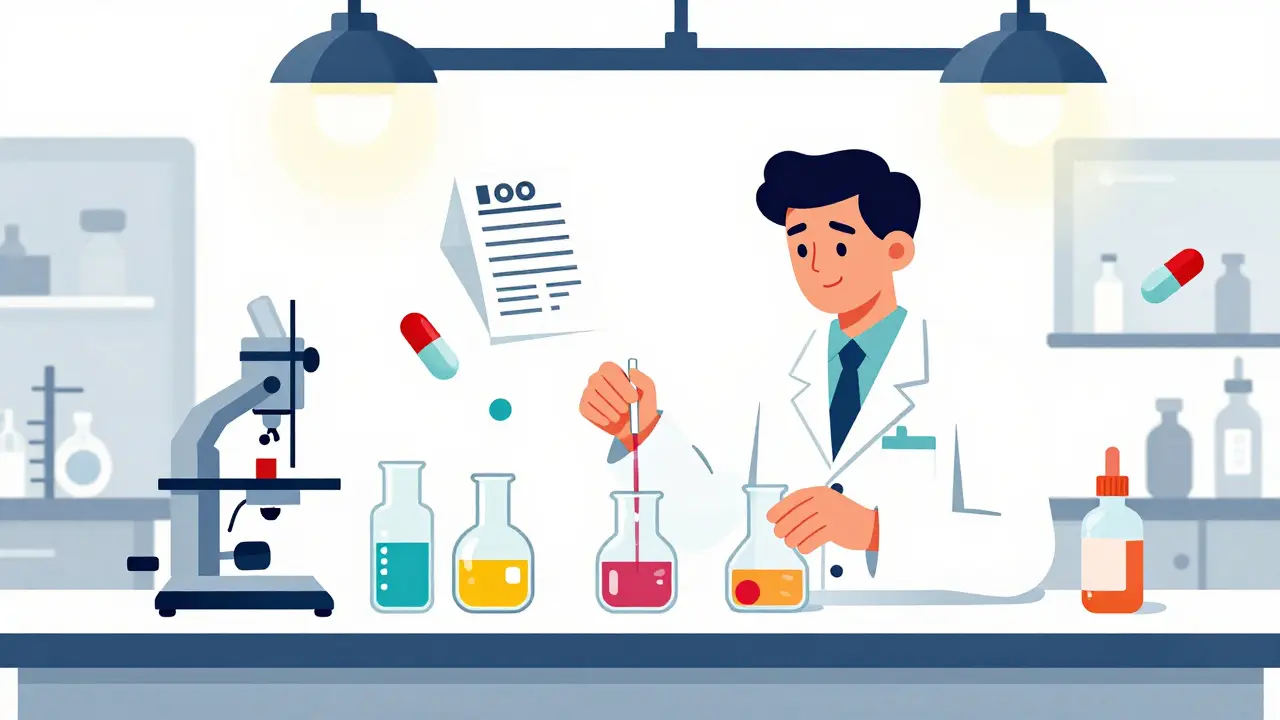
When a prescribed medication suddenly disappears from pharmacy shelves, it’s not just inconvenient-it can be dangerous. Maybe your doctor prescribed a hormone therapy that’s been pulled due to manufacturing delays. Or perhaps your child can’t swallow pills, and the only liquid version is out of stock. In Australia, like in many countries, drug shortages are becoming more common. In 2023 alone, over 300 medications faced supply issues in the U.S., and similar trends are showing up here. But there’s a solution many people don’t know about: compounding pharmacies.
What Exactly Is a Compounding Pharmacy?
A compounding pharmacy doesn’t just fill prescriptions. It builds them-from scratch. While regular pharmacies hand out pre-made pills and capsules, compounding pharmacies mix, crush, blend, and customize medications using raw ingredients. Think of it like a kitchen where a chef doesn’t serve pre-packaged meals but cooks exactly what the patient needs.
This isn’t science fiction. It’s a legal, regulated part of pharmacy practice. In Australia, these pharmacies follow strict guidelines set by the Therapeutic Goods Administration (TGA), similar to how the FDA oversees them in the U.S. They can create medications in forms that standard pharmacies can’t: liquids for kids who can’t swallow pills, topical gels for people with stomach sensitivity, or hormone creams without irritating dyes.
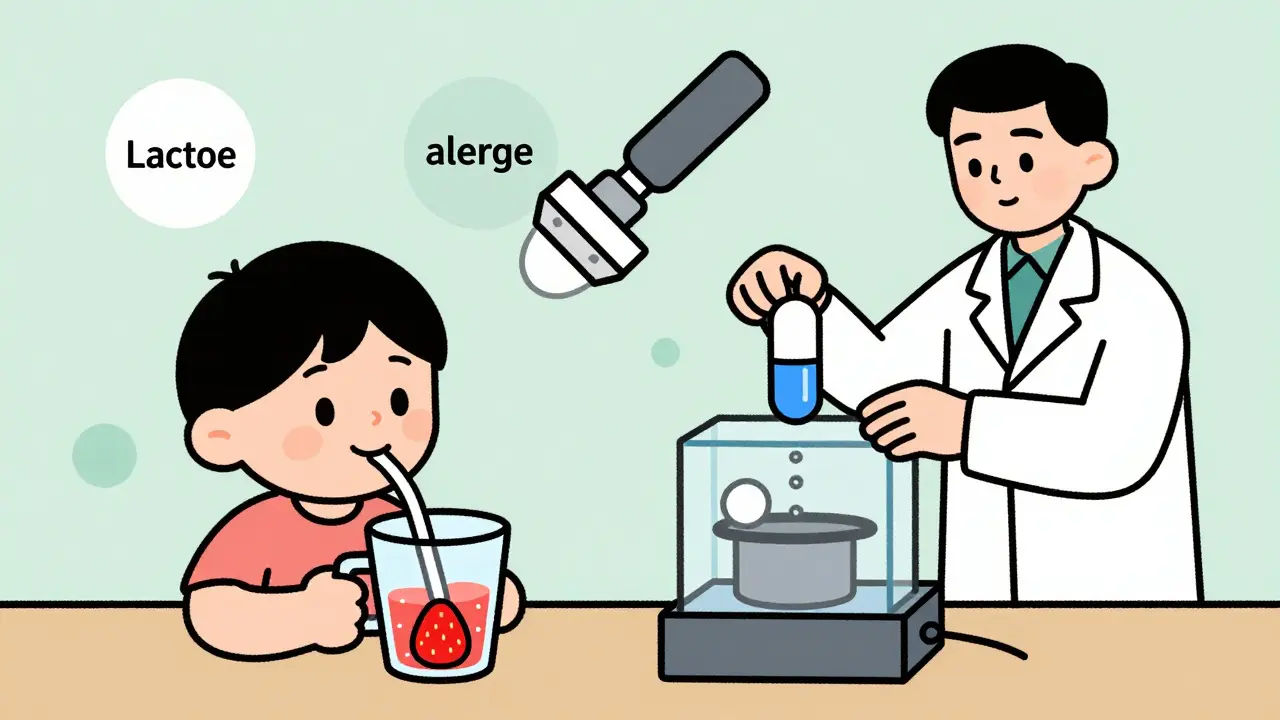
Why does this matter? Because 1 in 5 people have allergies or sensitivities to common fillers like lactose, gluten, or artificial dyes. For them, even a tiny amount in a mass-produced pill can cause rashes, bloating, or worse. Compounding pharmacies remove those triggers entirely.
When Do You Need a Compounded Medication?
You don’t need to be sick to benefit from compounding. Here are the most common situations where it’s the best-or only-option:
- Drug shortages: If your thyroid medication, antibiotics, or pain reliever is out of stock, a compounding pharmacist can often replicate it using the same active ingredients.
- Allergies to fillers: Many pills contain dyes, preservatives, or lactose. Compounded versions skip these entirely.
- Pediatric needs: Kids often refuse bitter pills. Compounding pharmacies can turn medications into sweet, fruity liquids or even lollipops.
- Geriatric challenges: Older adults frequently struggle to swallow tablets. Creams, sprays, or easy-to-swallow liquids make adherence possible.
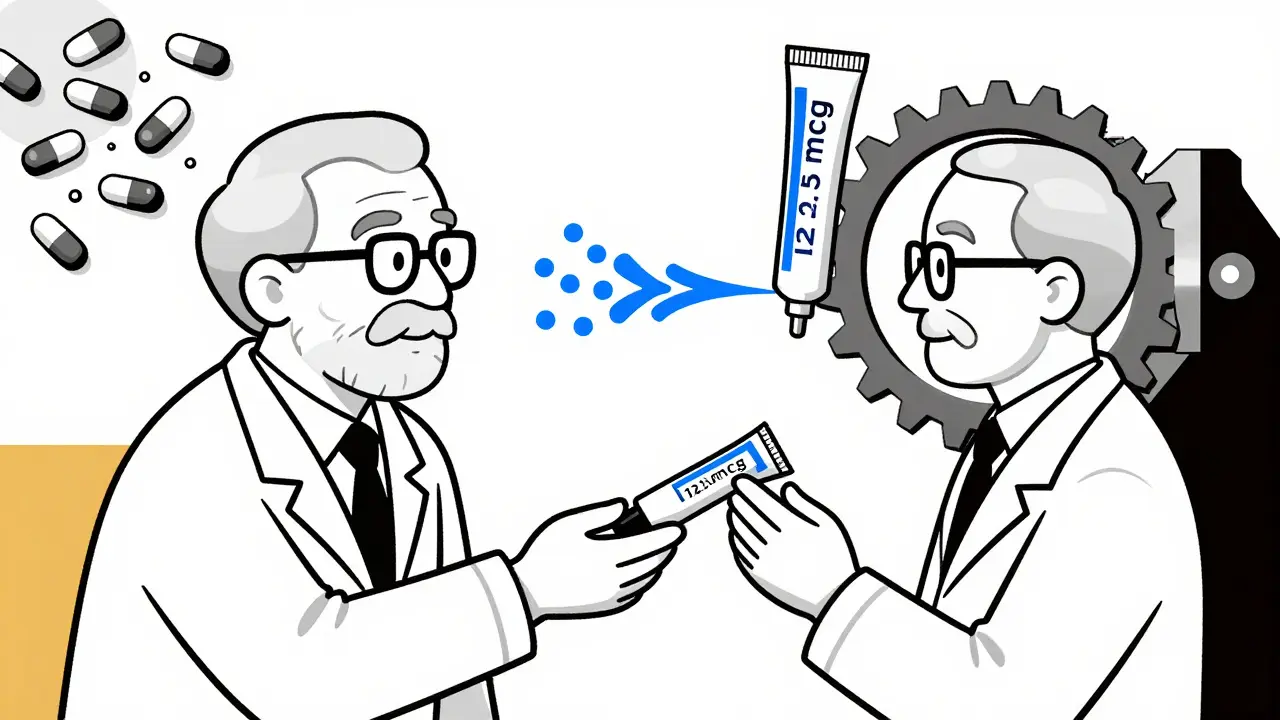
- Custom dosing: Some patients need 12.5 mg, but the only available pill is 25 mg. Cutting pills isn’t precise. Compounding delivers the exact dose.
- Specialized treatments: Hormone replacement, chronic pain management, and dermatology treatments often rely on compounded formulations for better absorption and fewer side effects.
A 2023 study found that 85% of patients who switched to compounded versions due to allergies or intolerances saw better adherence and fewer side effects. One parent in Melbourne shared that her son, who had been vomiting every time he took his ADHD medication, finally started taking it consistently after his pharmacist reformulated it into a strawberry-flavored liquid.
How It Works: From Prescription to Package
It’s not as simple as walking in and asking for a custom pill. Here’s the real process:
- Your doctor identifies a problem: Maybe your current medication isn’t working, or it’s unavailable. They’ll write a prescription specifying the active ingredient, dose, and desired form (e.g., cream, liquid, capsule).
- You take it to a compounding pharmacy: Not every pharmacy does this. Look for ones with PCAB accreditation (Pharmacy Compounding Accreditation Board) or TGA-registered compounding facilities.
- The pharmacist reviews and consults: They check the formula’s safety, stability, and feasibility. Some combinations aren’t compatible. Others need special equipment.
- The medication is made: Depending on complexity, it can take 24 to 72 hours. Sterile preparations (like injections) take longer and require clean-room environments.
- You pick it up: Unlike regular prescriptions, compounded meds aren’t pre-stocked. You’ll likely pay out-of-pocket, since many insurers don’t cover them.
That last point is critical. About 45% of patients in Australia pay full price for compounded medications. Insurance typically covers only FDA-approved (or TGA-approved) products. So while compounding saves lives, it can be expensive. Some pharmacies offer payment plans or bulk discounts for long-term needs.
What Compounding Can’t Do
It’s easy to think compounding pharmacies can make anything. They can’t. There are hard limits:
- No biologics: Insulin, vaccines, and monoclonal antibodies require complex manufacturing. Compounding pharmacies can’t replicate these.
- No mass production: They don’t replace factories. If a drug is widely available, they won’t compound it just because it’s cheaper.
- No shortcuts: A 2023 review found that 15% of compounded prescriptions could have been filled with standard drugs. Using compounding when it’s not needed adds risk and cost.
Dr. Robert Smith from the National Community Pharmacists Association puts it bluntly: “If a safe, approved drug exists, use it. Compounding is a backup, not a first choice.”
That’s why accreditation matters. Only about 1,200 pharmacies in the U.S. (and a smaller number in Australia) hold PCAB certification. These labs undergo strict audits for cleanliness, accuracy, and quality control. Always ask: “Are you PCAB-accredited?” or “Do you follow TGA compounding standards?”
Real Stories, Real Impact
In Melbourne, a woman with severe eczema tried three different steroid creams. All contained parabens-she broke out worse each time. Her dermatologist referred her to a compounding pharmacy. They made her a paraben-free, fragrance-free cream using only zinc oxide and shea butter. Within two weeks, her skin cleared up. She’s been using it for three years.
A retired teacher in Geelong needed a low-dose thyroid medication, but the only available tablet was 50 mcg. Her doctor wanted 12.5 mcg. Cutting pills led to inconsistent dosing. The compounding pharmacy made her capsules with 12.5 mcg. Her TSH levels stabilized. She no longer felt fatigued or anxious.
These aren’t rare cases. They’re daily occurrences. Compounding pharmacies serve 1.5% of all prescriptions in the U.S.-and that number is growing. In Australia, demand has jumped 22% since 2021, driven by aging populations and more frequent drug shortages.
What to Ask Before You Go
If you’re considering a compounded medication, don’t just accept the first pharmacy you find. Ask these questions:
- Are you accredited by PCAB or registered with the TGA for compounding?
- Do you have a clean room for sterile preparations (if needed)?
- How long will it take to prepare?
- Will my insurance cover this? If not, what’s the out-of-pocket cost?
- Can you provide stability testing results for this formula?
- Do you use USP-grade ingredients?
Reputable pharmacies will answer all of these without hesitation. If they can’t, walk away.
The Future of Personalized Medicine
Compounding is no longer just a workaround for shortages. It’s becoming part of precision medicine. Some pharmacies now partner with genetic testing labs to tailor medications based on how a person metabolizes drugs. One Melbourne clinic offers a service where patients get a DNA panel, and the pharmacist adjusts dosing based on liver enzyme activity. It’s still new, but early results show fewer side effects and better outcomes.
With drug shortages expected to rise and demand for personalized care growing, compounding pharmacies are filling a gap that big pharma can’t. They’re not a cure-all. But when standard options fail, they’re often the only lifeline.
Are compounded medications safe?
Yes-when they’re made by accredited pharmacies following TGA or USP guidelines. These pharmacies use pure, tested ingredients and follow strict hygiene protocols. But safety depends on the source. Avoid online pharmacies that offer compounded drugs without a prescription or proper accreditation. Always use a local, verified compounding pharmacy.
Can I get compounded meds without a prescription?
No. Compounded medications require a valid prescription from a licensed doctor. Even if a pharmacy claims they can make it "on demand," it’s illegal and unsafe without a medical reason and oversight. This protects you from unregulated or incorrect formulations.
Why are compounded drugs more expensive?
Because they’re made one at a time, with manual labor, specialized equipment, and high-quality ingredients. A standard pill costs pennies to mass-produce. A compounded cream or capsule might take 30 minutes to prepare, use rare raw materials, and require lab testing. Insurance rarely covers them because they’re not pre-approved products. But for many patients, the cost is worth the benefit.
How long does it take to get a compounded medication?
Typically 24 to 72 hours. Simple non-sterile formulations (like creams or liquids) may be ready in a day. Sterile ones (like injections) can take up to five days because they require extra testing and clean-room processing. Always plan ahead-don’t wait until your last pill is gone.
Can my regular pharmacy compound my medication?
Some can, but most don’t. Only about 1 in 7 community pharmacies in Australia have the training, equipment, or accreditation to do compounding safely. If your local pharmacy says yes, ask if they’re PCAB-accredited or TGA-registered for compounding. If they don’t know what you mean, they likely can’t do it reliably.
Sanjana Rajan
March 20, 2026 AT 08:31Okay but let’s be real - compounding pharmacies are just a fancy way to say ‘I can’t be bothered to wait for real medicine.’
My cousin in Mumbai had to wait 3 months for his thyroid med because of supply issues. He didn’t go to some back-alley lab. He waited. And he’s fine.
People act like this is some revolutionary solution, but it’s just expensive, unregulated guesswork with a fancy label.
And don’t get me started on the ‘strawberry-flavored ADHD pill’ nonsense - that’s not medicine, that’s a candy shop with a pharmacy license.
Also, why are we okay with paying $300 for a cream when a $5 pill exists? Capitalism at its finest.
Kendrick Heyward
March 21, 2026 AT 16:35This is why America is falling apart 😭
People can’t even swallow a pill anymore??
My grandma took her meds like a champ - no fancy creams, no lollipops, no ‘personalized dosing’ 🤦♂️
We used to be tough. Now we’re just… delicate.
Also, who lets a pharmacist decide your hormone dose?? That’s not science - that’s TikTok medicine 💀
lawanna major
March 22, 2026 AT 10:06There’s something profoundly human about this - the idea that medicine should adapt to the person, not the other way around.
For decades, pharmaceutical companies have treated patients like units in a factory line: one size fits all, even when it fits no one.
Compounding pharmacies don’t just fill prescriptions - they restore dignity.
Imagine a child who’s been vomiting every time they take their medicine - until a pharmacist, with care and precision, turns it into a sweet, fruity liquid.
That’s not just chemistry. That’s compassion in action.
And yes, it’s expensive - because human-centered care rarely is.
But when you’re the parent of that child, or the elderly person who can’t swallow a tablet, or the person allergic to every filler in every pill - this isn’t a luxury.
It’s survival.
And if we’re going to call ourselves a society that values health, we need to fund this - not just as a last resort, but as a right.
It’s not about convenience.
It’s about equity.
And maybe, just maybe, it’s the future we’ve been too afraid to build.
Ryan Voeltner
March 23, 2026 AT 15:22Compounding pharmacies serve as necessary adaptive mechanisms within a broken supply chain
Accreditation standards must be universally enforced to prevent harm
Cost barriers undermine equitable access
Policy reform is overdue
Not a panacea but a vital bridge
Respect the science
Respect the patient
Respect the pharmacist
Andrew Mamone
March 23, 2026 AT 21:34Just had my first compounded thyroid med last month 🙌
Used to feel like a zombie on 50mcg pills
Now I’m on 12.5mcg custom capsules - energy back, anxiety gone
Worth every penny
And yes, I paid out of pocket
But I’d do it again tomorrow 😊
MALYN RICABLANCA
March 25, 2026 AT 01:40OH MY GOD I WASN’T READY FOR THIS POST 😭
MY DAUGHTER’S ADHD MED WAS MAKING HER VOMIT EVERY MORNING UNTIL THE PHARMACIST TURNED IT INTO A LOLLIPPOP 🍓🫶
SHE’S BEEN TAKING IT FOR 14 MONTHS AND SHE’S ACTUALLY SMILING IN THE MORNING
AND I’M NOT KIDDING - I CRIED IN THE PHARMACY PARKING LOT
AND YES IT COST $280 BUT I’D PAY $2800 IF I HAD TO
THIS ISN’T ‘ALTERNATIVE MEDICINE’
THIS IS A MIRACLE MADE BY A HUMAN BEING WITH A BEAKER AND A HEART
AND IF YOU THINK THIS IS ‘WASTEFUL’ OR ‘EXPENSIVE’
YOU’VE NEVER HAD TO WATCH YOUR KID CRY BECAUSE THEY CAN’T SWALLOW A PILLS
WE NEED MORE OF THIS
NOT LESS
AND WE NEED INSURANCE TO STOP BEING SO BULLSHIT
PS I TOLD MY DOCTOR TO F*** OFF WHEN HE SAID ‘JUST CUT THE PILLS’
HE’S NOT THE BOSS OF MY KID’S LIFE
Prathamesh Ghodke
March 26, 2026 AT 21:29As someone who’s worked in Indian pharma logistics, I’ve seen shortages that make Australia look like a luxury spa.
But here’s the thing - compounding isn’t magic.
It’s a workaround for a broken system.
And yeah, it’s expensive - but so is a hospital bed because someone had a reaction to a filler they didn’t know was in their pill.
My cousin in Bangalore used a compounded antihistamine for years - no rashes, no drowsiness.
Simple formula: active ingredient + zero junk.
Also - don’t let the ‘lollipops’ fool you.
It’s not candy.
It’s precision medicine with a smile.
And honestly? We need more of it - even if it’s not covered by insurance.
It’s not about cost.
It’s about not dying because a pill was too big or too full of crap.
Stephen Habegger
March 27, 2026 AT 01:55My mom switched to a compounded pain cream after her oral meds stopped working.
No more nausea.
No more crashes.
Just relief.
Worth every cent.
Also - ask your pharmacist about USP-grade ingredients.
It matters.
Justin Archuletta
March 28, 2026 AT 12:48Wait wait wait - so you can get a custom hormone cream that doesn’t give you a rash?
AND a kid’s ADHD med that doesn’t make them throw up?
AND a 12.5mg thyroid pill that actually works?
Why isn’t this everywhere??
Why do we have to beg for basic human care??
I’m mad.
And also… thank you.
For writing this.
For existing.
For not giving up.