
Complete Guide to Over-the-Counter Medications for Safe Self-Care
 Jan, 7 2026
Every year, millions of people reach for an OTC medication without thinking twice. A headache? Grab a pill. Stuffy nose? Pick up a bottle. Heartburn? There’s a liquid for that. It’s easy to assume these drugs are harmless because you don’t need a prescription. But here’s the truth: OTC medications can be just as dangerous as prescription drugs if used incorrectly. In the U.S. alone, more than 68,000 emergency room visits each year are linked to OTC medicine misuse. That’s not a small number-it’s a warning.
What Exactly Counts as an OTC Medication?
< p>OTC medications aren’t just painkillers and cold syrups. The FDA classifies a wide range of products as over-the-counter, including fluoride toothpaste, dandruff shampoos with zinc pyrithione, antibiotic ointments like Neosporin, and even eye drops for redness or dryness. These aren’t cosmetics or supplements-they’re drugs. And like all drugs, they have active ingredients that affect your body.There are more than 300,000 OTC products on shelves today, grouped into about 80 therapeutic categories. The biggest ones? Pain relief (32.1% of the $114 billion market), digestive aids (18.7%), and cough/cold remedies (16.3%). You’ll find acetaminophen, ibuprofen, naproxen, guaifenesin, and bismuth subsalicylate on almost every pharmacy shelf. But knowing the brand name isn’t enough. You need to know the active ingredient.
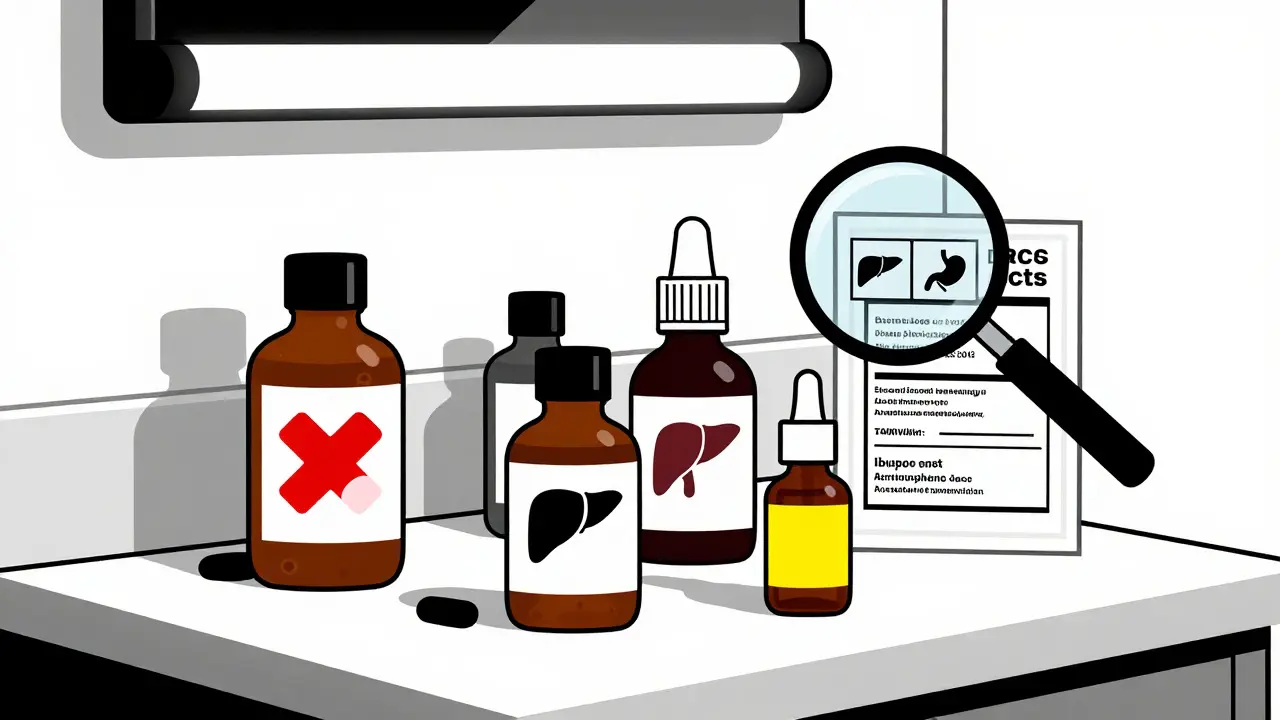
Understanding the Drug Facts Label
The FDA made a big change in 1999: every OTC product must have a standardized Drug Facts label. This isn’t marketing fluff-it’s your safety guide. It has 11 required sections, and you should read them every time. Most people don’t. Only 22% of users read the full label, according to the FDA. That’s a problem.
Here’s what matters most:
- Active ingredients: This tells you what the drug actually contains. If you take two products with the same active ingredient-like acetaminophen-you risk overdose.
- Purpose: What is this medicine for? A cold tablet might say “relieves fever and minor aches,” not “treats sinus infection.”
- Uses: What symptoms does it treat? Don’t assume it works for something not listed.
- Warnings: This section lists who shouldn’t take it. Asthma? High blood pressure? Liver disease? These are red flags.
- Directions: How much? How often? Never guess. More isn’t better.
- Inactive ingredients: These include dyes, sugars, and preservatives. If you’re allergic to gluten, red dye #40, or lactose, this is critical.
Many people don’t realize that “nighttime” cold medicine often contains diphenhydramine-an antihistamine that causes drowsiness. Taking it during the day can make you sluggish. Taking it with another sleep aid? That’s a dangerous mix.
Acetaminophen vs. Ibuprofen: Know the Difference
When it comes to pain and fever, two drugs dominate: acetaminophen (Tylenol) and ibuprofen (Advil, Motrin). But they work differently.
Acetaminophen is best for headaches, fever, and mild body aches. It doesn’t reduce inflammation. That’s why it’s often the first choice for people with stomach issues or those on blood thinners. But here’s the catch: your liver processes it. The maximum safe daily dose is 3,000 mg-equivalent to six 500 mg tablets. Exceed that, and you risk liver failure. In the U.S., acetaminophen overdose causes 56,000 ER visits and 458 deaths every year.
Ibuprofen is an NSAID. It reduces inflammation, so it’s better for sprains, arthritis, or menstrual cramps. But it can irritate your stomach lining and raise your blood pressure. If you have a history of ulcers, kidney disease, or heart problems, it’s not safe. And if you have asthma, ibuprofen can trigger attacks in about 1 in 10 people.
Don’t assume one is “safer” than the other. They just have different risks. Use acetaminophen for fever and general pain. Use ibuprofen for swelling and inflammation. Never take both together unless a doctor says so.
What You Should Never Do
Here are the top mistakes people make with OTC meds-and why they’re dangerous:
- Double-dosing: Taking Tylenol for a headache, then taking a cold medicine that also has acetaminophen. That’s how you hit the 3,000 mg limit without realizing it.
- Ignoring age limits: Children’s liquid Tylenol is 160 mg per 5 mL. Adult tablets are 500 mg. Using the wrong concentration can lead to overdose. Always check the strength.
- Using expired meds: OTC drugs usually last 2-3 years. After that, they lose potency. Some, like liquid antibiotics or eye drops, can become harmful. If it’s past the date, throw it out.
- Self-treating serious symptoms: Chest pain, sudden weakness, confusion, or unexplained weight loss? These aren’t OTC problems. Delaying care can be deadly.
- Assuming “natural” means safe: Herbal supplements sold next to OTC drugs aren’t regulated the same way. “Natural” doesn’t mean harmless. St. John’s wort can interfere with antidepressants. Echinacea can trigger allergies. Don’t trust labels without proof.
When to See a Doctor Instead
OTC meds are for temporary relief, not long-term fixes. If any of these happen, stop self-treating and call a doctor:
- Symptoms last longer than 7 days
- Pain gets worse instead of better
- You develop a rash, swelling, or trouble breathing
- You’re taking 5 or more prescription drugs (polypharmacy risk)
- You’re over 65-your body processes drugs slower
- You’re pregnant or breastfeeding
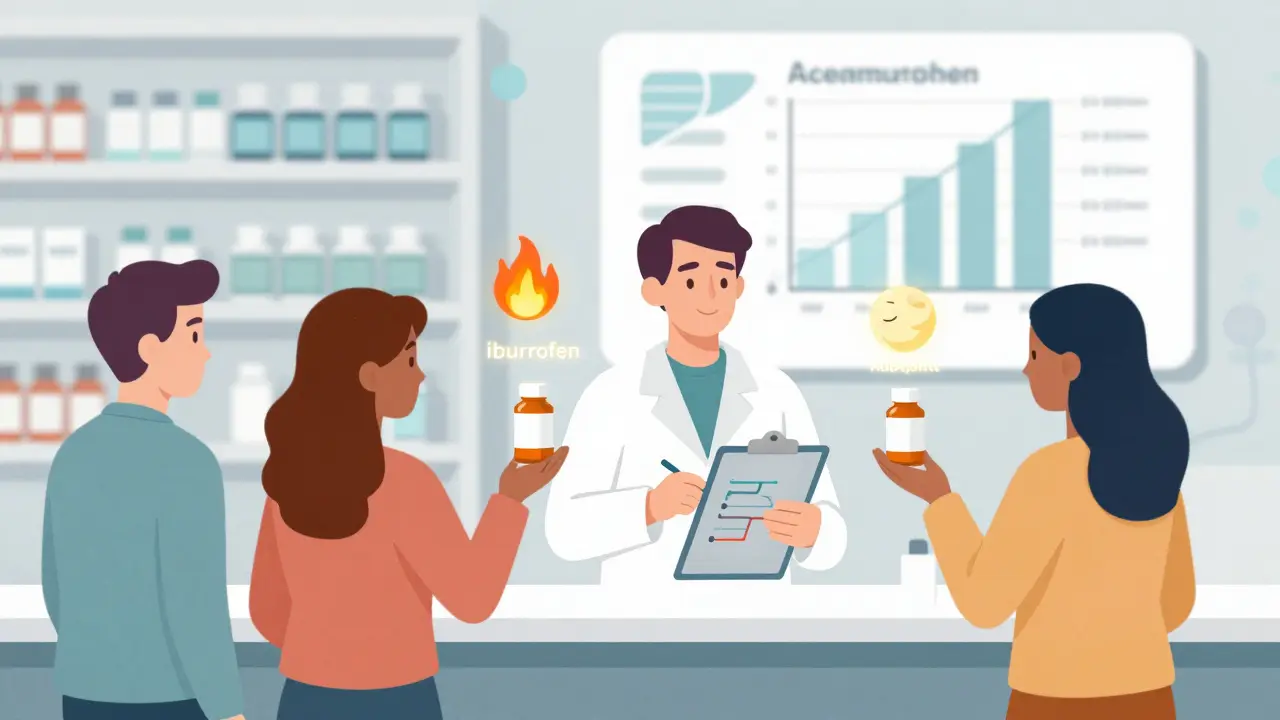
There’s no shame in asking for help. In fact, pharmacists are trained to help you avoid mistakes. In Australia, 68% of people consult a pharmacist about OTC meds at least once a year. That’s a smart habit.
How to Use OTC Medications Safely
Here’s a simple 3-step system that cuts your risk of error by 68%, according to the American Society of Health-System Pharmacists:
- Match symptoms to the label: Does the product say it treats your exact issue? If not, don’t use it.
- Check for duplicates: Look at every medicine you’re taking-prescription and OTC. Do any have the same active ingredient? If yes, you’re overdosing.
- Verify the dose: Is it right for your age, weight, and health? Don’t use adult dosing for a child. Don’t take more than the label says.
Also, store meds properly. Heat and moisture ruin them. Keep them in a cool, dry place-like a bedroom drawer, not the bathroom cabinet. And always keep them out of reach of kids and pets.
The Role of Pharmacists
Pharmacists aren’t just people who hand out pills. They’re trained medication experts. In the U.S., 78% of pharmacists provide OTC counseling every year. They check for drug interactions, confirm dosing, and spot contraindications. And it works: pharmacies that offer free medication reviews reduce inappropriate OTC use by 42%.
You don’t need an appointment. Walk in. Bring your list of all medications-including vitamins and supplements. Ask: “Is this safe for me to take with what I’m already using?” Most pharmacists will do it for free.
What’s Changing in 2026?
The FDA is updating the rules for OTC drugs under the CARES Act. By 2026, they plan to remove products that haven’t proven safety and effectiveness. That means some old favorites might disappear from shelves. New labels will include clearer warnings about heart attack and stroke risks with NSAIDs. And digital tools are rising-63% of consumers now use apps to compare OTC products.
Also, more states are letting pharmacists prescribe certain OTC meds-like emergency contraception or nicotine patches-without a doctor’s note. This isn’t just convenience. It’s about making safe care easier to reach.
Final Thoughts
OTC medications are powerful tools. Used right, they can make life easier. Used wrong, they can land you in the hospital. The key isn’t avoiding them-it’s respecting them. Read the label. Know your active ingredients. Talk to a pharmacist. Don’t assume because it’s sold on a shelf, it’s harmless.
Your body isn’t a lab. You’re not a statistic. You’re a person with unique health needs. Treat OTC meds like the medicine they are-not candy.
Can I take OTC painkillers every day?
No. Daily use of OTC pain relievers, especially NSAIDs like ibuprofen or naproxen, increases your risk of stomach bleeding, kidney damage, and high blood pressure. Even acetaminophen can harm your liver if taken regularly above 3,000 mg per day. If you need daily pain relief, see a doctor. There may be an underlying condition that needs treatment.
Is it safe to give children adult OTC medicine by cutting the dose?
Never. Adult medications are not formulated for children. The concentration of active ingredients is different, and children’s bodies process drugs differently. Always use a product labeled for children and follow the dosing chart by weight or age. Use the measuring tool that comes with the bottle-never a kitchen spoon.
What should I do if I accidentally take too much OTC medicine?
Call poison control immediately. In Australia, dial 13 11 26. In the U.S., call 1-800-222-1222. Don’t wait for symptoms. Acetaminophen overdose, for example, may not cause pain for 24 hours-but liver damage is already starting. Bring the medicine bottle with you when you seek help.
Are store-brand OTC medications as good as name brands?
Yes. Store brands contain the same active ingredients, in the same amounts, as name brands. They’re required to meet the same FDA standards. The only differences are in inactive ingredients (like dyes or flavorings) and price. Save money by choosing store brands-just make sure the active ingredient matches.
Can OTC medications interact with alcohol?
Absolutely. Alcohol increases the risk of liver damage with acetaminophen. It can cause stomach bleeding when mixed with NSAIDs like ibuprofen. It can make you extremely drowsy when combined with antihistamines in cold medicines. The label may not always say this-so when in doubt, avoid alcohol while taking any OTC medicine.
Why do some OTC medicines require a photo ID to buy?
Products containing pseudoephedrine (like Sudafed) are kept behind the counter because they can be used to make illegal methamphetamine. The Combat Methamphetamine Epidemic Act of 2005 requires pharmacies to check ID, limit daily purchases, and log sales. This doesn’t mean the medicine is unsafe-it just means it’s regulated to prevent abuse.
How do I know if my OTC medicine has expired?
Look for the expiration date printed on the bottle, box, or blister pack. It’s usually labeled “EXP” or “Expires.” If you can’t find it, check the manufacturer’s website or call the pharmacy. Never use medicine past its expiration date-especially liquids, eye drops, or antibiotics. They can lose effectiveness or become harmful.
Next Steps for Safe Self-Care
Start today. Go through your medicine cabinet. Toss anything expired. Write down every OTC product you keep, including the active ingredient. Next time you’re at the pharmacy, ask the pharmacist to review your list. Keep a small notebook or phone note with your meds and dosing instructions. If you’re over 65 or taking multiple prescriptions, schedule a free medication review with your pharmacist every six months.
Safe self-care isn’t about avoiding medicine. It’s about using it wisely. Your health isn’t something you can guess your way through. Be informed. Be careful. And never be afraid to ask for help.
Pooja Kumari
January 8, 2026 AT 06:48Okay but like... I just took two Advil for my period cramps and then a NyQuil because I felt a little sniffly and now I’m panicking because I didn’t realize NyQuil had ibuprofen too? Like why do they make these things so sneaky? I’m not dumb, I just didn’t read the label because I was in pain and tired and honestly who has the energy to read tiny print at 2 a.m.? I’ve been doing this for years and nothing bad happened… until now. 😭
Kiruthiga Udayakumar
January 8, 2026 AT 08:32People are just lazy. That’s the real problem. You wouldn’t drive a car without reading the manual, but you’ll swallow a chemical cocktail like it’s candy? I’m not judging-I’m just stating facts. If you can’t be bothered to read a Drug Facts label, maybe you shouldn’t be medicating yourself at all. It’s not rocket science. It’s basic responsibility. Stop blaming the packaging and start taking ownership of your health. 🙄
Phil Kemling
January 9, 2026 AT 01:58It’s fascinating how we treat medicine as a commodity while ignoring its ontological weight. OTC drugs are not ‘safe’-they’re merely *accessible*. The illusion of safety is a cultural construct, reinforced by marketing and convenience. We’ve outsourced our bodily autonomy to the pharmacy shelf, and now we’re surprised when the system fails us. Maybe the real question isn’t ‘how to use OTC meds safely’-but ‘why did we let ourselves believe they were harmless in the first place?’
Diana Stoyanova
January 9, 2026 AT 09:10Y’all need to stop treating your medicine cabinet like a vending machine! 🙌 I used to take Tylenol every day for stress headaches-until my liver enzymes went haywire. My pharmacist caught it during a random check-in. Now I keep a little notebook: what I took, when, why. I even screenshot the Drug Facts label on my phone. It’s not extra-it’s essential. Your body isn’t a robot. It remembers. It feels. It retaliates. Be kind to it. 💪❤️
Jenci Spradlin
January 9, 2026 AT 23:35lol i used to think store brand was fake stuff but then i started checkin the ingrediants and theyre the exact same as advil or tylenol. save your cash. also dont forget to check the expiration date-i had a bottle of antacid from 2018 that tasted like chalk and i swear it made my stomach worse. dont be that guy.
Maggie Noe
January 9, 2026 AT 23:50My grandma always said, ‘If you don’t know what’s in it, don’t put it in you.’ 🧓💊 I’m 32 and I just started doing what she taught me: write down every pill, even the gummy vitamins. I showed my list to my pharmacist last week and she said I was taking 3 things with diphenhydramine. THREE. I thought I was just sleeping better. Turns out I was just drugged. 🤯 Thank god I asked. Don’t wait until you’re in the ER. Talk to someone. Anytime. No shame.
Gregory Clayton
January 11, 2026 AT 06:45THIS IS WHY AMERICA IS FALLING APART. People think because it’s sold next to gum and candy, it’s not a drug. Meanwhile, our ERs are full of idiots who took 8 Advil ‘because it didn’t work the first time.’ We need to start treating OTC meds like guns-locked up, logged, and regulated. No more ‘just one more’ BS. Your dumb choices are costing everyone else money. Get educated or get off the grid.
Catherine Scutt
January 13, 2026 AT 01:52Let’s be real-most people who read this post are already the responsible ones. The ones who need it? They’re the ones scrolling past it to buy a bottle of melatonin gummies while drunk at 1 a.m. This is preaching to the choir. The real problem isn’t lack of info-it’s lack of accountability. Nobody gets punished for overdosing on OTC meds. No consequences. No shame. Just a trip to the ER and a free meal. Until we change the culture, this will keep happening.
Darren McGuff
January 14, 2026 AT 13:53Interesting how the FDA’s Drug Facts label is mandatory but still unreadable to most. I’ve seen people squint at it like it’s ancient hieroglyphs. Maybe we need a simplified version-like a traffic light system: green = safe to take with your current meds, yellow = caution, red = don’t even think about it. And pharmacists should be required to hand out a one-page cheat sheet with every OTC purchase. Simple. Visual. No jargon. It’s 2026, not 1982.
Ashley Kronenwetter
January 15, 2026 AT 23:58I appreciate the thoroughness of this guide. As a healthcare professional, I’ve seen too many cases of accidental overdose, especially among elderly patients on polypharmacy regimens. The 3-step system outlined here is excellent. I recommend patients print it and tape it to their medicine cabinet. Consistency, not complexity, saves lives.
Angela Stanton
January 17, 2026 AT 13:00Let’s analyze the data: 68k ER visits annually from OTC misuse → 87% of those cases involved polypharmacy or label neglect. The root cause isn’t ignorance-it’s cognitive overload. People are managing 5+ chronic conditions, 3+ prescriptions, 2+ supplements, and now ‘wellness’ OTCs. The system is designed to fail. We need AI-driven medication reconciliation tools integrated into pharmacy apps. Until then, we’re just band-aiding a hemorrhage with glitter.