
Codeine and CYP2D6 Ultrarapid Metabolizers: Why Standard Doses Can Be Deadly
 Dec, 12 2025
CYP2D6 Risk Assessment Tool
This tool assesses your risk of ultrarapid metabolism for codeine. Based on your inputs, it will indicate whether you should consider CYP2D6 genetic testing before taking codeine. Always consult your doctor for medical advice.
Most people think of codeine as a mild painkiller or cough suppressant-something safe enough to hand out after a tooth extraction or for a child with a cold. But for a small group of people, even a single normal dose can turn deadly. This isn’t rare. It’s genetic. And it’s happening right now, in hospitals and homes around the world.
How Codeine Turns Into a Silent Killer
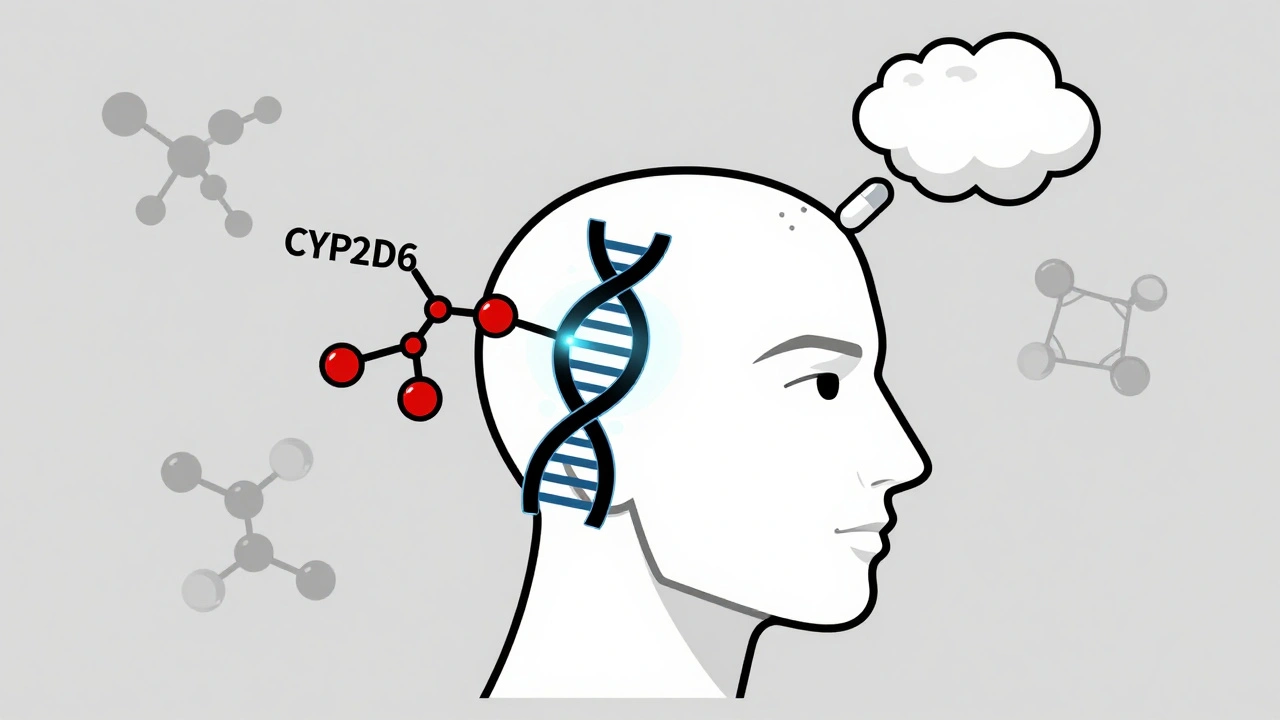
Codeine itself doesn’t do much. It’s not even the active painkiller. Your body has to convert it into morphine to feel any effect. That conversion happens through an enzyme called CYP2D6. For most people, this works fine. But for about 1 in 30 people-especially those of North African, Ethiopian, or European descent-this enzyme works too well. They’re called ultrarapid metabolizers. These people have extra copies of the CYP2D6 gene. Instead of slowly turning codeine into morphine over hours, their bodies do it in minutes. The result? Blood morphine levels spike far beyond what’s safe. That’s not a side effect. That’s a toxic overdose. And it doesn’t take much. A single 15 mg tablet of codeine can be enough to stop breathing in a child or adult who’s an ultrarapid metabolizer. The U.S. Food and Drug Administration (FDA) confirmed this in 2013 after reviewing 64 cases of serious harm. Twenty-four people died. Twenty-one of them were children under 12. In nearly every case where genetic testing was done, the child was an ultrarapid metabolizer. One 15-month-old died after a routine tonsillectomy. The dose they gave was standard. The outcome was fatal.Who’s at Risk? It’s Not Just Kids
You might think this only matters for children. It doesn’t. While pediatric cases grabbed headlines, adults are just as vulnerable. In Australia, about 3% of the population are ultrarapid metabolizers. In some parts of North Africa, that number jumps to nearly 30%. That means in a room of 100 people, three to 30 of them could be at risk-without knowing it. Symptoms of morphine toxicity don’t always look like a classic overdose. People don’t always pass out. They might just seem unusually sleepy. Or nauseous. Or hard to wake up. That’s what happened in several documented cases: parents thought their child was just resting after surgery. By the time they realized something was wrong, it was too late. The FDA now requires a boxed warning on all codeine products: “Respiratory depression and death have occurred in children who received codeine following tonsillectomy or adenoidectomy.” But warnings aren’t enough. Many doctors still prescribe it. Many pharmacists still fill the script. And many patients still take it, thinking it’s harmless.The Genetic Test That Could Save a Life
There’s a simple blood or saliva test that can tell you if you’re an ultrarapid metabolizer. It checks your CYP2D6 gene. The results come back as an activity score. If your score is above 2.25, you’re an ultrarapid metabolizer. That’s not a guess. That’s a hard genetic fact. The Clinical Pharmacogenetics Implementation Consortium (CPIC) has been clear since 2020: “Codeine or tramadol should not be used” for anyone with a score above 2.25. The same goes for tramadol, another common painkiller that also turns into a dangerous opioid through CYP2D6. The test costs between $200 and $500. Insurance doesn’t always cover it. Results can take up to two weeks. That’s a barrier. But here’s the truth: if you’ve ever had a bad reaction to codeine-extreme drowsiness, trouble breathing, nausea that wouldn’t go away-you might already be one. And if you’re planning surgery, especially for your child, asking for this test isn’t overcautious. It’s necessary.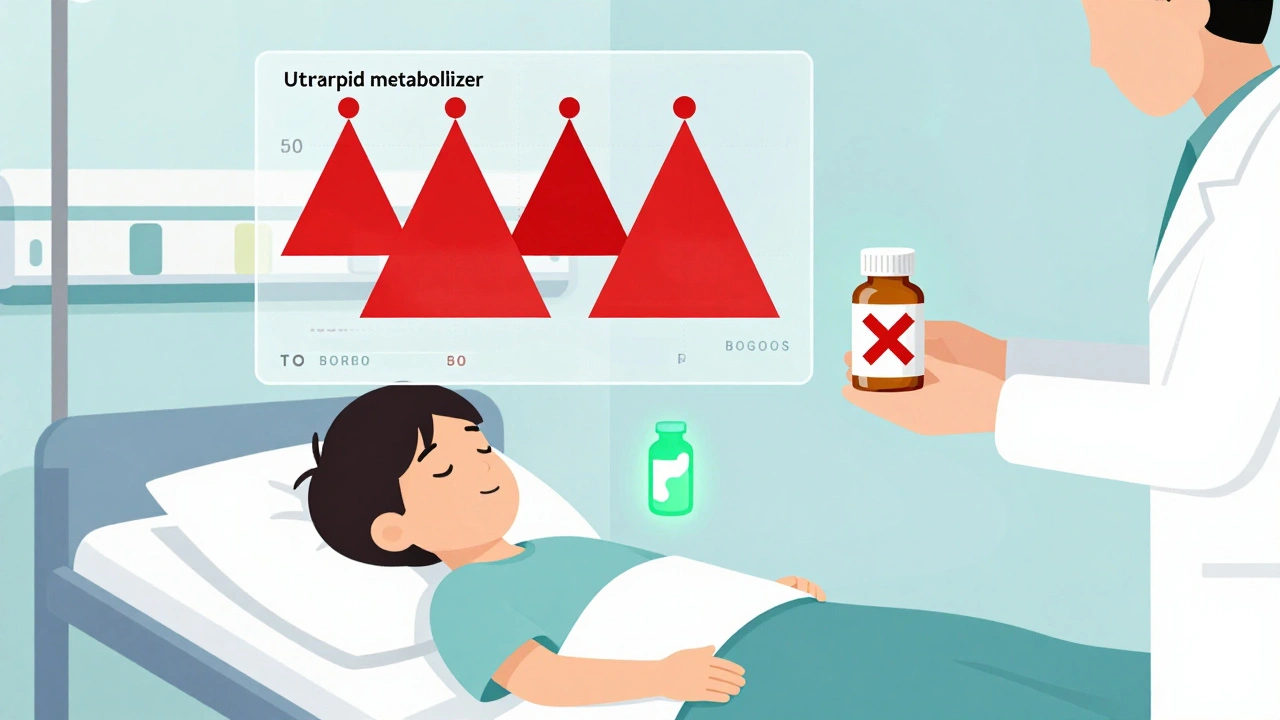
What to Use Instead
You don’t need codeine. There are safer, more predictable options.- Morphine - already active. No conversion needed.
- Hydromorphone - stronger than codeine, no CYP2D6 dependency.
- Fentanyl - used in hospitals, reliable dosing.
- Paracetamol (acetaminophen) or ibuprofen - often enough for mild to moderate pain.
Why This Isn’t Common Knowledge
You’d think this would be in every medical textbook by now. But it’s not. Many doctors were trained before pharmacogenetics became mainstream. Electronic health records rarely flag CYP2D6 status. Pharmacists don’t always ask. And patients? They don’t know to ask. The science has been clear for over 20 years. Studies from the early 2000s showed the link. The FDA acted in 2013. CPIC updated its guidelines in 2020. Yet, codeine is still on pharmacy shelves. Still being prescribed. Still killing. One reason? Cost. Genetic testing isn’t cheap. Another? Misconception. Some believe only children are at risk. Or that the risk is rare. But the data says otherwise. In one Australian study, nearly 3% of the population were ultrarapid metabolizers-and those people were more likely to develop codeine use disorder because their bodies gave them an intense, fast high.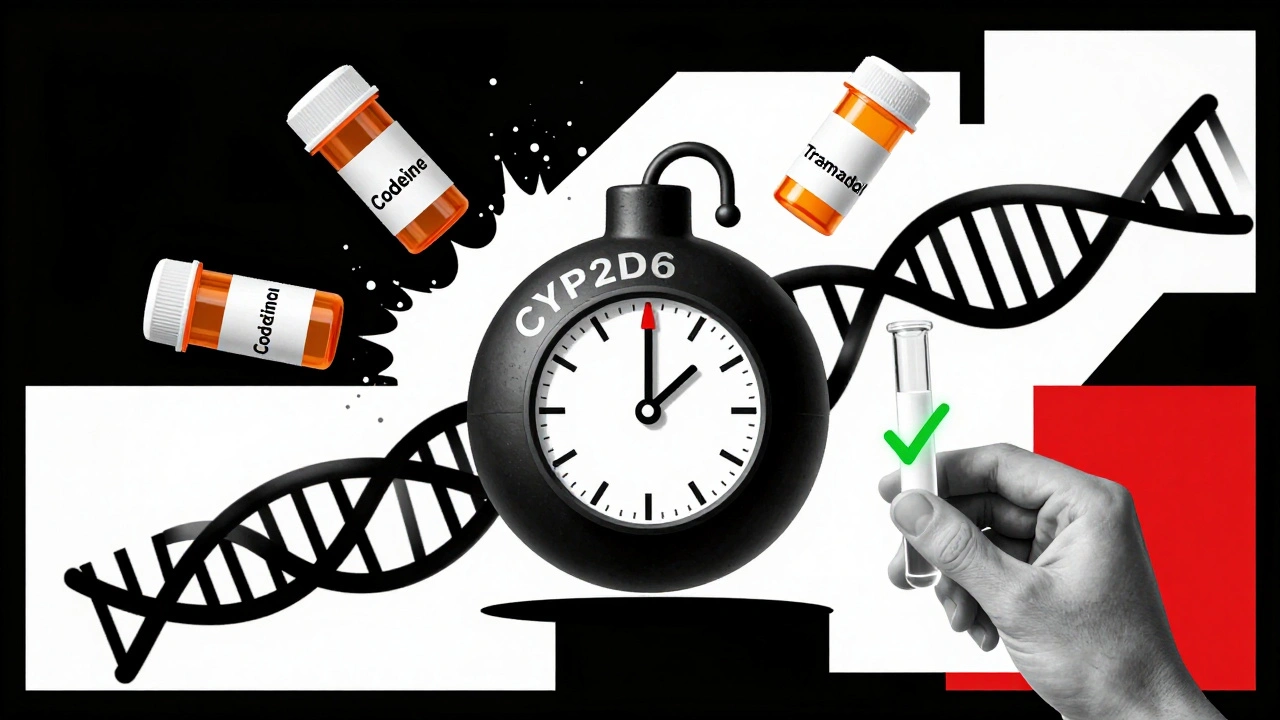
What You Can Do Right Now
If you or your child has ever been prescribed codeine:- Check the label. If it’s for cough, pain, or post-surgery recovery, stop using it unless you know your CYP2D6 status.
- Ask your doctor for a non-CYP2D6-dependent painkiller. Say: “I want something that won’t turn into morphine in my body.”
- If you’ve had unexplained drowsiness or breathing trouble after codeine, get tested.
- If you’re planning surgery, especially for a child, request genetic screening before anesthesia or pain meds are given.
- Don’t assume “natural” or “over-the-counter” means safe. Codeine is in many cough syrups, even in Australia.
What’s Next?
Research is moving fast. Vanderbilt University is testing point-of-care CYP2D6 kits that could give results in under two hours. That means in emergency rooms or clinics, a child’s genetic status could be known before the first dose of painkiller is given. Some experts believe codeine will vanish from clinical use entirely within the next decade. It’s already fading from pediatric care. The only question is how many more lives will be lost before it’s fully retired. This isn’t about fear. It’s about knowledge. Codeine isn’t dangerous for everyone. But for some, it’s a ticking time bomb. And the only way to disarm it is to know your genes.Can codeine be safe if I’ve taken it before without problems?
Maybe. But past safety doesn’t mean future safety. CYP2D6 ultrarapid metabolism is genetic-it doesn’t change. If you’ve taken codeine before and felt fine, you might still be an ultrarapid metabolizer. Some people have higher tolerance or slower absorption, masking the risk. But the next dose could trigger a life-threatening reaction. Don’t rely on past experience. Get tested if you’re planning surgery or have children.
Is this only a problem for children?
No. While the most tragic cases involve children-especially after tonsillectomies-adults are equally at risk. There are documented cases of adults dying from codeine after routine surgeries or dental work. The FDA’s 2013 report included adult deaths. And because codeine is still sold over the counter in many countries, adults are self-medicating without knowing their genetic risk.
What if I’m an ultrarapid metabolizer and I need strong pain relief?
You have options. Morphine, hydromorphone, oxycodone (in lower-risk doses), and fentanyl don’t rely on CYP2D6 to become active. Non-opioid options like paracetamol and ibuprofen are often effective for moderate pain. Your doctor can tailor a plan based on your pain level and medical history. The goal isn’t to avoid opioids entirely-it’s to avoid ones that turn dangerous because of your genes.
Can I get tested without a doctor’s order?
In some countries, direct-to-consumer genetic tests include CYP2D6 analysis. But results from these tests aren’t always clinically validated. For medical decisions, you need a test ordered by a healthcare provider through a certified lab. These are more accurate and come with expert interpretation. Don’t rely on ancestry kits or wellness tests for life-or-death decisions.
Does insurance cover CYP2D6 testing?
It depends. In the U.S., insurance often covers testing if it’s ordered before surgery or for chronic pain management, especially if you’ve had a bad reaction before. In Australia and Europe, coverage is more limited. Many labs require prior authorization. But if you’re having a major procedure, your hospital may cover it as part of pre-op screening. Ask your doctor to justify it as a safety measure.
Are other painkillers like tramadol also risky?
Yes. Tramadol is converted into an active opioid (O-desmethyltramadol) by CYP2D6. Ultrarapid metabolizers can experience the same overdose risks with tramadol as with codeine. The CPIC guidelines explicitly warn against both drugs for UMs. Don’t assume tramadol is safer just because it’s marketed as “less potent.” The genetic risk is identical.
How common are ultrarapid metabolizers in Australia?
About 3% of Australians are ultrarapid metabolizers. That’s roughly 1 in 30 people. Rates vary by ancestry: higher in those with North African, Middle Eastern, or Southern European roots. In some communities, the rate can be over 10%. If you’re from one of these backgrounds and have been prescribed codeine, your risk is higher than average.
Why isn’t everyone tested before taking codeine?
Because the system hasn’t caught up. Most hospitals don’t have CYP2D6 testing built into their prescribing workflows. Doctors aren’t trained to think about genetics before writing a script. And testing takes time and money. But as point-of-care tests become faster and cheaper, this will change. Until then, it’s up to patients and families to ask the right questions.