
Child Medication Switches: What Parents Need to Know About Generic Substitutions
 Dec, 27 2025
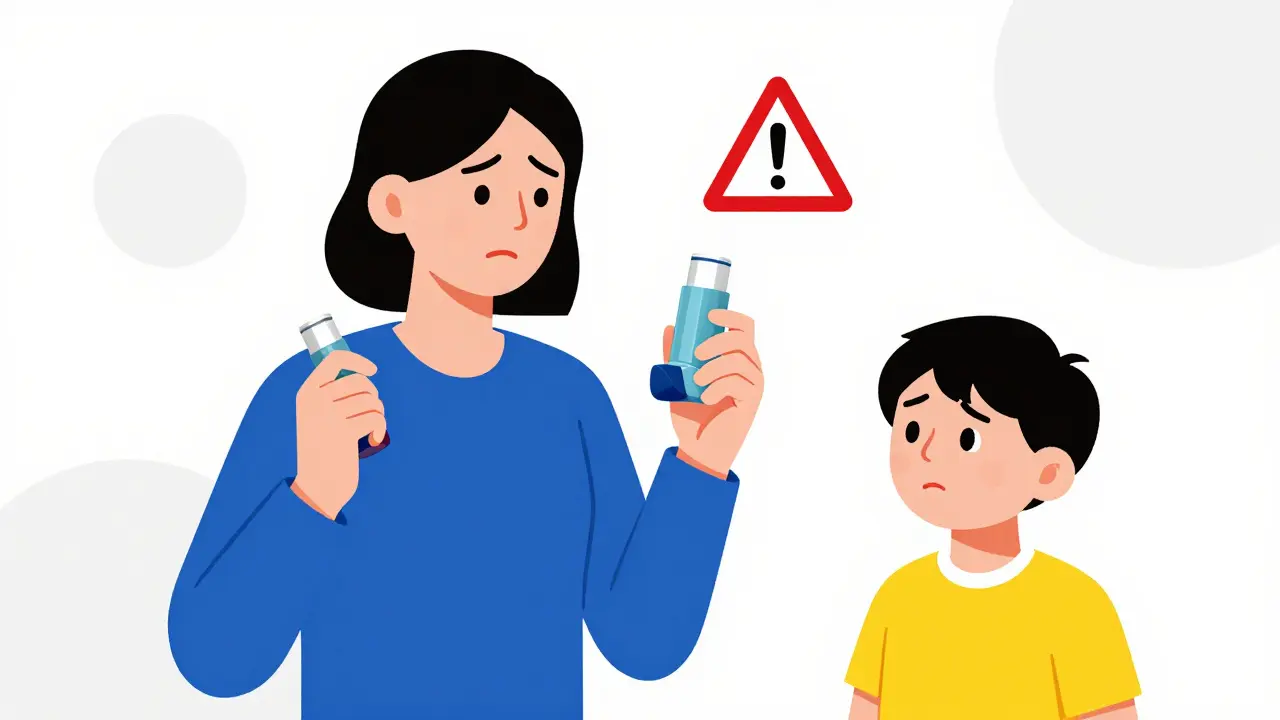
When your child’s asthma inhaler suddenly looks different-smaller, lighter, a new color-it’s easy to assume it’s the same medicine. But for kids, even small changes in medication can have big consequences. Across the U.S., insurers and pharmacies are switching children from brand-name drugs to cheaper generics more often than ever. And while this saves money, it’s not always safe. For children, especially those with chronic conditions like asthma, epilepsy, or heart disease, these switches can mean the difference between staying healthy and ending up in the hospital.
Why Generic Switches Are Riskier for Kids
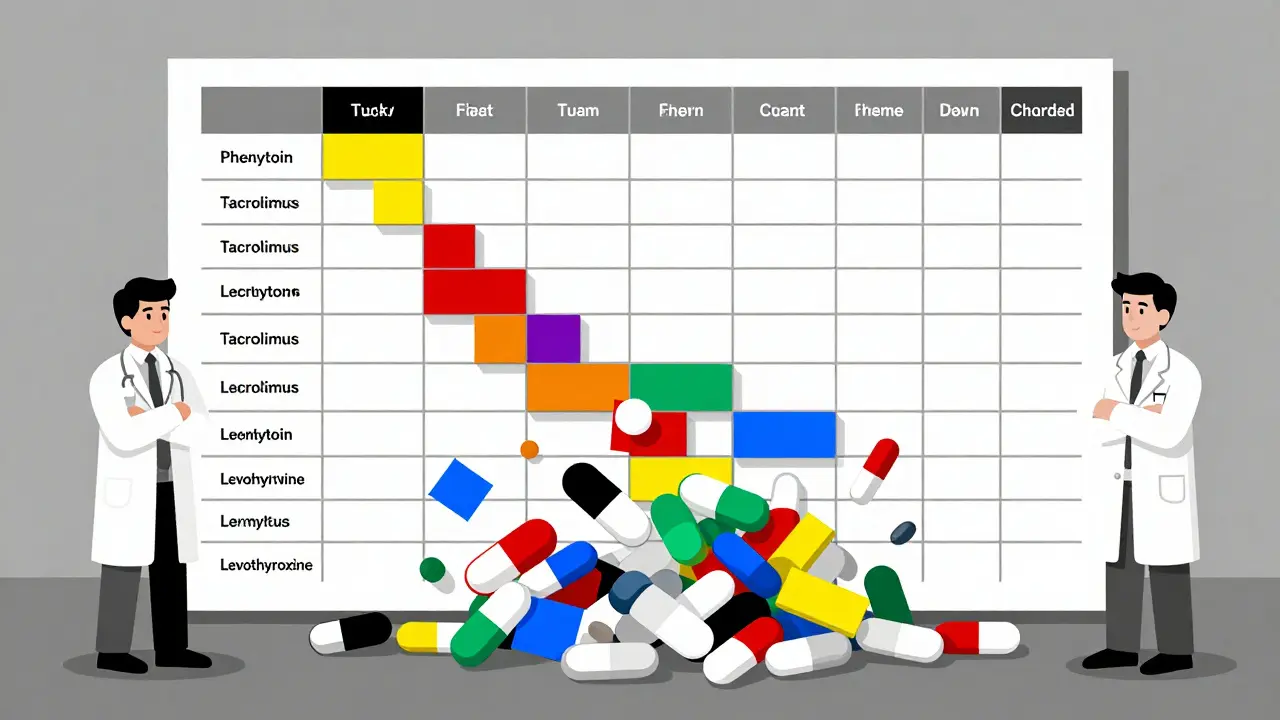
The FDA says generics are just as good as brand-name drugs because they contain the same active ingredient. That’s true in adults. But children aren’t small adults. Their bodies process medicine differently. A drug that works fine in a 40-year-old might behave unpredictably in a 3-year-old. For example, tacrolimus, a drug used after organ transplants, has a very narrow window between too little and too much. A 2015 study found that after switching pediatric heart transplant patients to generic tacrolimus, their blood levels dropped by an average of 14%. That’s not a small change-it can trigger organ rejection. The same risk exists with epilepsy drugs like phenytoin or seizure meds. Even a 10% fluctuation in blood levels can cause breakthrough seizures. The FDA’s bioequivalence rules require generics to deliver 80-125% of the active ingredient compared to the brand. That’s a 45% range. For adults, that’s usually fine. For kids, especially those under five, it’s a gamble. Their livers and kidneys are still developing. A drug cleared by the CYP2C19 enzyme in adults might be processed almost entirely by CYP3A4 in babies under three months. That’s why switching omeprazole (used for reflux) from brand-name Prevacid to a generic can lead to different results in a 6-month-old-even if the label says it’s the same.What Changes Really Matter
It’s not just the active ingredient. The fillers, dyes, and binders in a pill or liquid can make a difference too. A child with a rare allergy might react to a new dye in a generic version. A child with severe GERD might gag on a new flavor. A child using an inhaler might struggle with a different device if the generic comes with a new spacer or nozzle. One study found that after switching asthma medications, caregiver confusion led to a 15-20% drop in adherence. Parents didn’t know how to use the new inhaler. They didn’t realize the dose had changed. They thought the new pill was weaker because it looked different. These aren’t mistakes-they’re predictable outcomes of poorly managed switches. For children on multiple medications, each switch adds complexity. A child on four drugs might have one changed every few months. That’s four new instructions, four new pill shapes, four new refill routines. It’s no wonder families stop taking meds correctly.Which Medications Are Most Dangerous to Switch?
Not all drugs are created equal when it comes to switching. The FDA and pediatric experts flag these categories as high-risk:- AEDs (anti-epileptic drugs): Phenytoin, valproate, carbamazepine. Even small drops in blood levels can cause seizures.
- Immunosuppressants: Tacrolimus, cyclosporine. Used after transplants. Risk of rejection is real.
- Cardiac drugs: Digoxin, warfarin. Narrow therapeutic index means tiny changes can be dangerous.
- Psychiatric meds: SSRIs, stimulants. Mood and behavior changes can be mistaken for worsening illness.
- Thyroid meds: Levothyroxine. Even slight shifts can affect growth and brain development.
- Asthma controllers: Inhaled corticosteroids. Device changes can reduce delivery by up to 80% if technique isn’t re-taught.
These aren’t hypothetical risks. They’re documented in peer-reviewed studies and hospital reports. The American Academy of Pediatrics says switching these drugs without careful planning is a lost opportunity for safety-and sometimes, for life.
How Switches Happen (Without You Knowing)
Most parents don’t choose to switch. The switch happens at the pharmacy, or through insurance formularies. Insurers push generics because they’re cheaper. Sometimes, a pharmacy automatically substitutes without telling you. In 19 states, pharmacists are required to switch unless you say no. In only 7 states and D.C. do they need your consent. In 31 states, you get a notice after the fact. Insurance companies change formularies often. A drug might be covered one month, then dropped the next. Your child’s inhaler gets replaced with a different brand because the insurer struck a new deal. Then, six months later, they switch again because another drug got cheaper. This is called “churning.” And it’s common. UnitedHealthcare alone affected over 4 million children with formulary changes in 2021. Parents rarely get a heads-up. No doctor calls. No pharmacist explains. You just pick up the prescription and realize the pill looks different. That’s not informed consent. That’s a system designed for efficiency-not safety.What You Can Do to Protect Your Child
You don’t have to accept every switch. Here’s how to take control:- Ask before every refill: “Is this the same medication as last time?” If the pill looks different, ask why. Request the original brand if it’s medically necessary.
- Know your child’s drug class: If they’re on one of the high-risk meds listed above, flag it with your doctor and pharmacist. Say: “This is critical for my child’s health. Please don’t switch without discussing it with me.”
- Check the label: Look for the manufacturer name. If it changes, ask if it’s a different generic. Different manufacturers can have different inactive ingredients.
- Request a written plan: If your child’s medication is switched, ask your doctor to write a note: “Do not substitute. Brand name required.” Some insurers will honor this.
- Learn how to use the device: If it’s an inhaler, nebulizer, or injector, ask for a demonstration. Even if you’ve used it before, the new version might work differently.
- Track symptoms: After a switch, watch for changes: new seizures, worse asthma, mood swings, poor sleep, loss of appetite. Report them immediately.
Don’t be afraid to push back. If your child’s health depends on stable dosing, you have the right to demand it.

The Bigger Picture: Why the System Is Broken
Between 2009 and 2019, generics saved the U.S. healthcare system $2.2 trillion. That’s impressive. But those savings came from adult-focused rules. The FDA never updated its bioequivalence standards for children. No one requires pediatric-specific testing for generics. Only 12% of generic approvals between 2010 and 2020 included any data on kids. Pediatricians are caught in the middle. They know switching is risky. But they’re pressured to prescribe generics to keep costs down. Pharmacists are trained to substitute unless told not to. Insurers have no incentive to protect kids-they’re not the ones paying the hospital bills. Some states are starting to act. California now requires Medicaid plans to have pediatric review committees before changing formularies. The FDA’s 2022 Pediatric Formulation Initiative is trying to fix this. But progress is slow. Until regulators require pediatric bioequivalence data, especially for narrow-therapeutic-index drugs, children will keep being treated like afterthoughts.What’s Next?
The American Academy of Pediatrics is finalizing new guidelines on generic prescribing in children, expected by late 2024. These will likely recommend avoiding switches for high-risk drugs unless absolutely necessary. More states may follow California’s lead. But until then, the responsibility falls on you. If your child is on a chronic medication, treat every refill like a safety check. Don’t assume. Don’t accept. Ask questions. Document changes. Speak up. Your child’s health isn’t a line item on an insurance spreadsheet. It’s their life. And when it comes to medication switches, being informed isn’t optional-it’s essential.Can I refuse a generic switch for my child’s medication?
Yes. You have the right to ask for the brand-name version, especially if your child is on a high-risk medication like an anti-seizure drug, immunosuppressant, or asthma controller. Tell your doctor you want to avoid switching, and ask them to write a note saying “Do Not Substitute.” Some pharmacies will honor this. If your insurance denies coverage, you can appeal the decision or ask your doctor for a prior authorization form.
Are generics always cheaper for parents?
Not always. Some insurance plans have high copays for generics if they’re not on the preferred list. Others charge more for brand-name drugs even if they’re the same. Always check your plan’s formulary. Sometimes, the brand-name drug is covered at the same cost-or even lower-than the generic. Ask your pharmacist to compare prices before filling the prescription.
What should I do if my child has a reaction after a medication switch?
Contact your pediatrician or pharmacist immediately. Document the reaction-what changed, when it started, and what symptoms appeared. If your child has a seizure, difficulty breathing, rash, or sudden behavioral change, seek emergency care. Report the reaction to the FDA’s MedWatch program. You can also ask your doctor to file a report with the manufacturer. This helps build evidence that switching may be unsafe for children.
Why don’t pharmacists always tell me about the switch?
In most states, pharmacists are legally allowed to substitute generics without telling you-unless you ask. Only seven states and D.C. require consent. Even in states that require notification, the notice might come on the label after the fact. Many pharmacists assume parents know generics are interchangeable. But for children, that assumption can be dangerous. Always ask: “Is this the same as last time?”
Are there any pediatric-specific generics that are safer?
There’s no official list of “pediatric-safe” generics. But some manufacturers produce formulations specifically tested or labeled for children-like liquid suspensions with accurate dosing or flavor-matched tablets. Ask your pharmacist if the generic you’re getting is the same formulation used in clinical studies for kids. If your child’s medication has a pediatric-specific version, ask to keep that one, even if it’s not the cheapest.
How can I find out if my child’s medication has been switched before?
Check your prescription history with your pharmacy. Most pharmacies keep records of all fills, including manufacturer and formulation. Call and ask for a printout of your child’s medication history over the past year. Look for changes in the manufacturer name or pill appearance. If you see multiple switches in a short time, talk to your doctor. Frequent changes increase risk.
Elizabeth Ganak
December 28, 2025 AT 20:37My daughter’s asthma inhaler switched last month and I didn’t even notice until she started wheezing again. I thought it was just allergies. Turns out the new generic had a different spacer and she wasn’t getting the full dose. I cried in the pharmacy aisle. Please, parents-check the damn device. It’s not just the pill.
Nicola George
December 30, 2025 AT 20:08Oh sweet mother of FDA guidelines, we’re letting pharmacies play Russian roulette with our kids’ lives because it’s ‘cheaper’? I mean, I get it-insurance companies are greedy. But this isn’t ‘saving money,’ this is just gambling with neurodevelopment. And we wonder why kids end up in ERs.
Raushan Richardson
December 31, 2025 AT 03:42Just wanted to say THANK YOU for writing this. I’m a mom of a kid on tacrolimus after a heart transplant, and every time the pharmacy swaps it, I have to call my doctor, call insurance, and beg them to not switch. It’s exhausting. But I do it because my kid’s life depends on it. You’re not alone. Keep fighting.
Robyn Hays
December 31, 2025 AT 12:34Here’s the wild part: the FDA’s 80-125% bioequivalence window is basically saying, ‘Hey, if your kid’s drug is anywhere from ‘barely working’ to ‘way too strong,’ we’re cool with it.’ That’s not science-that’s a spreadsheet with a napkin doodle on it. And now we’re slapping that on toddlers? I mean… wow. Just wow.
Liz Tanner
January 2, 2026 AT 09:37My son’s levothyroxine was switched twice in six months. He went from thriving to lethargic, constipated, and failing school. I demanded the original brand. The insurance denied it. I appealed. They approved it on the third try. Now I have a printed note from his endocrinologist taped to the fridge. If you’re on a narrow-therapeutic-index drug, don’t wait for a crisis. Get the paper. Now.
Kylie Robson
January 3, 2026 AT 06:01Let’s be clear: the bioequivalence range is statistically sound for population-level pharmacokinetics. The variance you’re citing is within the 90% CI for Cmax and AUC. Pediatric populations are heterogeneous, yes-but the issue isn’t the generic, it’s the lack of therapeutic drug monitoring. If you’re not checking serum levels on tacrolimus or phenytoin, you’re not practicing medicine-you’re winging it.
Caitlin Foster
January 4, 2026 AT 01:41So let me get this straight: we’re letting a pharmacist-someone who can’t diagnose a cold-decide whether my kid gets the same drug or a ‘close enough’ version that might trigger a seizure? And we call this ‘healthcare’? I’m not mad. I’m just… disappointed. Like, ‘I expected better from America’ disappointed.
Todd Scott
January 5, 2026 AT 16:11As someone who’s worked in pediatric pharmacy for 22 years, I’ve seen this play out dozens of times. The real problem isn’t the generic-it’s the lack of standardized communication. Pharmacies don’t have pediatric-specific protocols. EHRs don’t flag high-risk meds for kids. Parents aren’t trained to read labels. And doctors are too busy. It’s a perfect storm of systemic neglect. We need mandatory pediatric flags in pharmacy systems, not just ‘ask the parent.’
Olivia Goolsby
January 7, 2026 AT 10:46THIS IS A BILLION-DOLLAR SCAM. The FDA, Big Pharma, and insurance companies are in cahoots. They don’t care about your kid. They’re using generics to push kids into chronic illness so they can sell more drugs later. Look at the stats-hospitalizations for asthma and seizures spiked right after the 2017 generic wave. Coincidence? Or profit-driven genocide? I’ll let you decide.
Babe Addict
January 7, 2026 AT 15:21Actually, the 80-125% range is conservative. Most generics fall within 90-110% for kids too. The real issue is adherence, not bioequivalence. If you’re switching inhalers and not retraining, of course it’s worse. It’s not the drug-it’s the delivery. Also, most ‘reactions’ are placebo effects from panic. Chill. The science says it’s fine.
Satyakki Bhattacharjee
January 8, 2026 AT 19:14Life is a test. Your child’s medicine is a test. The system is broken because we forgot to pray. I used to think generics were bad. Then I realized: everything is temporary. Even medicine. Even pain. Even fear. What matters is your faith. Trust God. And always check the expiration date.