
Cardiac Rehabilitation After Heart Attack or Surgery: What Really Works
 Jan, 1 2026
After a heart attack or heart surgery, your body doesn’t just need time to heal-it needs the right kind of guidance. Too many people think rest is the answer. But the truth? Cardiac rehabilitation is the most powerful tool you have to get back to life, reduce your risk of another event, and feel stronger than you thought possible.
What Is Cardiac Rehabilitation, Really?
Cardiac rehabilitation isn’t just a gym session with a heart monitor. It’s a structured, medically supervised program built on decades of research. The American Heart Association defines it as a full-package recovery plan that includes exercise, education, mental health support, and risk management-all tailored to your condition.
It started in the 1970s when doctors realized that forcing patients to stay in bed for weeks after a heart attack did more harm than good. Today, we know that moving safely and steadily is one of the best medicines you can take. Studies show people who complete cardiac rehab cut their risk of dying from heart disease by 20-30% and lower their chance of being readmitted to the hospital by nearly a quarter.
This isn’t optional. It’s standard care. And yet, only about 37% of eligible Medicare patients actually enroll. That’s not because it doesn’t work-it’s because most people don’t know it exists, or they’re scared to try.
The Three Phases of Recovery
Cardiac rehab doesn’t happen all at once. It’s broken into three clear phases, each with its own goals and rules.
Phase I: Right in the Hospital
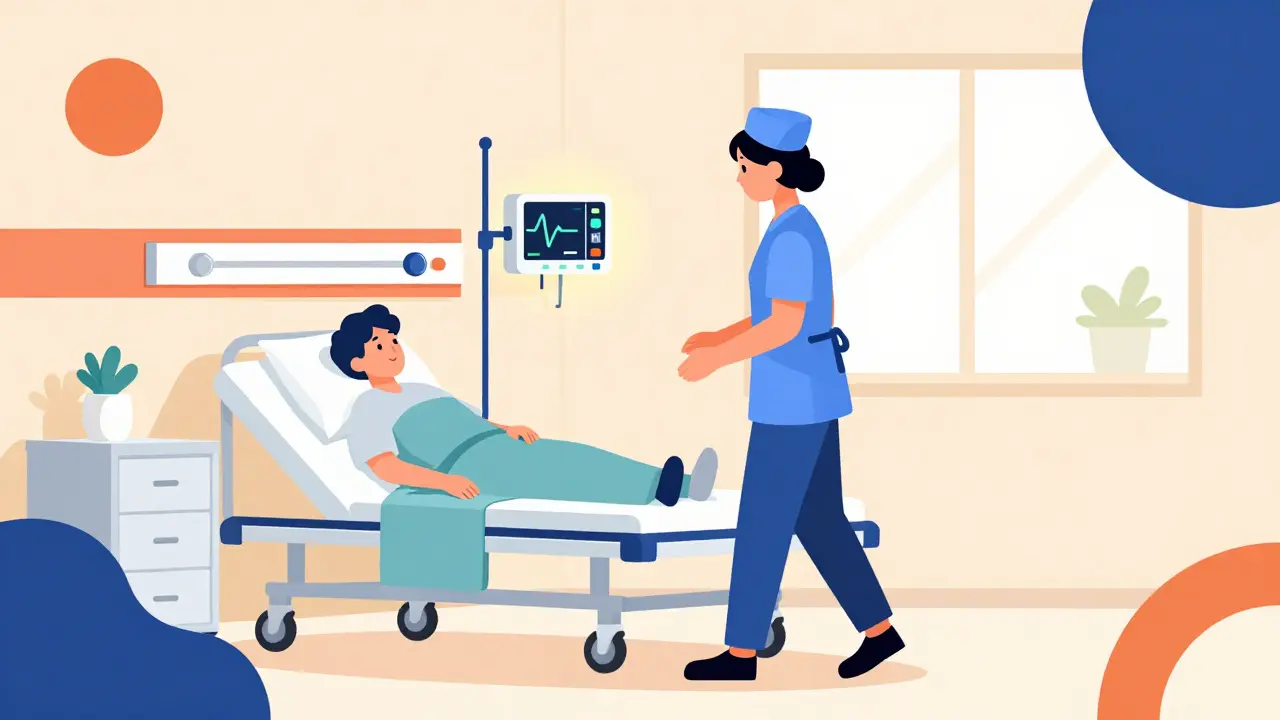
This starts within 24 to 48 hours after your heart event-even if you’re still in the ICU. The goal? Get you moving safely. You’ll do short walks, sit up in a chair, maybe even stand for a few minutes. Sessions last only 3-5 minutes at a time, with rest in between. Total time? Around 20 minutes a day, broken into pieces.
Your heart rate is monitored closely. You shouldn’t push past 120 bpm, or your resting rate plus 20 beats. On the Borg scale (a tool doctors use to measure how hard you feel you’re working), you should stay below a 13. That’s “light to moderate” effort-enough to feel a little winded, but not out of breath.
Don’t be fooled: this isn’t just about your heart. It’s about breaking the fear. Many patients are terrified to move. This phase teaches you that movement is safe. And it’s the first step toward independence.
Phase II: Outpatient Supervision
After you leave the hospital-usually 1 to 3 weeks later-you enter Phase II. This is where the real transformation happens.
You’ll attend 36 one-hour sessions over 12 weeks, typically three to five days a week. Each session includes:
- 5 minutes of warm-up (gentle walking or stretching)
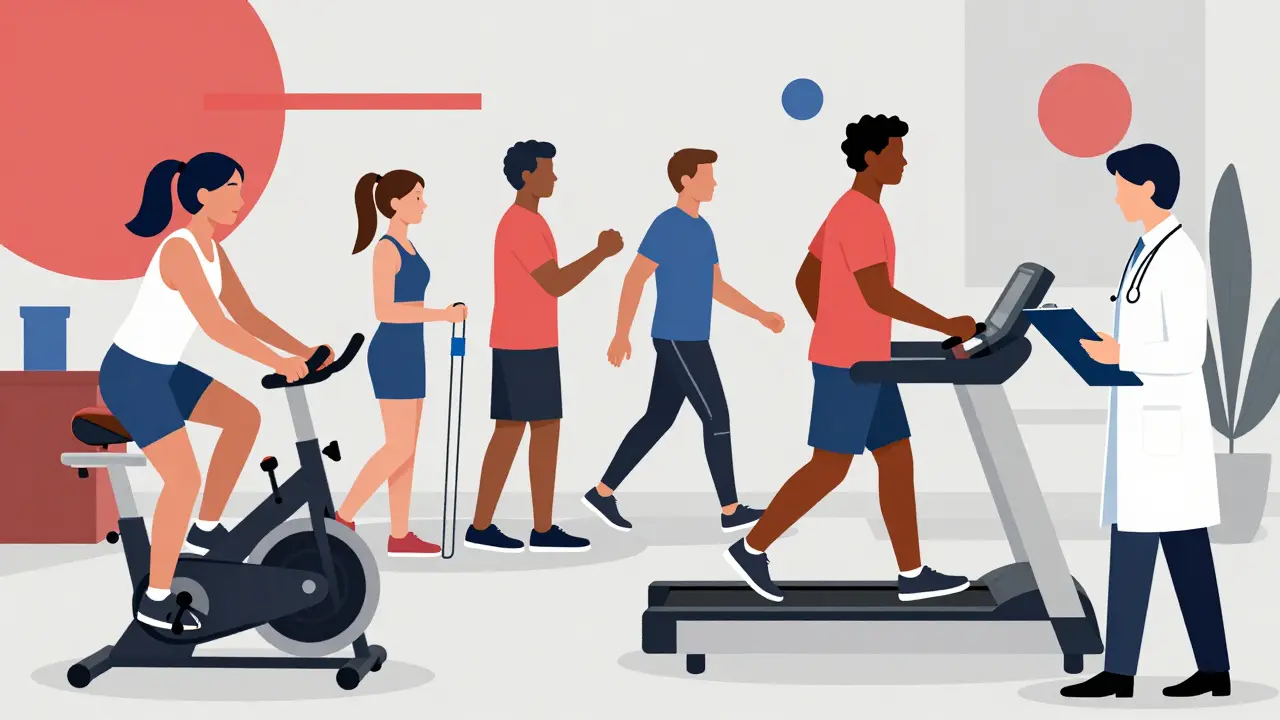
- 30-40 minutes of aerobic exercise (treadmill, bike, or arm ergometer)
- 20-30 minutes of strength training (light weights, resistance bands)
- 5 minutes of cool-down
Aerobic work is done at 40-59% of your heart rate reserve-enough to make you puff a little but still able to talk. That’s about a 12-13 on the Borg scale. Over time, you’ll work up to 60-85% of your predicted max heart rate.
Strength training? You’ll do 8-10 exercises targeting your arms, legs, chest, and back. Use weights you can lift 10-15 times without straining. No holding your breath. No sudden pushes. Breathing normally keeps your blood pressure steady.
By the end of this phase, most people see a 15% increase in oxygen uptake, a 40% jump in exercise capacity, and can walk 10% farther in six minutes. These aren’t small wins. They’re life-changing.
Phase III: Lifelong Maintenance
This is where you take over. Phase III isn’t a program you finish-it’s a habit you build.
The goal? 150 minutes of moderate exercise each week. That’s 30 minutes, five days a week. You’ll track your own heart rate, use a pedometer or fitness watch, and keep a log. You might join a community walking group, take up swimming, or ride a stationary bike while watching TV.
Strength training should still happen two to three times a week. Keep it light. Focus on form. Don’t rush. Your muscles will get stronger. Your heart will get more efficient.
And yes-you still need check-ins. Most programs offer monthly follow-ups with a nurse or exercise physiologist. These aren’t just for progress reports. They’re for motivation, troubleshooting, and catching problems early.
Who Should Do It?
Cardiac rehab isn’t just for people who’ve had a heart attack. It’s recommended if you’ve had:
- Coronary artery bypass surgery
- Angioplasty or stent placement
- Heart valve repair or replacement
- Heart or lung transplant
- Stable angina
- Chronic heart failure
Even if you’ve been told you have blocked arteries that cause pain when you walk, or you have a cardiomyopathy, rehab can help. It’s not just for the young or the fit. It works for older adults, people with diabetes, and those with multiple health conditions.
There are only a few reasons not to start. If you have unstable angina, uncontrolled arrhythmias, acute heart failure, severe aortic stenosis, or an active heart infection, rehab is delayed until you’re stable. But once you are, it’s one of the safest things you can do.
Why So Few People Do It
Here’s the hard truth: cardiac rehab saves lives. But most people don’t get referred. Only 69% of eligible patients even get a doctor’s recommendation. Why?
- Doctors assume patients will “know” to ask
- Patients think it’s too expensive or time-consuming
- Rural areas have no nearby centers
- People fear it’s too hard-or too risky
But here’s what you need to know: cardiac rehab is safer than driving to the grocery store. The complication rate? One serious event per 100,000 hours of exercise. That’s lower than the risk of falling at home.
And cost? Medicare covers 36 sessions. Most private insurers cover it too. You pay 20% coinsurance-same as most doctor visits.
Transportation? Many programs now offer telehealth. You can do sessions from home with remote monitoring. A 2022 study found remote rehab improved fitness just as much as in-person programs.
What You’ll Learn Beyond Exercise
Cardiac rehab isn’t just about moving your body. It’s about changing your life.
You’ll get:
- Nutrition coaching: How to eat for your heart-less salt, more veggies, smart fats. No fad diets. Just real food that lowers cholesterol and blood pressure.
- Medication education: Why you take each pill. What side effects to watch for. How to avoid dangerous interactions.
- Stress and mental health support: One in three cardiac patients gets depressed after an event. Rehab includes counseling. You’re not weak for feeling this way. You’re human.
- Smoking cessation: If you smoke, rehab gives you tools to quit. Quitting cuts your risk of another heart event by half.
- Goal setting: Walk to the mailbox. Play with your grandkids. Return to work. Rehab helps you pick your own goals-and reach them.
These aren’t afterthoughts. They’re core parts of the program. And they’re what make the difference between surviving-and thriving.
Real Stories, Real Results
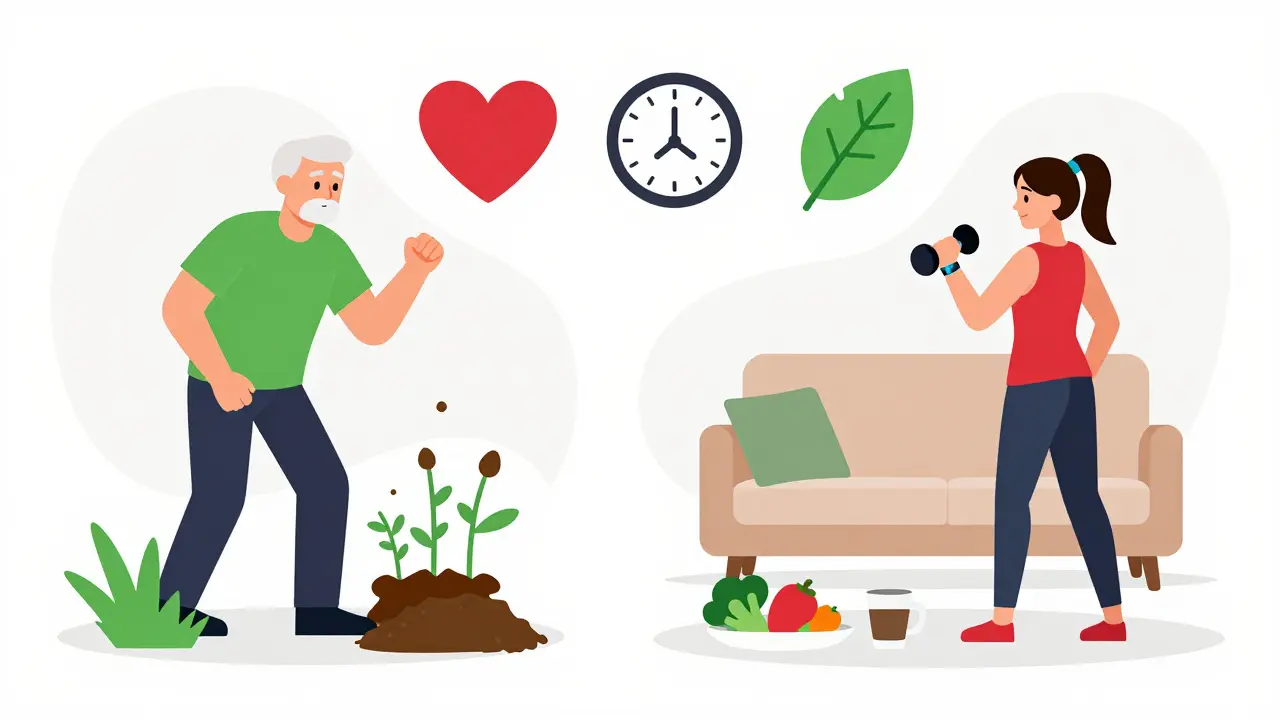
One 68-year-old man had a heart attack after his wife passed away. He stopped eating, stopped moving, and felt hopeless. His doctor referred him to rehab. He started walking 10 minutes a day. By week 8, he was walking 30. By week 12, he was gardening again. He told his nurse, “I didn’t realize I could feel this good.”
A 52-year-old woman had bypass surgery. She was terrified to lift anything heavier than a coffee cup. In rehab, she learned to use light bands. She went from lifting 2 pounds to 10. Now, she carries her groceries without help.
These aren’t miracles. They’re science. And they’re repeatable.
What to Do Next
If you or someone you love had a heart attack or heart surgery:
- Ask your doctor for a referral to cardiac rehab. Don’t wait.
- If they say “you don’t need it,” ask why-and get a second opinion.
- Check if your insurance covers it. Medicare does. Most private plans do too.
- If there’s no center nearby, ask about telehealth options.
- Start small. Even 5 minutes of walking counts.
Don’t let fear or confusion keep you from this life-saving step. Cardiac rehab isn’t a last resort. It’s the smartest, safest, most effective way to rebuild your heart-and your life.
Is cardiac rehab only for older people?
No. Cardiac rehab works for people of all ages. Younger patients who’ve had heart attacks, surgeries, or congenital heart conditions benefit just as much. The exercises are adjusted for fitness level, not age. Even teens and 30-somethings recover faster with structured rehab.
Can I do cardiac rehab at home?
Yes-especially in Phase III. Many programs now offer telehealth options where you exercise at home with remote monitoring. Your heart rate, blood pressure, and symptoms are tracked via wearable devices. Your rehab team adjusts your plan in real time. Studies show home-based rehab is just as effective as center-based programs.
How long does cardiac rehab take?
Phase II-the core supervised phase-lasts 12 weeks with 36 sessions. Phase I starts in the hospital and lasts a few days. Phase III is lifelong. You don’t “finish” rehab-you transition into a healthy routine that lasts for the rest of your life.
Will cardiac rehab help me live longer?
Yes. Research shows people who complete cardiac rehab reduce their risk of dying from heart disease by 20-30%. That’s as strong as many heart medications. It also cuts hospital readmissions by 18%. The more sessions you complete, the greater the benefit.
What if I’m too tired to start?
Fatigue is normal after a heart event. That’s why Phase I starts with 3-5 minutes of walking. You don’t need to feel strong to begin-you just need to start. Progress comes slowly. Even tiny movements build strength. Your rehab team will adjust the pace to your energy level. Rest is part of the plan. Pushing too hard isn’t.
Does cardiac rehab help with anxiety or depression?
Yes. Up to 40% of heart patients experience depression or anxiety after an event. Cardiac rehab includes mental health counseling as part of the standard program. Talking to a therapist, joining a support group, or learning breathing techniques can be as important as the exercise. Your emotional recovery matters as much as your physical one.
Can I skip rehab if I’m already active?
No. Even if you’re fit, your heart has been through a major event. Rehab teaches you how to safely return to activity without overdoing it. It also screens for hidden risks-like uncontrolled blood pressure or dangerous rhythms-that you might not notice on your own. Skipping rehab increases your chance of another cardiac event.
Shanahan Crowell
January 2, 2026 AT 03:02This is the kind of post that makes me want to hug my doctor-and then yell at them for not pushing rehab harder! I had a stent last year and was told to "take it easy"-turns out, "easy" was the worst advice I got. Cardiac rehab didn’t just save my life, it gave me back my weekends. I’m hiking with my grandkids now, and I didn’t think I’d ever climb a hill again. If you’re on the fence? Just show up. Your future self will thank you.
Kerry Howarth
January 2, 2026 AT 22:0736 sessions over 12 weeks. That’s the standard. Not optional. Not "nice to have." It’s evidence-based, medically necessary care. Skip it, and you’re gambling with your next cardiac event. The data is clear. The cost is minimal. The risk of skipping? Unacceptable.
Tiffany Channell
January 3, 2026 AT 20:37Let’s be real-this whole rehab thing is a corporate scam disguised as care. Hospitals make money off it. Insurance companies push it because it’s cheaper than treating another heart attack. And don’t get me started on the "lifelong maintenance" lie. You think you’re building a habit? You’re being trained to become a permanent patient. The real cure? Stop eating processed food. Stop being sedentary. Rehab is just a Band-Aid on a bullet wound.
Joy F
January 5, 2026 AT 14:18Cardiac rehab isn’t just about exercise-it’s about ontological recalibration. You’ve been violently dislocated from your embodied self by the trauma of cardiac arrest. The treadmill isn’t a machine-it’s a metaphysical bridge. The resistance bands? They’re the threads stitching your identity back together. And the mental health component? That’s not therapy-it’s the soul’s re-entry protocol after the existential shockwave of nearly dying. We’ve reduced healing to a protocol because we’ve lost the language of sacred recovery. Rehab is the last cathedral left standing in the hospital industrial complex. Walk through its doors. Not because it’s prescribed-but because you’re ready to be reborn.
Haley Parizo
January 6, 2026 AT 18:40They say only 37% of Medicare patients enroll? That’s not a failure of awareness-it’s a failure of American healthcare. We treat hearts like engines to be fixed, not lives to be restored. You don’t need more pamphlets. You need universal access. You need rural centers funded like schools. You need doctors who don’t assume patients know to ask. This isn’t a health issue-it’s a moral crisis. And if you’re not screaming about this, you’re complicit.
Ian Detrick
January 7, 2026 AT 21:01I’m a 42-year-old who had a heart attack after working 80-hour weeks. I thought I was invincible. Rehab taught me I was just exhausted. The exercise was good-but the nutrition class? That changed everything. I stopped drinking soda. I started cooking. I lost 30 pounds. And I didn’t even realize how much anxiety I was carrying until the counselor asked me to describe my fear in one word. I said "irreversible." She didn’t fix me. She just let me say it out loud. That’s what rehab does-it gives you space to breathe again.
Angela Fisher
January 9, 2026 AT 13:04Okay, but what if the rehab center is secretly monitoring your heart rate to sell data to Big Pharma? I read this one article-probably fake, but still-where they said wearable trackers in rehab programs feed into algorithms that predict when you’ll have another event so they can upsell you more meds. And the "telehealth" option? That’s just a way to make you pay for remote surveillance. I know someone who went to rehab and came back with a new pacemaker they didn’t need. Coincidence? I don’t think so. They want you dependent. They want you afraid. And this whole post? It’s part of the programming. Don’t trust the system. Trust your gut. If you feel tired, rest. Not because the program says so-but because you know your body better than any monitor.
Neela Sharma
January 11, 2026 AT 05:30In India, we don’t have rehab centers everywhere-but we have chai, family, and walking under neem trees. My uncle had bypass-he didn’t go to a clinic. He walked to the temple every morning. His daughter cooked dal and spinach. His grandson held his hand when he got winded. He lived ten more years. Rehab is not a place. It is a rhythm. A quiet dance of care. You don’t need a machine to heal. You need someone who remembers your name when you’re too tired to speak.