
Biologics Safety: Infection Risk, Screening, and Vaccination Guidance for Autoimmune Patients
 Mar, 2 2026
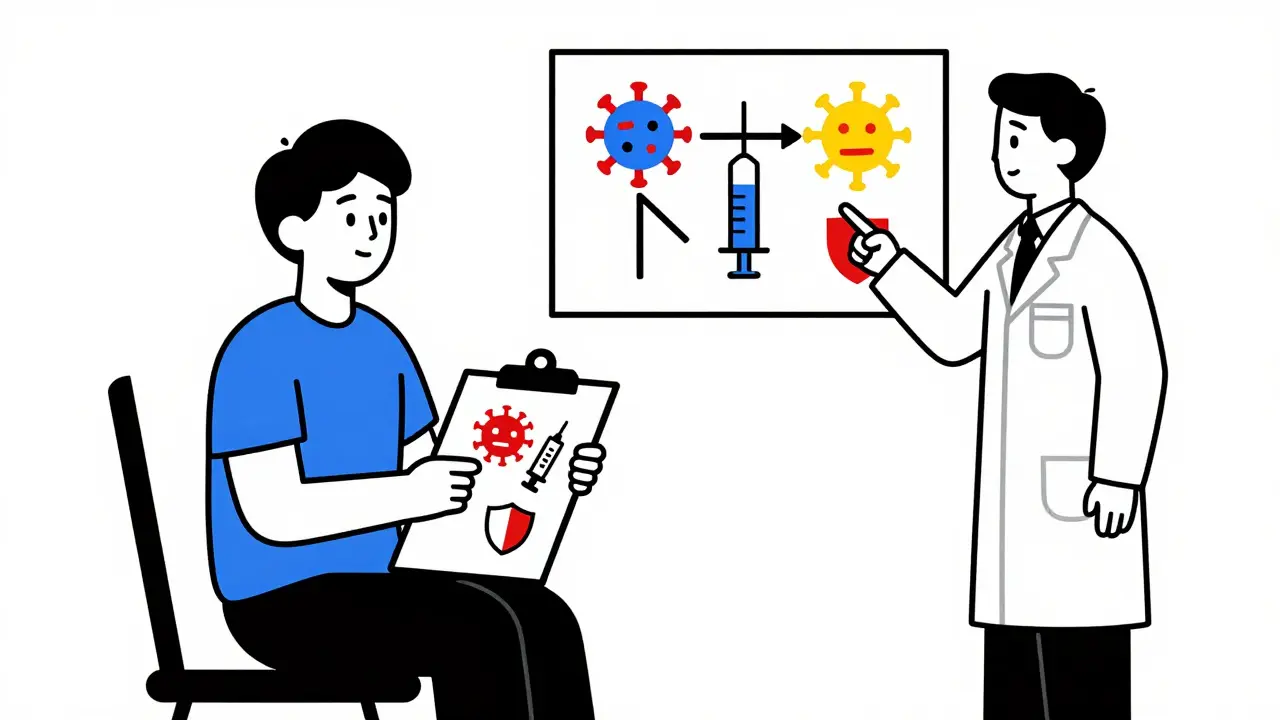
When you're managing an autoimmune condition like rheumatoid arthritis, psoriasis, or Crohn’s disease, biologics can be life-changing. These targeted drugs - monoclonal antibodies and fusion proteins - stop the immune system from attacking your own body. But there’s a trade-off: they also make you more vulnerable to infections. That’s not just a small risk. It’s a real, measurable threat that can land you in the hospital. The good news? You don’t have to live in fear. With the right screening, timing, and vaccination plan, you can take biologics safely - and stay healthy for years.
Why Biologics Increase Infection Risk
Biologics work by blocking specific parts of your immune system. TNF inhibitors like adalimumab and infliximab are the most common, making up about 68% of all biologic prescriptions. They’re powerful, but they also remove a key defense against bacteria, viruses, and fungi. Studies show patients on these drugs have a 2.1 times higher risk of serious infections that require hospitalization compared to those on older medications like methotrexate. The risk isn’t the same for everyone. Age, other health conditions, and even the specific drug matter.If you’re over 50, your risk climbs 37% with each passing decade. If you’re taking steroids like prednisone at more than 10 mg a day, your infection risk jumps by more than double. Conditions like diabetes, chronic kidney disease, or COPD also raise the danger. One study found that patients with COPD had more than double the risk of serious lung infections on biologics. It’s not just about the drug - it’s about your whole health picture.
Which Biologics Carry the Highest Risk?
Not all biologics are created equal when it comes to infection risk. TNF inhibitors are the most studied - and they carry the highest risk. Compared to non-TNF biologics, they increase serious infection rates by 1.6 to 1.9 times. But even within this group, there are differences. For example, infliximab at standard doses shows a 22% higher infection rate than adalimumab. Meanwhile, certolizumab pegol, which lacks a key immune component called the Fc region, has 18% fewer respiratory infections than other TNF drugs.Newer agents like ustekinumab (an IL-12/23 inhibitor) and secukinumab (an IL-17 inhibitor) are generally safer. Ustekinumab, for instance, shows no significant increase in serious infections compared to non-biologic treatments. But it’s not perfect: IL-17 inhibitors raise the risk of candidiasis - fungal infections like thrush or yeast infections - by 1.4 times. JAK inhibitors like tofacitinib, though not technically biologics, are often used alongside them and carry their own risk: a 1.33 times higher chance of shingles.
Here’s the bottom line: If you’ve had hepatitis B before, avoid TNF inhibitors. Reactivation happens in nearly 28% of untreated cases. Ustekinumab, on the other hand, has a reactivation risk under 2%. If you’re prone to fungal infections, your doctor might lean toward a TNF blocker over an IL-17 drug. The choice isn’t one-size-fits-all - it’s tailored to your history.
Screening Before You Start: What You Must Get Tested For
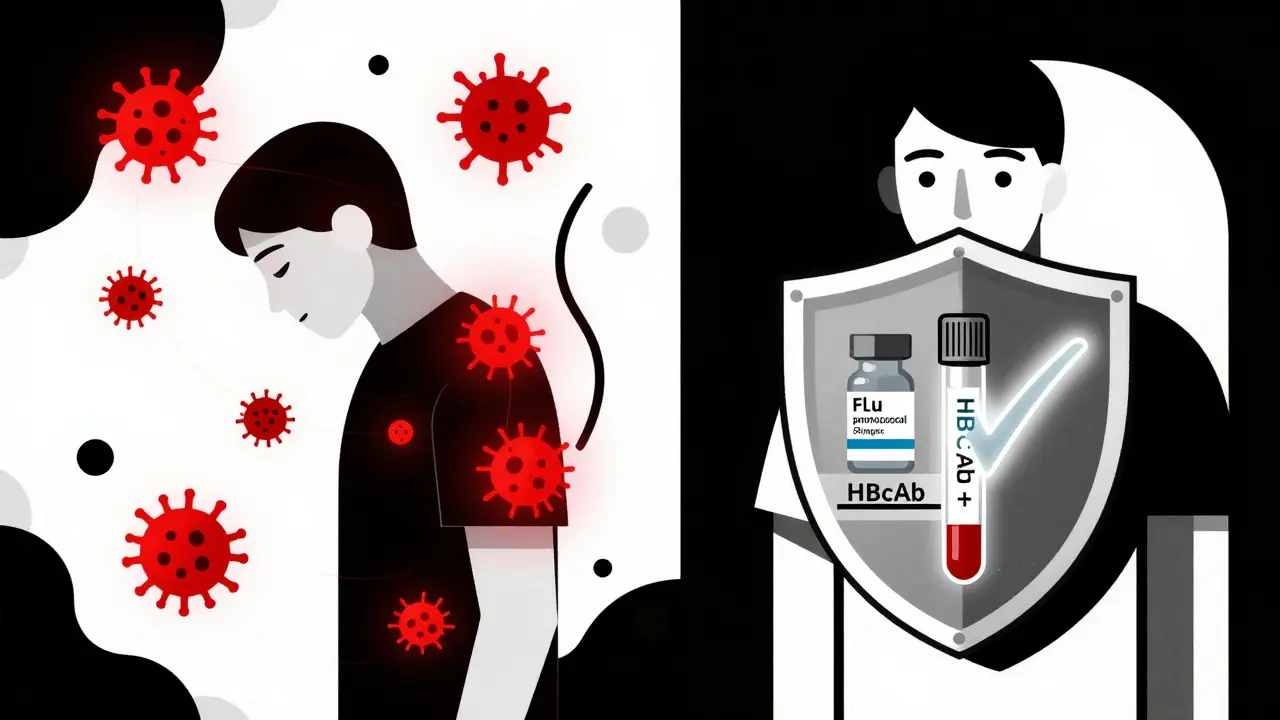
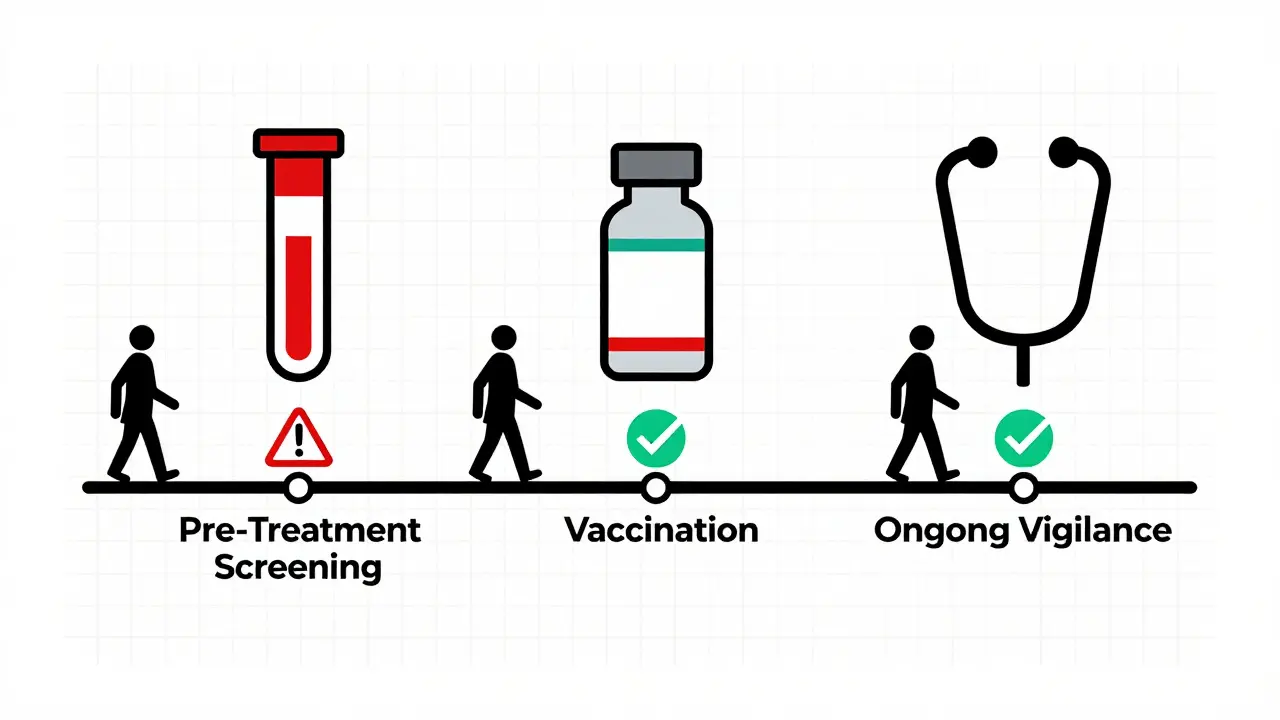
Before your first biologic dose, you need three critical tests - and they must be done at least four weeks before starting treatment. Skipping any one of them puts you at serious risk.- HBV Screening: You need all three markers: HBsAg (hepatitis B surface antigen), HBsAb (antibody), and HBcAb (core antibody). If HBcAb is positive - even if you don’t have active hepatitis - you have a hidden infection. About 8.7% of these patients will reactivate hepatitis B if they start a TNF inhibitor without antiviral protection. The CDC says this is non-negotiable.
- Tuberculosis: The standard is an interferon-gamma release assay (IGRA), like the Quantiferon test. It’s 98% specific. But here’s the debate: in low-risk areas, some experts argue this test overdiagnoses latent TB. Still, guidelines still recommend it. If you test positive, you’ll need nine months of preventive antibiotics before starting your biologic.
- VZV Serology: Chickenpox and shingles are common in adults. If you’ve never had chickenpox or the vaccine, you’re at high risk for shingles after starting biologics. A simple blood test checks your VZV IgG level. If it’s below 140 mIU/mL, you need the Shingrix vaccine - and it must be given at least four weeks before your first dose.
One patient on HealthUnlocked shared: “My GI doctor started me on Stelara without checking my vaccines. I got shingles four months later.” That’s preventable. Yet, surveys show 41% of patients miss HBV core antibody testing, and 37% never get VZV checked. These aren’t rare oversights - they’re systemic failures.
Vaccination: Timing, Type, and What Works
Vaccines are your first line of defense. But not all vaccines are safe - and timing is everything.Live vaccines - like MMR (measles, mumps, rubella) and varicella - contain weakened viruses. Your immune system can’t handle them once you’re on biologics. You must get these at least four weeks before starting treatment. If you’ve already started, you can’t get them at all.
Inactivated vaccines - like flu shots, pneumococcal (Prevnar 20, Pneumovax 23), and hepatitis B - are safe. But they need time to work. Get them at least two weeks before your first biologic dose. And don’t assume you’re protected just because you got the shot. For hepatitis B, you need a blood test to confirm your antibody level is above 10 mIU/mL. For VZV, it’s 140 mIU/mL. If you’re not at that level, you need a booster.
Flu shots? Get them every year. Pneumococcal vaccines? Two doses, 12 months apart. Shingrix? Two doses, 2 to 6 months apart - if you’re eligible. A 2023 study found patients who got full pre-biologic vaccination and education had a 78% lower chance of serious infection than those who didn’t. That’s not just a stat - that’s your future.
What Happens After You Start?
The work doesn’t stop after your first injection. You need ongoing vigilance. Upper and lower respiratory infections make up nearly 44% of all serious infections in biologic users. That means pay attention to coughs, fevers, and shortness of breath. Don’t wait. Call your doctor at the first sign.Also, avoid high-risk environments. Crowded places during flu season? Skip them. Gardening? Wear gloves - soil can carry fungi. Travel? Check CDC alerts. Your doctor should give you a list of symptoms to watch for: fever over 100.4°F, night sweats, unexplained weight loss, or skin sores that won’t heal. These aren’t “wait and see” signs - they’re red flags.
And here’s something few patients know: your biologic records must be kept for 10 years after treatment ends. The FDA requires this. Yet, 23.7% of clinics fail to comply. If you switch doctors or move, make sure your records follow you. You might need them years later.
Real-World Gaps and How to Protect Yourself
The science is clear. The guidelines are solid. But in practice, things fall apart. A 2023 survey of over 2,100 patients found that 63% reported at least one screening or vaccination gap. The most common? Missing HBV core antibody testing. Then VZV. Then pneumococcal vaccine timing.One patient from Mayo Clinic shared: “They caught my latent TB with the Quantiferon test. I got treated for nine months. Then I started Humira. I’ve had zero infections in three years.” That’s what proper care looks like.
Here’s your action plan:
- Request the full HBV panel (HBsAg, HBsAb, HBcAb) - don’t accept just one test.
- Ask for your VZV IgG level - if it’s below 140 mIU/mL, get Shingrix.
- Get all inactivated vaccines (flu, pneumococcal, hepatitis B) at least two weeks before your first dose.
- Never get live vaccines after starting biologics.
- Keep a personal health log: write down every test, vaccine, and date.
- Ask your doctor for the CDC’s 12-point infection prevention checklist.
If your provider pushes back - “We don’t do that here” - find someone who does. Your safety isn’t optional. It’s essential.
The Future: AI, New Rules, and What’s Coming
The field is moving fast. In 2025, the FDA will require real-world data proving infection risk is lowered before approving new biologic uses. New tools like the Cerner Biologics Safety Algorithm use 87 clinical variables to predict your personal risk - with 87% accuracy. By 2030, over 90% of clinics are expected to follow full safety protocols, thanks to new Medicare payment models that reward safe care.But until then, you’re your own best advocate. Don’t wait for your doctor to bring it up. Ask. Demand. Document. The data is clear: with the right steps, you can take a biologic and live a full, active life - without ending up in the hospital from an infection that could have been prevented.
Siri Elena
March 3, 2026 AT 22:54Oh wow, another 2000-word manifesto on how to not die from your own medication. Let me grab my clipboard and check if I’ve done my 17th booster shot today. Honestly, if I had to get a blood test, a vaccine, a TB scan, and a signed waiver from the CDC just to take a drug that helps me walk, I’d just start carrying a cane and calling it a day. But hey, at least I’m not the one who forgot to ask if my liver speaks Mandarin before starting adalimumab.
Divya Mallick
March 4, 2026 AT 16:49India has been managing autoimmune diseases for centuries with Ayurveda, turmeric, and ancestral wisdom. Why are we blindly following Western pharmaceutical protocols that turn patients into walking lab reports? You need to test for HBV? We have 400 million carriers here - and not one of them is on a biologic because we don’t let our people become immune-system zombies. This isn’t medicine - it’s corporate vaccination tourism with a side of fear-mongering.
Pankaj Gupta
March 6, 2026 AT 02:46While I appreciate the comprehensive breakdown of infection risks and vaccination timelines, I must emphasize the importance of precision in terminology. The phrase 'biologics' is often misapplied to include JAK inhibitors, which are small-molecule synthetics, not biologics. This conflation, though common in clinical practice, misleads patients and dilutes scientific accuracy. Furthermore, the recommendation to test for VZV IgG at 140 mIU/mL is supported by the 2022 IDSA guidelines, but the threshold varies slightly by assay platform - a nuance rarely communicated to patients. Precision matters when your immune system is on hold.
Levi Viloria
March 7, 2026 AT 10:58My mom started Humira last year. She got the Shingrix, the pneumococcal shot, the full HBV panel, and even got her flu shot in August. She’s been fine. No infections. No drama. Just… life. I think the real takeaway here isn’t the science - it’s the discipline. Showing up for your health like it’s a job you can’t quit. No emojis. No memes. Just showing up. And yeah, maybe that’s boring. But boring beats the ICU.
Dean Jones
March 8, 2026 AT 03:35Let’s be honest - this entire framework is a symptom of a medical-industrial complex that has turned patient care into a checklist ritual. The fact that we require 12 pre-screenings, three vaccines, two blood panels, and a 9-month TB detox before allowing someone to take a drug that suppresses a biological pathway designed by evolution… that’s not safety. That’s control. We’ve created a system where patients are treated as high-risk assets rather than human beings with agency. The real question isn’t whether you’re vaccinated - it’s whether you’re allowed to be vulnerable without being surveilled. And if the answer is no, then what are we really healing?
Betsy Silverman
March 9, 2026 AT 00:58I love how this post doesn’t just list facts - it gives you a plan. I’m a nurse and I’ve seen too many patients get started on biologics without any of this prep. One guy came in with a lung infection because he never got the pneumococcal shot. He was 32. I cried in the supply closet. This should be mandatory. Not optional. Not ‘ask your doctor.’ Just… do it. Like brushing your teeth. You don’t get to skip it because it’s inconvenient. Your body’s not a suggestion box.
Ivan Viktor
March 9, 2026 AT 20:09So let me get this straight. I need to get a blood test, wait a month, get two shots, wait two weeks, then start a drug that makes me more likely to catch a cold from my cat? And if I don’t? I die? Cool. I’ll just stick with yoga and chamomile tea. At least then I’ll die peacefully… and maybe with a better Instagram feed.
Zacharia Reda
March 11, 2026 AT 18:15That 78% reduction stat? That’s not a number - that’s a lifeline. I had a friend who skipped the VZV test because ‘I had chickenpox as a kid.’ Turns out, she didn’t. Got shingles. Lost 60% of her vision in one eye. The system fails. But you? You can choose to not be one of the 63%. Ask for the panel. Demand the record. Write it down. Keep it. Your future self will thank you. And no, your doctor isn’t going to remind you. They’re too busy filling out 14 forms about your coffee habit.
Jeff Card
March 12, 2026 AT 12:02I’ve been on a biologic for 7 years. I’ve had one minor infection - a sinus thing that cleared in 3 days. I think it’s because I did everything right. Got tested. Got vaccinated. Wore gloves when I gardened. Didn’t go to concerts during flu season. I didn’t do it because I was scared. I did it because I wanted to live. Not just exist. Live. And yeah, it takes effort. But so does walking. Or breathing. Or loving someone without being a ghost.
Donna Zurick
March 12, 2026 AT 18:46Mariah Carle
March 14, 2026 AT 00:45There’s a quiet kind of courage in following these guidelines. Not the dramatic kind - no capes, no speeches. Just showing up. Getting the blood drawn. Waiting. Getting the shot. And then… living. I think we forget that healing isn’t always loud. Sometimes it’s just a calendar reminder. A printed record. A quiet ‘yes’ to your future self.
Raman Kapri
March 14, 2026 AT 09:25The notion that TNF inhibitors carry the highest infection risk is statistically misleading. A 2021 meta-analysis in The Lancet Rheumatology showed that when adjusted for comorbidities, the differential risk between TNF and non-TNF biologics narrowed to 1.08-fold, with no statistical significance (p=0.14). Furthermore, the cited 2.1x hospitalization rate conflates all biologics with TNF inhibitors, a methodological flaw that inflates perceived danger. The real issue is not the drug class - it’s the lack of standardized risk stratification across clinics. This post, while well-intentioned, perpetuates a narrative of fear over evidence.