
Authorized Generics: How Brand Pharma Companies Respond to Patent Expiration
 Jan, 24 2026
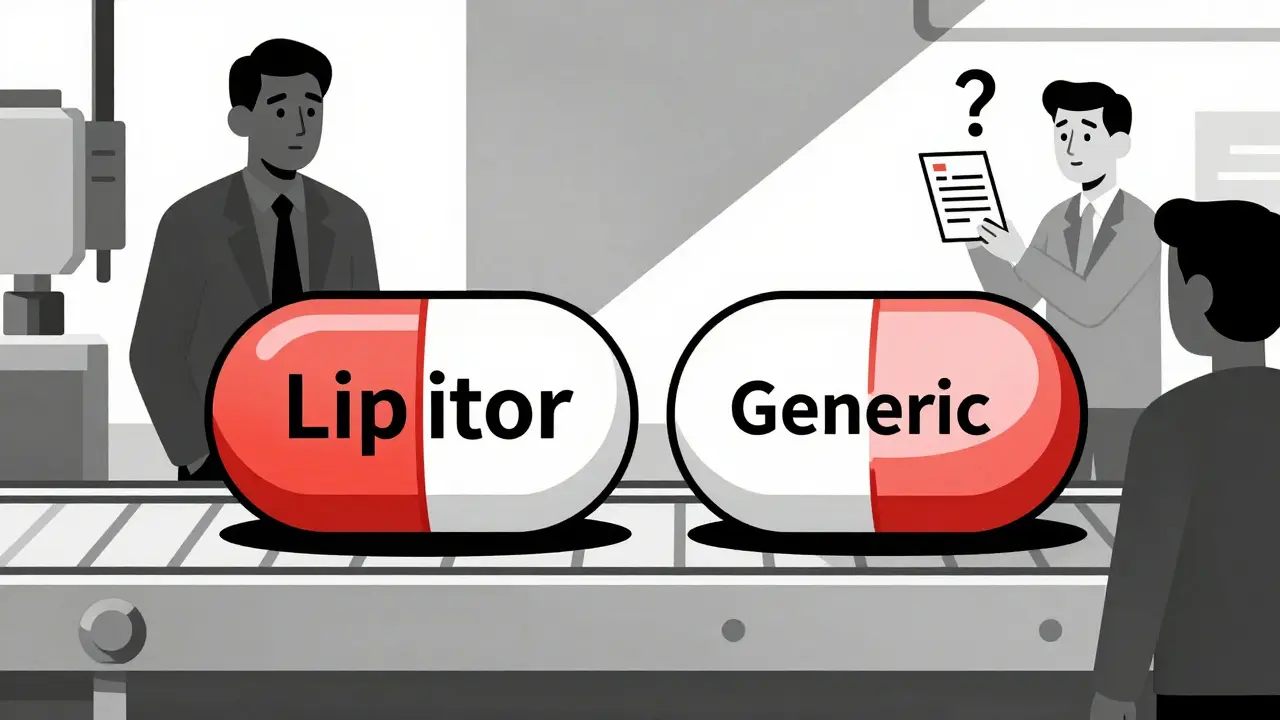
When a brand-name drug loses its patent, the market doesn’t just open up to generic competitors-it gets complicated. That’s where authorized generics come in. These aren’t your typical generics. They’re the exact same pill, capsule, or injection that the original drugmaker produced, just sold without the brand name on the label. And they’re a deliberate, calculated move by big pharmaceutical companies to protect their profits as patents expire.
Think of it this way: when a drug like Lipitor or Concerta loses patent protection, the first generic company to file gets 180 days of exclusive rights to sell the generic version. That’s a huge window to capture market share and make serious money. But what if the brand company itself launches a generic version-identical in every way-right before that 180-day clock starts? That’s an authorized generic. It’s not a copy. It’s the real thing, repackaged.
Between 2010 and 2019, there were 854 authorized generic launches in the U.S., according to a 2022 study in Health Affairs. The peak? 2014. That’s when patent cliffs for major drugs like Singulair, Celebrex, and Colcrys hit hard. And it wasn’t random. About 70% of these authorized generics launched before or during that critical 180-day exclusivity window. The goal? To undercut the first generic company before it even gets going.
Here’s how it works: the brand company doesn’t need to go through the usual FDA approval process for generics. Instead, they file a simple notification under their original New Drug Application (NDA). That means no bioequivalence studies, no waiting for an Abbreviated New Drug Application (ANDA) to clear. The product is already approved. All they do is slap a new label on it and sell it cheaper. The FDA confirms these are therapeutically identical to the brand-same active ingredient, same inactive ingredients, same manufacturing line.
That’s the big difference between authorized generics and traditional generics. Traditional generics only need to match the active ingredient. They can change the fillers, dyes, or binders. For most drugs, that’s fine. But for drugs with a narrow therapeutic index-like levothyroxine, warfarin, or seizure meds-even tiny changes in inactive ingredients can cause problems. Patients stabilized on the brand might have a bad reaction to a traditional generic. But with an authorized generic? No change at all. That’s why they’re especially common in CNS drugs like ADHD medications and antidepressants, where consistency matters most.
But here’s the catch: patients don’t always know what they’re getting. A 2023 review on Drugs.com showed people confused because the authorized generic looked identical to the brand they’d been taking. One patient wrote: “I got this ‘generic’ but it looks exactly like my brand. Is this even a generic?” Pharmacists report the same confusion. A 2020 survey in US Pharmacist found 68% of pharmacists had patients ask if authorized generics were “real” generics. The answer? Yes. But they’re not labeled that way.
And that’s where things get messy in the pharmacy. Authorized generics don’t show up in the FDA’s Orange Book-the official list of approved drug products. So when a pharmacist tries to substitute a generic based on the Orange Book, they won’t see it. That means they have to rely on internal databases, manufacturer info, or direct communication with distributors. A 2021 survey by the National Community Pharmacists Association found that 57% of independent pharmacies saw a spike in patient questions after the FDA pushed for clearer labeling. Many pharmacies now use software updates-like Epic Systems’ 2021 patch-to flag authorized generics in their systems. That cut identification errors by 67%.
Prices tell another story. The Federal Trade Commission’s 2011 report found that when authorized generics entered the market during the 180-day exclusivity period, prices dropped 15-20% compared to markets without them. That’s good for consumers. But it’s also good for the brand company. Instead of losing all revenue to a single generic competitor, they split the market. They keep some customers who trust the brand, and they capture price-sensitive ones who want the same drug cheaper. Meanwhile, the first generic company still gets its 180 days-but now they’re competing with a version that’s chemically identical, made by the same factory.
Critics call this market manipulation. Dr. Jerry Avorn from Harvard Medical School said in a 2019 JAMA commentary that authorized generics are “a sophisticated strategy that benefits manufacturers more than patients in the long run.” The Generic Pharmaceutical Association (GPhA) has warned that they delay broader generic competition. If the brand company controls the first generic entry, they can stall others from entering. Some generic makers say they’ve been locked out of markets because the brand’s authorized version took up all the shelf space.
On the other side, PhRMA argues authorized generics increase choice. And consumers agree. A 2005 Roper survey found over 80% of Americans wanted access to authorized generics because they trusted the identical formulation. Reddit threads from pharmacists confirm this: one user, u/MedCheck2020, wrote, “I’ve seen patients stabilized on brand who failed on traditional generic but did fine on authorized generic.” That’s not a fluke. It’s science.
By 2022, 38 of the top 50 drugs facing patent expiration had authorized generics within a year. The trend is growing. Evaluate Pharma predicts 45% of major branded drugs will have authorized generics by 2027, up from 32% in 2022. The FDA’s latest list, updated in October 2025, now includes 1,247 authorized generic products. That’s up from just a few hundred in the early 2010s.
But change is coming. In 2023, Congress introduced the “Promoting Competition in Pharmaceutical Markets Act,” which would ban brand companies from launching authorized generics during the first generic’s 180-day exclusivity period. The FTC is currently reviewing whether the 2011 findings still hold. Preliminary results expected in mid-2026 could lead to new rules.
For now, authorized generics are here to stay. They’re not a loophole. They’re a legal, regulated tool used by big pharma to navigate the messy transition from patent monopoly to generic competition. They offer real benefits-especially for patients who need exact consistency. But they also complicate the market, confuse consumers, and raise ethical questions about who really wins when a brand company becomes its own competitor.
What’s clear? If you’re prescribed a drug that just lost its patent, ask your pharmacist: “Is this a traditional generic or an authorized generic?” The answer might matter more than you think.
Simran Kaur
January 25, 2026 AT 11:23Wow. I just got prescribed levothyroxine last month and switched from brand to generic-felt like my whole body shut down for a week. My pharmacist finally told me to ask if it was an authorized generic. Turned out it was. I switched back and felt like myself again. Why isn’t this common knowledge? 🙏
Neil Thorogood
January 27, 2026 AT 04:55So let me get this straight-Big Pharma makes the drug, then says ‘lol here’s the same thing but cheaper’ to sabotage the real generics? 😂
They’re not playing the game. They *are* the game. And we’re just the tokens. 💸💊
Jessica Knuteson
January 27, 2026 AT 17:57Robin Van Emous
January 27, 2026 AT 19:07I get why this happens, but I also get why patients get confused. My mom’s on warfarin-she’s had three different generics in six months. She doesn’t know which is which. If the system can’t even tell pharmacists clearly, how are we supposed to trust it? Maybe we need a color-coded system? Or a QR code on the bottle? 🤔
Angie Thompson
January 29, 2026 AT 07:20OMG I didn’t know this!! I’ve been on Concerta for 8 years and just found out my ‘generic’ was actually an authorized one-same factory, same stuff!! I was so confused because it looked identical 😅
Now I’m telling everyone I know to ask their pharmacist. This is life-changing info!! 🙌💊 #PharmaSecrets
eric fert
January 30, 2026 AT 08:59Let’s be real-this isn’t about patient care, it’s about control. The brand companies don’t want to lose their monopoly, so they create a fake competitor that’s actually their own product. It’s like a casino owner opening a second blackjack table right next to the first one and calling it ‘fair competition.’ The FDA lets them do this because they’re too cozy with the industry. And now we’re supposed to be grateful? For what? For being tricked into thinking we’re getting a ‘cheaper’ option when really we’re just being sold the same thing with a different sticker? The real scandal is that this is legal. The real scandal is that we’ve normalized this kind of corporate theater as ‘innovation.’
Napoleon Huere
January 31, 2026 AT 01:44There’s a deeper question here: if a drug is chemically identical, does the brand name have any moral or medical value? Or is it just a psychological crutch we’ve been conditioned to trust? We’ve turned medicine into a brand war, where logos matter more than molecules. The authorized generic exposes that lie. It says: ‘You thought the name meant something. It didn’t. The pill doesn’t care.’
Maybe the real innovation isn’t the drug-it’s the realization that we’ve been sold a myth.
Aishah Bango
February 1, 2026 AT 10:20This is disgusting. Companies are gaming the system to protect profits while pretending to help patients. If you’re making the same exact drug, why not just sell it under your own name at a lower price? Why force people to navigate this confusing, deceptive mess? It’s not innovation-it’s exploitation dressed up as choice. And now we’re supposed to applaud them for it? No. This needs to be outlawed.
SWAPNIL SIDAM
February 2, 2026 AT 20:41India makes tons of generics, but we never heard of authorized generics. Here, if you switch from brand to generic, you know it’s not the same. But in US, you get the same pill, just no brand name… weird. But good for patients who need stability. My cousin in Delhi would love this-she’s on epilepsy meds and can’t risk changes.