
Auditory Processing Disorder: Understanding Listening Challenges and Effective Support
 Dec, 5 2025
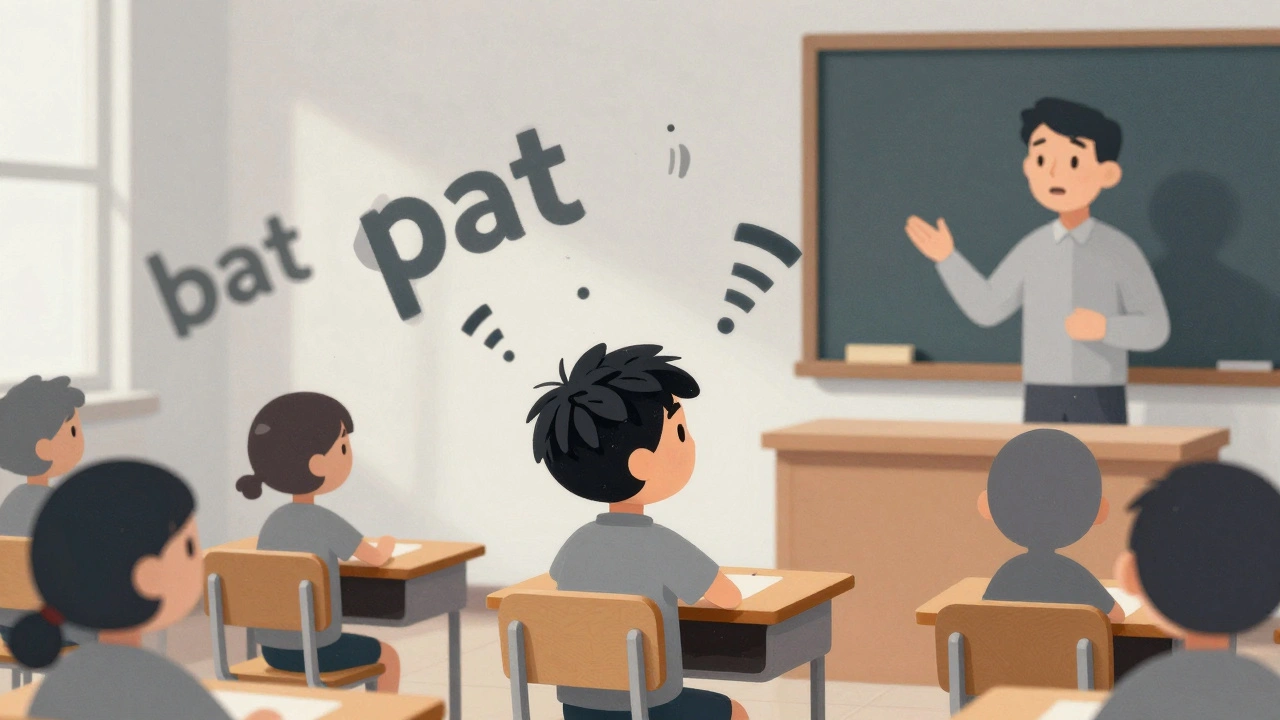
Imagine sitting in a busy classroom, listening to your teacher explain math problems. Everyone else nods along, but you’re stuck on the first sentence. The words sound muddled, like someone’s talking through static. You ask them to repeat it-again. By the third time, you’re embarrassed. Your classmates glance at you. You start avoiding group work. This isn’t laziness. It’s not inattention. It’s auditory processing disorder.
What Is Auditory Processing Disorder?
Auditory Processing Disorder, or APD, isn’t hearing loss. Your ears work fine. The problem is in your brain. When sound enters your ears, it should be turned into clear, usable information by your brain’s auditory cortex. With APD, that translation gets stuck. Sounds arrive, but your brain struggles to make sense of them-especially in noisy places, when speech is fast, or when multiple people are talking.
It’s not rare. About 3% to 5% of school-aged kids have it, according to Nemours KidsHealth. Adults get it too, though it often goes unnoticed until school demands rise. Kids start falling behind in reading and following directions. Adults struggle in meetings or crowded restaurants. The root cause? A neurological disconnect between the ear and the brain’s sound-processing centers. It’s not a learning disability, but it often looks like one.
How APD Shows Up in Daily Life
People with APD don’t hear less-they process differently. Here’s what that looks like in real life:
- They miss small differences in words: "bat" vs. "pat," "then" vs. "than."
- They can’t follow conversations in cafeterias, classrooms, or family dinners.
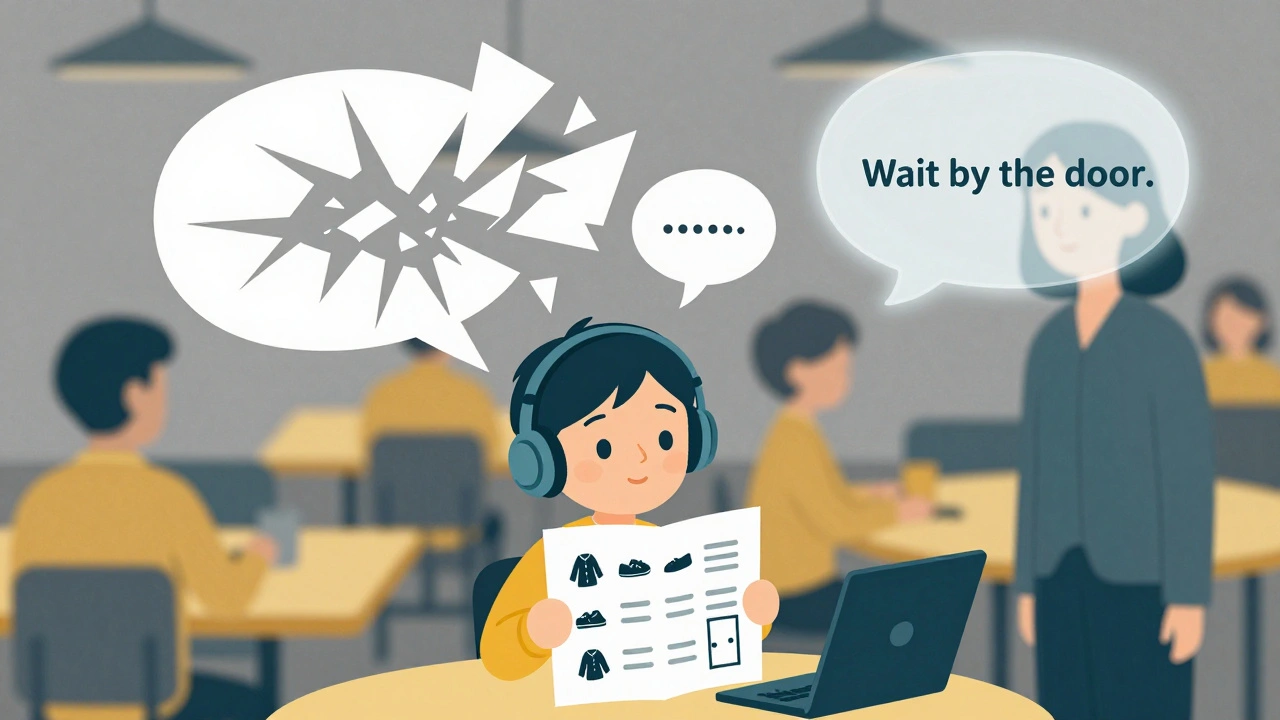
- They forget multi-step instructions like, "Grab your coat, put on your shoes, and wait by the door."
- They need things repeated constantly-even when the speaker isn’t shouting.
- They mishear names, dates, or homework assignments, leading to frustration and mistakes.
One parent shared that her son thought his teacher said "write a paragraph" when it was actually "cite a paragraph." He lost points because his brain heard the wrong sound. That’s not carelessness-it’s a processing glitch.
Over 78% of children with APD struggle specifically with understanding speech in background noise, according to the NHS. That’s why they seem to zone out in group settings. They’re not ignoring you. They’re overwhelmed.
APD vs. ADHD, Dyslexia, and Hearing Loss
APD gets misdiagnosed a lot. Why? Because its symptoms look like other conditions.
ADHD? About 30% to 40% of kids with APD also show attention problems. But here’s the difference: a child with ADHD might tune out because their brain won’t focus. A child with APD tunes out because the sound is too scrambled to focus on. One is a focus issue. The other is a decoding issue.
Dyslexia? About 25% to 35% of kids with APD also have trouble reading. But dyslexia is about connecting letters to sounds. APD is about hearing the sounds clearly in the first place. You can’t map letters to sounds if the sounds are blurry.
Hearing loss? Standard hearing tests show normal results for APD. The ears pick up the sound perfectly. It’s the brain’s interpretation that’s faulty. That’s why many kids pass school hearing screenings but still struggle to learn.
And here’s the kicker: 45% of kids referred for APD testing actually have ADHD or language disorders instead. That’s why diagnosis isn’t simple. It takes more than a quick check.
How APD Is Diagnosed
You can’t diagnose APD with a regular ear exam. You need a certified audiologist who specializes in central auditory processing.
Testing usually takes two to three sessions and includes:
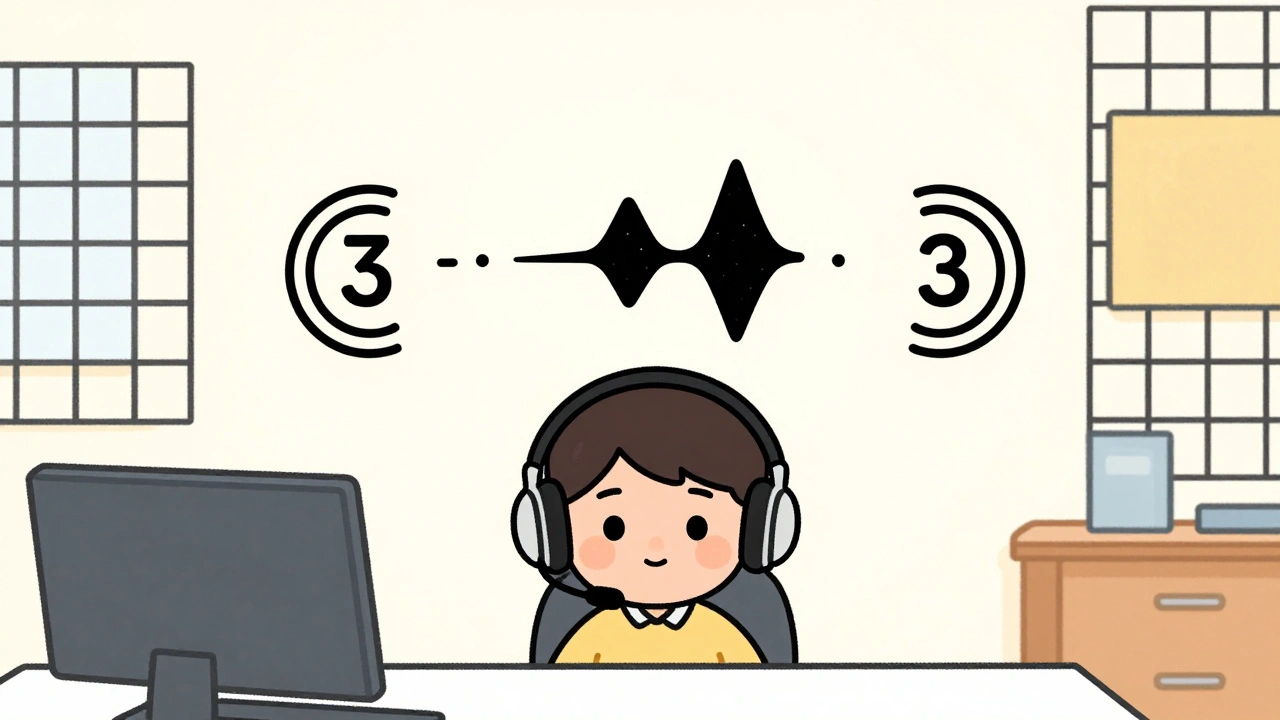
- Dichotic Digits Test: Different numbers are played into each ear at the same time. The person has to repeat both. This checks how well the brain handles competing input.
- Pitch Pattern Sequence Test: The person hears rising and falling tones and must repeat the pattern. This tests the brain’s ability to recognize sound sequences.
- Random Gap Detection Test: Tiny silences are inserted between sounds. The person detects when the gap is too short. This measures how fast the brain processes timing.
Results are compared to age-based norms. A diagnosis requires performance at least two standard deviations below average in at least two of these areas.
There are also subtypes:
- Decoding deficit: Trouble with fast or quiet speech. Linked to left-brain processing.
- Tolerance-fading memory: Forgets spoken info quickly, especially if it’s muffled. Tied to temporal lobe issues.
- Auditory integration deficit: Can’t combine what each ear hears. Often linked to the corpus callosum.
- Prosodic deficit: Misses tone, sarcasm, or emotion in speech. Connected to right-brain processing.
Each subtype needs a different kind of support.
What Doesn’t Work
There’s no pill for APD. Medications like those for ADHD don’t fix it. You can’t train someone to "just listen better." It’s not a behavior problem.
Some clinics offer unproven therapies-like listening to special music for hours a day. There’s no solid evidence these work. The American Speech-Language-Hearing Association warns against overdiagnosis and ineffective treatments.
And don’t assume it’s just a "phase." If a child is consistently missing instructions, misreading assignments, or avoiding social talk, it’s not going away on its own.
What Actually Helps
Good news: APD can be managed. With the right tools, people learn to compensate-and thrive.
Classroom and workplace accommodations:
- Preferential seating-within 3 to 6 feet of the speaker.
- Use of FM systems: a microphone worn by the teacher sends sound directly to the student’s earpiece, cutting out background noise.
- Visual aids: written instructions, diagrams, or checklists to support spoken directions.
- Slower speech and clear enunciation from teachers and coworkers.
- Reducing background noise: closing doors, using carpets, turning off fans during lessons.
Therapy and training:
- Computer-based programs like Earobics have shown 40% to 60% improvement in auditory discrimination in clinical trials.
- Speech-language therapy focused on active listening, memory strategies, and self-advocacy.
- Home exercises: 15 minutes a day using apps like Auditory Workout to practice sound discrimination.
Environmental tweaks:
- Keep signal-to-noise ratio at +15 dB-meaning speech should be 15 decibels louder than background noise.
- Use noise-canceling headphones in loud places.
- Teach the person to say, "Can you say that again? I want to make sure I got it right."
One child’s reading scores jumped from the 45th to the 89th percentile after getting an FM system and visual supports in class. That’s not magic. That’s the right support.
Long-Term Outlook
APD doesn’t disappear, but it doesn’t have to hold someone back.
A 10-year study from the University of Florida found that 80% of kids with APD who got early help developed strong coping skills and succeeded academically. But 45% still face challenges in noisy workplaces as adults.
That’s why self-advocacy matters. Teaching kids to explain their needs-"I hear better when you face me," or "Can we write that down?"-is as important as any tech or therapy.
And the future looks brighter. The NIH invested $4.7 million in APD research in 2024. Scientists are using brain scans to find biomarkers and testing new tools like transcranial magnetic stimulation to improve processing speed. AI-powered speech enhancers are also emerging-tools that clean up noisy audio in real time.
Who’s at Risk?
APD isn’t random. Certain factors increase the chance:
- Chronic ear infections in early childhood-65% of APD cases have this history.
- Being born prematurely-three times more likely to develop APD.
- Head trauma-15% of adult cases follow a concussion.
- Family history-kids with a parent who has APD are 50% more likely to have it.
- Gender-boys are diagnosed twice as often as girls, though this may reflect underdiagnosis in girls.
And here’s something many don’t know: only 35% of kids who qualify for accommodations under IDEA or Section 504 actually get them. That’s a gap. If you suspect APD, push for evaluation. It’s your right.
Where to Start
If you or your child shows signs:
- Document the issues: Keep a log of when mishearing happens-classroom, home, social settings.
- See an audiologist who specializes in central auditory processing. Not all do-ask.
- Request a full evaluation. It’s not a one-time test. It takes time and multiple tools.
- Work with a speech-language pathologist and teacher to build a support plan.
- Advocate for accommodations under school or workplace disability policies.
You don’t need to wait for a label to start making changes. Lower background noise. Face the person when speaking. Use written notes. These small steps help-even before diagnosis.
It’s Not About Hearing. It’s About Understanding.
Auditory Processing Disorder isn’t a hearing problem. It’s a brain problem. But it’s not a broken brain. It’s a different one. One that needs the right environment, the right tools, and the right understanding.
People with APD aren’t slow. They’re not lazy. They’re just trying to decode a world that wasn’t built for them.
With the right support, they don’t just keep up-they shine. They just need us to listen-really listen-to what they’re struggling to hear.
Is APD the same as hearing loss?
No. APD is not hearing loss. People with APD have normal hearing sensitivity on standard tests. Their ears pick up sound fine, but their brain struggles to interpret it correctly-especially in noisy environments or when speech is fast. Hearing loss involves damage to the ear’s physical structures, while APD is a neurological processing issue.
Can APD be cured?
There is no cure for APD, but it can be effectively managed. With early intervention, environmental changes, auditory training, and classroom accommodations, most people develop strong coping strategies. Many children with APD go on to succeed academically and professionally. The goal isn’t to fix the brain, but to change the environment to match how it processes sound.
How is APD diagnosed?
APD is diagnosed by a certified audiologist using specialized tests, not a standard hearing test. Common assessments include the Dichotic Digits Test, Pitch Pattern Sequence Test, and Random Gap Detection Test. A diagnosis requires performance at least two standard deviations below age norms in at least two of these areas. Testing usually takes two to three sessions and must rule out other conditions like ADHD or language disorders.
Does APD only affect children?
No. While APD is often first noticed in school-aged children, it affects adults too. Many adults live with undiagnosed APD and struggle with workplace meetings, phone calls, or social gatherings. Symptoms may have been overlooked in childhood or misattributed to inattention. Adults with APD often report fatigue from listening effort and avoid noisy environments.
Can APD be confused with ADHD?
Yes, frequently. About 30% to 40% of children with APD also show attention difficulties. But the root cause is different. In ADHD, the brain struggles to focus. In APD, the brain struggles to understand the sound input. A child with APD may appear distracted because the speech is too unclear to follow-not because they’re not trying. Proper diagnosis requires testing by an audiologist to distinguish between the two.
What accommodations help kids with APD in school?
Effective accommodations include preferential seating near the teacher, use of FM systems to reduce background noise, visual aids like written instructions and diagrams, extended time for verbal tasks, and breaking down multi-step directions into single steps. Teachers should speak clearly, face the student, and avoid talking while writing on the board. These supports are often covered under Section 504 or IDEA in the U.S.
Are there apps or tools that help with APD?
Yes. Computer-based auditory training programs like Earobics and Auditory Workout have shown measurable improvements in auditory discrimination and memory. Noise-canceling headphones, personal sound amplification products (PSAPs), and AI-powered speech-enhancing apps can also help in noisy environments. These tools don’t cure APD, but they reduce the listening effort and improve comprehension.
Is APD genetic?
There’s strong evidence of a genetic link. Children with a parent diagnosed with APD have a 50% higher chance of developing it. Research also shows higher rates among siblings. While no single gene has been identified, family history is a known risk factor. Environmental factors like chronic ear infections and premature birth also play a role, but genetics appear to increase vulnerability.
pallavi khushwani
December 6, 2025 AT 23:07Wow, this hits different. I used to think I was just bad at listening, but now I realize I’ve been fighting a silent war in noisy rooms my whole life. That part about missing 'bat' vs 'pat'? Yeah. I once thought my boss said 'submit by Friday' when he said 'submit by Friday the 13th'-and I turned it in on the 13th. He thought I was being dramatic. Turns out, my brain just glitched.
Kay Jolie
December 7, 2025 AT 08:11As a neurodivergent linguist with a specialization in central auditory processing anomalies, I must emphasize that APD is not merely a 'processing glitch'-it's a neurophenotypic divergence in the temporal lobe's phonological decoding cascade. The dichotic listening paradigm reveals asymmetric hemispheric integration deficits, particularly in the left superior temporal gyrus. The current diagnostic framework, while useful, remains grossly underpowered by fMRI-based biomarkers. We need longitudinal neuroplasticity studies, not just FM systems. This is a cortical architecture issue, not a classroom accommodation problem.
Clare Fox
December 8, 2025 AT 09:42i always thought i was just tired all the time. turns out i was just exhaustd from trying to hear. like, every conversation feels like decoding a scrambled radio. no one ever says it out loud but its like… we’re all just trying to catch the words before they fall off the edge of the world. i started using captions on everything. it helped. a lot.
Akash Takyar
December 9, 2025 AT 23:54This is an exceptionally well-researched and compassionate overview. I appreciate the clear distinction between APD and ADHD, as well as the emphasis on evidence-based interventions. As an educator in Delhi, I’ve encountered several students who were mislabeled as inattentive-only to thrive once we implemented preferential seating and visual scaffolding. Thank you for shedding light on this invisible challenge.
Andrew Frazier
December 11, 2025 AT 10:59Oh great. Another 'neurological difference' excuse for people who can't pay attention. We used to just tell kids to listen better. Now we need FM systems, apps, and brain scans? This is what happens when you coddle a generation that can't handle real life. If you can't hear in a noisy room, move to a quiet room. Simple. Stop turning every minor struggle into a federal mandate.
Karen Mitchell
December 11, 2025 AT 13:04It is, of course, entirely irresponsible to suggest that auditory processing disorder is a legitimate neurological condition without first establishing whether the individual in question possesses the requisite moral fortitude to engage in sustained auditory attention. The fact that this article does not condemn the moral laxity of those who fail to 'try harder' renders it ethically suspect. One cannot, after all, excuse intellectual deficiency under the banner of neurodiversity.
Geraldine Trainer-Cooper
December 11, 2025 AT 19:24so like… if your brain just doesn’t vibe with speech, is that a disability or just… being out of sync with the world? i mean, maybe we’re the ones who need to slow down, not them
Kenny Pakade
December 12, 2025 AT 04:01Look, I’m all for helping people, but this is just another woke diagnosis to justify lazy parenting. My dad didn’t have an FM system. He had a belt and a loud voice. You want your kid to hear? Yell louder. Stop buying into this corporate medical-industrial complex that’s monetizing confusion.
Dan Cole
December 13, 2025 AT 08:40Let’s be brutally honest: APD isn’t just underdiagnosed-it’s deliberately obscured by the education system because addressing it requires systemic change. We’d rather label kids as 'slow' or 'disruptive' than restructure classrooms to accommodate neurodivergent perception. The NIH funding is a start, but until we stop treating auditory processing as a 'behavioral issue' and start treating it as a sensory integration disorder, we’re just rearranging deck chairs on the Titanic. And yes-I’ve published peer-reviewed papers on this. You’re welcome.
Billy Schimmel
December 13, 2025 AT 17:52my sister has this. she says the worst part isn’t the noise-it’s people getting mad at her for asking to repeat things. like she’s being annoying. she’s not. she’s just trying to survive a world that talks too fast and too loud. i wish more people knew that.
Shayne Smith
December 15, 2025 AT 14:17the one sentence that hit me? 'they’re just trying to decode a world that wasn’t built for them.' i’ve been that kid. i’m still that adult. and honestly? i’m kinda proud we’re finally talking about it.