
ADHD: Stimulants, Non-Stimulants, and Behavioral Strategies
 Feb, 9 2026
When you’re living with ADHD, the right treatment can mean the difference between feeling stuck and finally finding your rhythm. For millions of people-kids, teens, and adults-medication isn’t the whole story. It’s one piece. And sometimes, the most powerful part isn’t a pill at all. It’s learning how to structure your day, how to respond when your brain feels like a browser with 50 tabs open, or how to talk to your body when your appetite vanishes because of a morning dose. This isn’t about quick fixes. It’s about building a life that works with your brain, not against it.
How Stimulants Actually Work
Stimulant medications for ADHD aren’t what you might think. They don’t make you hyper. They don’t ‘speed you up.’ Instead, they help your brain focus by boosting two key chemicals: dopamine and norepinephrine. These aren’t just mood boosters. They’re the brain’s internal GPS and alarm system. In someone with ADHD, these signals are weak or delayed. Stimulants turn up the volume.
The two main classes are methylphenidate and amphetamine. Methylphenidate, found in Ritalin and Concerta, works by blocking the reabsorption of dopamine and norepinephrine so they stay active longer in the brain. Amphetamines, like Adderall and Vyvanse, do something a little different-they push more of these chemicals out of storage and block their cleanup. Both get results. About 70 to 80% of people see clear improvements in focus, impulse control, and task completion.
But here’s what most people don’t talk about: timing matters more than dose. A 5mg dose taken at 7 a.m. might help you get through morning school or work. But if you take it at 3 p.m., you’re likely to be staring at the ceiling at midnight. That’s why doctors often start low-5mg of methylphenidate or 2.5mg of amphetamine-and go slow. Most people find their sweet spot between 10mg and 30mg per day. And extended-release versions? They’re game-changers. Concerta lasts 10 to 12 hours. Focalin XR? Same. That means one pill instead of three. No midday trips to the bathroom to swallow a pill in secret. No teacher noticing. No coworkers wondering why you’re suddenly quiet.
Non-Stimulants: The Slow Burn
Not everyone can-or wants-to take stimulants. Maybe you have anxiety. Maybe you’ve had a bad experience with appetite loss. Maybe you’re worried about abuse potential. That’s where non-stimulants come in.
Atomoxetine (Strattera) is the first FDA-approved non-stimulant for ADHD. It doesn’t touch dopamine directly. Instead, it blocks norepinephrine reuptake. That’s it. No rush. No high. No crackling energy. But it also doesn’t work fast. It takes 4 to 6 weeks to build up in your system. Some people feel nothing for the first month. Then, suddenly, things click. It’s not as strong as stimulants-only about 50 to 60% respond-but for those who do, the side effects are gentler. No sleep crashes. No jittery hands. No loss of appetite.
Then there are the alpha-2 agonists: guanfacine (Intuniv) and clonidine (Kapvay). These were originally blood pressure meds. Turns out, they calm the overactive parts of the prefrontal cortex. They’re not magic bullets. But they help with emotional outbursts, impulsivity, and sleep problems. A lot of parents use them at night to help kids wind down. And they’re especially useful for kids with tics or those with a family history of substance use.
One big advantage? No risk of misuse. Stimulants are controlled substances. Non-stimulants aren’t. That makes them easier to get through insurance. And if you’re in your 30s and work in a job where random drug tests happen? Non-stimulants are safer.
The Real Side Effects Nobody Warns You About
Let’s be honest: the brochures make side effects sound like a quick checklist. Appetite loss. Trouble sleeping. Headaches. Done.
But if you’ve lived it, you know it’s messier.
Appetite suppression hits 50 to 60% of kids on stimulants. That doesn’t just mean skipping lunch. It means forgetting to eat for hours. Losing weight. Parents report kids who used to devour pancakes now push their plate away like it’s a chore. The trick? Eat before the med kicks in. A protein-heavy breakfast-eggs, Greek yogurt, peanut butter-before 7 a.m. can make all the difference. Some families even set alarms for snack time: 11 a.m., 2 p.m., 6 p.m. No meds, no hunger.
Sleep problems? That’s the silent killer. One study found 30 to 50% of users struggle to fall asleep. It’s not just caffeine. It’s the lingering buzz. The fix? Move the last dose to 4 p.m. at the latest. And if that doesn’t work, switch to a non-stimulant. Or try adding melatonin. Not as a crutch. As a reset button.
Then there’s emotional blunting. Not everyone talks about this. But on Reddit’s r/ADHD, over 30% of users say they feel ‘numb.’ Like they’re watching their own life through glass. It’s not depression. It’s just… flat. Some say it’s the meds. Others say it’s the pressure to perform. Either way, it’s real. And it’s okay to ask your doctor to lower the dose-even if you’re still getting better grades.
And growth? Yes, it happens. A third of kids on stimulants show slower height and weight gain in the first year. But here’s the relief: it usually catches up by year three. Still, doctors check height and weight every six months. Not because they’re paranoid. Because they care.
Behavioral Strategies: The Invisible Pill
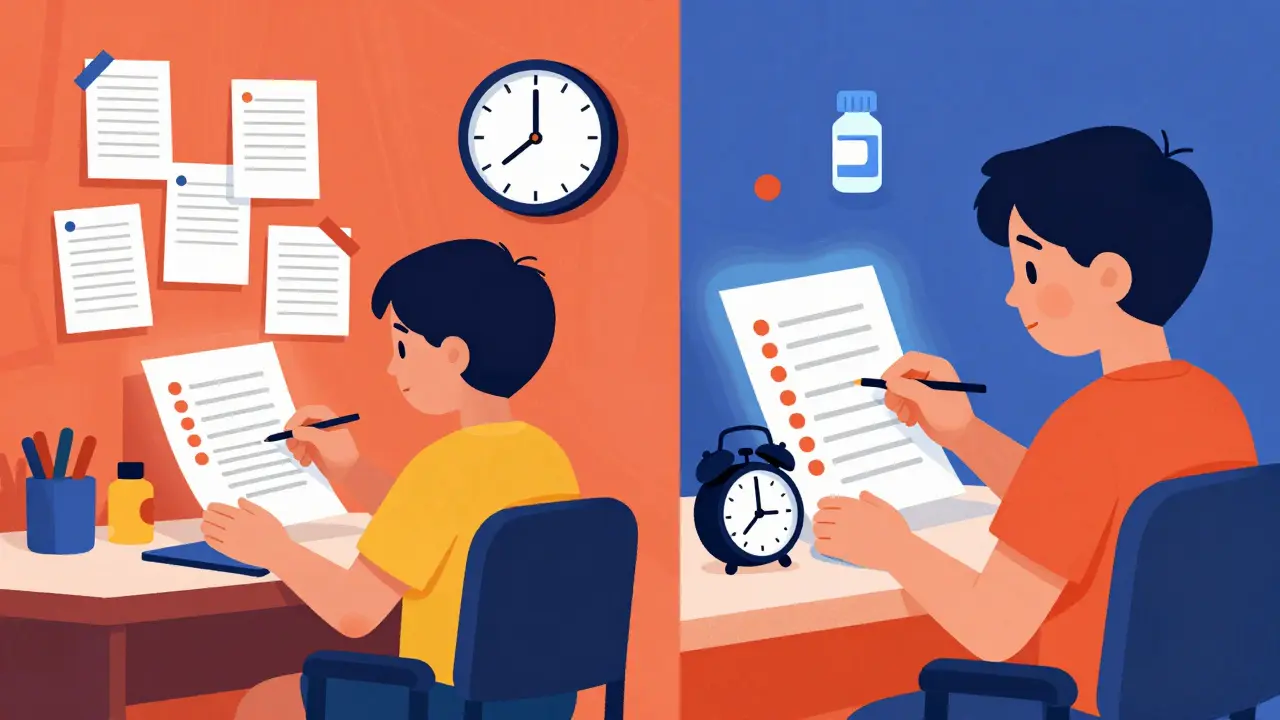
Medication helps you show up. Behavioral strategies help you stay.
Think of it like this: a stimulant gives you a flashlight. Behavioral strategies teach you how to build a map.
For kids, parent training works. Programs like the New Forest Parenting Programme don’t just tell you to be consistent. They show you how. How to give clear, one-step instructions. How to use reward charts that actually motivate-not just stickers, but choices. ‘You can pick the movie tonight if you finish your homework before dinner.’ Simple. Specific. Real.
For adults? It’s all about externalizing your brain. If you forget deadlines, write them on your bathroom mirror. If you lose your keys, have one spot-always the same hook by the door. If you can’t start tasks, use the ‘5-minute rule’: just do five minutes. That’s it. Often, starting is the hardest part. Once you’re in, your brain takes over.
Organizational tools? They’re not optional. A digital calendar with alarms. A notebook you carry everywhere. A weekly 10-minute review where you ask: ‘What got lost this week?’ That’s not laziness. That’s strategy.
And for teens? Structure isn’t control. It’s safety. A set bedtime. A chore list that doesn’t change. A quiet space to study without phones. These aren’t punishments. They’re scaffolding.
Who Gets What? The Real-World Choices
There’s no one-size-fits-all. But here’s how most people end up choosing:
- If you’re a child or teen with classic ADHD symptoms (inattention, impulsivity, hyperactivity)-start with a stimulant. Methylphenidate is cheaper. Generic Ritalin costs $15 to $25 a month. Concerta? $250 to $400. Most insurers make you try the generic first.
- If you have anxiety, tics, or a history of substance use-go non-stimulant. Atomoxetine or guanfacine. No abuse risk. Fewer side effects. Slower, but steadier.
- If you’re an adult with a demanding job-extended-release stimulants win. One pill, all day. No midday dips. No coworkers noticing you’re ‘off.’
- If you’ve tried meds and they didn’t work-it’s not you. It’s the drug. Try switching classes. Methylphenidate to amphetamine. Or vice versa. Response rates jump 15 to 20% when you switch.
And if you’re a parent? Don’t feel guilty for asking for help. ADHD isn’t a parenting failure. It’s a brain difference. And treatment isn’t about making your kid ‘normal.’ It’s about helping them thrive.
The New Frontiers
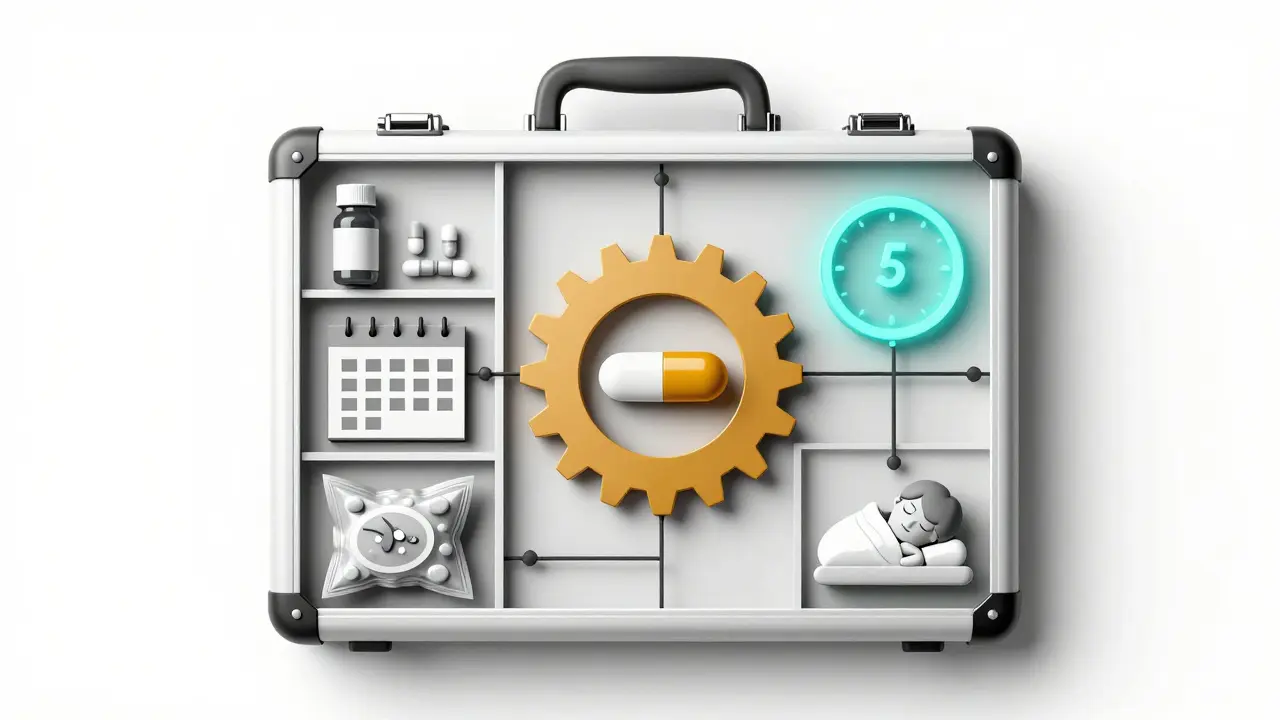
The field is changing fast. In 2023, the FDA approved AZSTARYS-a new stimulant combo designed to reduce misuse. It releases slowly, so it’s harder to crush or snort. That’s huge for teens.
And then there’s digital therapy. EndeavorRx, an FDA-cleared video game for kids aged 8 to 12, trains attention through gameplay. It’s not a replacement. But for kids who hate pills? It’s a real option. Studies show it improves attention scores after four weeks of daily play.
Genetic testing is coming too. Tests like Genomind’s PGx Express look at your CYP2D6 and CYP2C19 genes. These tell your doctor if you’re a fast or slow metabolizer. If you’re slow, standard doses might overload you. If you’re fast, you’ll need more. In one 2023 study, this test predicted 65% of non-responders. That’s not science fiction. It’s here.
The big shift? We’re moving from ‘trial and error’ to ‘personalized fit.’ That’s the future.
What to Do Next
If you’re thinking about treatment:
- Write down your top three struggles. Is it focus? Procrastination? Emotional outbursts? Sleep? This tells your doctor what to target.
- Ask about baseline tests: height, weight, blood pressure. They’re not optional. They’re safety checks.
- Start low. Go slow. Don’t rush to the highest dose. Give it 3 weeks to settle.
- Track side effects. Use a notebook. Note the time, dose, and how you felt. Patterns emerge.
- Pair meds with one behavioral strategy. One. Not ten. Just one. Maybe it’s a daily checklist. Or a phone alarm for water. Small wins build momentum.
And if you’re feeling overwhelmed? You’re not alone. The ADHD community is full of people who’ve been there. Reddit, CHADD, ADDitude-they’re not just websites. They’re lifelines.
Can ADHD medication change your personality?
No, ADHD medication doesn’t change your personality. It reduces the symptoms that make it hard to focus, manage impulses, or stay organized. What some people describe as ‘personality change’ is often emotional blunting-a side effect where emotions feel muted. This usually happens with high doses or long-acting stimulants. Lowering the dose or switching to a different medication often brings back your natural self. If you feel like you’re not ‘you’ anymore, talk to your doctor. It’s not normal, and it’s fixable.
Are non-stimulants less effective than stimulants?
For core ADHD symptoms like inattention and impulsivity, stimulants are generally more effective-about 70-80% respond. Non-stimulants like atomoxetine or guanfacine help about 50-60% of people. But ‘less effective’ doesn’t mean ‘not useful.’ Non-stimulants are often better for people with anxiety, tics, or sleep issues. They also avoid abuse potential and don’t cause appetite loss. Sometimes, the trade-off in effectiveness is worth it for better quality of life.
Why do some people gain weight on ADHD meds?
Actually, most people lose weight on stimulants because appetite drops. But some people gain weight later-not from the meds themselves, but from rebound effects. When the medication wears off, hunger spikes. People eat more, especially carbs and sugar, to compensate. Also, if someone switches from a stimulant to a non-stimulant like guanfacine, appetite can return, leading to weight gain. It’s not the drug causing weight gain directly. It’s the body adjusting after suppression.
Is it safe to take ADHD meds long-term?
Yes, for most people. Long-term studies, including the 20-year follow-up of the MTA trial, show no major negative effects on adult outcomes like education, employment, or relationships. The biggest risks are short-term: sleep issues, appetite loss, or slight growth delays in kids-most of which improve over time. The FDA warns about cardiovascular risks, but these are rare and usually only a concern if you have a pre-existing heart condition. Regular check-ups with your doctor make long-term use safe.
Can behavioral strategies replace medication?
For mild ADHD, yes. For moderate to severe? Usually not. Behavioral strategies build skills, but they don’t fix the brain’s chemical imbalance. Medication helps you get to a point where you can use those skills. Think of it like glasses: you can learn to navigate a blurry room, but it’s exhausting. Glasses make it easier. Medication is the glasses. Behavioral strategies are the training to use them well.
What should I do if my child’s ADHD meds stop working?
It’s common. Kids grow. Their brains change. What worked at age 8 might not work at 12. First, check the dose. Are they still on the same amount? Second, consider timing. Maybe the school day changed. Third, check for other issues-sleep, anxiety, or undiagnosed learning problems. Often, it’s not that the med stopped working. It’s that life got harder. Talk to your doctor about switching to a different medication or adding a non-stimulant. Don’t just stop. Adjust.
John Watts
February 10, 2026 AT 11:59Man, this post hit different. I’ve been on Vyvanse for 5 years and honestly? The biggest win wasn’t the focus-it was finally being able to wash my dishes without them piling up into a volcanic crater. I used to think I was lazy. Turns out, my brain just needed a little nudge. Also, the 5-minute rule? Lifesaver. I tell myself, ‘Just open the doc.’ Nine times outta ten, I end up writing a whole damn essay. No magic pills. Just tiny wins.
Ritteka Goyal
February 11, 2026 AT 10:35OMG I’m so glad someone finally said this! In India, ADHD is just called ‘bad behavior’ and kids get slapped for not sitting still. My cousin? He was 14, couldn’t focus in school, and his dad made him stand in the corner for 3 hours. Then one day, he got prescribed methylphenidate-and BAM-he started getting A’s. Now he’s studying engineering. But NO ONE in my family will admit it was the med. They say ‘he just grew up.’ LOL. ADHD isn’t a choice. It’s biology. And we need to stop pretending it’s just discipline.
Ashlyn Ellison
February 12, 2026 AT 14:20Patrick Jarillon
February 13, 2026 AT 13:44Ohhhhh sweet mercy. Another ‘ADHD is just brain chemistry’ pamphlet. Let me guess-next you’ll tell me the government isn’t using stimulants to control the masses? I’ve been following this since 2018. The FDA approves drugs, then the pharmaceutical companies fund ‘studies’ that prove they work. Meanwhile, the real side effect? You become dependent on a system that tells you your brain is broken. I’ve tried 4 meds. All made me feel like I was watching my life on mute. Then I started walking 2 miles a day. No pills. No alarms. Just me, my thoughts, and the wind. My focus? Better than ever. Coincidence? Or is this all just corporate gaslighting wrapped in a ‘science’ bow?
Elan Ricarte
February 13, 2026 AT 20:31Bro. The emotional blunting thing? I thought I was going crazy. Felt like I was floating through my own life. Like I’d lost my anger. My joy. My sarcasm. I didn’t even care when my dog died. That’s when I knew: this ain’t focus. This is numb. I dropped my dose from 40mg to 15mg of Adderall XR. Took 3 weeks. Then-boom-I cried during a Pixar movie again. I’m not ‘broken.’ I’m just overmedicated. And yeah, I still get my shit done. But now I feel like ME again. Not some corporate drone with a pencil in hand.
Randy Harkins
February 14, 2026 AT 00:38Just want to say-thank you for writing this with so much heart. I’m a 42-year-old mom of two with ADHD, and I’ve spent years feeling like I’m failing. This isn’t about fixing me. It’s about building a life that fits. I use sticky notes on my fridge. I set alarms for water. I let myself nap after lunch. No shame. I’m not lazy. I’m adapting. And if you’re reading this and feeling lost? You’re not alone. We’re all just trying to build a bridge from ‘how I’m supposed to be’ to ‘how I actually am.’ And that’s brave.
Tori Thenazi
February 14, 2026 AT 10:37Okay, but have you heard about the 2021 CDC memo that secretly recommended stimulants for ‘productivity enhancement’ in white-collar workers? I found it buried in an archive. And the FDA’s approval of AZSTARYS? That’s not about reducing misuse-it’s about making it harder to detect in workplace drug tests. They want us dependent but ‘invisible.’ And don’t get me started on the ‘behavioral strategies’-they’re just Pavlovian training in disguise. Why do you think they push the 5-minute rule so hard? Because it trains you to obey. To comply. To be quiet. I’m not saying don’t use strategies. I’m saying: know who’s really benefiting from them.
Monica Warnick
February 16, 2026 AT 09:57…I just… I don’t know. I’ve been on Strattera for 8 months. I still forget to eat. I still lose my keys. I still cry over stupid things. But… I don’t feel like a monster anymore. That’s enough. I guess? I don’t need to be fixed. Just… understood. I’m tired of being told I’m ‘too much.’ Maybe I’m just… me. And that’s okay.
Camille Hall
February 17, 2026 AT 05:44One thing no one talks about: the guilt. As a parent, I felt so guilty for even considering meds. Like, am I giving up on my kid? Am I letting society pathologize his energy? But then I saw him finally finish a puzzle without screaming. He smiled. Real smile. Not because he was ‘fixed.’ But because he could breathe. I stopped trying to ‘fix’ him. I started trying to understand him. And now? We have a quiet space. A routine. A snack timer. And a dog who knows when he needs a hug. That’s the real treatment.
Jonah Mann
February 18, 2026 AT 13:00yo so i just wanna say i got on guanfacine last year and it was a game changer for my sleep and emotional outbursts. i used to scream at my roommate over a dirty dish. now? i just take a breath and text ‘hey can we talk about this?’ it’s not perfect. but it’s better. also, i use a physical planner. like, paper. with pens. it’s weird but it sticks in my brain. also, i eat like 3 protein bars a day. i forgot to eat for 2 weeks on stimulants. not fun. also, melatonin 3mg at 9pm. life saver. also, i love this post. thanks.
Angie Datuin
February 18, 2026 AT 15:07Thank you for writing this. I’ve been silent for years. I’m 29, female, diagnosed last year. I thought I was just ‘messy’ or ‘lazy.’ Turns out, I just needed structure and a little help. I’m not ‘cured.’ But I’m finally learning how to live with this. And that’s enough.